Castell de Preixens: A Historic Fortress and Noble Residence in Spain
Visitor Information
Google Rating: 5
Popularity: Very Low
Country: Spain
Civilization: Early Modern, Medieval European, Medieval Islamic
Site type: Domestic
Remains: Palace
History
The Castell de Preixens is a historic fortress situated in the municipality of Preixens in Spain. Its origins date back to the Andalusian period, likely the 10th century, when it served as a strategic stronghold overseeing the Sió river basin and the route connecting the towns of Balaguer, Agramunt, and Guissona.
During the late 11th century, Count Ermengol IV of Urgell extended his influence to the area by capturing the castle following his conquest of the nearby town of Agramunt in 1070. By the 12th century, the castle was firmly embedded in the local feudal system; it appears in a 1172 document pertaining to Bertran de Preixens, who bequeathed a mill within the castle grounds to the local parish church of Sant Pere de Preixens. This association indicates the castle’s role not only as a military site but also as part of the surrounding community’s economic and religious life.
In 1190, a noteworthy change in control took place when landowners from the Anglesola family granted estates to Pere de Preixens. This grant established the Preixens family as vassals responsible for the defense of both the castle and the adjacent village, marking the family’s long-standing role as castellans—castle lords—from the late 11th or early 12th century onwards. Members of this family distinguished themselves in religious and political spheres. Arnau de Preixens served as bishop of Urgell between 1167 and 1195, while another Arnau de Preixens led the Poblet Abbey as abbot from 1254 to 1267. Berenguer de Preixens is recorded in the chronicles of King James I, indicating the family’s ongoing involvement in regional affairs.
By the late 14th century, ownership of the castle passed to Joan de Montcada, reflecting a shift in noble possession. The castle underwent a major transformation in the 16th century when it was remodeled into a Renaissance-style noble residence. This renovation marked the castle’s evolution from a medieval fortress to a stately home befitting the tastes and social status of its owners. Later restoration and remodeling efforts have preserved much of this 16th-century character. Today, the property remains under the private ownership of the Pijuan family.
Remains
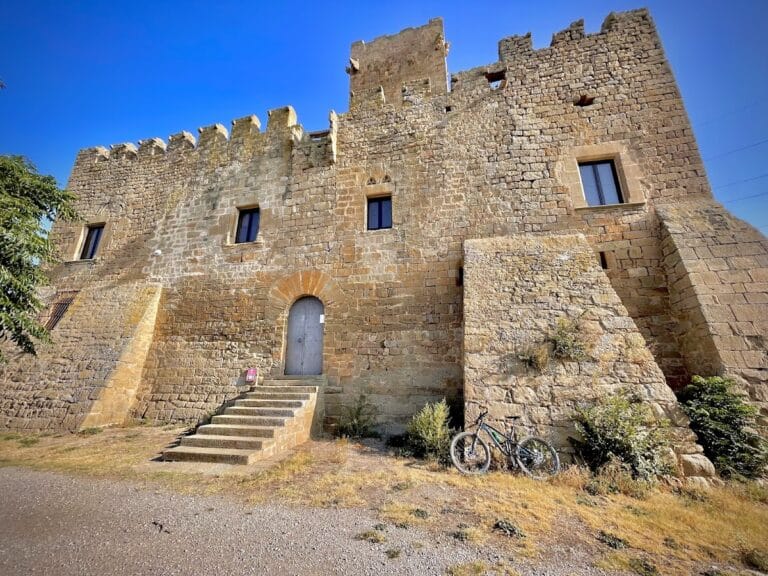
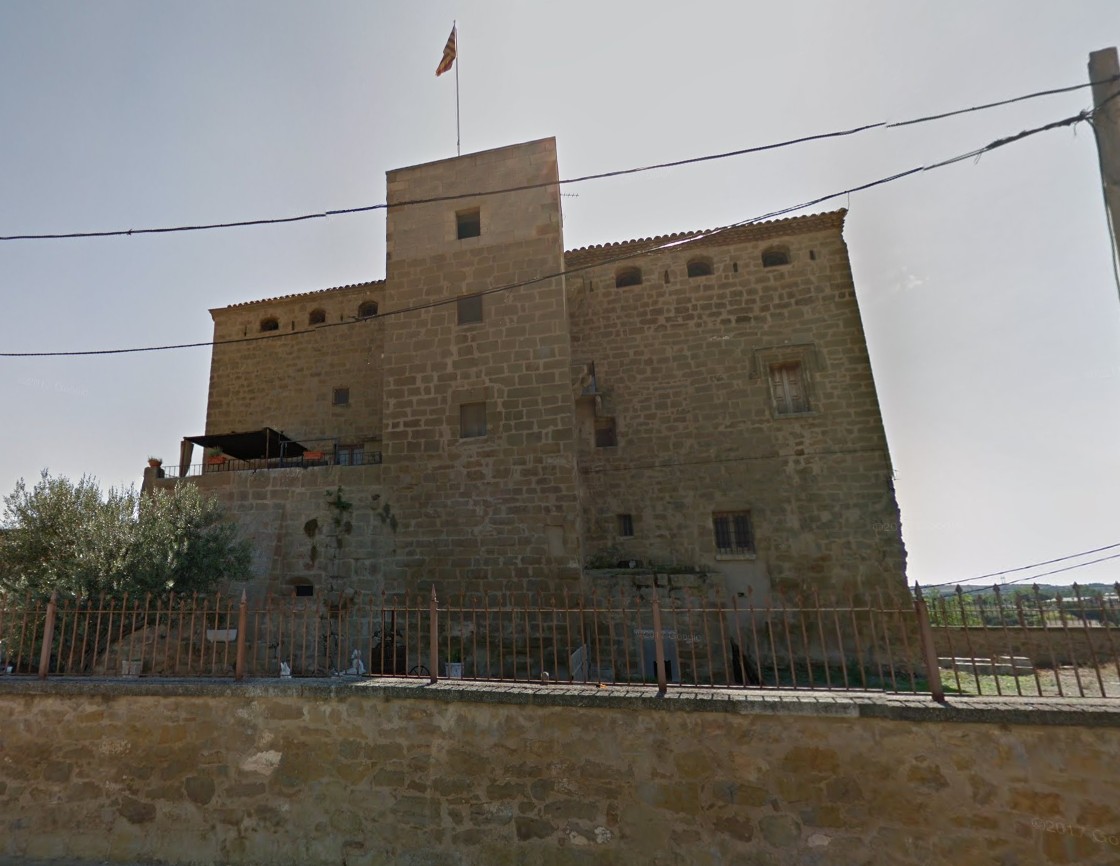
Perched on the highest point of Preixens hill, the Castell de Preixens is a sizable fortified manor showcasing a blend of medieval and Renaissance construction. The main building forms a rectangular block measuring approximately 27 by 16 meters and rises three stories high, manifesting its evolution from a defensive stronghold to a noble residence. The castle’s masonry primarily consists of sandstone ashlar, a finely cut stone technique lending both strength and a refined exterior.
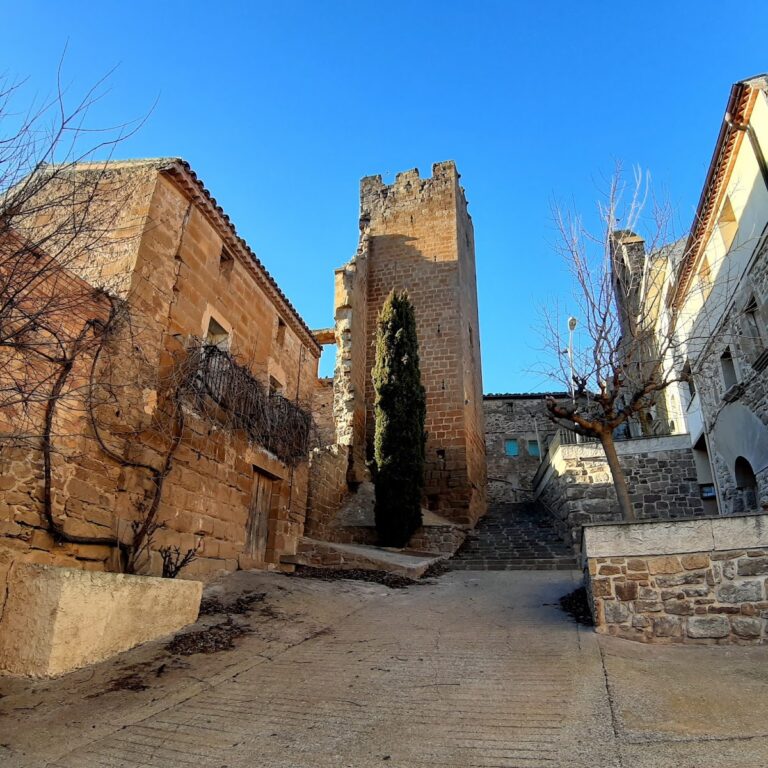
A prominent architectural feature is the square tower located centrally on the north façade. Measuring around five meters on each side, this tower retains original 12th-century construction elements, sharing its composition with a short adjoining wall that extends southward at a right angle. These components are vestiges of the early medieval castle built over previous Andalusian fortifications, illustrating layers of occupation and adaptation.
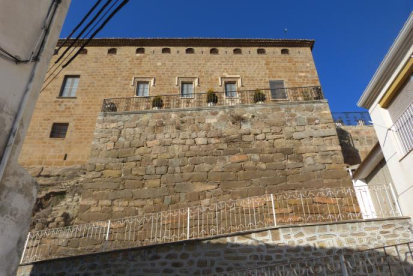
The four façades of the main building date largely from the 16th century, built atop medieval remains in the Renaissance style. They rest on a battered base—a foundation that slants outward—composed of larger, less uniform stones providing stability. The castle’s principal façade faces south toward the village below and the Sió valley, featuring windows of varying sizes. Ground-floor openings are simple, rectangular, and secured with iron grilles. The noble second floor presents larger windows with decorative molded lintels; three of these have been reconstructed. Above, the third floor contains multiple smaller windows with flat arches, many of which are equipped with gunports. These openings indicate a transition from traditional battlements to adaptations suited for firearms and the addition of an upper story, reflecting changes in military architecture during the Renaissance.
The main entrance is situated on the southern façade at ground level. It consists of a semicircular arch doorway constructed with nine evenly spaced wedge-shaped stones called voussoirs. At the center is a keystone carved with a heraldic shield, which authenticates the noble lineage and status of the castle’s occupants.
The castle’s west façade includes a balcony and a rectangular window on the noble floor, while its north side is dominated by the square tower and a terrace accessible through the tower, which overlooks the north-east annex. On the east façade, six windows with flat arches adorn the third floor and two rectangular windows with molded upper edges are found on the second floor. A 10 by 14 meter courtyard opens at ground level here, disrupting the otherwise symmetrical form of the complex and serving as an internal open space.
The roof’s design is asymmetrical, consisting of multiple slopes. The western two-thirds have a double-pitched roof with drainage directed both north and south, while the eastern third slopes separately into the courtyard. The eaves show alternation between tile and brick across four levels, a detail contributing to the castle’s distinctive silhouette.
Inside, the castle’s interiors have undergone full restoration and remodeling, integrating decorative elements from the medieval period, Renaissance, and the 19th century. This layered style reflects the castle’s long history and the successive tastes of its owners, creating an interior environment rich with historical resonance.
Nearby sites