Castell de Bàscara: A Medieval Catalan Fortress in Spain
Visitor Information
Google Rating: 4
Popularity: Very Low
Official Website: www.bascara.cat
Country: Spain
Civilization: Medieval European
Site type: Military
Remains: Castle
History
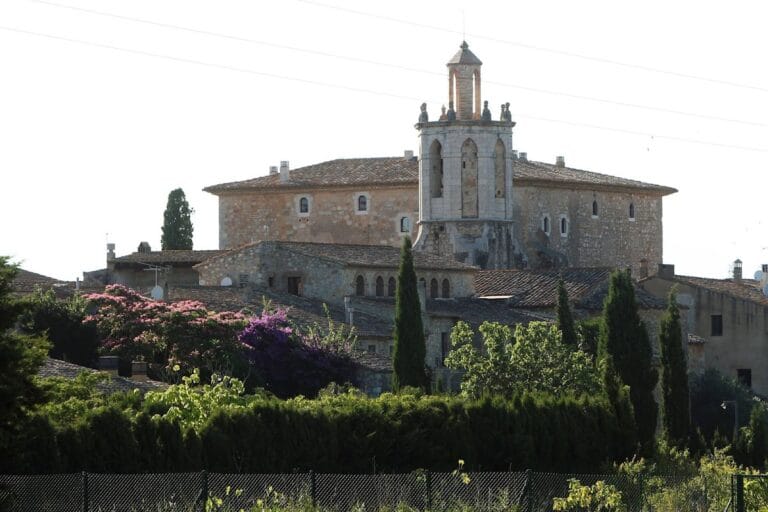
The Castell de Bàscara is situated in the town of Bàscara in Spain and was built under the authority of the medieval Catalan civilization. It stands on the highest northern point of the town, overseeing a key crossing of the Fluvià river, strategically controlling access and defense.
The earliest known reference to the castle dates from 1241, when King James I granted Bishop Guillem de Cabanelles of Girona permission to construct fortifications in the area. This defensive complex became the third enclosure within Bàscara’s walls and was primarily designed to protect private homes enclosed within its boundaries. The castle and its walls were carefully integrated with the town’s earlier fortifications; the southern and western walls were developed alongside the second town barrier, while the eastern wall aligned with the edge of the original first wall. Inside the enclosure, an east-west street helped organize the settlement’s layout.
Between 1369 and 1380, the castle’s fortifications underwent strengthening due to an increased threat of invasion, a measure recorded in historical documents. Additionally, in 1407 a sculpted coat of arms belonging to Bishop and Cardinal Berenguer d’Anglesola was placed above the new gate of the fortifications. This heraldic emblem was carved by the craftsman Pere Oller at the cost of 107 sous, reflecting the castle’s ongoing religious and political connections.
By the early 18th century, a French map from 1711 depicted the castle as having three towers: two circular and one square. However, during the Napoleonic Wars the castle suffered significant damage. Two of its towers were destroyed by gunpowder explosions, leaving only the so-called Prison Tower intact. Following the conflict, Marshal Suchet ordered the dismantling of the remaining fortifications. This action marked the end of the castle’s military role and initiated its decline into ruin. Today, the site is privately owned and no longer open to public access.
The Castell de Bàscara is officially recognized as a cultural heritage site of national importance within Catalonia and Spain under the reference number RI-51-0005798.
Remains
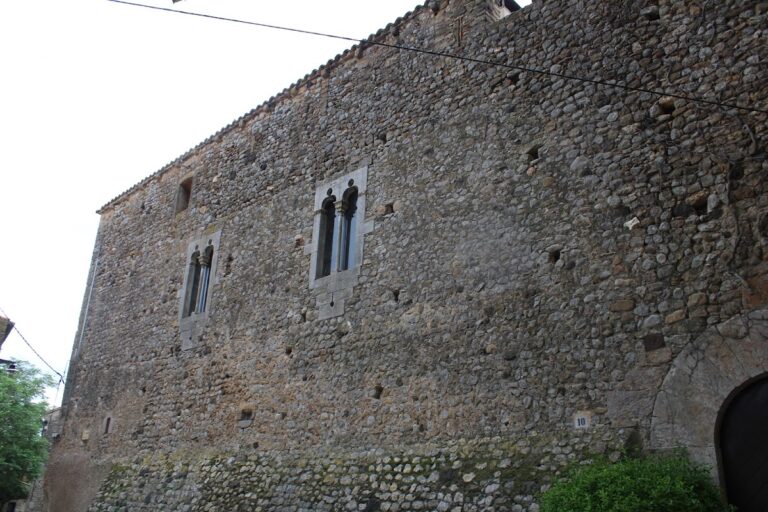
The visible remains of Castell de Bàscara display an irregular arrangement of adjoining sections, covered with tiled roofs that slope in one or two directions. The structure is organized across three levels: a ground floor, first floor, and attic. Its eastern face connects directly with a thick, angled defensive wall known as a battered wall, which protected the original castle and serves as the main façade. Entry to the building is marked by a lowered arch doorway framed in stone, while the first-floor contains two altered windows with similar lowered arches constructed in brick. Small brick-built loopholes, narrow vertical slits used for defense and observation, remain in the upper portions of the walls.
Inside, the entrance vestibule is covered by a lowered vault made up of bricks laid flat, a technique which also appears in the vault-supported ceilings of the ground floor rooms. The main hall on the first floor features a more complex lowered vault enhanced by lunettes—semicircular openings or recesses—and decorative moldings, attesting to a certain level of craftsmanship in the interior design. The castle’s walls are primarily composed of unshaped cobblestones and stones bound with generous amounts of lime mortar. Some sections have been further protected with plaster.
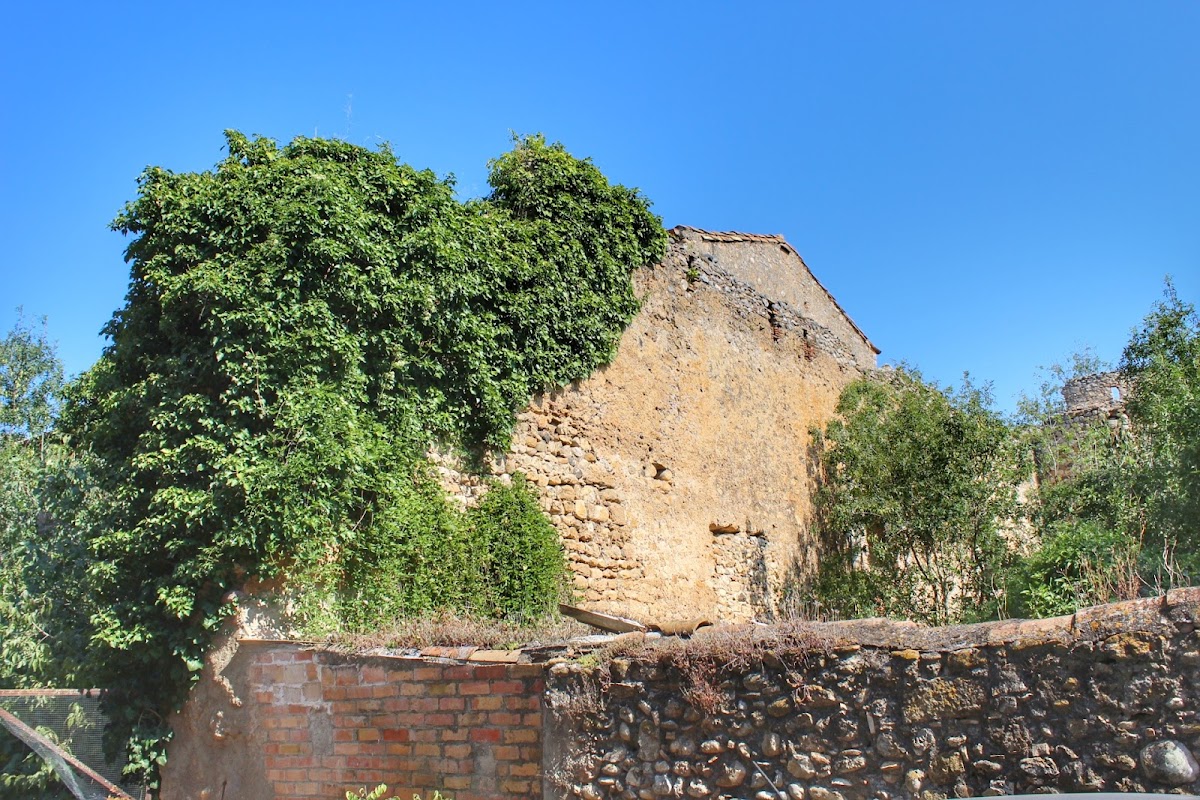
To the north of the main structure lies another segment of the enclosing wall from the castle’s original defenses. This portion is detached from the current building and contains a semicircular arched gate. The arch is formed with wedge-shaped stones called voussoirs, while above it stands the carved coat of arms of Bishop Berenguer d’Anglesola, linking this entrance with the early 15th-century phase of reinforcement.
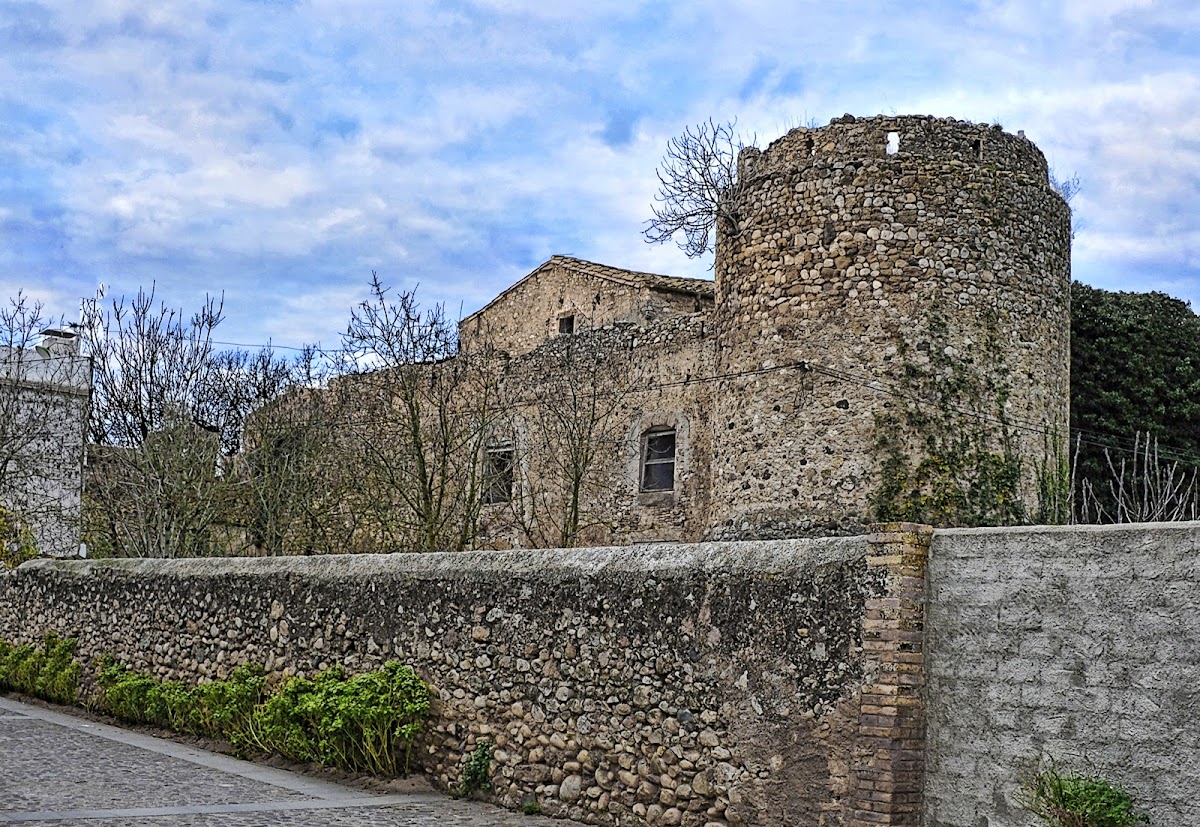
Connecting these two wall sections at the northeast corner is the Prison Tower, the only one of the castle’s original three towers still standing. This tower is circular with a sloping base designed to strengthen its foundation and resist attacks. A door, opened relatively recently at ground level, provides access, and a brick window is located on its southern side. The tower’s upper battlements, which originally allowed defenders to observe and shoot, include remnants of brick-built loopholes. These defensive features highlight the tower’s military function. The other towers, two circular and one square, which were once part of the complex, were destroyed during the early 19th century and do not survive today.
Nearby sites