Burg Hachen: A Medieval Hill Castle in Sundern, Germany
Visitor Information
Google Rating: 4.2
Popularity: Low
Country: Germany
Civilization: Medieval European, Modern
Site type: Military
Remains: Castle
History
Burg Hachen is a medieval hill castle situated above the district of Hachen in the municipality of Sundern, Germany. It was established around the year 1000 by the local nobility who played important roles in the region during the early Middle Ages.
The castle originally belonged to Count Ezzo and his family, known as the Ezzonen, who were influential in the Rhineland during this period. Over time, ownership changed hands to several noble families, including the Counts of Dassel and later the Counts of Arnsberg. In 1080, Count Kuno of Beichlingen transferred control of Burg Hachen to the Archbishop of Cologne. The archbishop, exercising ecclesiastical and political power, then granted the castle as a fiefdom to the Counts of Dassel. This arrangement lasted until 1368 when, following the sale of the County of Arnsberg, the castle returned to the direct authority of the Archbishopric of Cologne.
Shortly after this transfer, around 1371, Burg Hachen served as the residence for Anna, the last Countess of Arnsberg, during her widowhood. However, she later chose to live at Burg Wildshausen instead, leading to a decline in the castle’s political significance from the 15th century on. In subsequent centuries, the property passed through several noble families, including the von Wrede, Ketteler, von Thülen, von Ledebur, and von Fürstenberg lineages, reflecting changes in regional aristocratic ownership rather than military or administrative prominence.
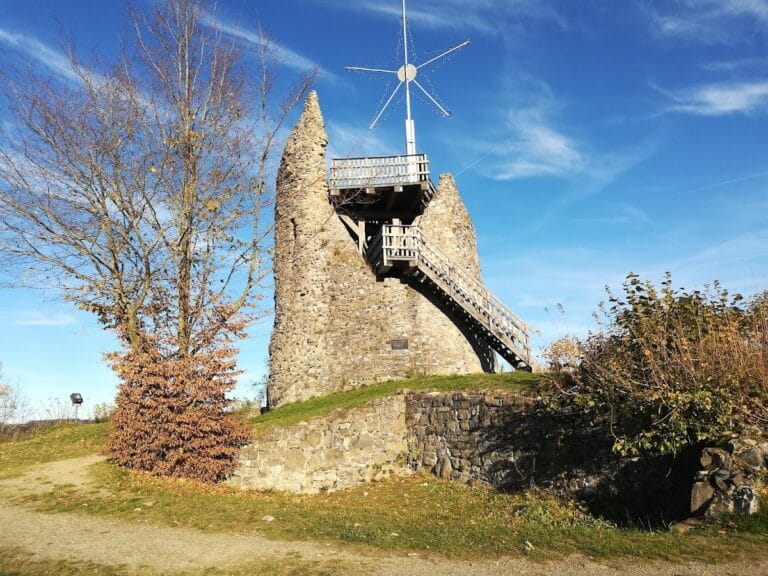
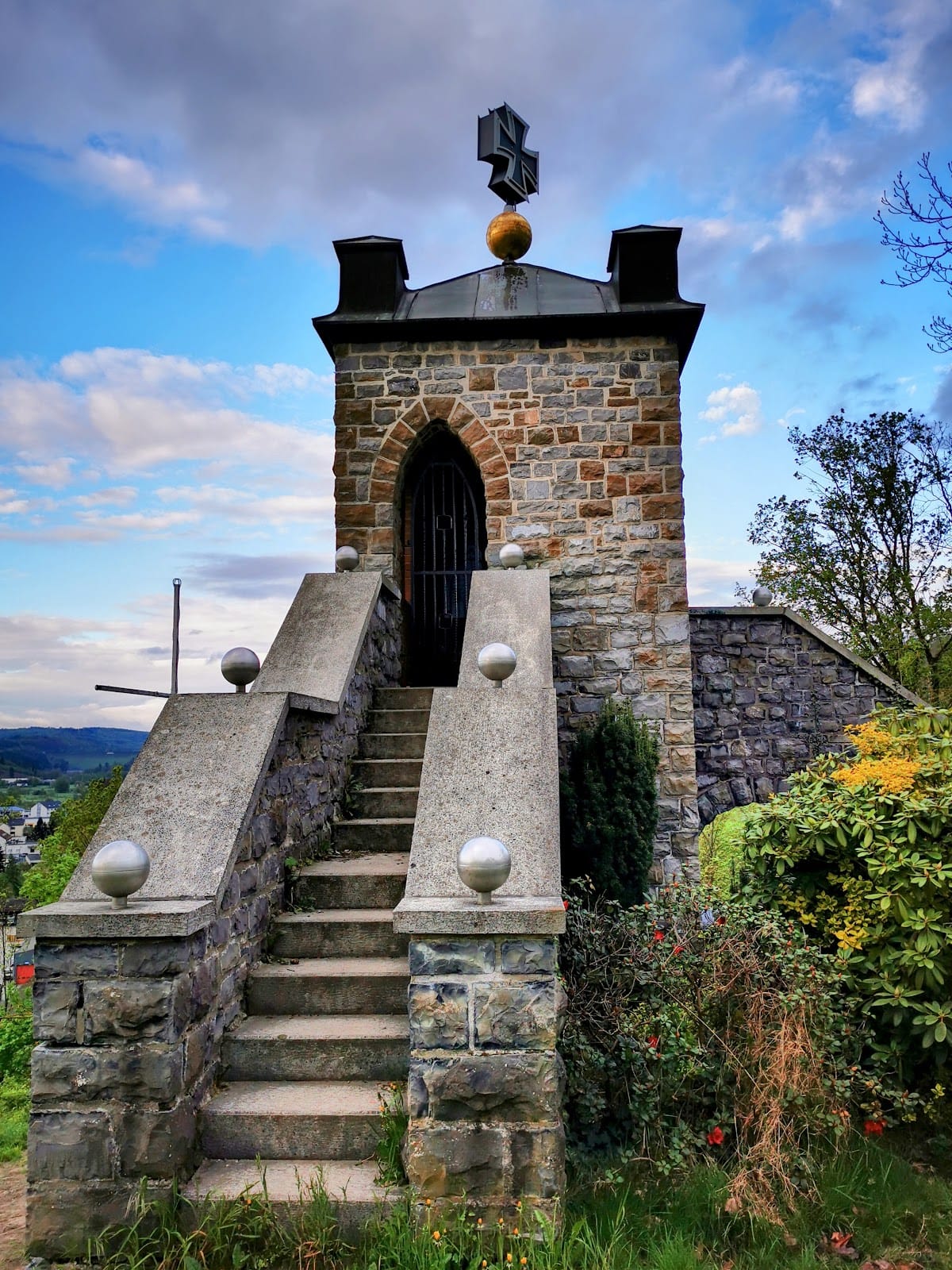
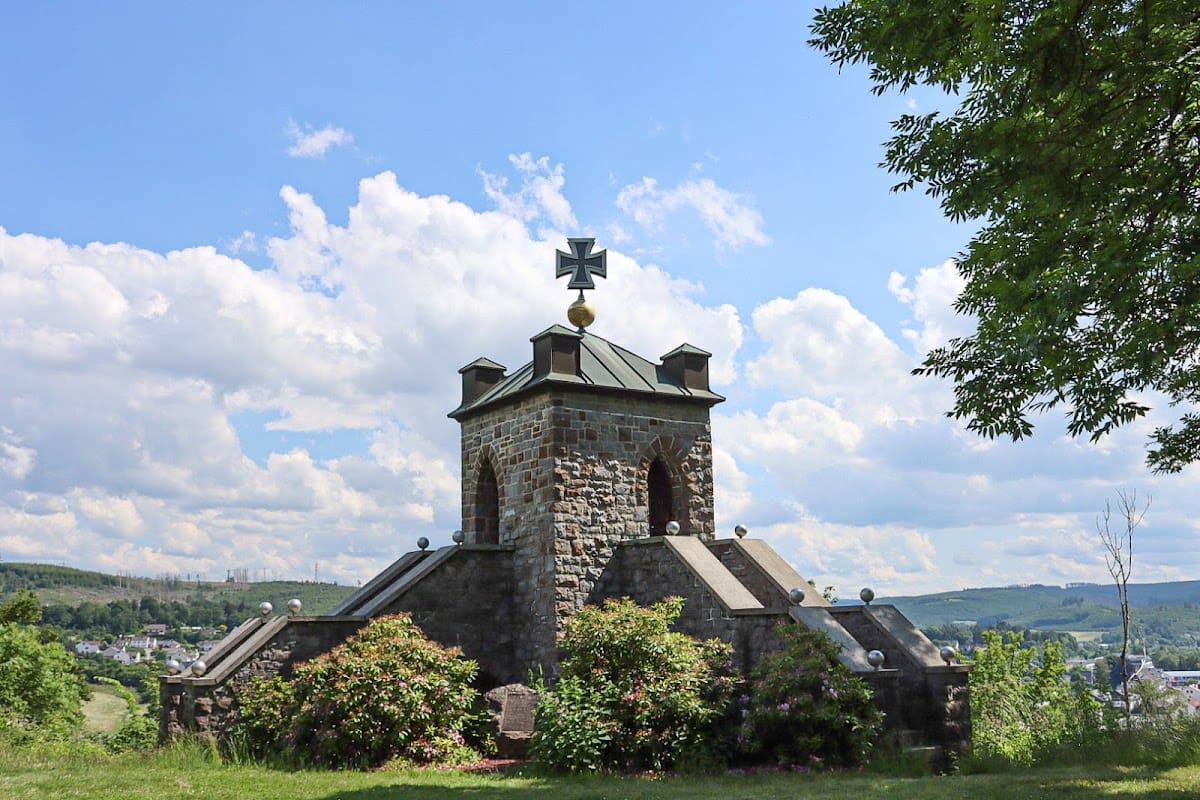
By the 19th century, Burg Hachen ceased to function as a noble seat and entered municipal possession in 1839 under the community of Hachen. A war memorial was erected near the castle ruins to honor local soldiers and inaugurated on August 3, 1924. While the castle’s history through the medieval period is documented through these recorded transfers and uses, detailed building phases, especially from the 15th century onward, remain sparse. Archaeological examinations conducted in the 20th century have helped illuminate aspects of its development and transformation over time.
Remains
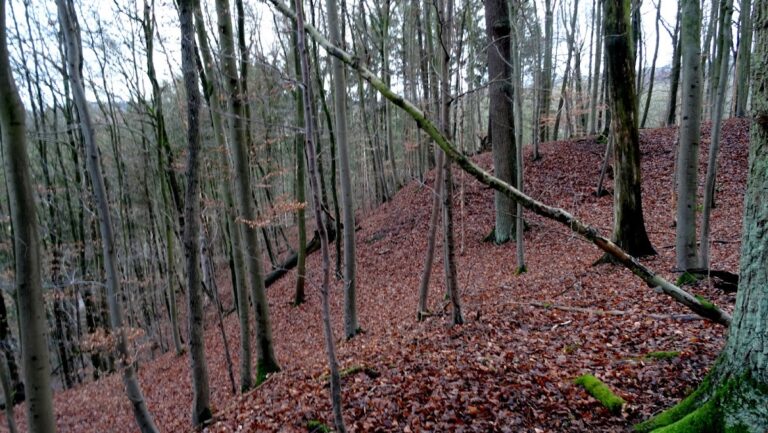
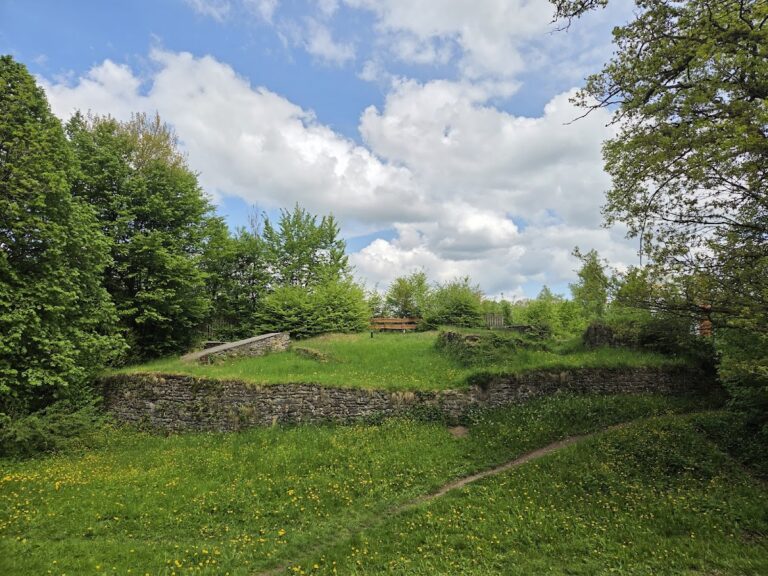
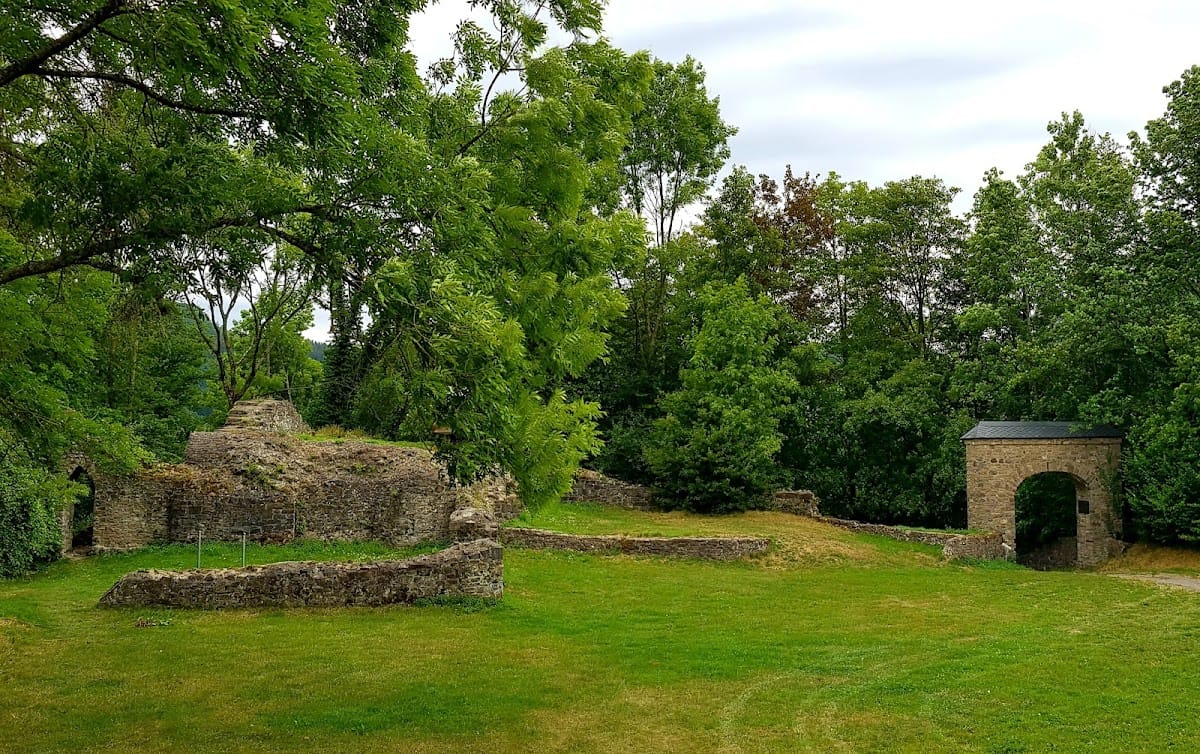
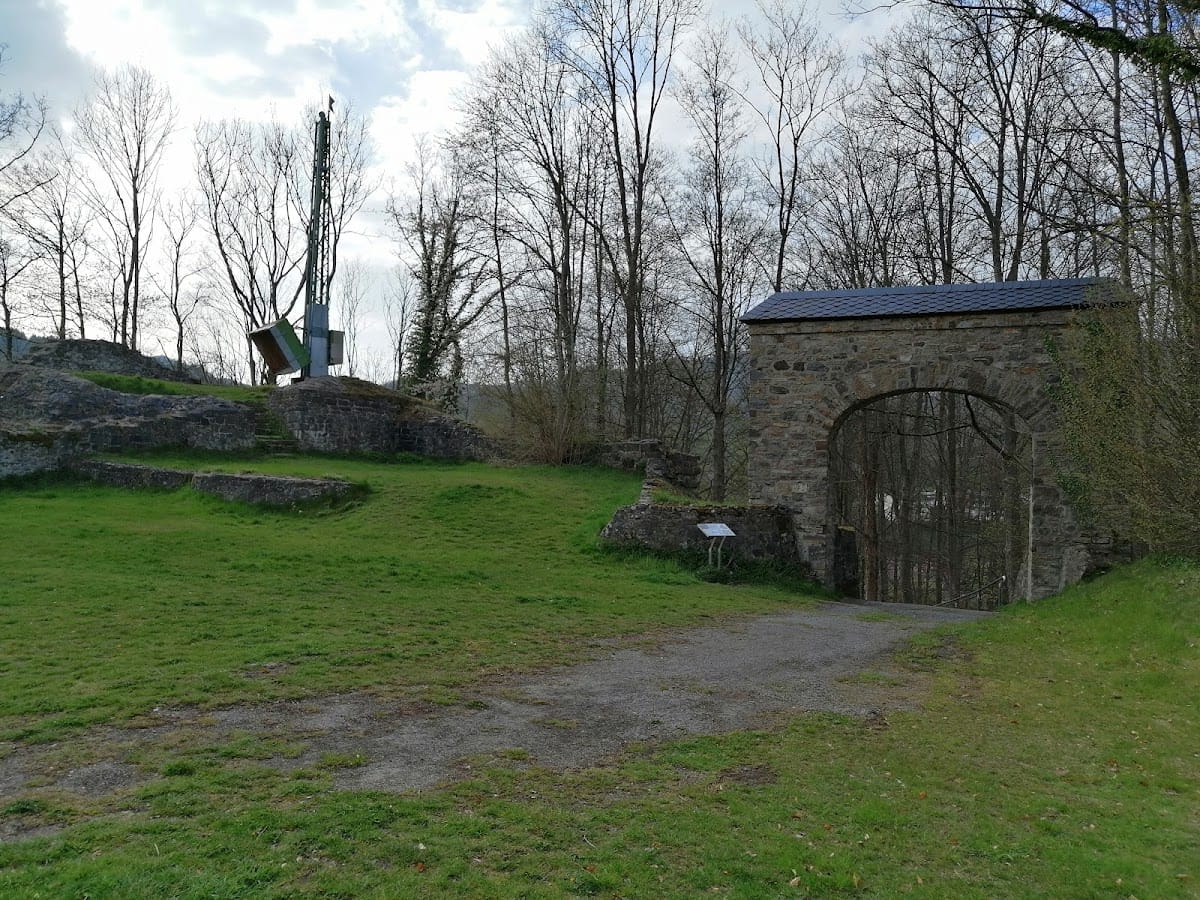
Burg Hachen occupies a hilltop site featuring a main fortified area that measures approximately 40 by 60 meters. This main compound is positioned on a prominent elevation, while below it lies a lower outer bailey situated on a more level plateau. This two-tiered layout reflects typical medieval defensive strategies where an upper stronghold was supported by additional defensive works down the slope.
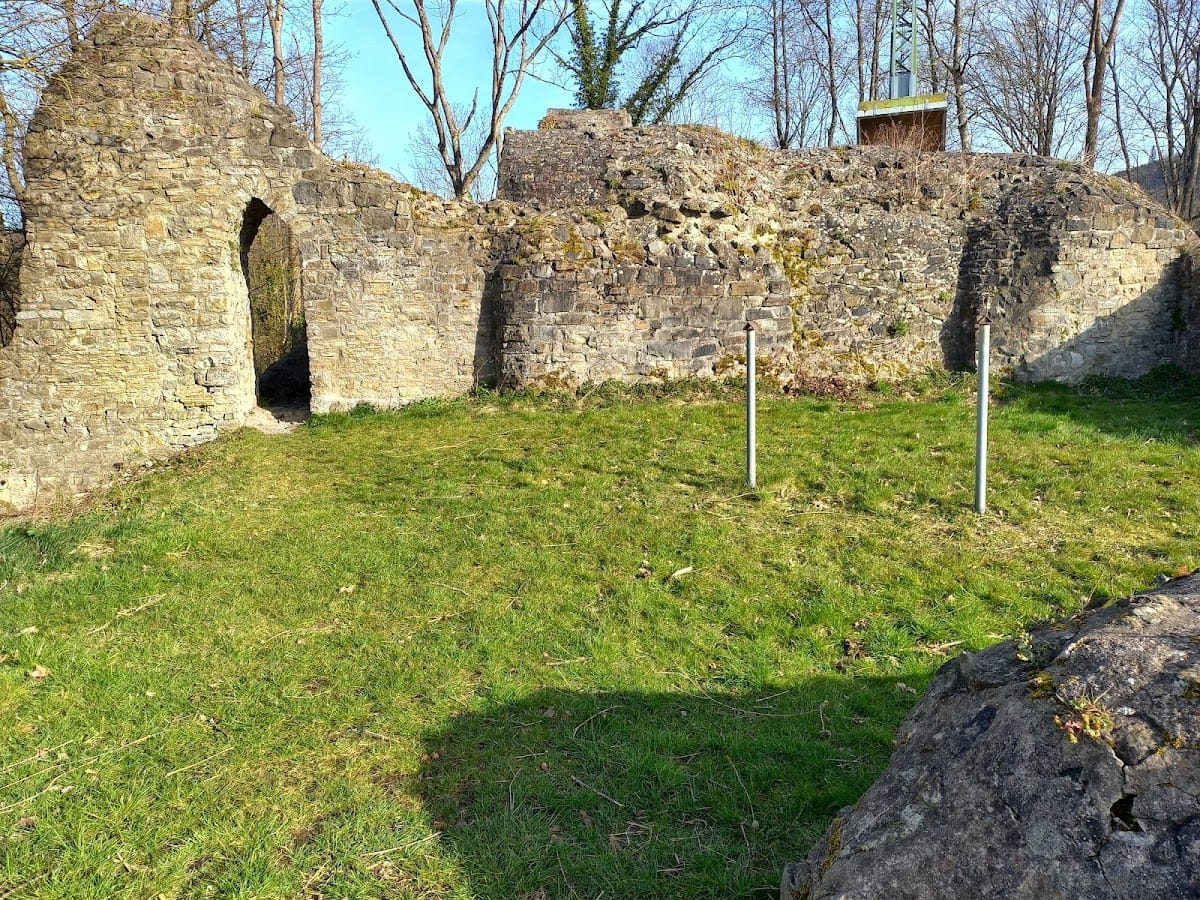
Excavations have revealed that the castle’s most vulnerable side, the northern approach, was secured by a substantial shield wall. This defensive barrier was roughly two meters thick, designed to protect the complex from attacks originating from that direction. Behind this imposing wall once stood a round tower approximately eight meters in diameter. This tower may have functioned as a bergfried, a type of strong, often freestanding tower used primarily for defense and refuge rather than regular habitation.
In a later building phase, the original round tower was replaced by a trapezoidal structure featuring thick walls. This change in form and construction suggests adaptations in the castle’s defensive architecture responding to evolving military needs or structural issues. Additional buildings identified within the castle enclosure likely served residential or service functions, though specific details of these structures have not been fully elaborated.
Today, the remains of Burg Hachen lie within a protected area established as a nature reserve in 2019, encompassing 2.5 hectares around the ruin. This sanctuary preserves not only the historical fabric of the site but also its natural environment, including a diverse community of snails and other native fauna. Conservation and any activities in the area are managed in tandem with local nature protection authorities to ensure the continued preservation of both castle and habitat.
Nearby sites