Burg Bocksberg: A Medieval Castle in Laugna, Germany
Visitor Information
Google Rating: 4.6
Popularity: Very Low
Country: Germany
Civilization: Medieval European
Site type: Military
Remains: Castle
History
Burg Bocksberg is located in the municipality of Laugna, Germany. It was established by the medieval German nobility, likely in the early 13th century, as the home of the Lords of Bocksberg. This noble family is recorded in documents from 1231 until 1322, after which they probably died out during the 14th century.
Following the extinction of the original lords, the castle came under the control of the Marschalken von Bocksberg family, who served as vassals to the Prince-Bishopric of Augsburg. During their tenure, the castle experienced significant damage in 1378 due to military action. The following year, ownership shifted to the Augsburg patrician family Rehm, establishing a new phase of stewardship.
In 1462, the lordship changed hands again through marriage when Andreas Rieter von Kornburg joined the family. That same year, the castle suffered destruction amidst the conflict known as the Second Cities War. Over the next century and a half, Burg Bocksberg passed through several influential families. In 1542, the property transferred to Georg von Stetten from another Augsburg patrician family. Then, in 1613, it was owned briefly by Schertlin von Burtenbach, who soon sold it along with nearby estates to the prominent Fugger family of Augsburg.
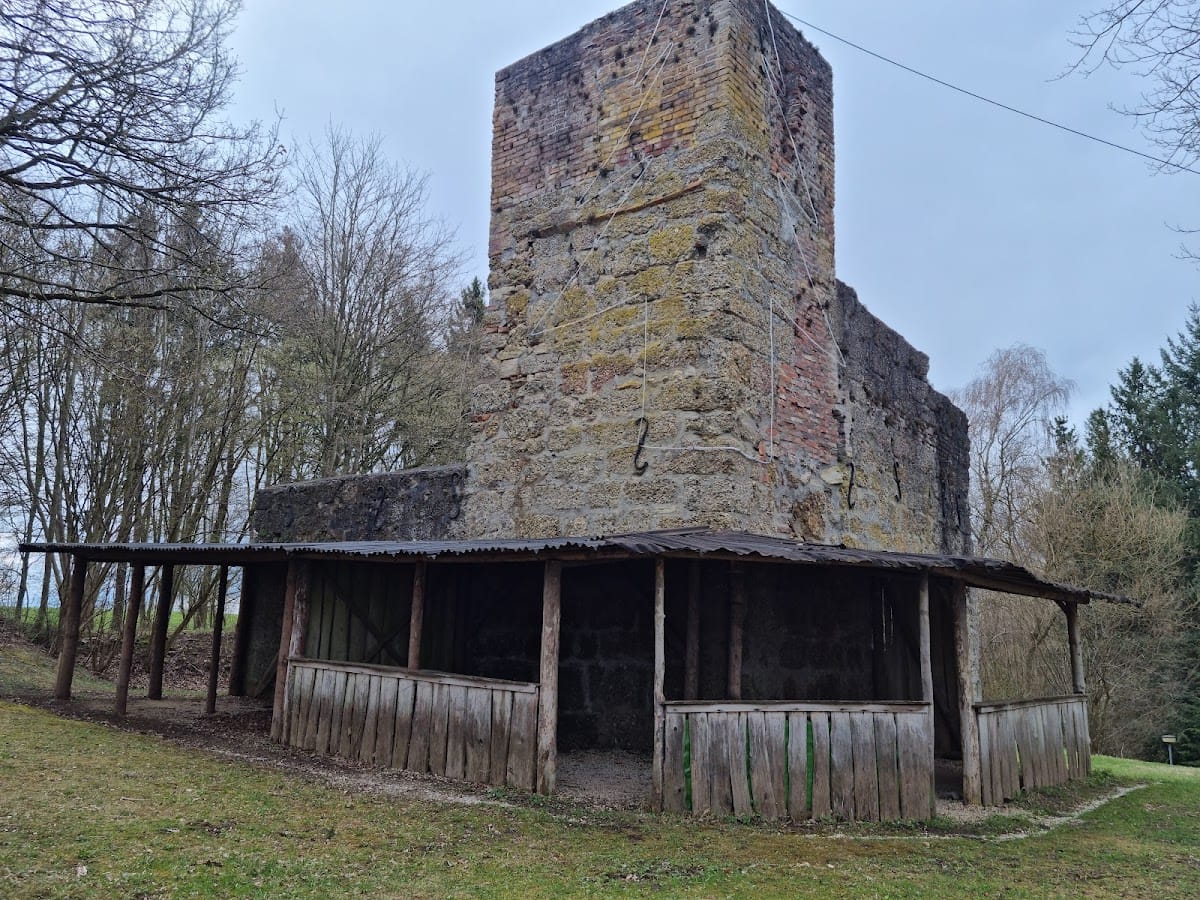
The castle endured major damage during the Thirty Years’ War in the early 17th century and was not rebuilt after this period. From 1660 onward, the Fugger family’s foundation administered the estate, managing the holdings from the nearby village of Laugna rather than residing at the castle itself. In the 20th century, following World War II, the site was adapted for cultural events with the installation of electrical facilities. The medieval residential tower, or bergfried, was restored at this time but is now surrounded by temporary wooden structures used for festivals.
Remains
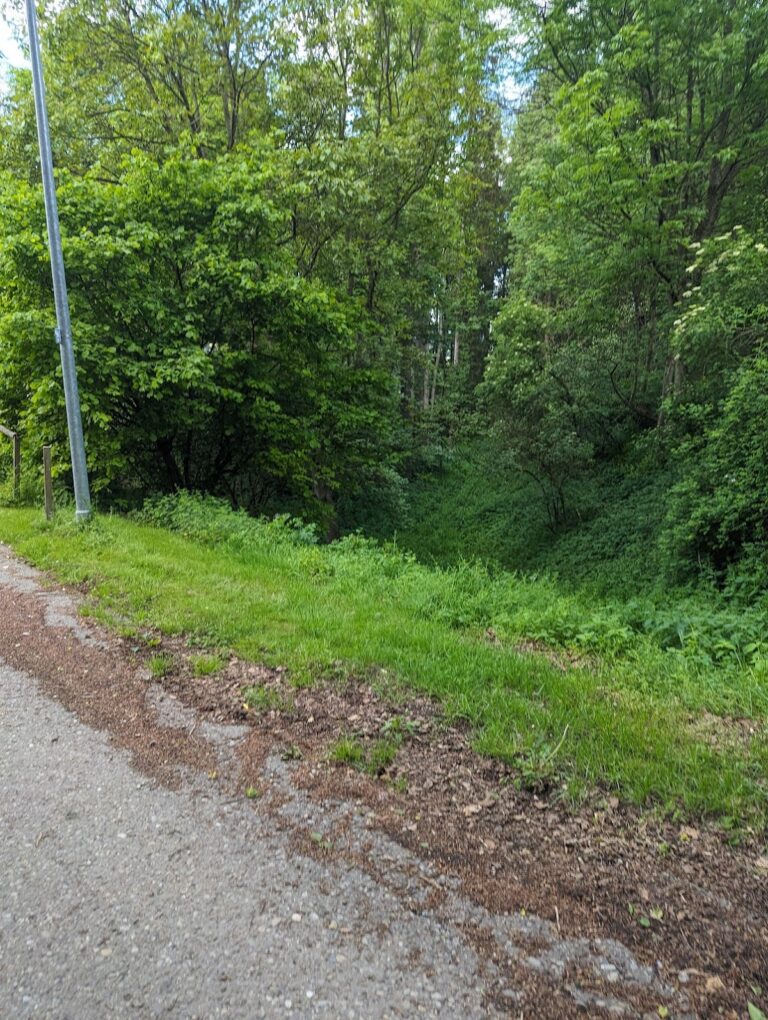
Burg Bocksberg is situated atop a wooded ridge overlooking the village of Bocksberg in the valley of Laugnatal. Its defensive position includes a terraced conical hill forming the main castle area, which is isolated from the surrounding land by a deep, curved ditch known as a neck ditch. On its northern side, the site benefits from a natural steep slope that would have hindered attackers.
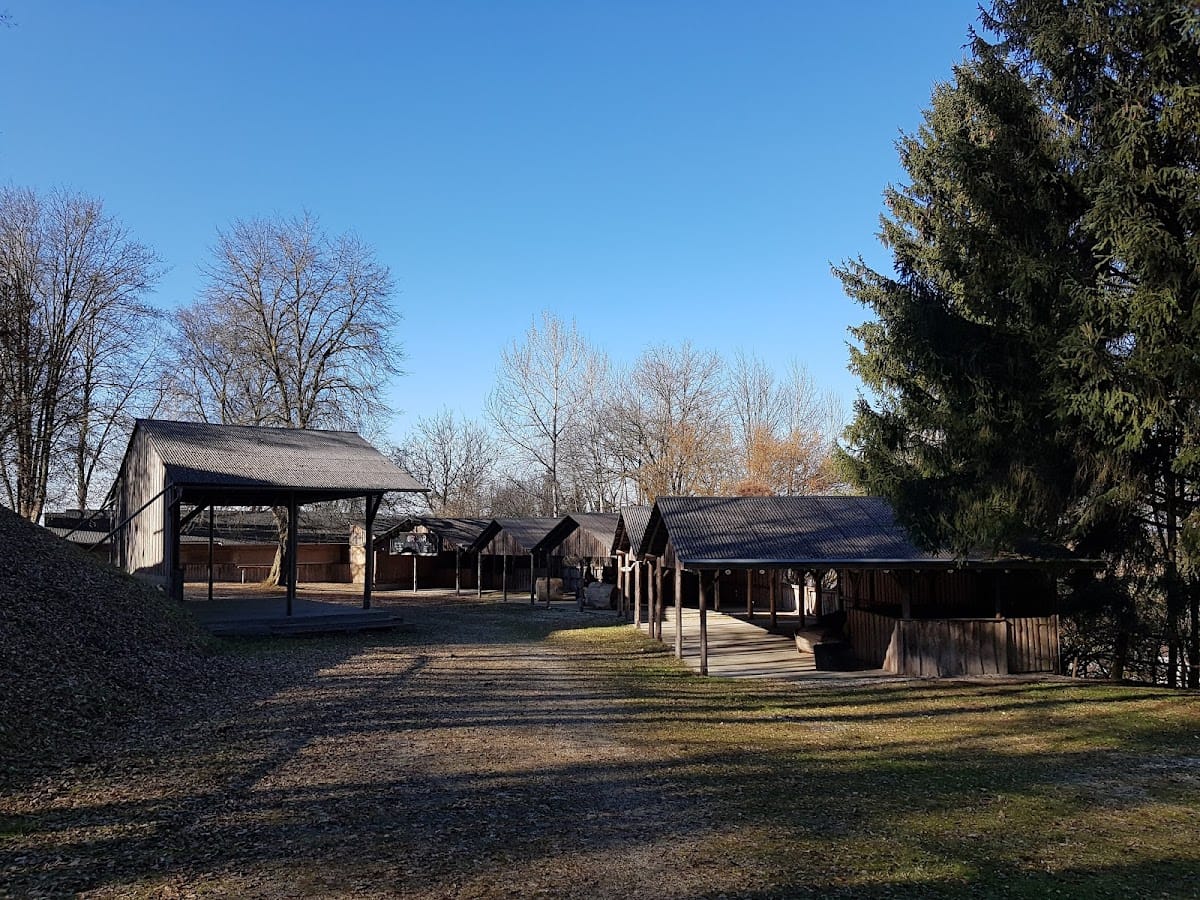
The main hilltop is complemented by a large lower terrace to the north and east, which historically housed the outer bailey, an enclosed courtyard typically used for stables, workshops, and other ancillary buildings. Today, this area is flattened and hosts several wooden stalls and a stage constructed for festival purposes. Part of the outer bailey extends into the neck ditch, where a tall wooden palisade now marks the entrance.
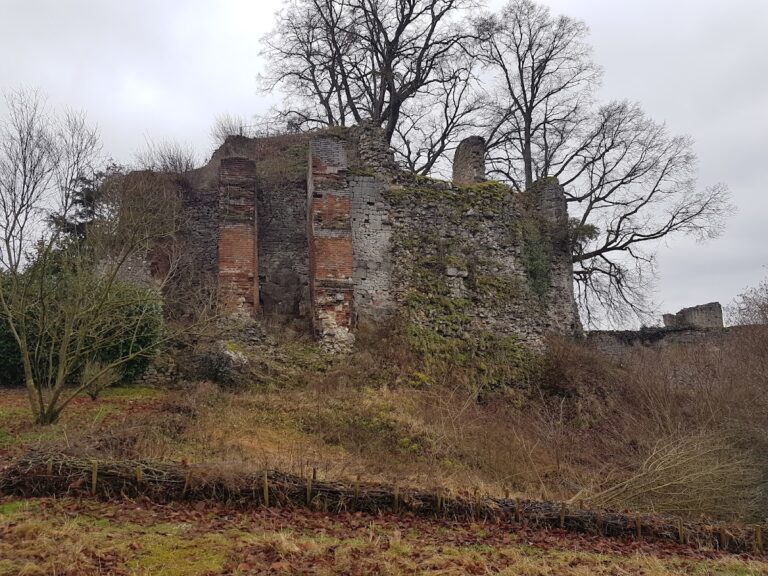
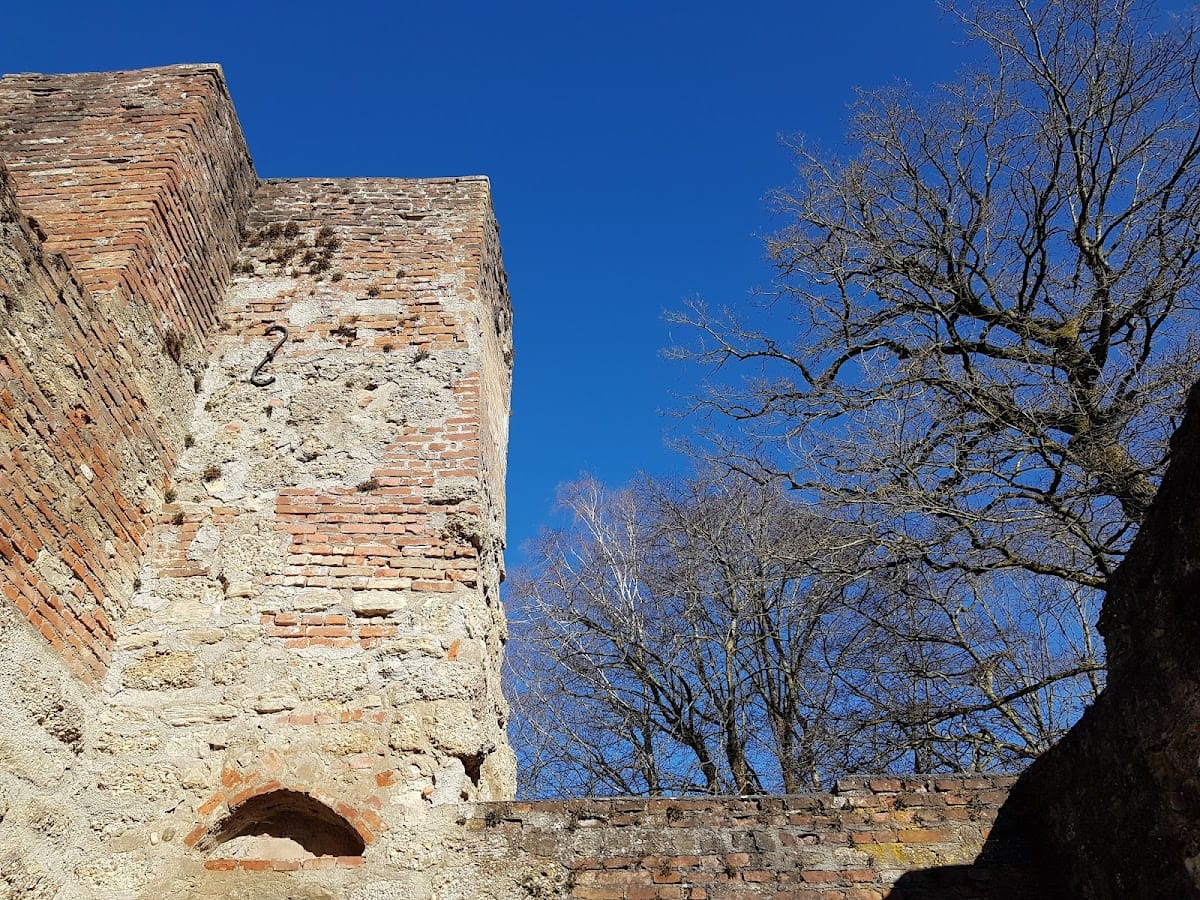
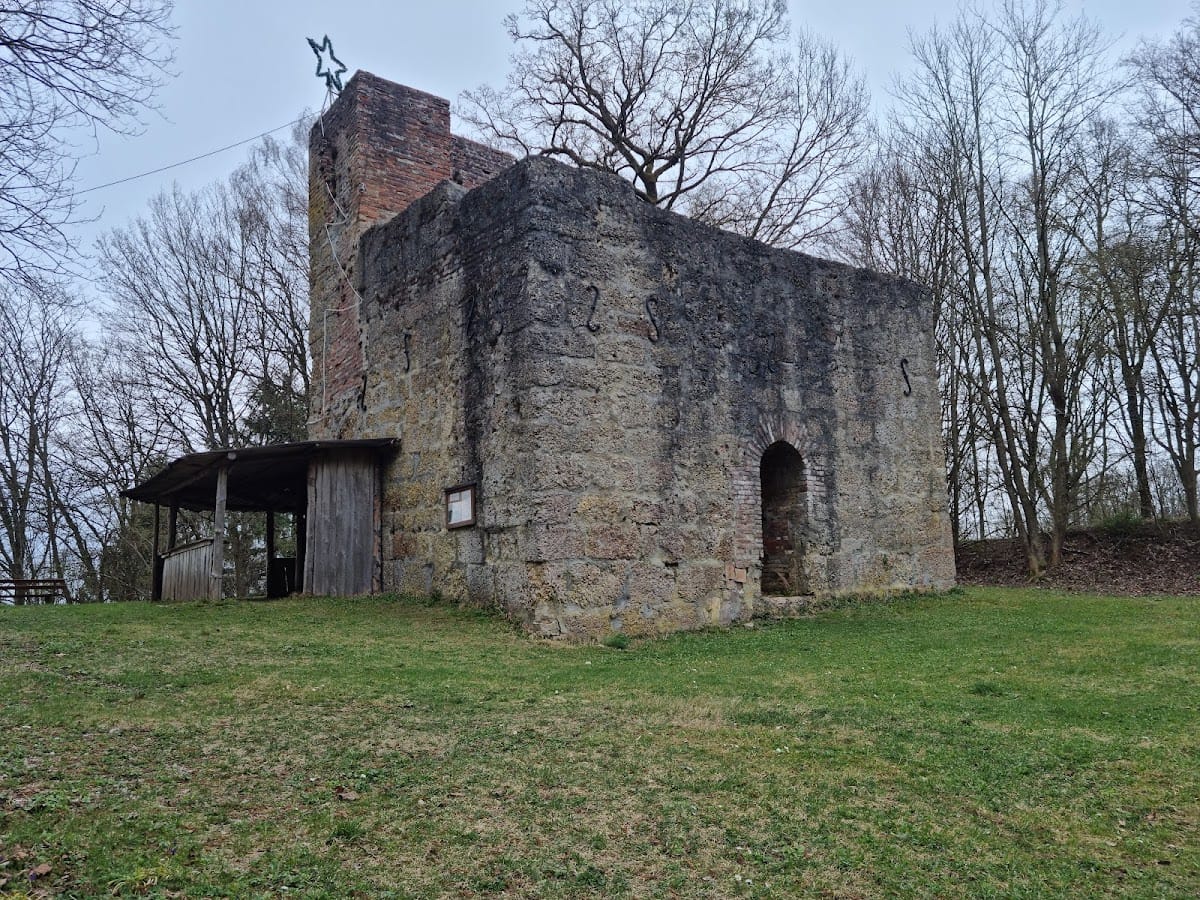
At the core of the castle, the remains of the bergfried— a tall, square residential and defensive tower — still stand. Constructed from smooth blocks of Nagelfluh, a type of conglomerate rock, the tower’s base measures about 9.25 meters on each side with walls approximately 1.75 meters thick. The northeast corner of this structure rises roughly eight meters high, with the upper sections rebuilt using brick masonry as part of restoration efforts.
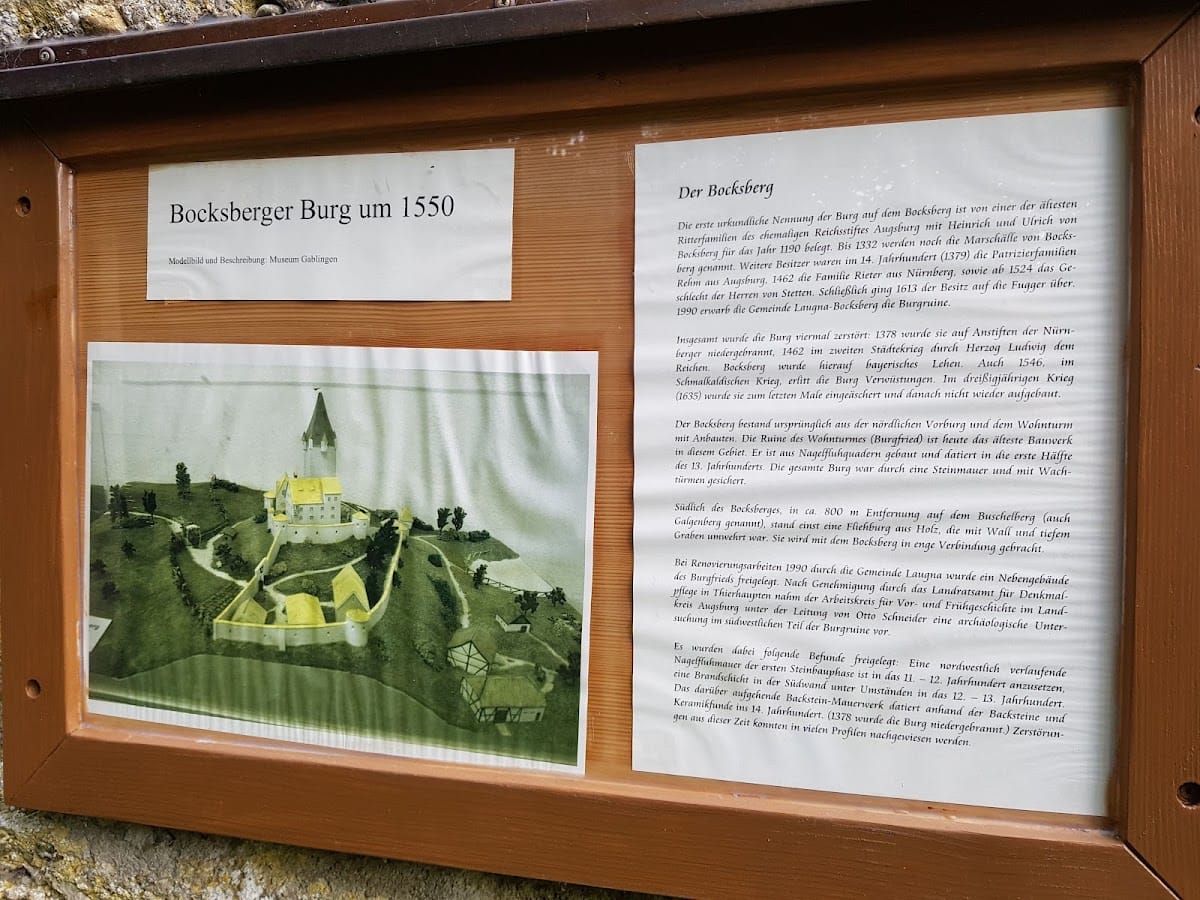
Historical maps from the mid-16th century depict the castle as comprising two main houses with pitched, gabled roofs alongside a massive bergfried crowned by a pointed roof with small battlements. These images provide valuable insight into the castle’s appearance before its decline.
Approximately 200 meters to the south on the slope stands a large medieval motte called Buschelberg. This raised earthwork structure may have served as an earlier fortress or the dwelling of a subordinate lord under the original owners of Burg Bocksberg. This motte appears on the same historic maps, suggesting its close association with the main castle complex during the medieval period.
Nearby sites