Château Barrière: A Ruined Medieval Castle in Périgueux, France


Site at a Glance
- Rating
- 4.2
- Popularity
- Very Low
- Country
- France
- Primary era
- Medieval
- Eras represented
- Classical, Medieval, Early Modern
- Civilizations
- Roman
- Site type
- Military
- Remains
- Castle
On this page5 sections
History
Origins in the fortified Cité
Château Barrière is a ruined castle in Périgueux, France, whose origins date to the twelfth century and whose construction developed between the twelfth and sixteenth centuries. It was built on the late-third-century Gallo-Roman enceinte, or defensive city wall, that protected the Cité, the historic fortified center of Périgueux. The Cité was one of the two urban nuclei, together with Puy-Saint-Front, around which the city developed.
During the thirteenth century, the castle formed a fief of the Barrière family, whose name it preserves. Its position within the historic Cité connected the medieval stronghold with an earlier defensive framework dating from the Roman period in Gaul.
Destruction and preservation
In 1575, Huguenot forces partially destroyed Château Barrière during the religious conflicts that affected France in the sixteenth century. The castle subsequently remained in ruins. The city of Périgueux owns the ruins, which have been listed as a historic monument since the 1862 designation list. The site is also indexed in the Mérimée architectural-heritage database under reference PA00082726.
Remains
Walls and towers
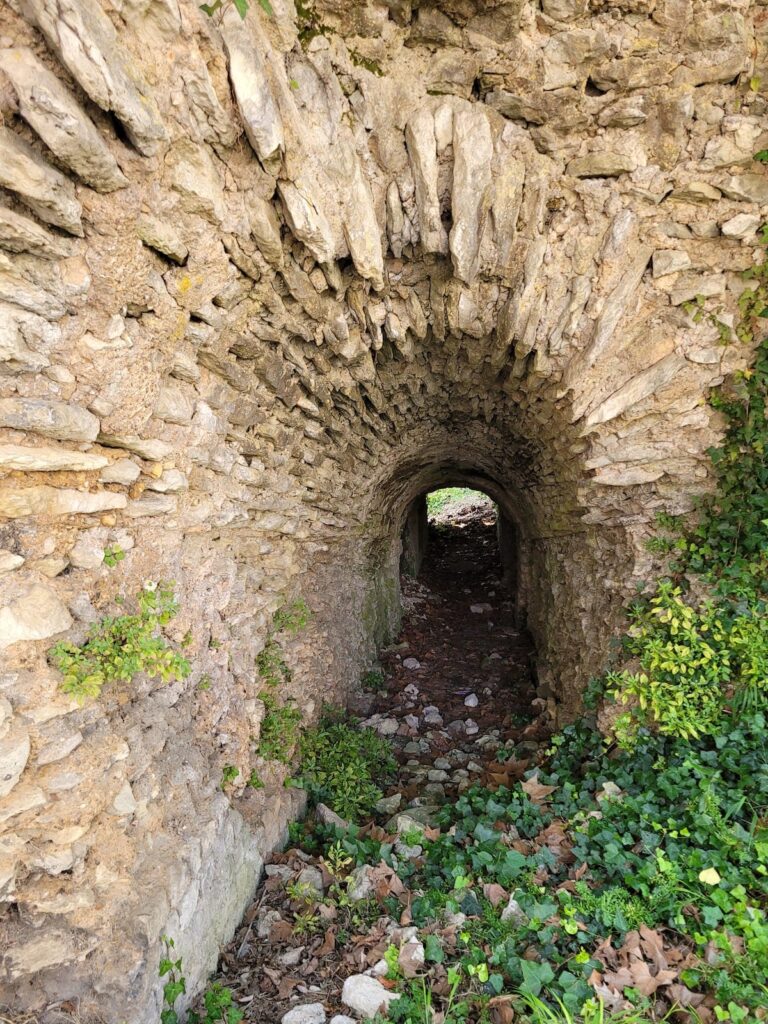
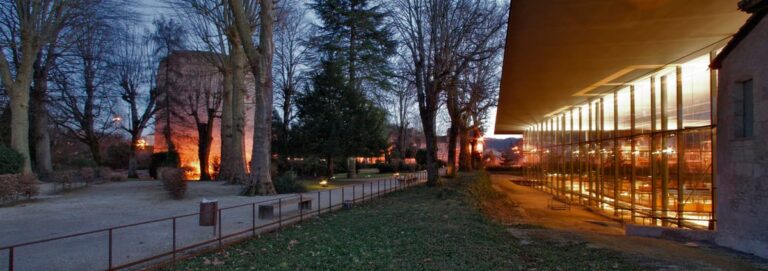
Château Barrière stands on rue de Turenne, less than 200 metres from the amphitheatre and the church of Saint-Étienne-de-la-Cité. Its western walls rest on the former Gallo-Roman city wall and incorporate imposing stone blocks. Other surviving walls are pierced by mullioned windows, which are divided into separate openings by vertical stone or masonry bars. Two towers remain on the eastern and southern sides. The eastern tower is truncated and contains a doorway with Flamboyant decoration, a late Gothic style known for elaborate, flame-like tracery and rich ornament. The castle survives as a ruin, with Gallo-Roman remains incorporated within the site.