Belsay Castle: A Medieval Fortified Residence in Northumberland, England
Visitor Information
Google Rating: 4.7
Popularity: Medium
Official Website: www.english-heritage.org.uk
Country: United Kingdom
Civilization: Early Modern, Medieval European
Site type: Military
Remains: Castle
History
Belsay Castle is situated in the village of Belsay, in Northumberland, England, and was established by the medieval English during the 14th century. It originally served as a fortified residence for the Middleton family, a notable local lineage.
The castle’s earliest and main structure, a large tower, was constructed around 1370. This tower functioned primarily as a defensive stronghold and home for the Middletons. In 1614, the estate saw significant development when Thomas Middleton expanded the living quarters by attaching a new manor house to the existing tower. This addition marked a transition from purely defensive architecture to more comfortable domestic arrangements, reflecting changing needs and social conditions of the early 17th century. Further enlargement occurred in 1711 with the addition of a west wing to the manor house.
In the early 19th century, the castle ceased to serve as the family’s principal residence. Sir Charles Monck, a later family member, built Belsay Hall nearby, representing a modernized housing choice. Subsequently, the castle’s interiors were mostly emptied, and the building’s purpose shifted. By the late 19th century, particularly in 1872, Sir Arthur Middleton undertook the partial demolition of the 1711 west wing and carried out significant alterations to the remaining structures. Following these changes, the castle was repurposed mainly as a decorative feature or folly, used for social events such as garden gatherings and aristocratic entertainments rather than as a home.
Today, Belsay Castle holds official protection as a Scheduled Monument and a Grade I listed building, acknowledging its historical importance and heritage value.
Remains
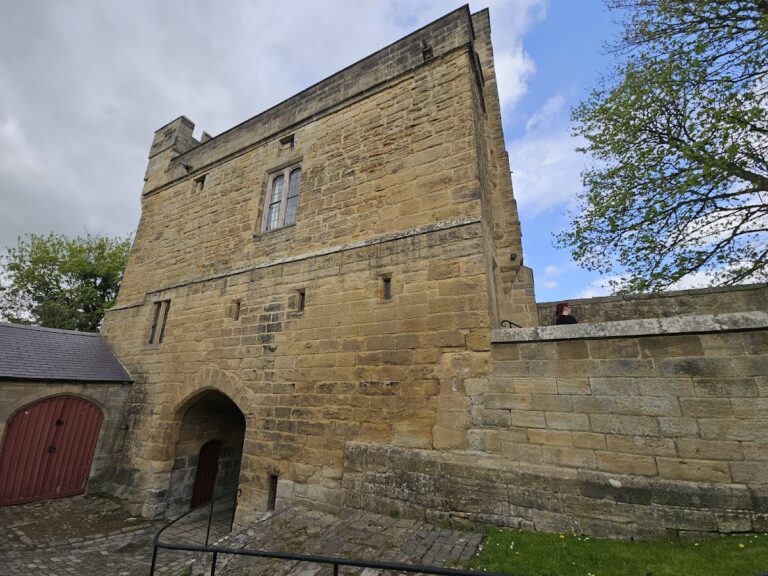
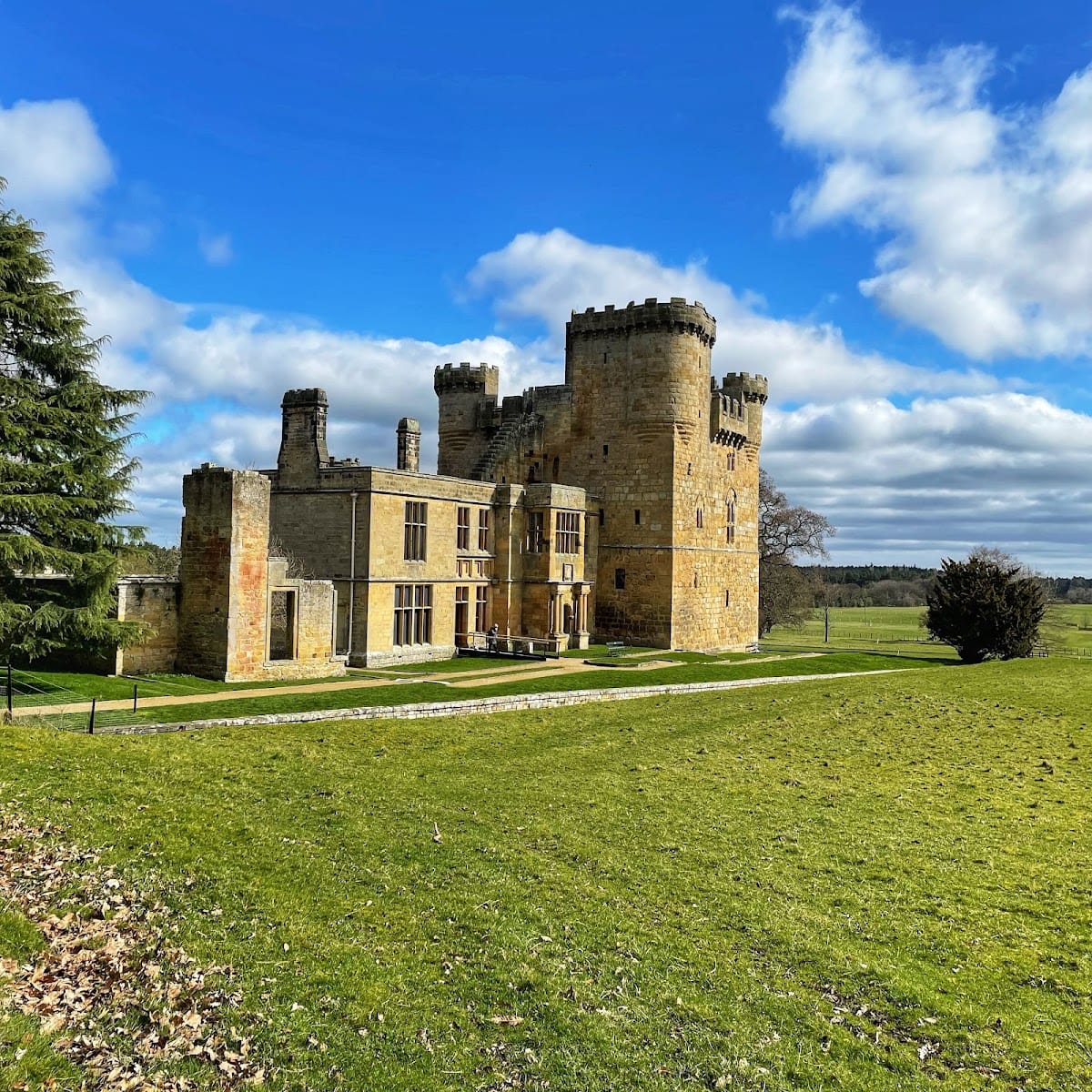
Belsay Castle is dominated by a large, rectangular pele tower rising three storeys high. A pele tower refers to a small fortified keep typical in the border regions of England and Scotland, built to provide strong defense during tumultuous periods. This tower, dating to around 1370, is constructed with stone and features rounded turrets at its corners topped by battlements. These battlements, with their crenellated parapets, served defensive purposes by allowing defenders to shield themselves while observing or fighting off attackers.
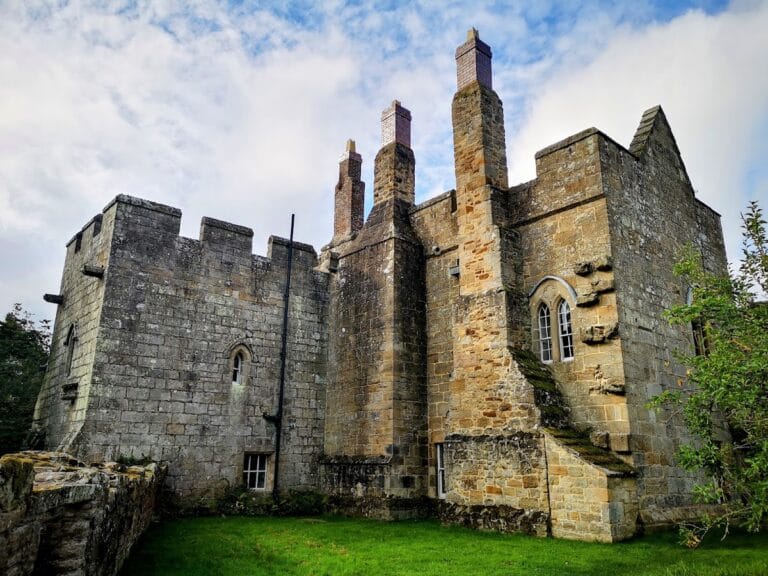
Attached directly to the tower is the manor house, built in 1614 by Thomas Middleton. This section represented a move towards more comfortable and spacious living quarters, moving away from the tower’s fortress-like character. In 1711, the manor house was expanded with a west wing. However, most of this wing was removed in 1872 under the direction of Sir Arthur Middleton, who also remodeled the remaining parts of the house, altering its late Renaissance form.
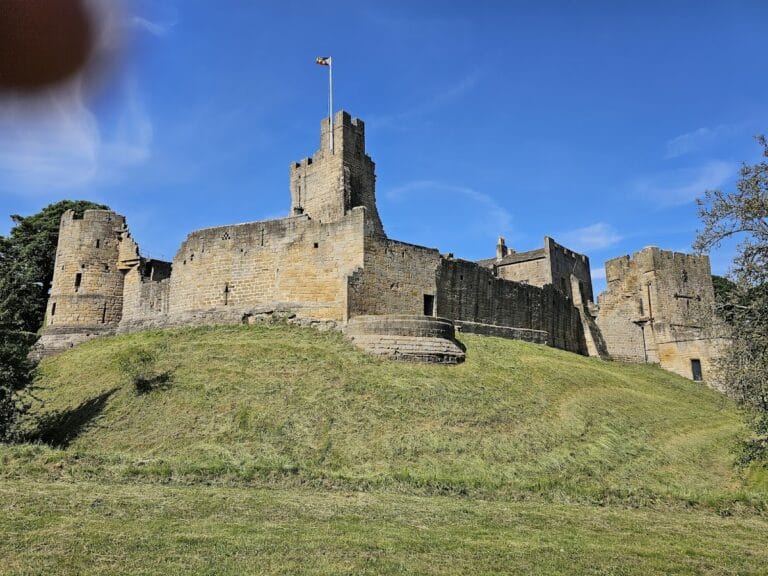
Set on rising ground at an elevation of approximately 133 meters above sea level, the castle overlooks gently sloping terrain that descends steeply to the east. The surrounding land is primarily open grassland, giving the castle prominence within the landscape. Nearby, the population density is moderate, with about 78 residents per square kilometer.
The castle’s interior arrangements have been largely stripped out, a reflection of its transition from a lived-in residence to a decorative folly. While the external stone structures remain in situ and largely intact, the loss of interior fittings marks the building’s change in function and status over time.
Nearby sites