Ballyheigue Castle: A Historic Mansion and Site in Ireland
Visitor Information
Google Rating: 4.5
Popularity: Low
Official Website: www.ballyheiguecastlegolfclub.com
Country: Ireland
Civilization: Early Modern
Site type: Domestic
Remains: Palace
History
Ballyheigue Castle stands in the town of Ballyheigue in Ireland, originally erected on the site of an earlier residence dating back to the mid-18th century. The land was historically connected with the Mac an Chrosáin family, a bardic lineage from Leinster, before transferring ownership to the Crosbie family in the early 1700s.
The Crosbies, a prominent local family, developed the site significantly. Around 1809, notable architect Richard Morrison expanded the building, transforming it into a castellated mansion characterized by its crenellated parapet, lending it a castle-like appearance despite its function as a grand home. Members of the Crosbie family served in political and administrative roles, including as Members of Parliament for Kerry and as High Sheriffs for the county. The family maintained their association with Ballyheigue Castle into the early 20th century.
From the late 19th century, Ballyheigue Castle took on a more strategic role. Beginning in 1890, parts of the building were repurposed as a station for the Royal Irish Constabulary (RIC), the police force in Ireland under British rule. During the Irish War of Independence, British forces occupied the site in 1921, using it to detain hundreds of men. This military presence made the castle a target for Irish Volunteers, who attacked and set it ablaze on 27 May 1921. The fire was deliberately ignited by an officer in the Irish Republican Army (IRA) using petrol.
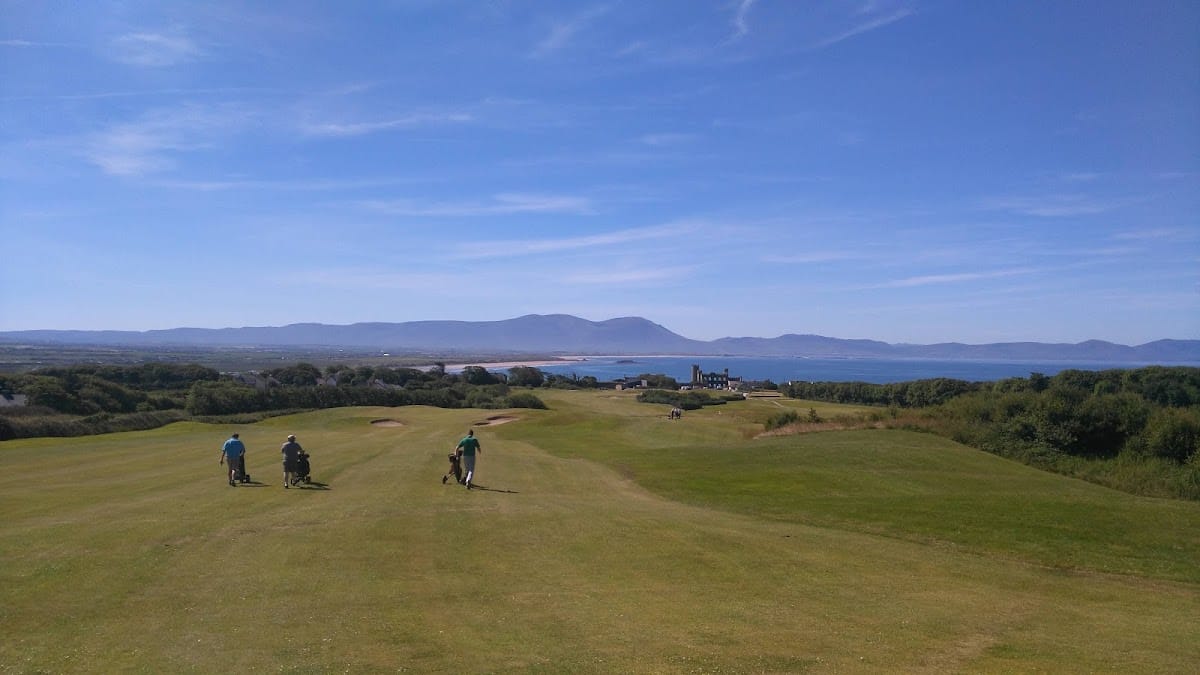
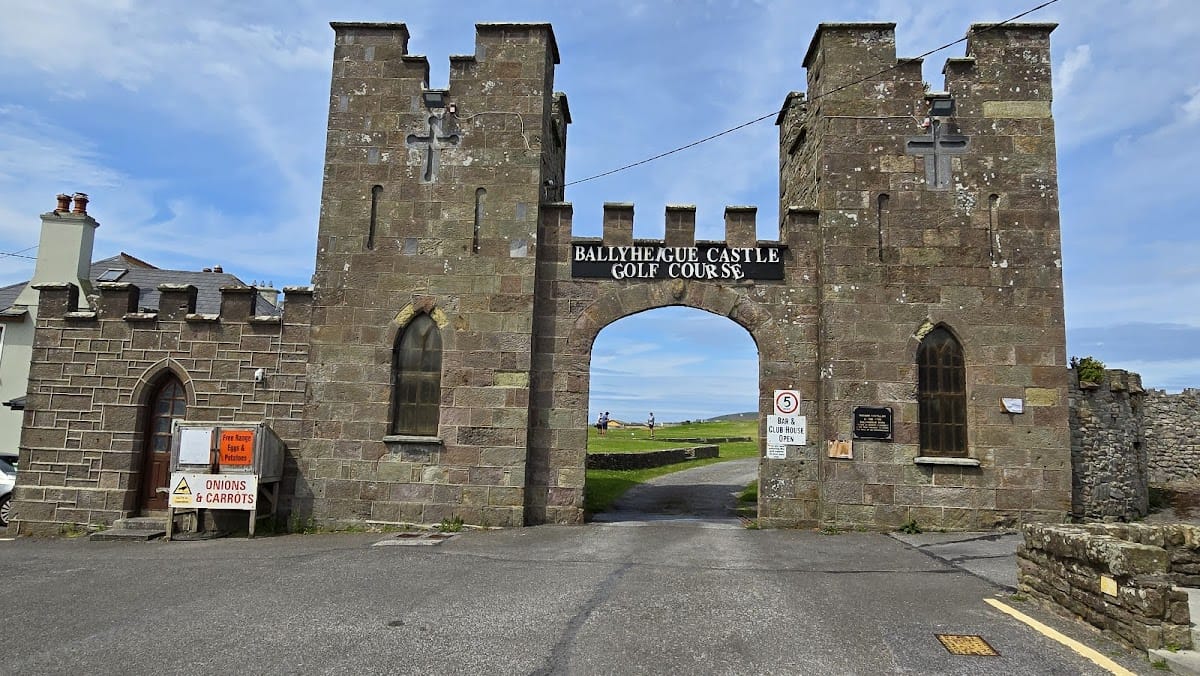
The castle had previously suffered fire damage in 1840, marking two major episodes of destruction during its history. Following the 1921 burning, legal proceedings arose concerning compensation and insurance related to the damages incurred during the British occupation and the subsequent attack. The building remained largely in ruins until part of the front elevation was reconstructed in 1975 and converted into apartments. Since 1998, the site forms part of the Ballyheigue Castle Golf Course, linking its historic grounds with new forms of use.
Remains
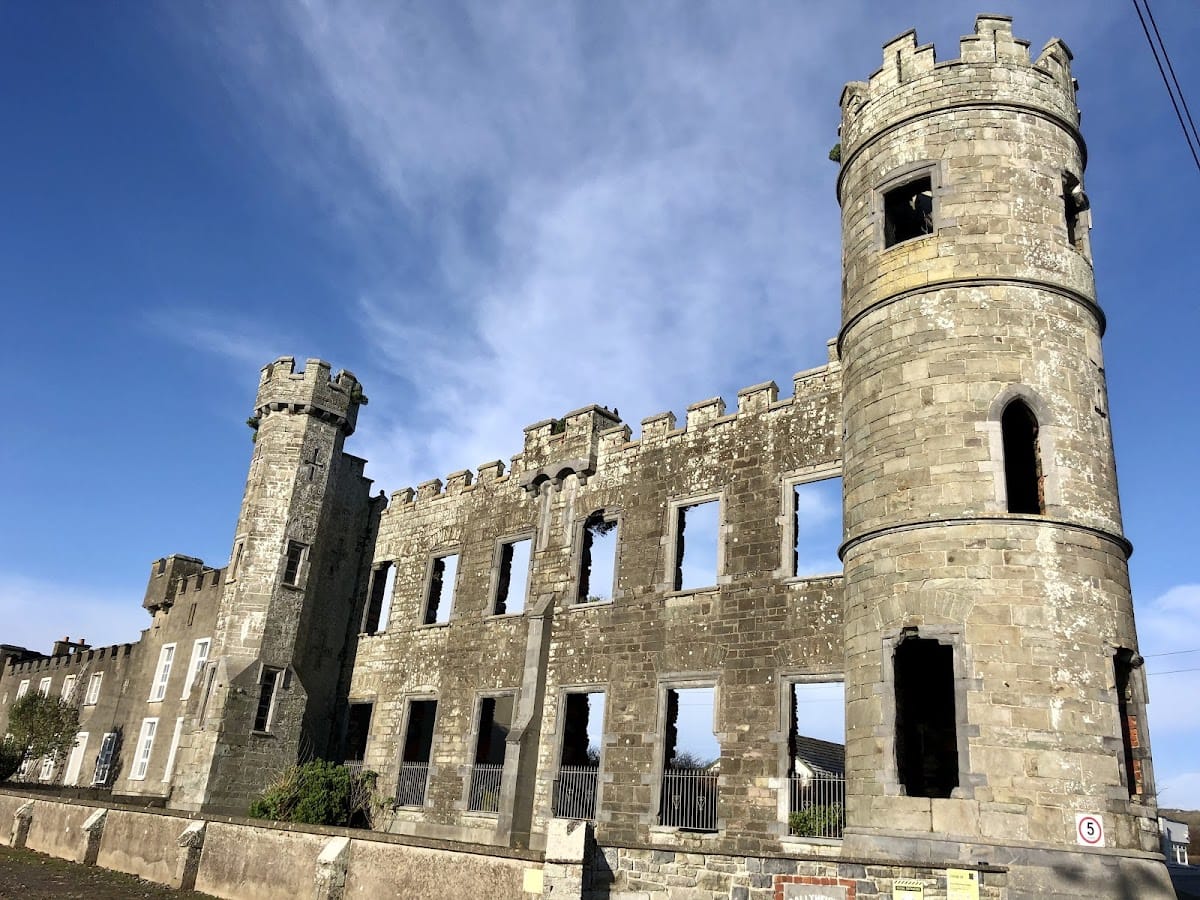
Ballyheigue Castle was originally designed as an impressive two-storey mansion oriented southward, featuring a main facade composed of six bays. The entrance was marked by two distinctive circular turrets at its corners, each rising three stories high yet limited to a single bay in width. A crenellated parapet crowned the structure, enhancing its castle-like silhouette, while the building was initially roofed with thatch. The overall style displayed Tudor-Gothic-Revival elements, particularly evident in its battlemented parapet, which created the illusion of a medieval fortress.
The castle incorporated part of the original house constructed in 1758, blending earlier fabric within its later expansion by Richard Morrison in the early 19th century. Its arrangement included an enclosed courtyard facing the main mansion, highlighting its role as a substantial private residence. Over time, the building’s function shifted, including adaptation for use as a jail and a police station during the early 20th century, reflecting its strategic importance during periods of conflict.
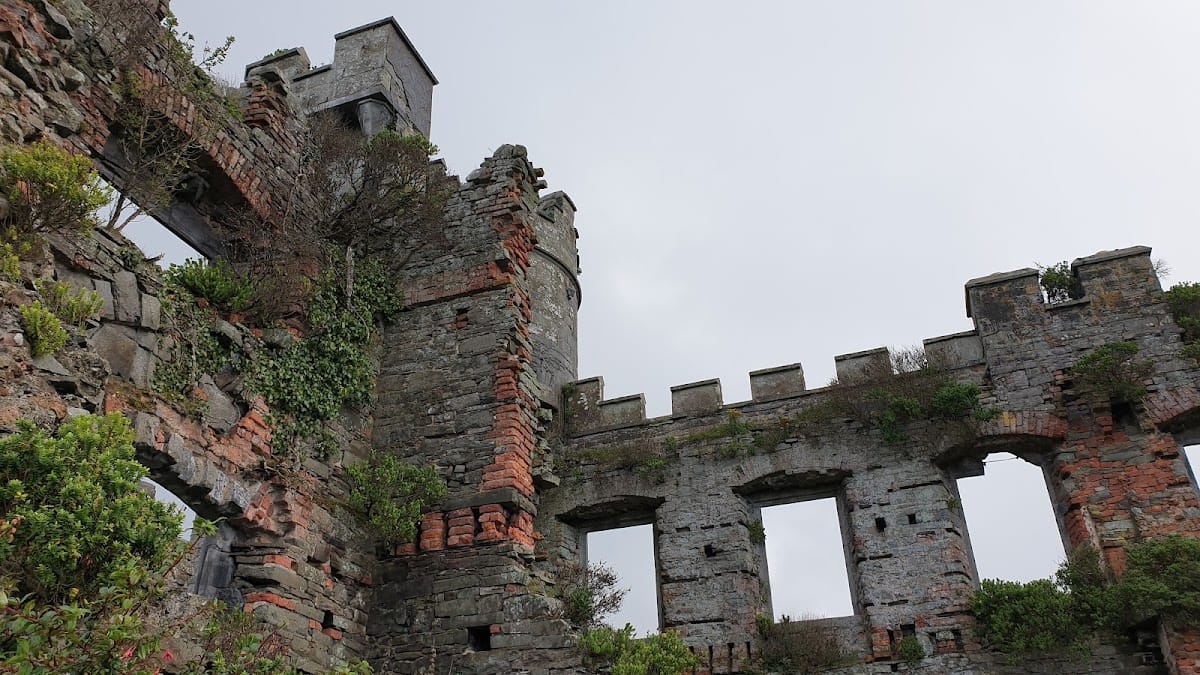
After the significant fire set in 1921, the castle was left largely devastated. Only a low section on the left side of the front elevation survived, which was eventually rebuilt and remodeled into residential apartments in 1975. Since then, this partial reconstruction has been integrated within a golf course established on the grounds of the former estate, preserving the location’s historical footprint amid new land use.
Nearby sites