Listowel Castle: An Anglo-Norman Stronghold in Ireland


Site at a Glance
- Rating
- 4.5
- Popularity
- Low
- Country
- Ireland
- Primary era
- Medieval
- External website
- Open
- Eras represented
- Medieval, Modern
- Civilizations
- Irish, Norman
- Site type
- Military
- Remains
- Castle
On this page8 sections
History
Listowel Castle is a fifteenth-century Anglo-Norman stronghold in Listowel, Ireland, built during a period of Fitzmaurice control and later associated with the conflicts that shaped County Kerry. Designated a National Monument of Ireland, it occupied a strategic position above the River Feale and guarded routes leading to a river ford.
Early Castle and Rebuilding
The castle may have followed an earlier thirteenth-century fortress associated with the FitzGeralds. Its fifteenth-century rebuilding is linked to the Fitzmaurices, the family whose hereditary title was the Knights of Kerry. Archaeological excavations and old castle records indicate that the earlier structure resembled Bunratty Castle in County Clare before later work changed its form.
Conflict and Capture
Listowel became involved in repeated struggles among the Desmond Geraldines, the Irish O’Neill clan, and English forces. The Geraldines were a powerful Anglo-Norman aristocratic family in Ireland, while the Desmond branch controlled extensive territories in the southwest and led resistance during the Desmond, or Geraldine, rebellions against Queen Elizabeth I of England.
During those rebellions, Listowel was the last Geraldine stronghold to resist English forces. After a 28-day siege, the castle fell to the English officer Sir Charles Wilmot on 5 November 1600. Wilmot then commanded its garrison, which was executed in the following days.
Later Ownership and Conservation
After the period of Fitzmaurice ownership, the castle passed to the aristocratic Hare family, whose members held the title Earls of Listowel. It was eventually abandoned and became a ruin. Restoration began in 2005 under Ireland’s Office of Public Works. The programme cleaned the masonry, restored and waterproofed the severely deteriorated upper sections, and added an exterior staircase to reach the upper floors.
Remains
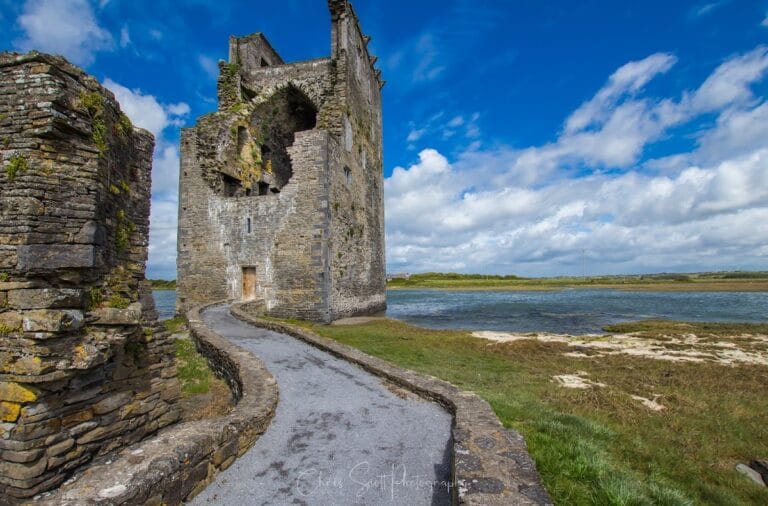
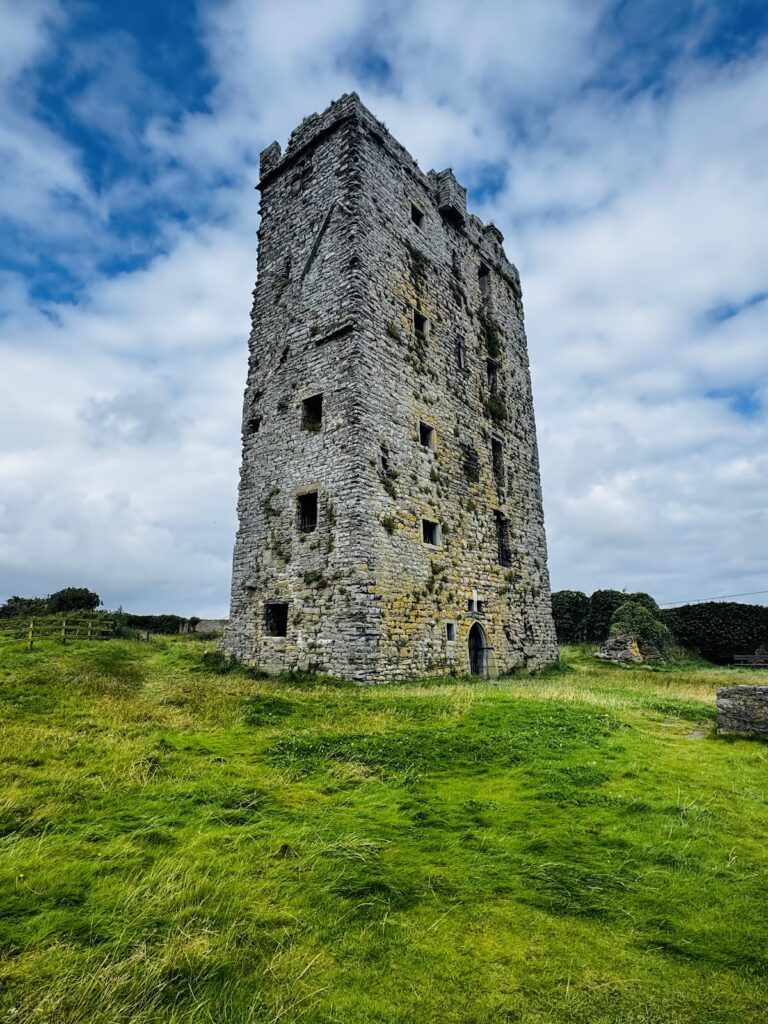
Listowel Castle stands on a high bank above the River Feale. Its surviving structure is formed from thick rubble-stone masonry and includes two of the original four towers joined by a substantial curtain wall, a fortified wall linking defensive towers. The restored upper sections and added exterior staircase form part of the castle’s present architectural fabric.
Defensive Structure
Towers and Curtain Wall
The two surviving towers are connected by a substantial curtain wall, creating the principal defensive remains of the castle. The walls are notably thick and built of rubble stone. Their position above the river reflects the fortress’s defensive purpose, particularly its control of routes approaching the ford.
High Arch and Upper Levels
A high arch beneath the battlements, or wall-walk, is an unusual feature of the surviving structure. The upper parts had deteriorated severely over time, but restoration cleaned the masonry and made these sections watertight. An exterior staircase, designed to harmonize with the existing architecture, now provides access to the upper floors.