Historic Sites in Germany: Explore Castles, Cathedrals and Palaces
Explore more than 3,500 historic sites in Germany, including medieval castles, cathedrals, monasteries, royal palaces and Roman monuments. Castles and historic residences form much of the collection, alongside a large group of religious buildings. Examples from Trier, the Eltz valley, Eisenach, Speyer, Maulbronn and Potsdam show surviving gateways, residential halls, vaulted interiors and palace terraces.
Primary Function: All
Type: All
Civilization: All
Popularity: All
Rating: All
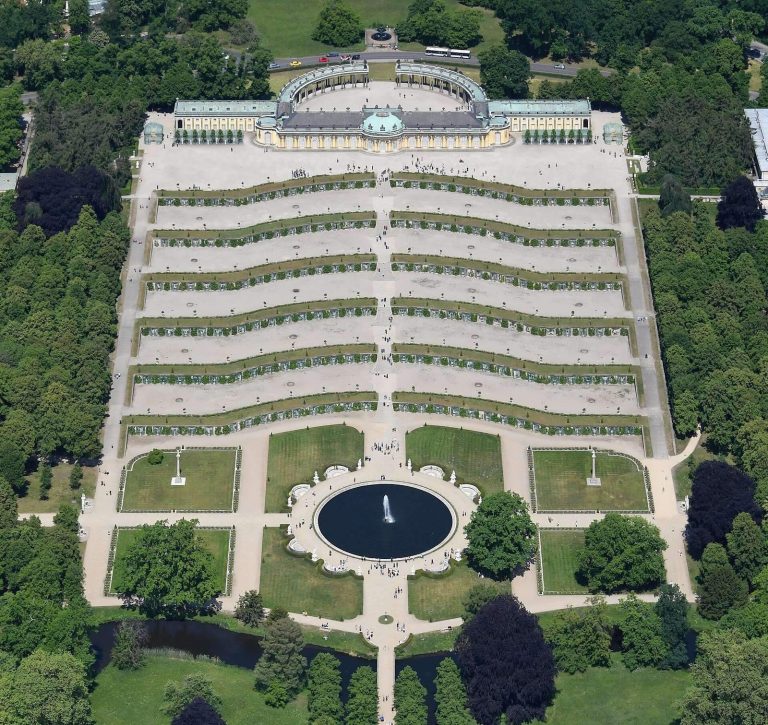
Sanssouci Palace in Potsdam was Frederick the Great’s private summer retreat and a major expression of Frederician Rococo, surrounded by vineyard…
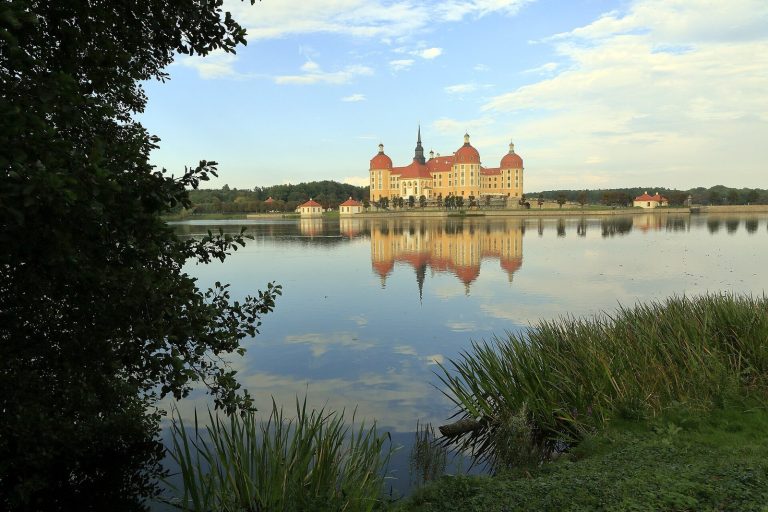
Moritzburg Castle in Germany developed from a sixteenth-century Renaissance hunting lodge into a Baroque residence of the electors and kings of…

Reichsburg Cochem Castle began as a medieval customs and administrative stronghold above Cochem in Germany. Destroyed by French forces in 1689, it…
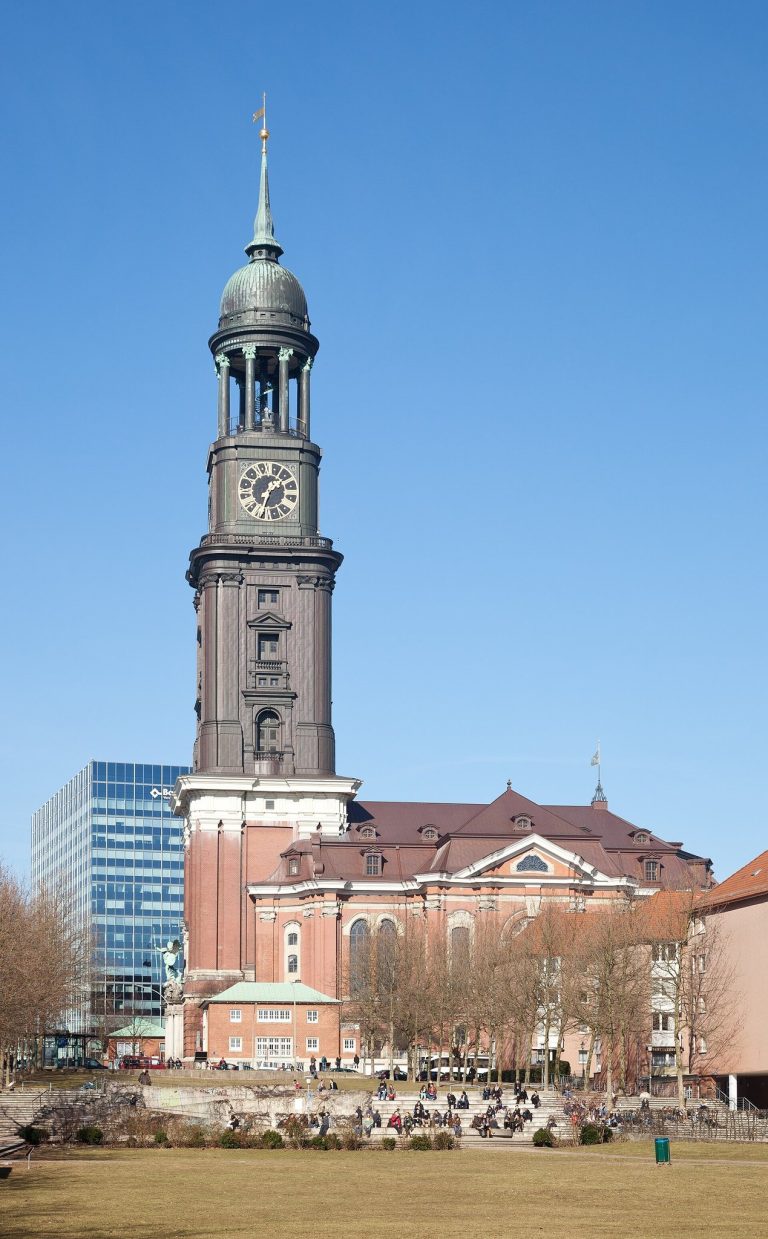
St. Michaelis Church, known as the Michel, is one of Hamburg’s five principal Lutheran churches. Its history includes repeated destruction and…
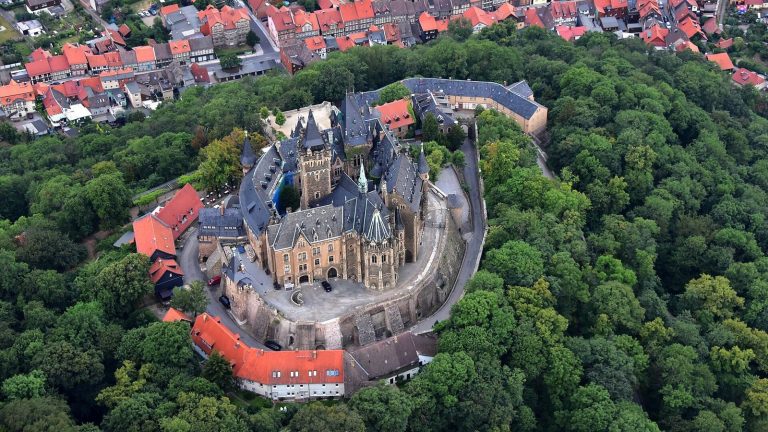
Wernigerode Castle developed from an early medieval fortress into a Baroque residence and a nineteenth-century Neo-Gothic palace. Its museum traces…
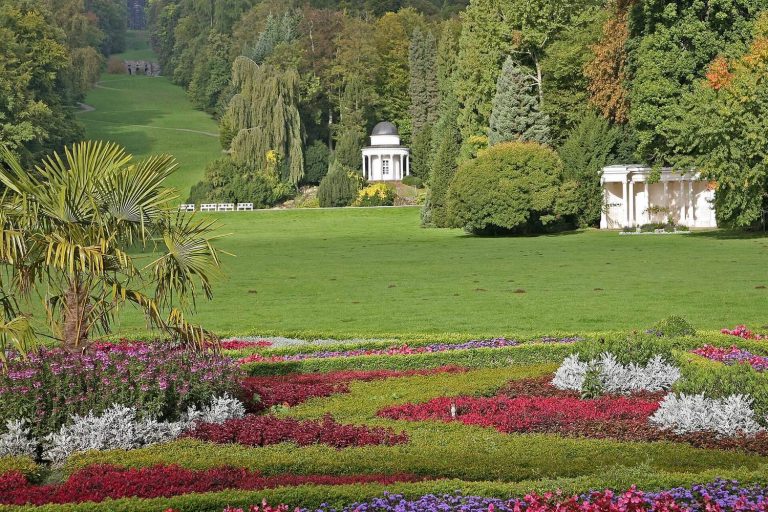
Bergpark Wilhelmshöhe in Kassel developed over roughly 150 years from a Baroque hillside garden into an English landscape park. Its monumental water…
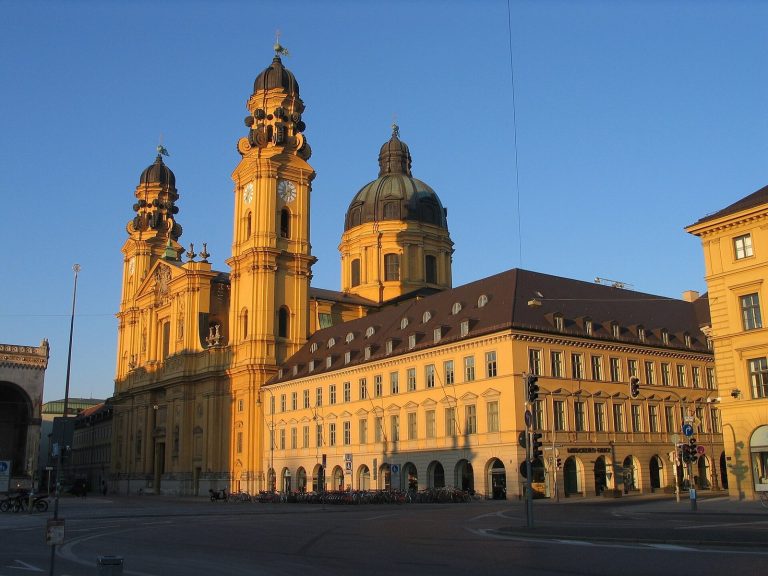
Palais Moy is a neoclassical palace built in Munich in 1824–1825 during the city’s expansion under the Bavarian monarchy. Rebuilt after its interiors…
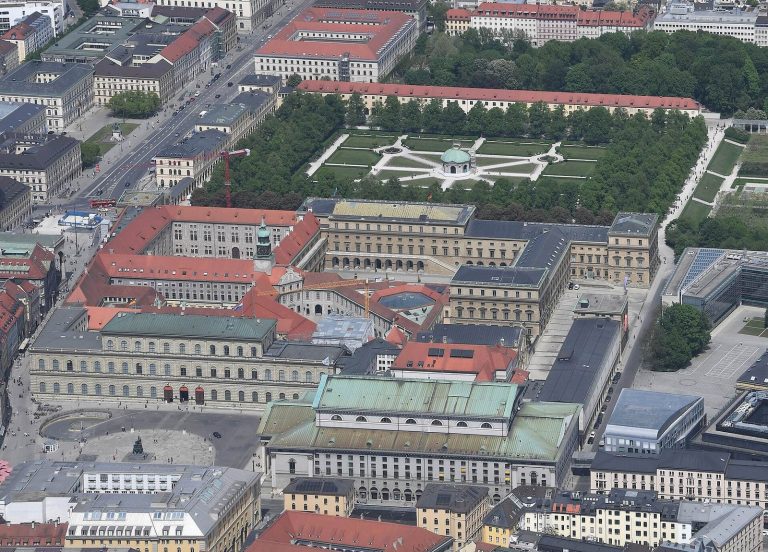
The Munich Residence served as the seat of Bavaria’s Wittelsbach rulers from 1508 until the 1918 revolution. Expanded from a medieval fortress into a…
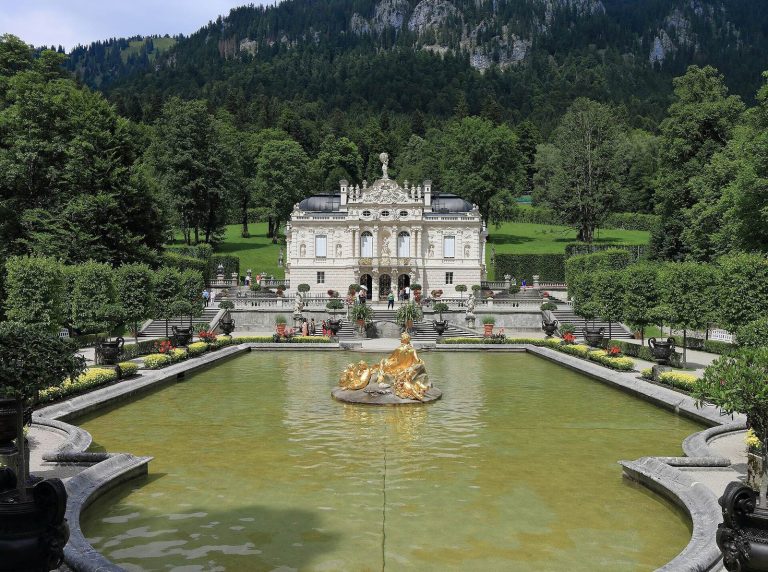
Linderhof Palace in Bavaria was King Ludwig II’s smallest palace and the only one completed during his lifetime. Its Neorococo interiors, formal…
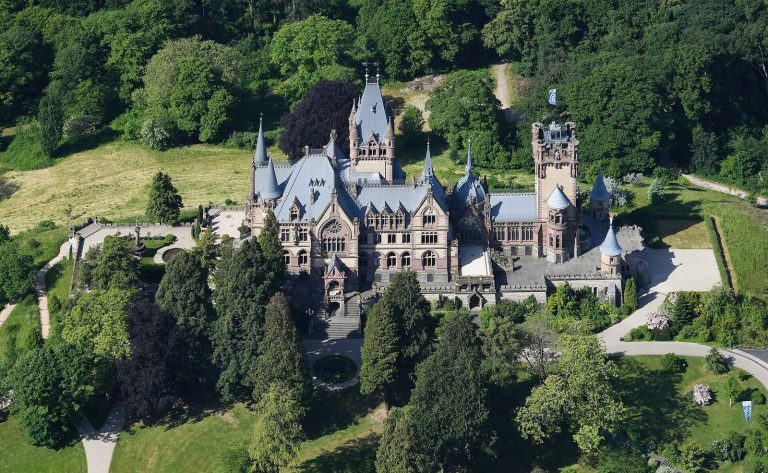
Built on the Drachenfels between 1882 and 1884, Schloss Drachenburg was a private residence shaped by Rhine Romanticism, later used as a hotel…
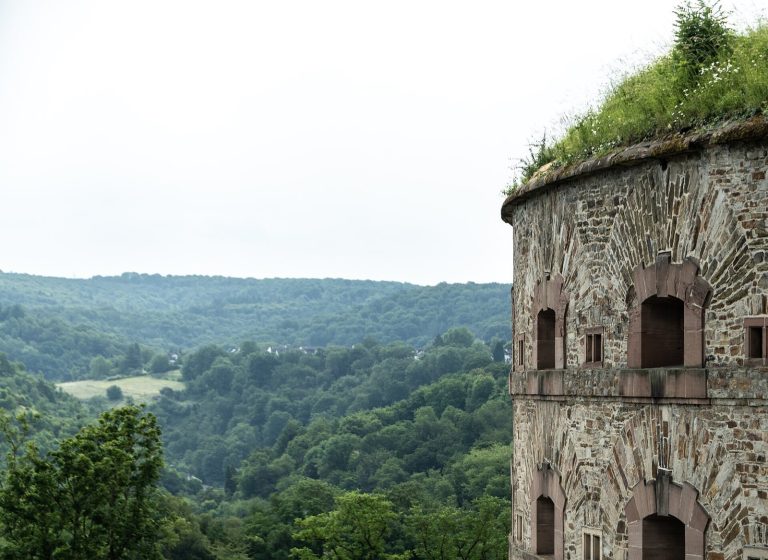
Ehrenbreitstein Fortress in Koblenz developed from prehistoric and medieval fortifications into a Trier stronghold and later the principal work of…
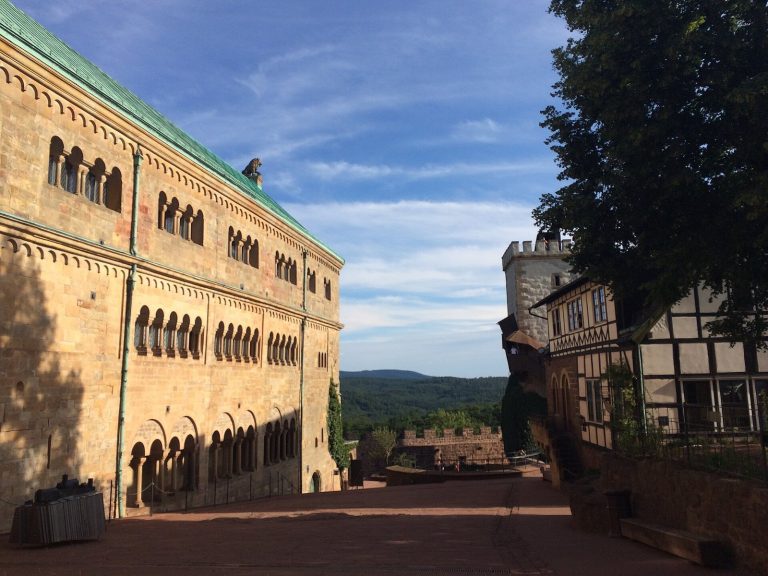
Wartburg near Eisenach developed from a medieval Ludowinger stronghold into a princely residence and later a national historical monument. Its…
For details on how to use the maps, which sites are included, how popularity and ratings are determined, and how sites are classified, see the help page.
On this page5 sections
Castles and fortified residences
Eltz Castle occupies a rocky spur surrounded on three sides by the Elz stream. Several branches of the family maintained separate residences here, producing the closely grouped Kempenich, Rübenach and Rodendorf buildings around an inner courtyard. Their different heights and irregular rooms follow the restricted rock surface. The lower storeys of the Romanesque Platteltz tower preserve part of the castle’s earlier development.
At Wartburg, above Eisenach, the principal medieval residence is the twelfth-century Palas, or Landgrave’s House. Its three main levels accommodated residential and ceremonial functions, with a chapel on the second floor. The castle gives more space to a single princely residence than Eltz’s cluster of family houses. Its present appearance also includes extensive nineteenth-century rebuilding, so the medieval Palas and the later restoration belong to different stages of the complex.
Cathedrals and monasteries
Speyer Cathedral was begun under the Salian ruler Conrad II around 1030. Its red sandstone interior rises through a sequence of substantial piers and arches. The nave originally had a timber ceiling; the later stone groin vaults span pairs of bays, with strengthened supports carrying their weight. That structural arrangement is one of the clearest features of the church’s Romanesque interior.
Maulbronn Monastery preserves a wider collection of medieval communal buildings within a fortified enclosure. Its dining halls show different approaches to vaulting: the lay brothers’ refectory has paired supports and groin vaults, while the monks’ refectory combines six-part rib vaults with pointed wall arches. Cloister passages connected these rooms with the church and other parts of the monastery. Walls, towers and a gatehouse surround the complex, extending the surviving fabric beyond the religious buildings themselves.
Palaces and gardens
Sanssouci Palace in Potsdam was commissioned by Frederick II of Prussia in 1745 as a private summer retreat. Its low, single-storey form stretches above vineyard terraces, with a curved central bay and dome interrupting the long garden façade. The gilded name on the building identifies the retreat the king wanted to create.
The palace’s scale and arrangement suit that purpose: a compact sequence of rooms opens towards the garden rather than forming a large fortified enclosure. Rococo rooms occupy the low residential block above the vineyard terraces.
Roman gates and town defences
The Porta Nigra was built around AD 170 as the northern entrance to Roman Trier. Its sandstone blocks were laid without mortar, forming a gateway with two passages, a narrow inner courtyard and projecting towers. The stacked openings and massive masonry make the structure readable as a defensive entrance rather than simply an isolated arch.
Its survival also owes much to a change of use. After the hermit Simeon lived in the gate in the eleventh century, it was converted into a double church. The original entrances were blocked and a staircase gave access to the upper level. This conversion helped preserve a Roman building that might otherwise have been dismantled for stone.
Explore the collection
Explore sites on the map or in the grid. Map icons indicate each site’s primary function, helping you identify different kinds of places at a glance. Narrow the results by primary function, site type, civilization or era, with additional filters for popularity and rating. Select a map marker to view the site’s details and open its article, or open the article from its grid entry.