Borsh Fortress: A Strategic Hilltop Stronghold in Albania

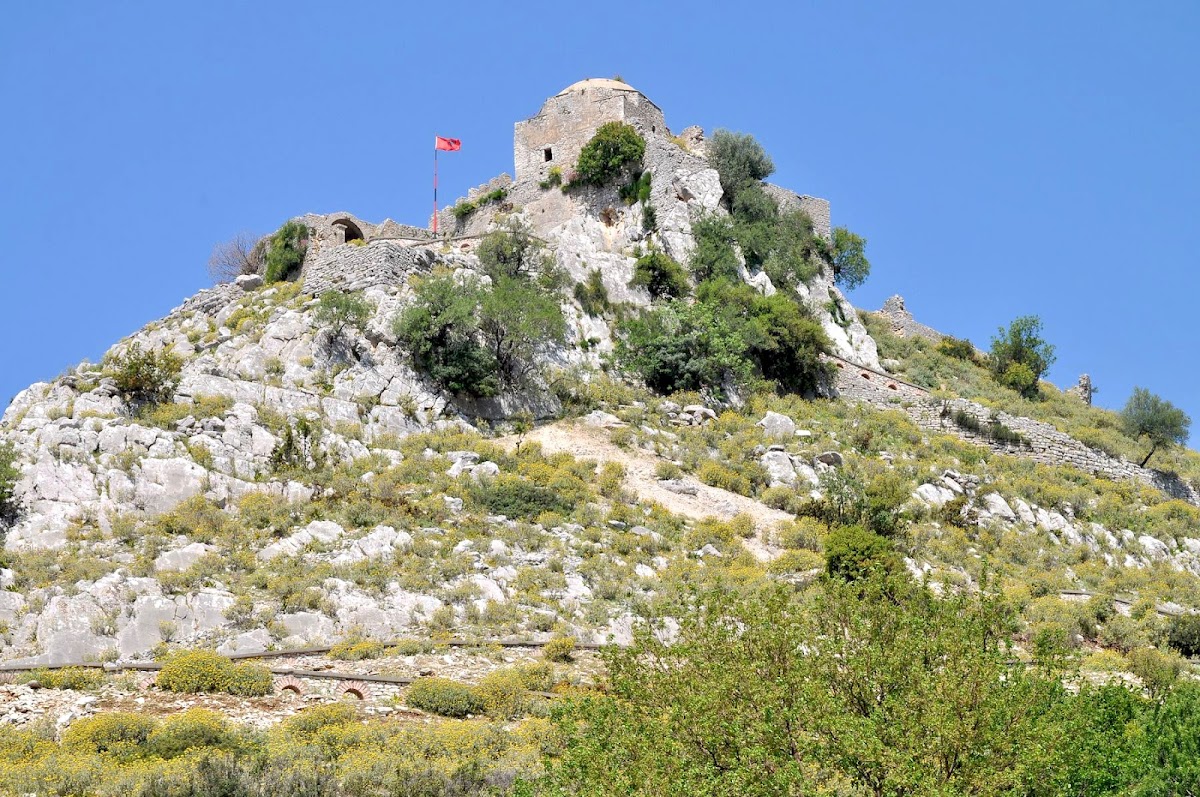
Site at a Glance
- Rating
- 4.6
- Popularity
- Low
- Country
- Albania
- Primary era
- Medieval
- External website
- Open
- Eras represented
- Bronze Age, Classical, Medieval, Early Modern
- Civilizations
- Byzantine, Ottoman
- Site type
- Military
- Remains
- Fort
On this page12 sections
History
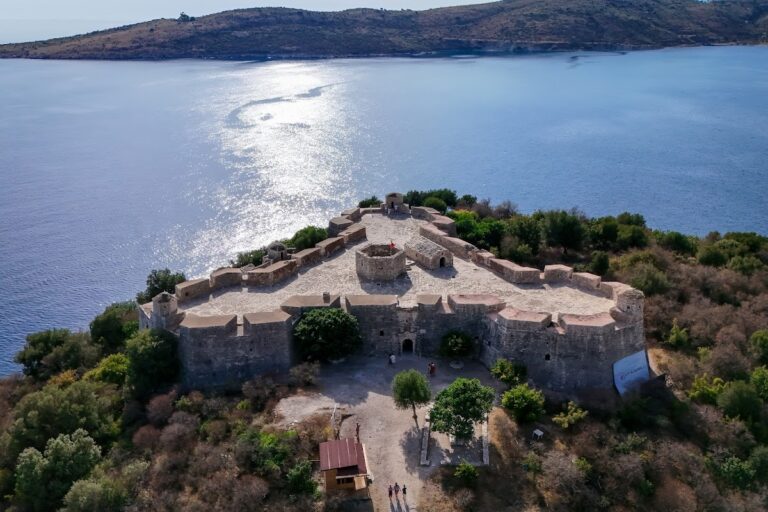
Borsh Fortress, also known as Sopot Fortress, is a fortified hilltop complex above Borsh, Albania, whose earliest defenses were established during the Bronze Age and whose later form reflects Byzantine and Ottoman rebuilding. Set on Sopot hill above the Albanian Riviera, it controlled routes from the Ionian coast toward Fterra, Kuc, Kurvelesh, and the Shushica valley, as well as connections between Chaonia, central Albania, and the Vlora region. The fortress follows the line of an ancient acropolis, a fortified high point that served as the defensive and administrative center of a settlement.
Bronze Age and ancient settlement
The earliest finds within the fortified area date to the twelfth century BC, when a Bronze Age fortification was established. This defense was reportedly created against the Dorians. A small settlement developed west of the acropolis during the fourth century BC and expanded greatly between the middle of that century and the middle of the first century BC. It eventually covered about 57 hectares, extending across the western and northern slopes, before being abandoned during the first century BC.
The settlement’s ancient occupation included black-glazed pottery, a ceramic ware covered with a dark glossy coating associated with the ancient Greek world. An ancient necropolis was located south of the settlement, adding evidence of the community’s organization beyond its inhabited and defended areas.
Byzantine and medieval rule
Borsh was included among the regional fortifications during the reign of the Byzantine emperor Justinian, whose rule lasted from AD 527 to 565 and was marked by extensive imperial construction and restoration. The site was mentioned again in 1192. In the early thirteenth century, it formed the Archontate of Sopotos within Vagenetia. An archontate was a Byzantine administrative territory governed by an archon.
In 1258, Michael II Komnenos Doukas, ruler of the Despotate of Epirus, a Byzantine successor state in the western Balkans, granted the fortress, together with Butrint and Corfu, as a dowry for his daughter Helena to Manfred of Sicily. The fortress soon returned to Epirote control. In 1279, Nikephoros I Komnenos Doukas ceded it to Charles I of Anjou, an Angevin ruler who controlled territories in southern Italy and the Balkans. Borsh later passed again among Epirote rulers and other powers. During the Epirote revolt of 1338 to 1339, its inhabitants remained loyal to the Byzantine emperor Andronikos III Palaiologos.
Ottoman, Venetian, and local control
The Ottoman conquest of the region took place in 1417. An Ottoman land register from 1431 listed Sopot as a settlement of 60 households and as the administrative center of a nahiye, a subdivision of the Ottoman administrative system. In 1456, forces of Alfonso V of Aragon operated against the Ottomans in the area.
Sopot came under Venetian control in 1470, under the authority of the governor of Corfu. The Ottomans reclaimed the fortress at the end of the Ottoman-Venetian War of 1463 to 1479, a conflict between the Ottoman Empire and Venice. In 1481, forces led by Gjon Kastrioti the Younger, an Albanian nobleman associated with the Kastrioti family, captured the fortress but withdrew in 1484. Local Albanians rebelled against Ottoman rule in 1488. The fortress was again linked with Venetian control during the sixteenth century, supported by local insurgents.
In 1566, approximately 5,000 Albanian rebels from surrounding villages besieged and burned the fortress. In 1571, a Venetian company landed from the sea and fought heavily with the inhabitants of Borsh. The site later returned to Ottoman control and underwent substantial rebuilding before the end of the sixteenth century.
Ali Pasha and modern investigation
Ali Pasha of Janina controlled the fortress and the surrounding region from 1798. The hill was abandoned after his death in 1822. During the medieval period, the site had been adapted as a military garrison, while its fullest fortified character developed under Ali Pasha.
The first archaeological description of Borsh Fortress was produced in the 1930s. The site was mapped in 1971, and excavations took place between 1976 and 1990. Borsh Fortress is recognized as a Cultural Monument of Albania. In 1913 and 1914, before the later archaeological work, the fortress was commanded by Mehmet Selim Shahaj, an Albanian patriot identified as the bearer of the Vlora Ultimatum.
The Haxhi Bendo Mosque, within the fortress, is regarded together with the stronghold as a landmark of Borsh. Its namesake, Haxhi Bendo Vasili, was the son of Vasili, an Orthodox vassal serving Ali Pasha of Janina. Haxhi Bendo operated in the villages of Souli between 1805 and 1813 and was killed, along with his brother Ali Vasili, while fighting the Souliotes in the Mesolongi area.
Remains
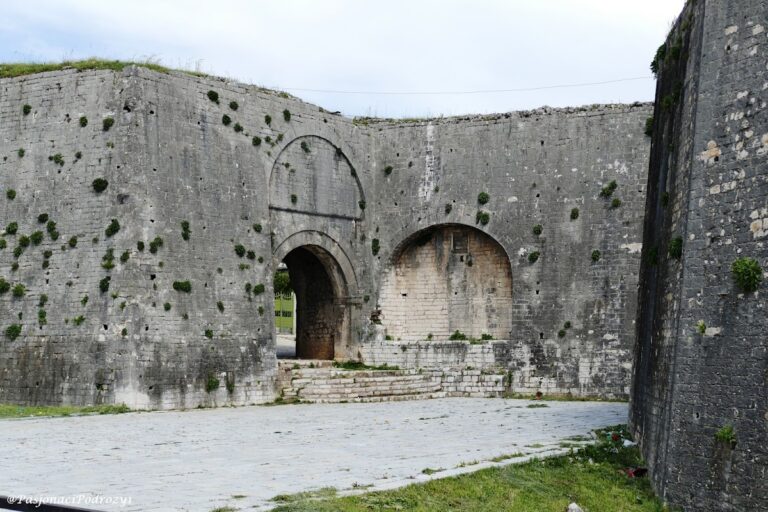
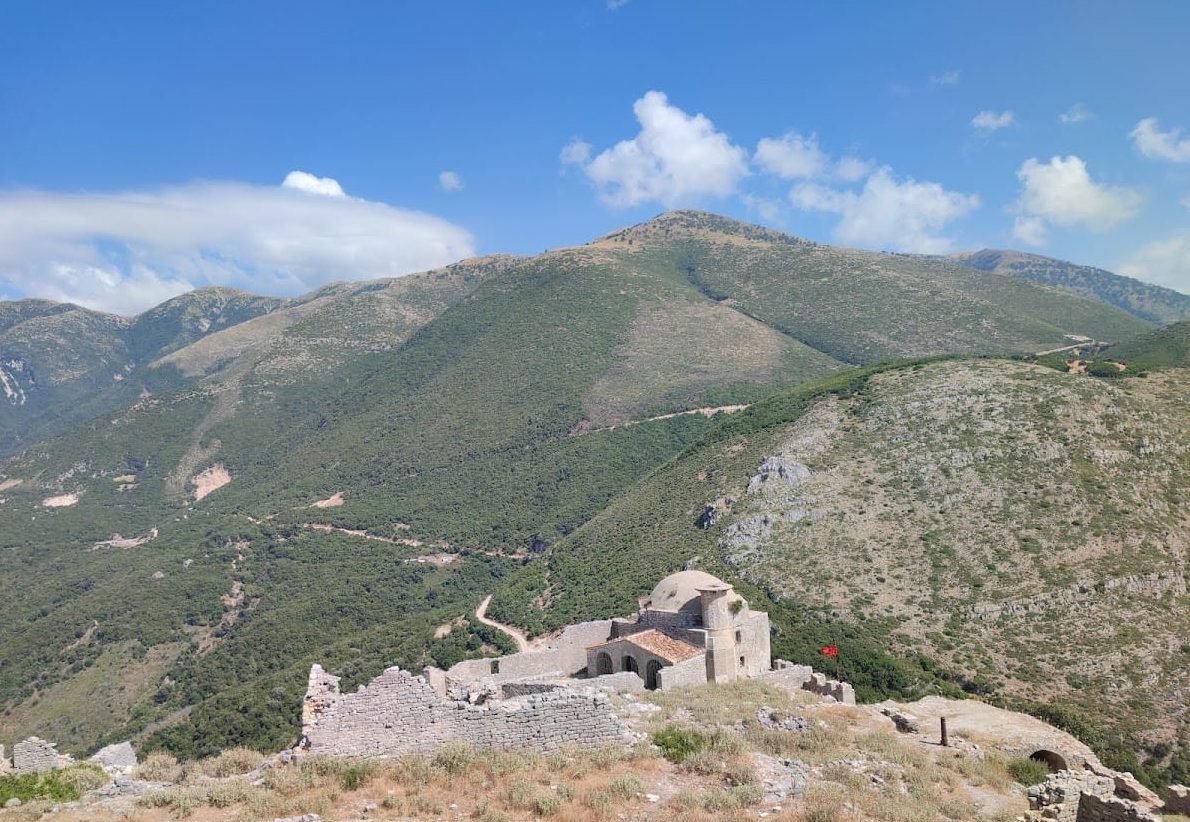
Borsh Fortress occupies the rocky Sopot hill north of Borsh and west of Fterra. The hill drops steeply toward the north, west, and south, while several natural terraces extend along its western side. The settlement covered approximately 57 hectares, and its outer walls followed the ancient defensive line for about 1,000 meters. The later wall circuit descended along the western slope to enclose the middle of the hill, with continuous tight-angled bends that give it a saw-toothed appearance.
Ancient defenses and settlement
Ancient defensive walls
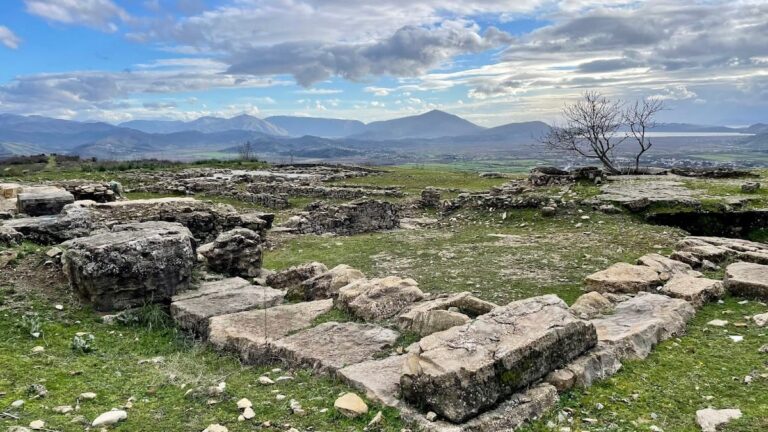
Ancient wall remains survive on the southwestern side of the hill. One preserved stretch is approximately 10 meters long and 1.33 meters high. Its masonry consists of stones shaped with a bulging outer face and flatter surfaces on the other sides. The technique has been compared with masonry at Butrint.
Settlement and necropolis
The ancient settlement spread west of the acropolis and later extended onto the western and northern slopes. Fourth-century-BC fragments of black-glazed pottery have been found across the settlement area. An ancient necropolis lay south of the settlement, placing the burial area beyond the inhabited zone.
Medieval and Ottoman fortress
Walls, towers, and terraces
The medieval fortress was divided into two sections by an internal wall. Triangular towers were added later, probably during the Middle Byzantine period, which generally extends from the seventh through the twelfth centuries. Inside the defenses are ruins of buildings, cisterns, and medieval residential structures. The houses were arranged on terraces, and the natural terraces on the western side retain a series of medieval building remains.
Haxhi Bendo Mosque
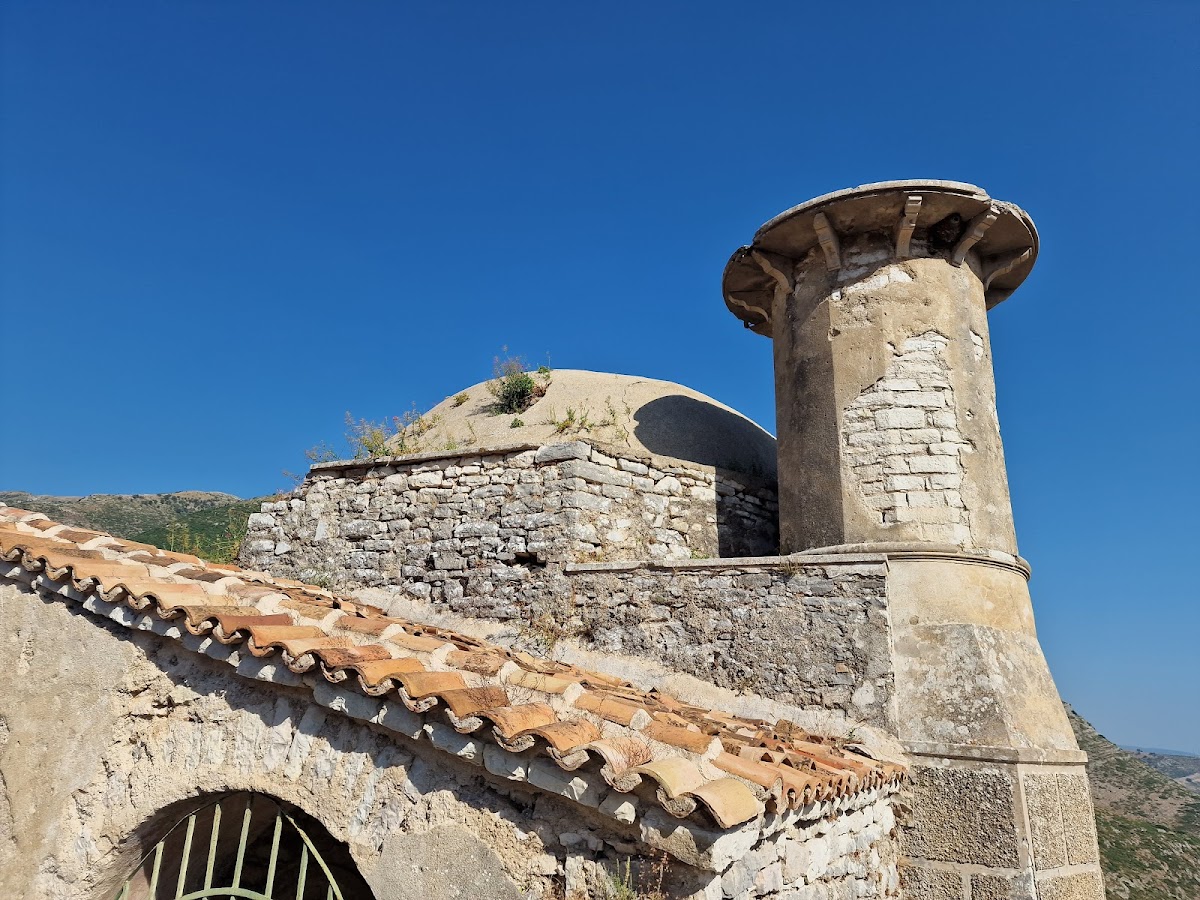
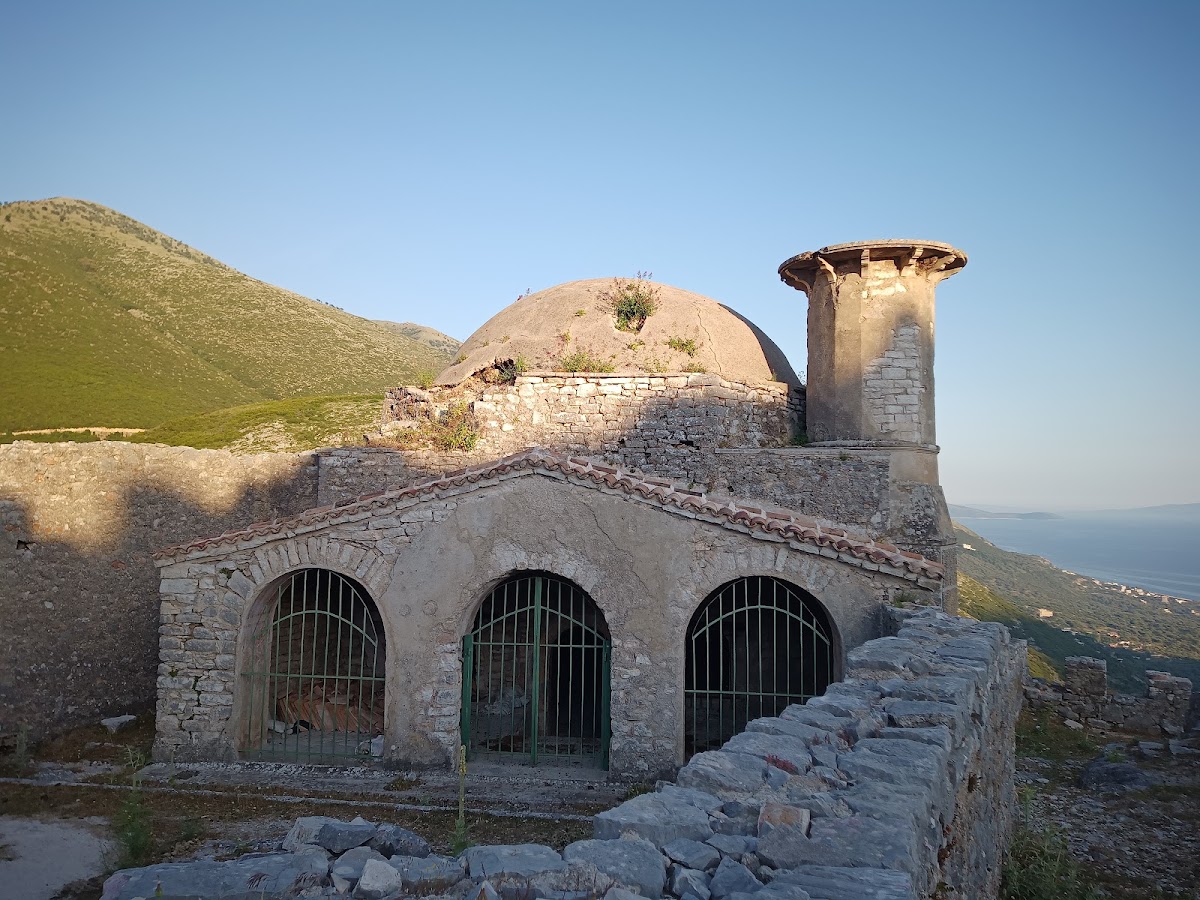
The Haxhi Bendo Mosque survives within the fortress complex in a ruinous condition. It was probably built from local material in the late seventeenth century and has not been restored since the end of communism in Albania. The building follows a common Albanian form for a single-domed mosque and has a square plan measuring approximately eight meters on each side.
A northern porch, or hajat, is attached to the mosque. This covered entrance space has a roof of tiles and three stone arches. The mihrab, the niche marking the direction of prayer, is set in the southern facade. Remains of the minaret stand at the northwestern corner, while the dome is now coated with concrete.
Nearby sites