Kanina Fortress: A Historic Fortification in Albania


Site at a Glance
- Rating
- 4.4
- Popularity
- Low
- Country
- Albania
- Primary era
- Medieval
- Eras represented
- Classical, Medieval, Early Modern
- Civilizations
- Byzantine, Ottoman, Venetian
- Site type
- Military
- Remains
- Fort
On this page9 sections
History
Kanina Fortress is a cultural-heritage monument in Albania, located in Kaninë near Vlorë. Thought to have originated in the fourth century BC, it developed through successive phases of antiquity and the Middle Ages, including Byzantine, Venetian, and Ottoman periods. Its position and long development made it an enduring military center in the region.
Antiquity and the Byzantine rebuilding
The fortress is thought to have been established in the fourth century BC. Its defenses were later altered through several building phases. In the sixth century, Justinian I, the Byzantine emperor known for extensive fortification and reconstruction across the Balkans and the eastern Roman Empire, rebuilt Kanina as part of a program involving 94 fortifications in Epirus. The Byzantine historian Procopius of Caesarea mentioned the fortress under the name Kionin while recording imperial building and military activity.
Medieval and Ottoman phases
During the twelfth and thirteenth centuries, Kanina became a major military center of the medieval Angevin Kingdom of Albania, a state associated with the Angevin ruling house. Later changes reflected Venetian and Ottoman influence. Sultan Suleiman I, the Ottoman ruler who reigned from 1520 to 1566, restored the fortress in 1530. Albanian feudal lords of Vlorë carried out further repairs between the seventeenth and nineteenth centuries.
Modern protection
Kanina Fortress was designated a protected cultural monument on October 1, 1948, under designation no. 95, with reference VL047. This status recognizes the fortress as part of Albania’s cultural heritage and preserves its long sequence of historical development.
Remains
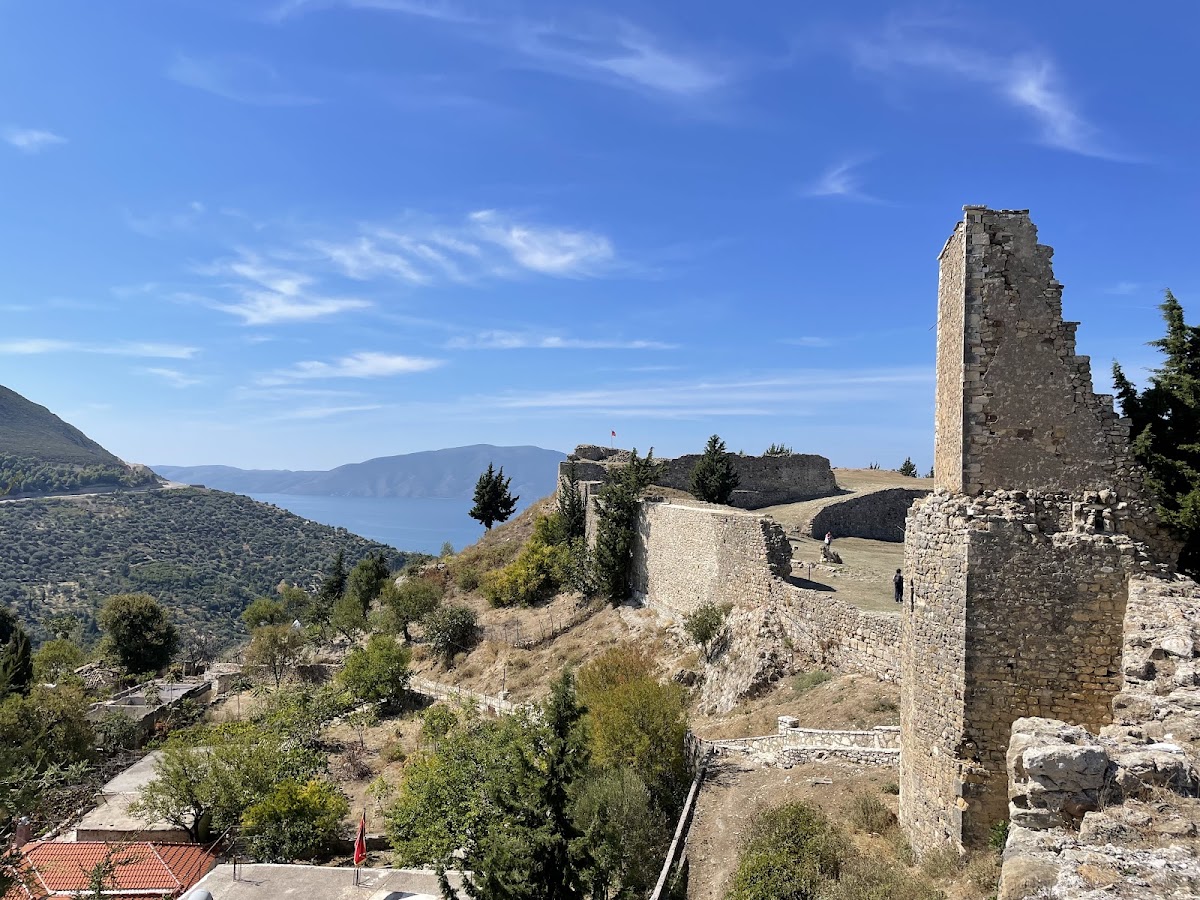
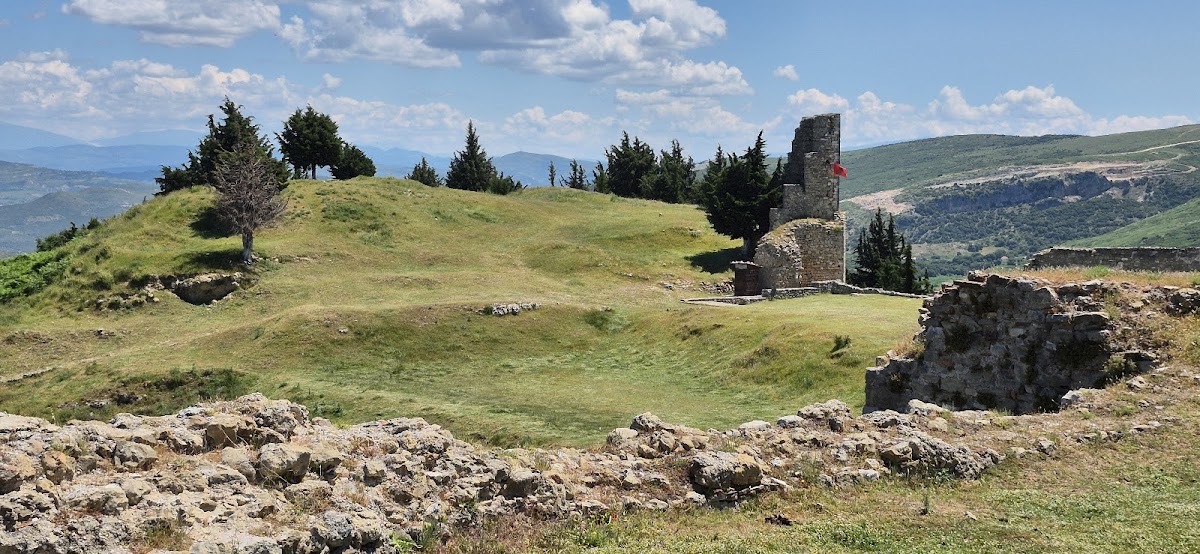
The fortress stands on a hill approximately 380 metres above sea level, about 6 kilometres from Vlorë. Its perimeter wall extends for roughly 1 kilometre and encloses about 3.5 hectares. Transverse walls once divided the enclosure into three sections. The wall separating the highest section survives, and this upper area was protected by three towers. Four gates served the complex, with one linking the uppermost section to the rest of the fortification and three opening outward from the main enclosure.
Gate and tower defenses
Southern entrance
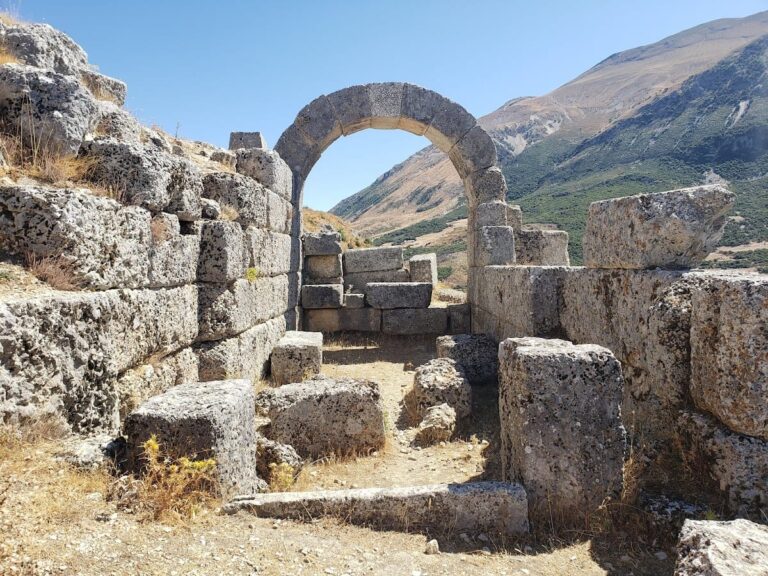
The best-preserved entrance lies on the southern side and is protected by a substantial hexagonal tower. The gateway is 3.40 metres high, with a clear opening 2.85 metres wide, and is covered by a segmental arch. Its double-leaved door was secured from inside by a beam. The entrances were arranged with flanking towers, while the surviving descriptions of the gates show a straightforward defensive design.
Fortification towers
The towers have circular, polygonal, triangular, and quadrangular plans, and their forms and construction techniques reflect several building periods. Seven towers survive today, including two triangular examples. The earliest towers are thought to have been the small triangular towers, which also served as buttresses. Semicircular towers also belong to an early phase and resemble those of the acropolis at Butrint. They incorporate brick and tile fragments between stone joints, while the triangular towers reuse numerous ancient stones.
Polygonal towers belong to a later phase and contain gun embrasures, openings through which artillery could be fired. Their forms and building methods resemble those of the lower castle of Durrës, constructed in the thirteenth century. An 1688 plan shows that the fortress then had 14 towers, providing evidence for a more extensive arrangement than the seven towers preserved today.
Internal facilities
Evliya Çelebi described houses, garrison buildings, ammunition stores, and cisterns within the fortifications. Cisterns were tanks or underground reservoirs used to collect and store water, supporting the garrison and other occupants inside the enclosure.