Castillo de Sisamón: A Medieval Frontier Castle in Spain
Site at a Glance
- Rating
- 4.8
- Popularity
- Very Low
- Country
- Spain
- Primary era
- Medieval
- Eras represented
- Medieval
- Civilizations
- Crown of Aragon
- Site type
- Military
- Remains
- Castle
On this page9 sections
History
Castillo de Sisamón is a medieval castle in Spain, built in the fourteenth century in the municipality of Sisamón, Zaragoza Province, Aragon. It occupied a contested frontier between the kingdoms of Aragon and Castile and helped defend the entrance to the Jalón Valley.
From Molina to the Aragonese Frontier
Sisamón initially belonged to the Lordship of Molina, a medieval territory positioned between Aragon and Castile. Molina remained an independent lordship for a period before its definitive incorporation into Castile in 1321. Sisamón, however, stayed within Aragon. The frontier between Tarazona and Torralba de los Frailes was heavily disputed and changed repeatedly, giving the castle a continuing military role.
The War of the Two Peters
The castle first appears in the historical record during the War of the Two Peters, a fourteenth-century conflict between Aragon and Castile. It belonged to the Kingdom of Aragon, and its garrison was strengthened in preparation for war. In 1356, Rodrigo González de Ayoza served as lieutenant of the castle and was granted 2,000 Jaqués pounds from royal revenues to finance its fortification and the defense of the Jalón Valley. Castilian troops besieged Sisamón in 1357.
The Fernández de Heredia Lords
After the siege, Peter IV of Aragon entrusted the castle and settlement to Sancho González de Heredia. Through his marriage to Donosa Fernández de Heredia, sister of Blasco Fernández de Heredia, the Justice of Aragon, and Juan Fernández de Heredia, Grand Master of the Order of the Hospital, Sancho made Sisamón the patrimonial base of a third branch of the influential Fernández de Heredia family.
Conflict in the district continued during the fifteenth century even after peace with Castile. The Liñán lords of Cetina fought the Fernández de Heredia family, and in 1452 the Aragonese historian Jerónimo Zurita recorded a duel between Juan Fernández de Heredia, lord of Sisamón, and Alfonso de Liñán, lord of Cetina. The dispute required royal intervention.
Marriage and Later Status
The castle remained associated with noble warfare until 10 March 1509, when Juan Fernández de Heredia, lord of Sisamón, married Jerónima de Liñán, daughter and heiress of Miguel de Liñán, lord of Cetina and Contamina. The marriage united the two houses, pacified the district, and established the foundations of the future County of Contamina.
Castillo de Sisamón was declared a cultural-interest monument by a resolution dated 17 April 2006, published on 22 May 2006.
Remains
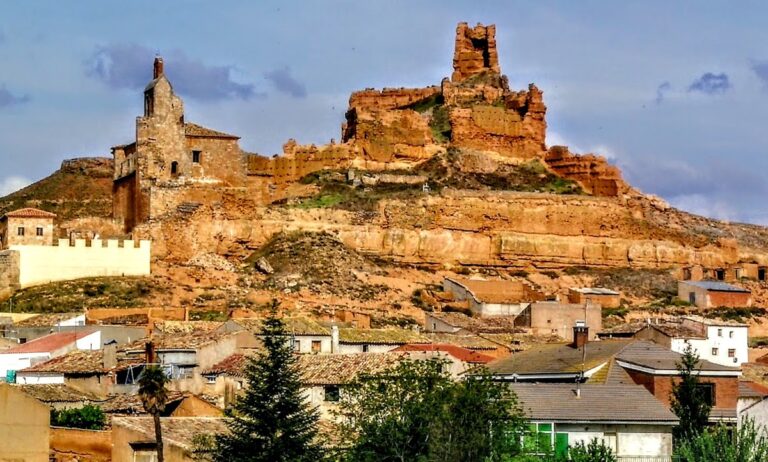
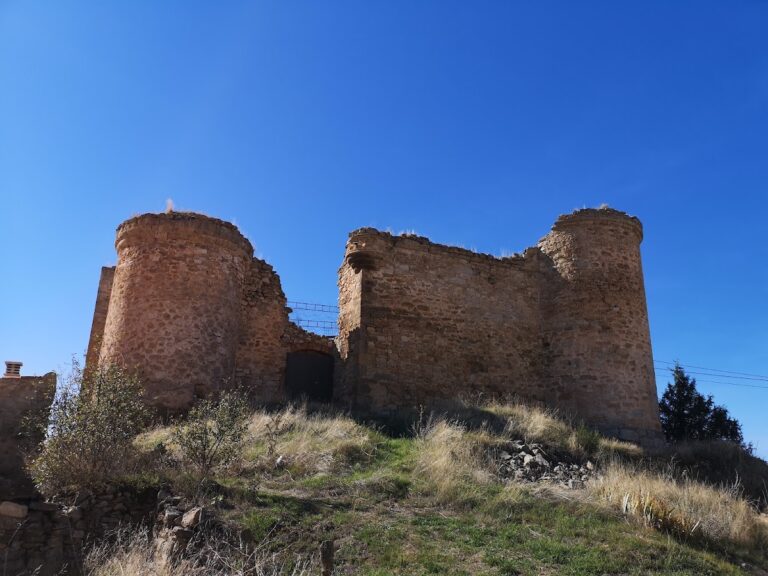
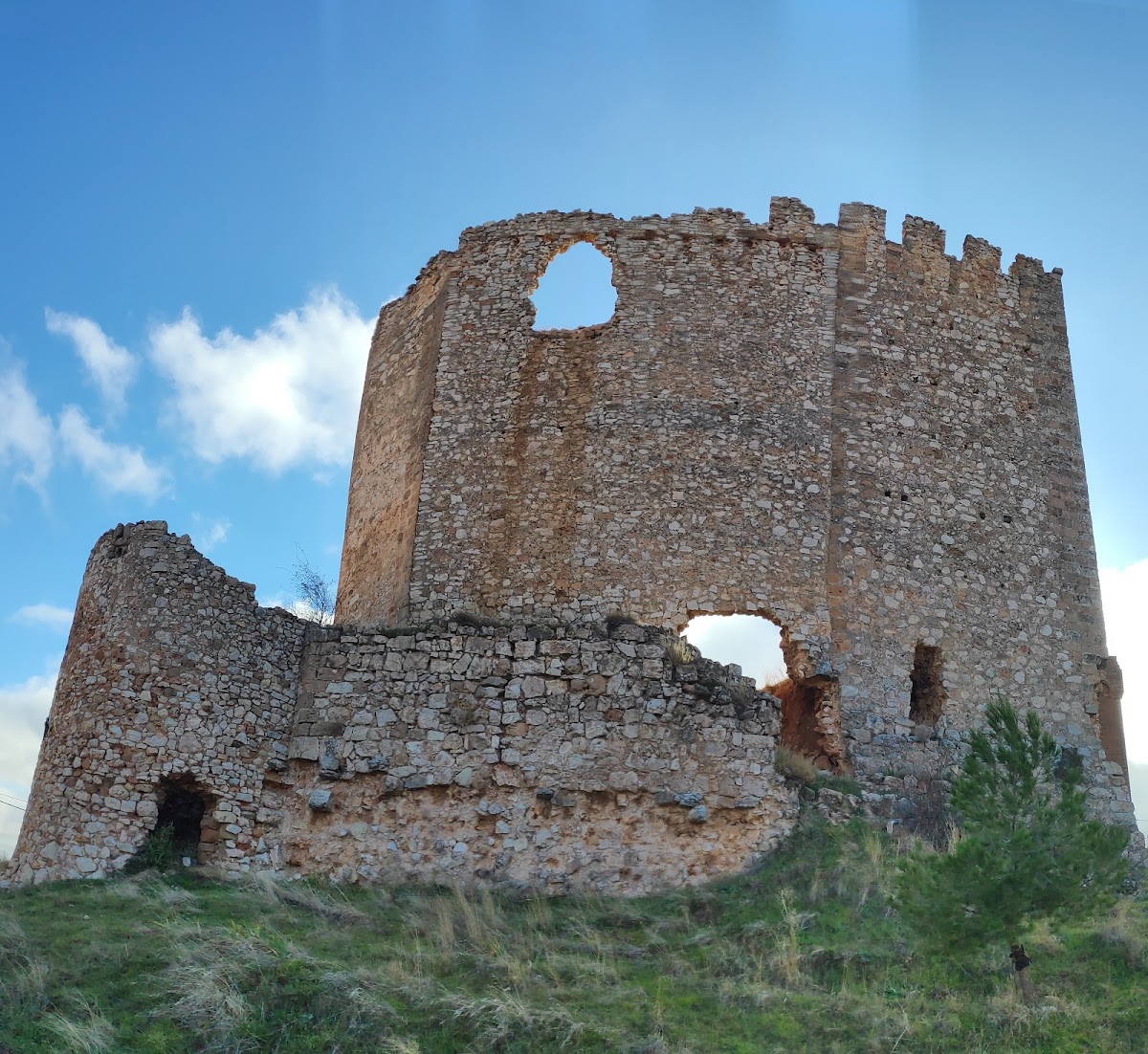
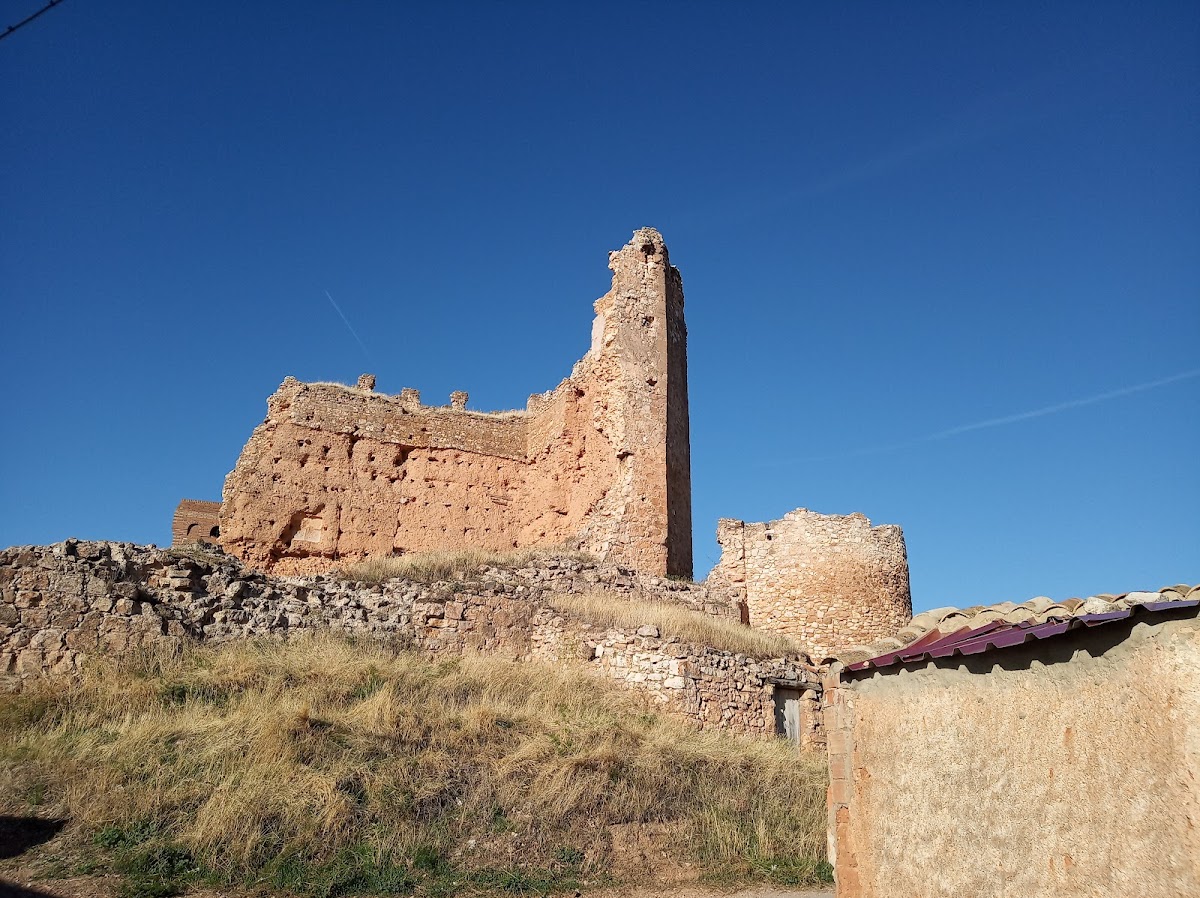
The castle survives in an advanced state of ruin. Its remaining elements include part of the principal tower, sections of the defensive wall and wall-walk, an underground room, and traces of an outer defensive line. Together, these features show a fortification organized around a principal tower and perimeter defenses.
Principal Tower and Wall-Walk
Approximately half of the principal tower remains, represented by two battlemented walls. Part of the wall-walk, a passage along the top or inner side of a defensive wall used for movement, observation, and defense, also survives. One of the standing walls carries the heraldic coat of arms of the Fernández de Heredia family.
Underground Room
An underground room remains within the ruins and may have served as a storage area. Its survival preserves evidence of the practical spaces that supported the castle’s military occupation.
Perimeter Defense
Traces of a perimeter wall are visible around the castle. This wall functioned as an advanced defensive line, extending the fortification beyond the principal tower and inner walls.