Strahlegg Castle Ruin: A Roman and Medieval Watchtower in Switzerland

Visitor Information
Google Rating: 4.4
Popularity: Very Low
Official Website: www.amden-weesen.ch
Country: Switzerland
Civilization: Medieval European, Roman
Site type: Military
Remains: Tower
History
Strahlegg castle ruin stands on a rocky promontory overlooking the northern shore of Lake Walen in the municipality of Amden, Switzerland. The site originated with Roman builders who constructed a watchtower here in 15 BCE, during the reign of Emperor Augustus. This tower formed part of a communication network linking it to other Roman lookout posts in the region, enabling visual signaling across strategic points near what is now eastern Switzerland.
After the Roman period, the original tower fell into disuse but was later rebuilt in the Middle Ages. Although no medieval documents mention the castle by name, it reemerged as a fortified outpost under the Habsburgs. During the 1388 conflict known as the Näfels War, this site was held by Habsburg forces before falling to troops from the canton of Glarus, who captured and destroyed the castle, ending its military role.
The ruin remained largely forgotten until the 19th century when archaeological interest identified its medieval masonry atop the Roman foundations. A detailed study in 1960 confirmed the dual phases of construction, revealing its transformation from a Roman frontier watchtower into a medieval defensive position. Today, it is recognized as a cultural property of national significance within Switzerland.
Remains
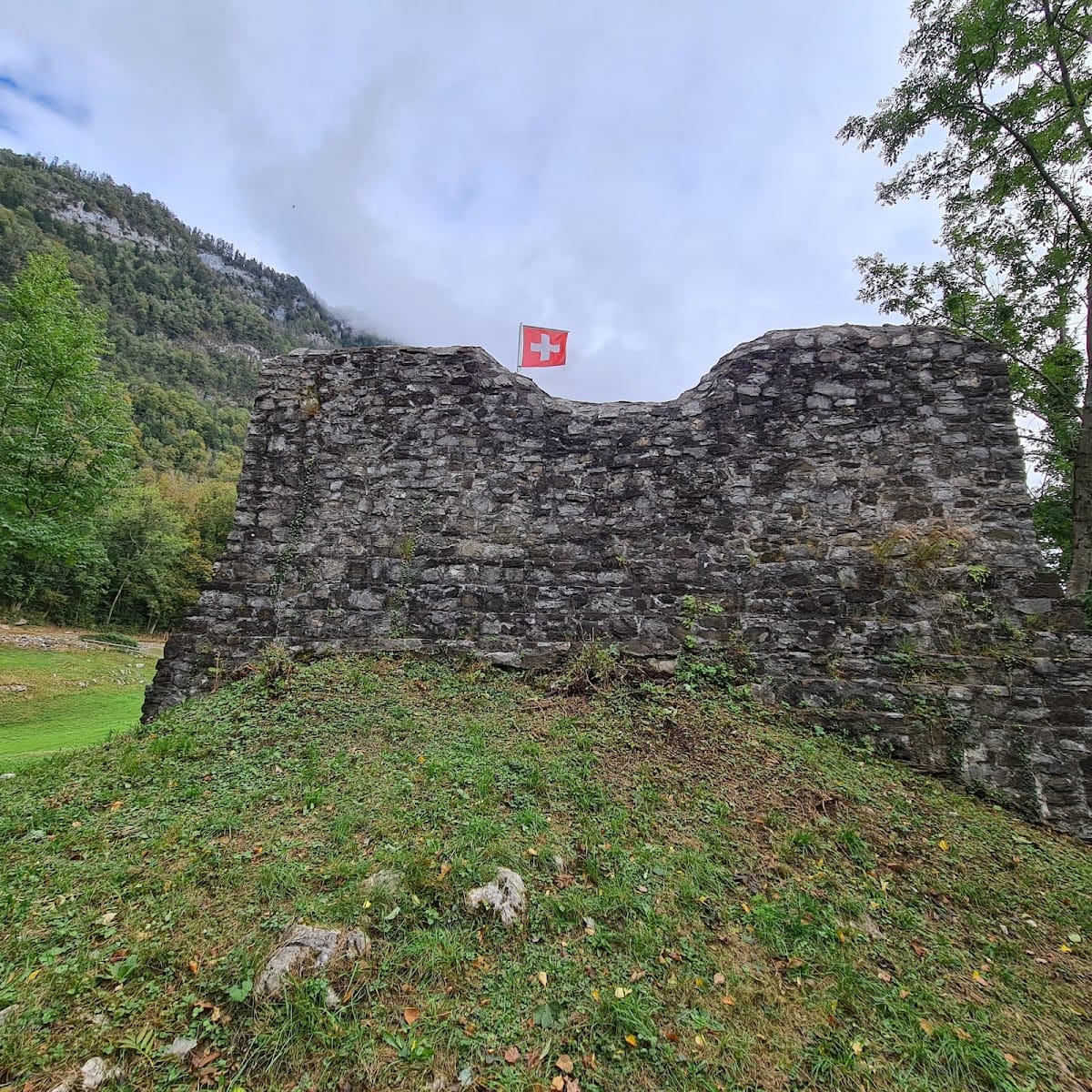
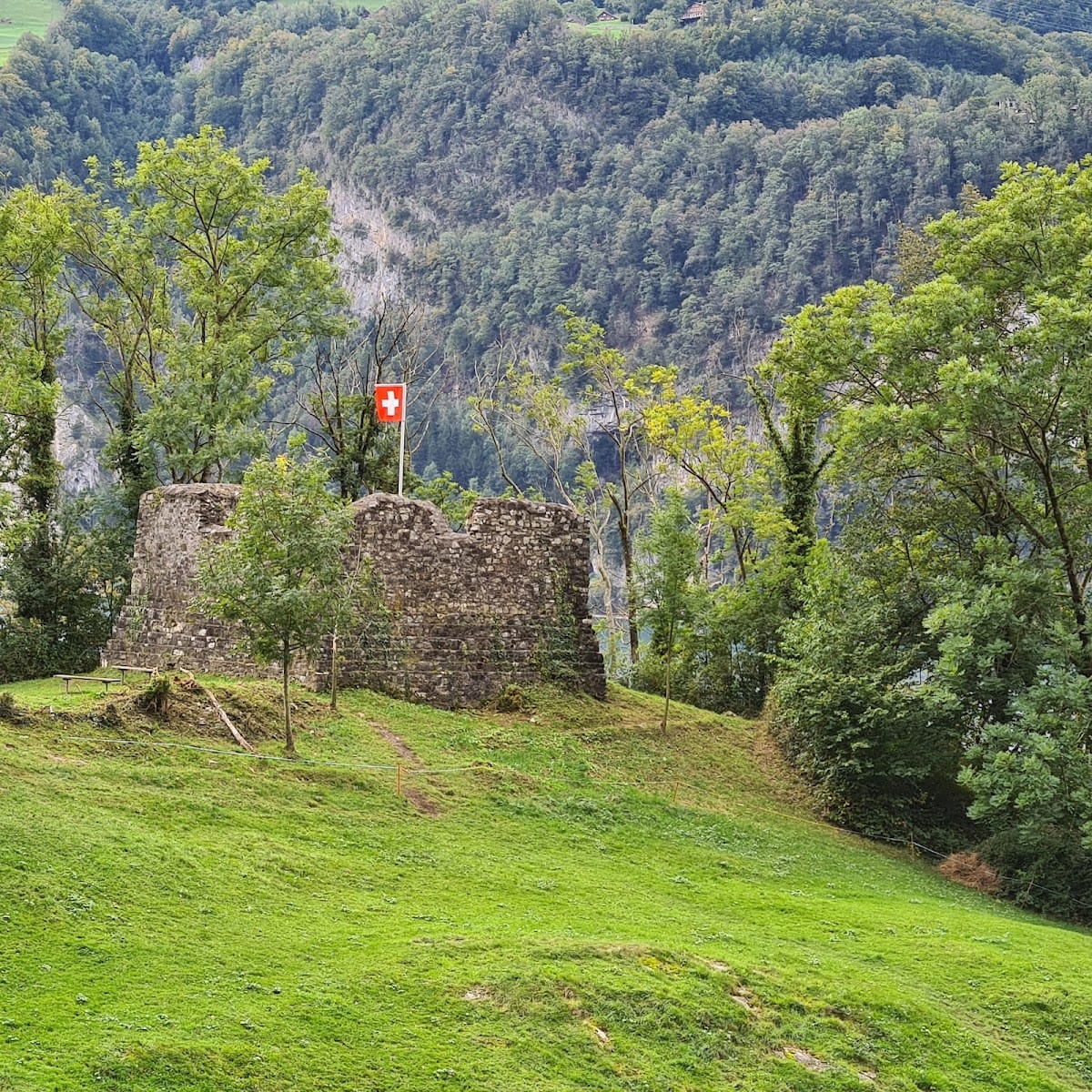
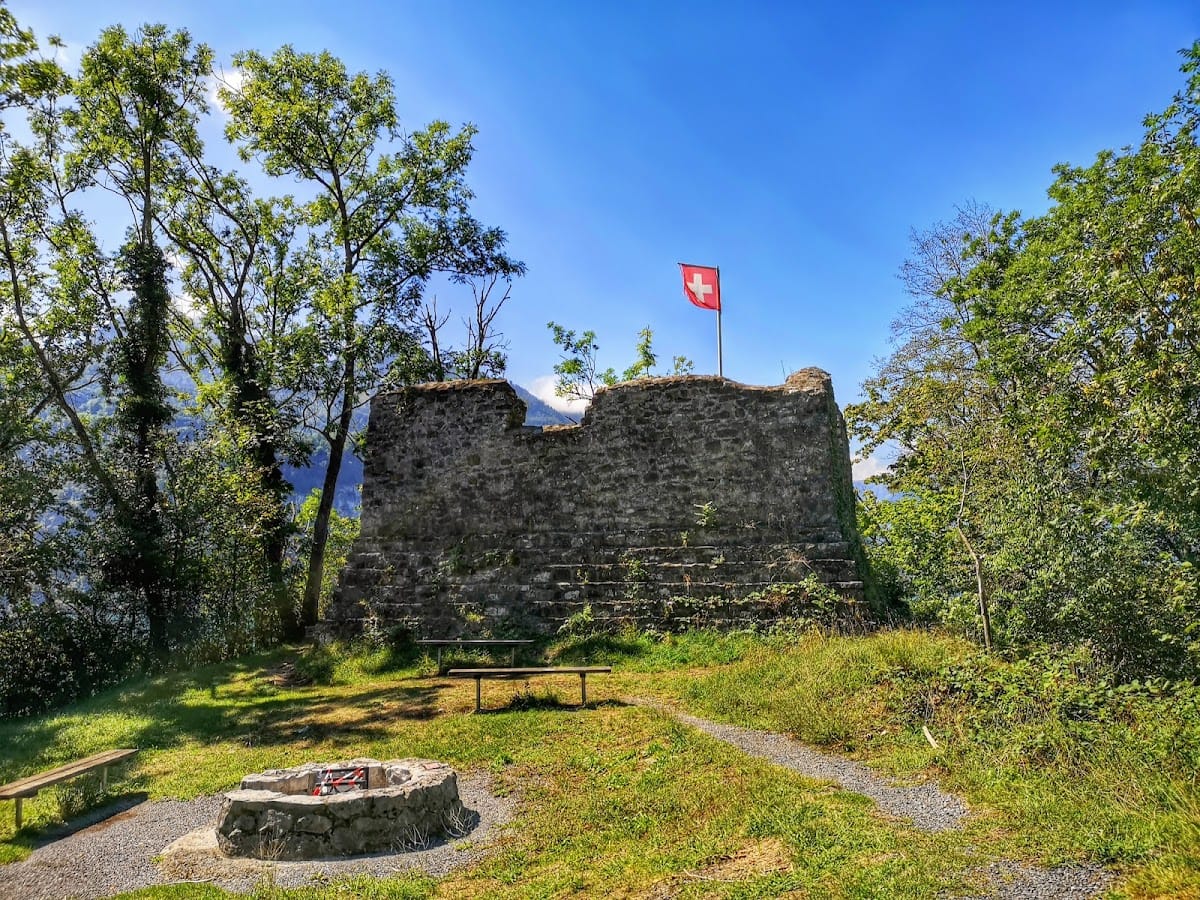
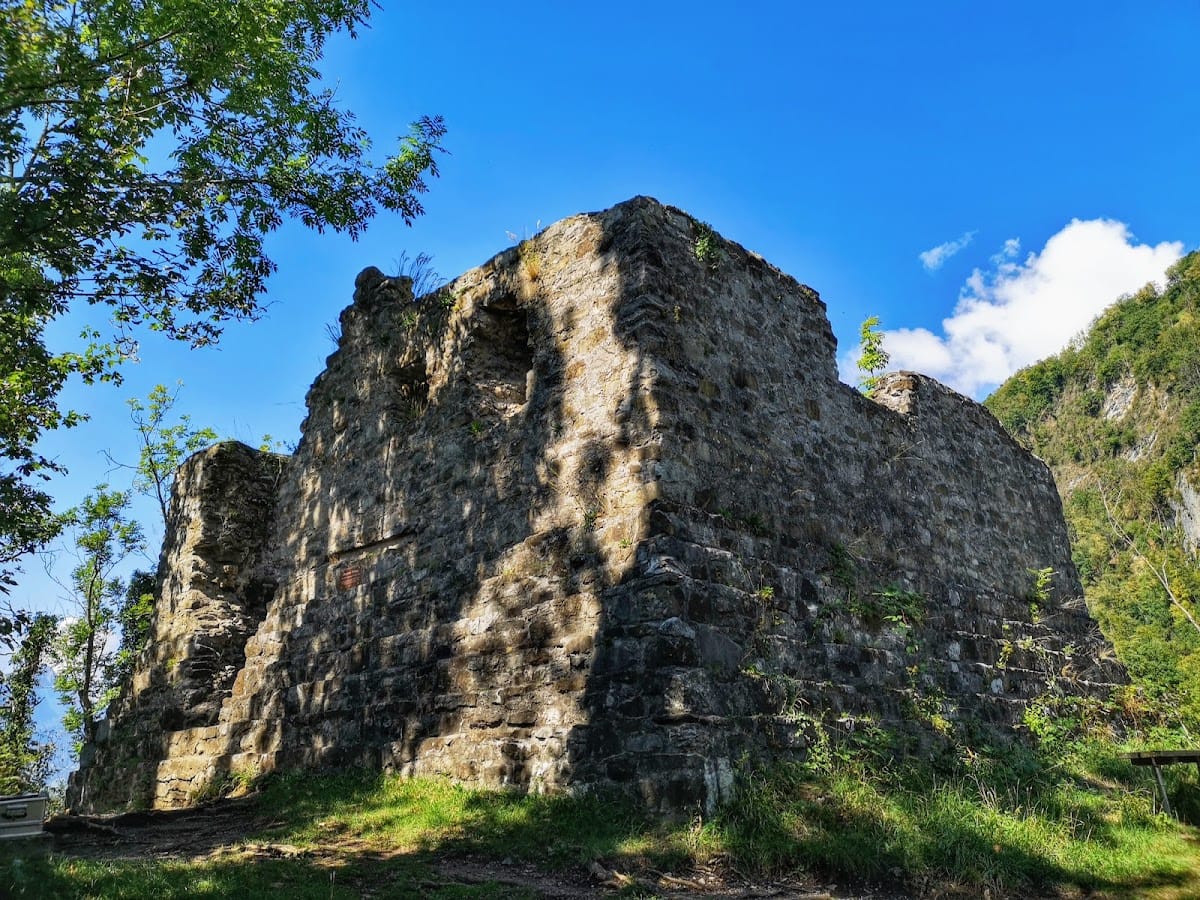
The ruin at Strahlegg presents a tower with a nearly square base measuring about 10.4 meters on each side, constructed primarily from roughly cut limestone blocks. The remaining walls stand up to six meters tall and clearly exhibit differences in masonry that correspond to their historical phases. Most of the stonework dates back to the Roman era, with the medieval builders adding masonry only at the upper section of the western wall.
Internally and externally, the foundation is marked by a series of six stepped offsets—horizontal ledges in the stonework—which helped support the tower’s structure and floors. The highest offset on the inside lies just above where a wooden beam floor once rested, indicating the original Roman interior arrangement.
Beam holes appear in all four walls, showing how wooden beams were inserted to support internal floors and external walkways. Holes on the north and south walls likely held beams for an upper floor inside the tower, while those on the east and west walls probably carried beams for a defensive walkway along the outside of the tower’s perimeter.
The entrance was located on the south side, where the wall has been breached, allowing access into the tower. The combination of Roman construction techniques with medieval modifications reflects the site’s continuous military importance from antiquity through the Middle Ages. Today, the ruin remains in situ, its walls bearing silent testimony to both eras of occupation.
Nearby sites