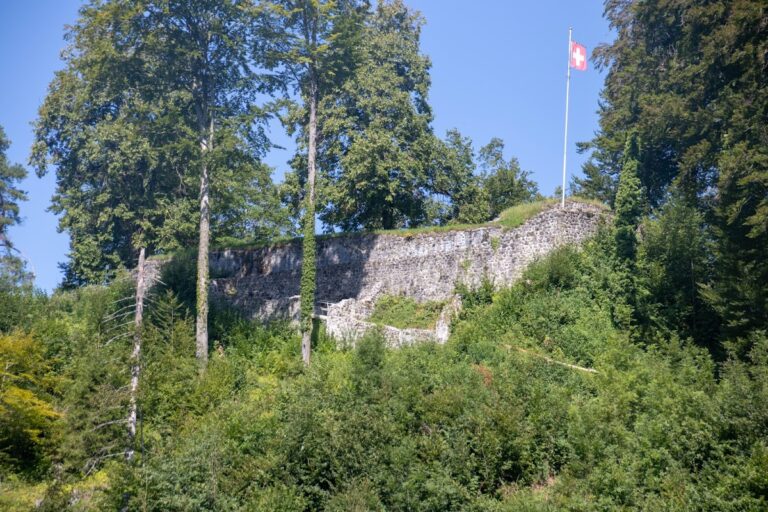
Neu-Toggenburg Castle Ruin: A Counts of Toggenburg Hilltop Castle


Site at a Glance
- Rating
- 4.4
- Popularity
- Very Low
- Country
- Switzerland
- Primary era
- Medieval
- Eras represented
- Medieval
- Civilizations
- Holy Roman Empire
- Site type
- Military
- Remains
- Castle
On this page10 sections
History
Neu-Toggenburg Castle is a ruined hilltop castle in Switzerland, built by the medieval Counts of Toggenburg in the late twelfth century. Located north of the hamlet and pass of Wasserfluh in the municipality of Oberhelfenschwil, it began as a masonry residential tower and later became a larger comital residence.
Foundation and enlargement
The castle probably gained greater importance after 1226, when Count Friedrich I of Toggenburg was murdered. The family then abandoned its former seat, Alt-Toggenburg Castle in Kirchberg, and Neu-Toggenburg was subsequently enlarged. This expansion included the palas, the principal residential and representational building of a medieval castle.
Because of its remote position and difficult access, Neu-Toggenburg never held major strategic importance. It consequently appears only rarely in surviving documentary records.
Abandonment and later history
After the death of the last Count of Toggenburg, Friedrich VII, the castle was abandoned in 1436 and passed to the Barons of Raron. In 1468, Petermann of Raron sold the Toggenburg territory and the castle to the Prince-Abbey of St Gall under Abbot Ulrich Rösch. The Prince-Abbey was a major ecclesiastical institution with territorial authority in northeastern Switzerland. Its abbots had no use for Neu-Toggenburg and allowed the castle to decay.
During the nineteenth century, local inhabitants of Wasserfluh used the ruins as a quarry. Some walls were dismantled because they threatened to collapse onto the hamlet. The overgrown remains were cleared in 1936, when conservation work and archaeological excavations began. Finds from those excavations are displayed at the Toggenburg Museum in Lichtensteig. Neu-Toggenburg is classified as a Class B Swiss cultural property of regional significance.
Remains
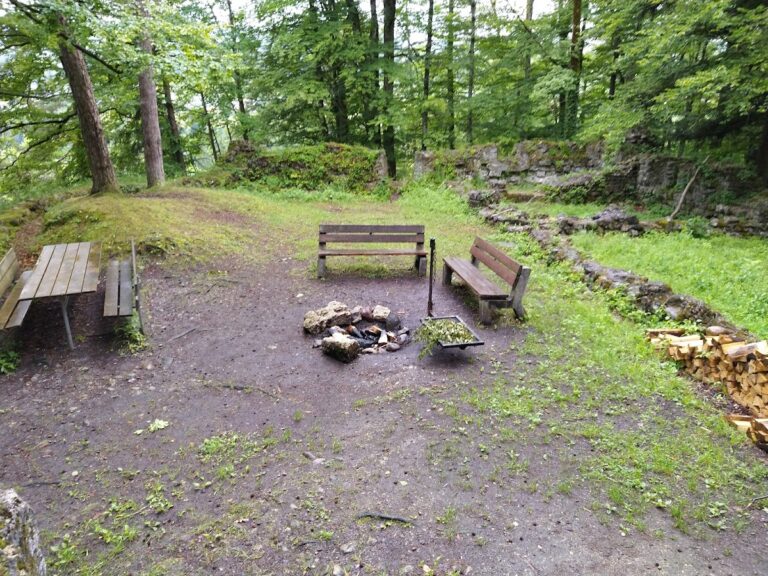
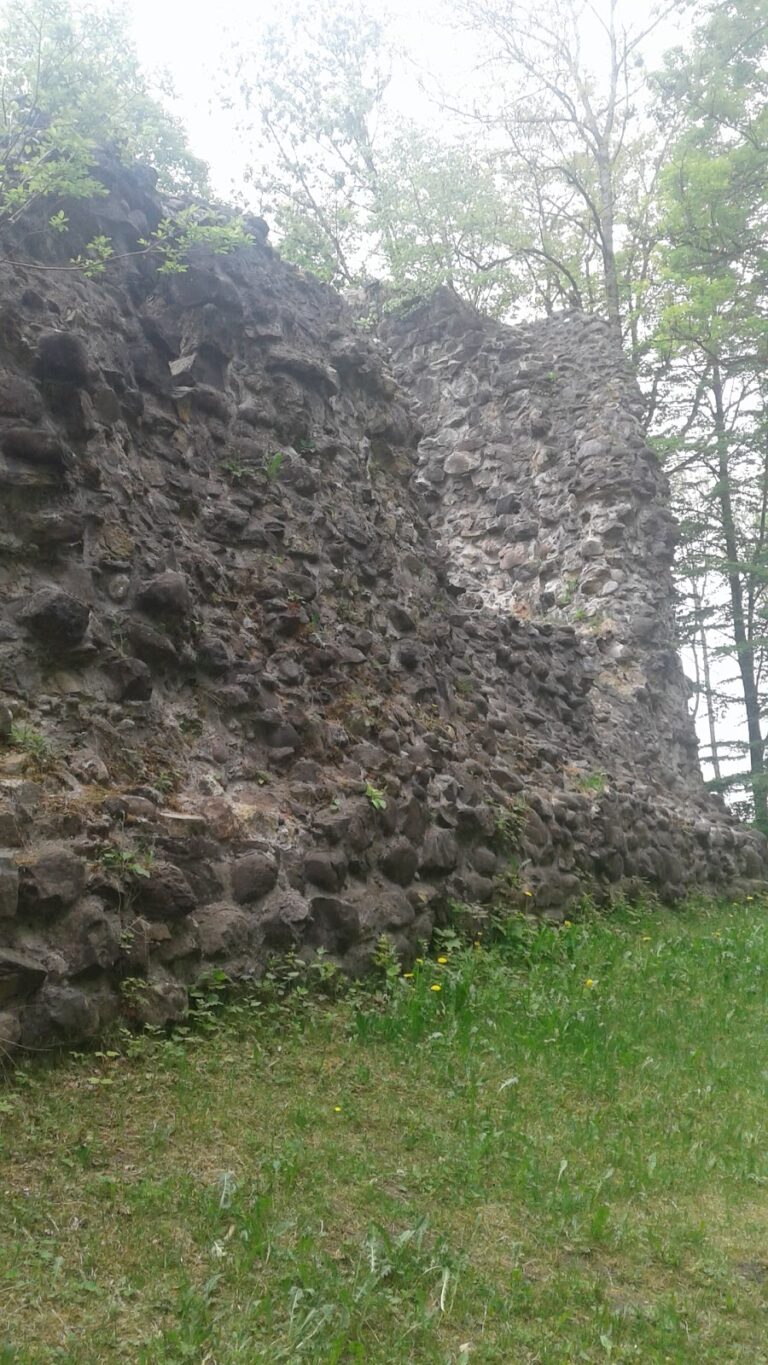
Neu-Toggenburg survives as a small and fragmentary group of remains from an extensive late-twelfth-century hilltop castle. The site was enclosed by a thick defensive wall, with internal and external ditches shaping its defenses. Within the enclosure, traces of the gate, residential buildings, and water-storage facilities preserve parts of the castle’s original organization.
Castle enclosure and defenses
Curtain wall and ditches
The curtain wall, the enclosing defensive wall of a castle, was approximately two metres thick. Only traces of it survive, but the wall’s line can still be followed in places. Two inner ditches, thought to have protected the presumed old keep, remain recognizable, while three additional ditches outside the curtain wall are still visible.
Gate
Traces of the older castle gate remain among the fragmentary walls. The gate formed part of the original enclosed complex and belongs to the defensive arrangement associated with the castle’s early form.
Residential and water facilities
Palas
The foundations of the palas survive within the castle area. This building was added when Neu-Toggenburg was substantially enlarged after 1226, reflecting the site’s development beyond its initial masonry residential tower.
Cisterns
Remnants of two cisterns, structures used to collect or store water, also remain. Their surviving traces form part of the castle’s internal facilities alongside the residential and defensive structures.
The surviving walls were conserved after the site had served for a long period as a quarry and later become overgrown and obscure. The excavations and clearance begun in 1936 helped reveal the fragmentary remains and produced finds now held at the Toggenburg Museum in Lichtensteig.