Burgruine Kräheneck: A Medieval Fortress in Pforzheim, Germany
Visitor Information
Google Rating: 4.2
Popularity: Low
Official Website: www.schwarzwald-tourismus.info
Country: Germany
Civilization: Medieval European
Site type: Military
Remains: Castle
History
Burgruine Kräheneck is located in the municipality of Pforzheim, Germany. This medieval fortress was constructed during the 11th century by the noble family known as the lords of Weißenstein, who were originally referred to as the lords of Kräheneck. The castle’s earliest surviving record dates back to the year 1194, when it appeared under the name “Creinegg” in documents tied to the local aristocracy.
Throughout its history, Kräheneck served primarily as a defensive outpost overseeing the adjacent lower Weißenstein castle ruins, situated roughly 300 meters downhill. Its strategic position on a narrow spur encircled by the Nagold River suggests a military purpose focused on surveillance and protection rather than habitation. The castle is believed to have never been fully completed, as evidenced by the lack of residential or economic structures within the site.
In the modern era, Kräheneck experienced efforts toward preservation and public engagement. The first renovation took place in 1883, with the castle undergoing further restoration in 1972 to stabilize its significant remains. Official recognition of its historical value was secured in 1936 when Kräheneck was entered into Pforzheim district’s official registry of protected monuments. Since 1928, the site has hosted castle festivals, which were held intermittently until 1939 and were revived in recent decades, marking Kräheneck’s continued cultural importance in the region.
Remains
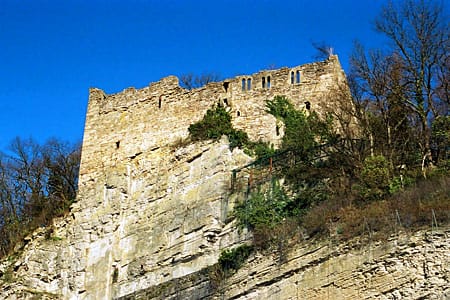
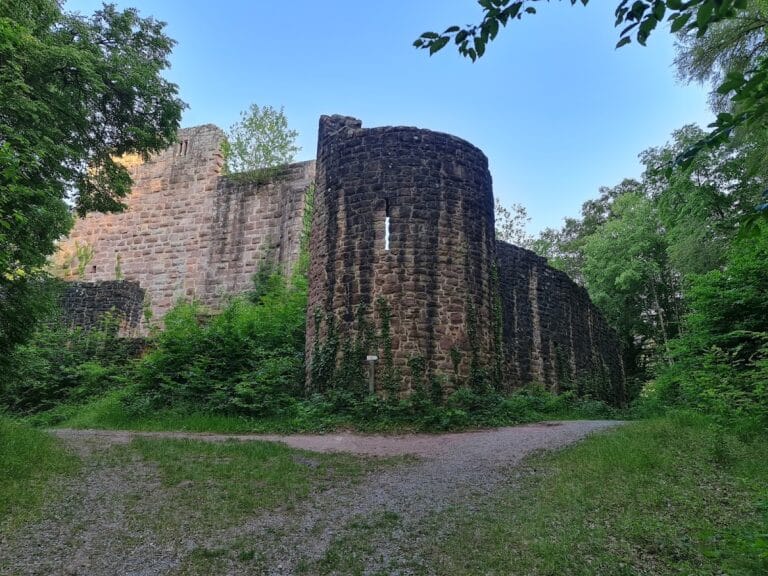
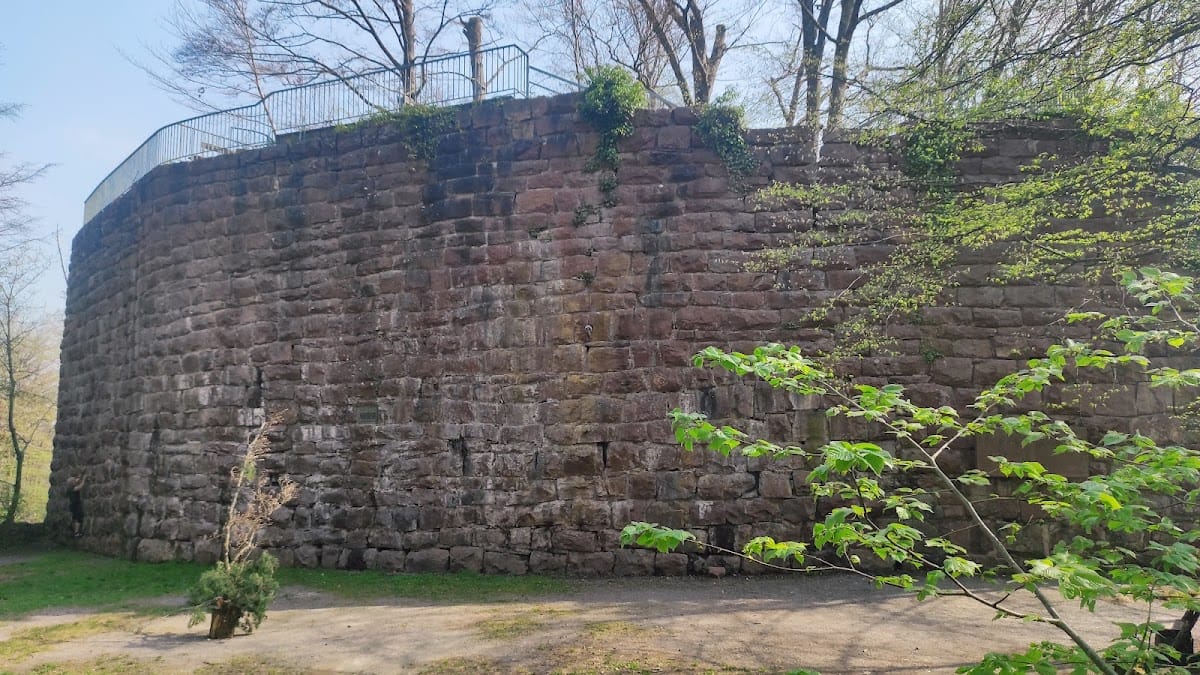
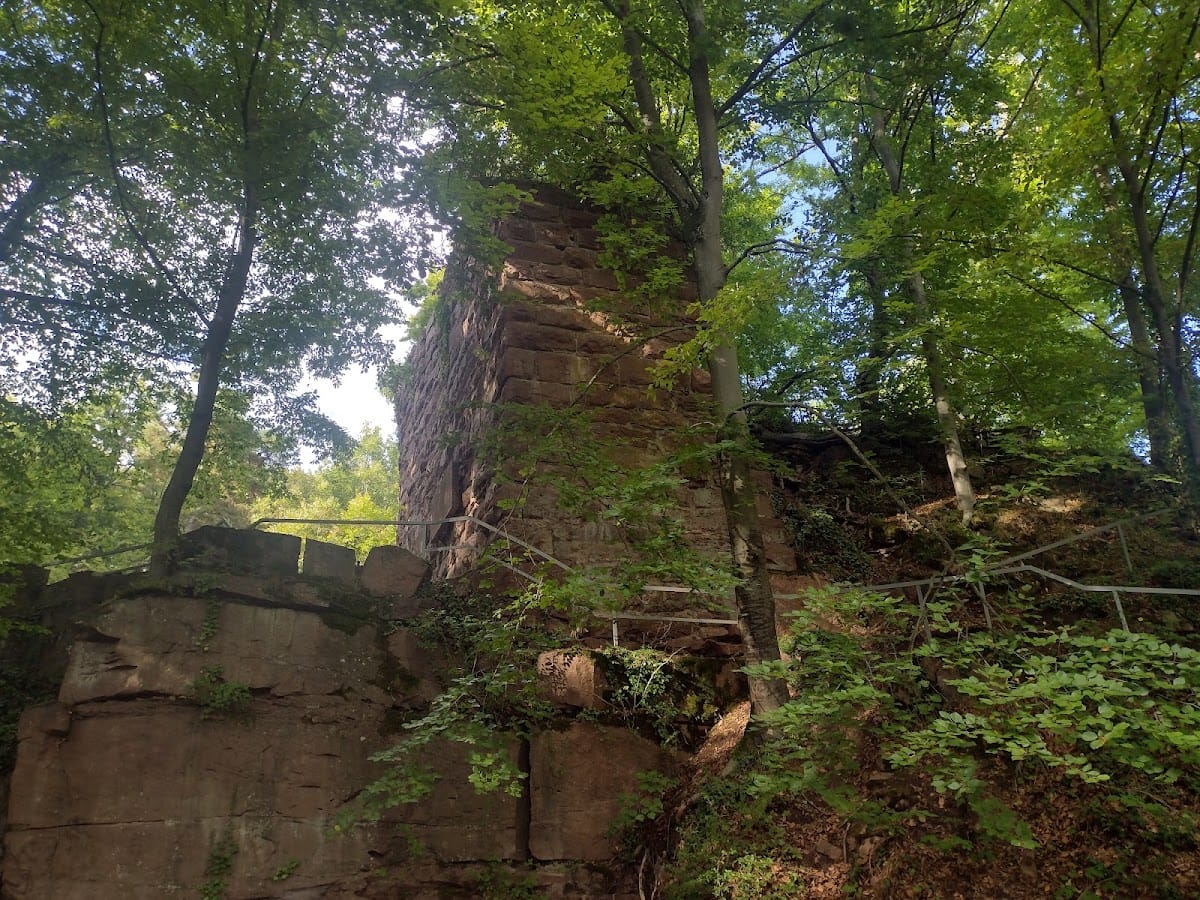
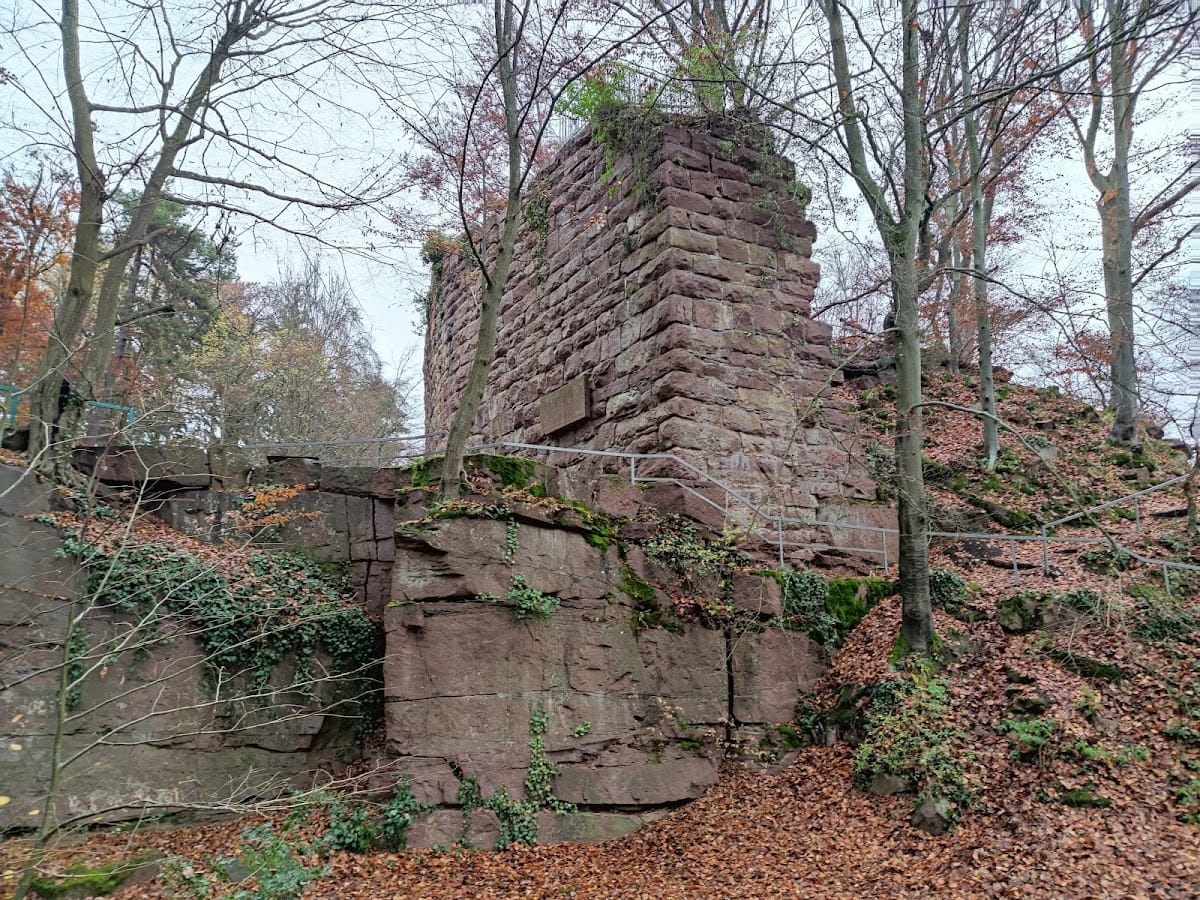
The ruins of Kräheneck are best known for their impressive shield wall, a type of fortified barrier designed to protect the castle from direct attack. This shield wall rises up to ten meters in height and measures nearly four meters thick. It was constructed from carefully shaped blocks of red sandstone, a material quarried locally and worked to form the massive defense structure. This wall dominates the site’s layout, emphasizing the castle’s primary role as a stronghold rather than a residential complex.
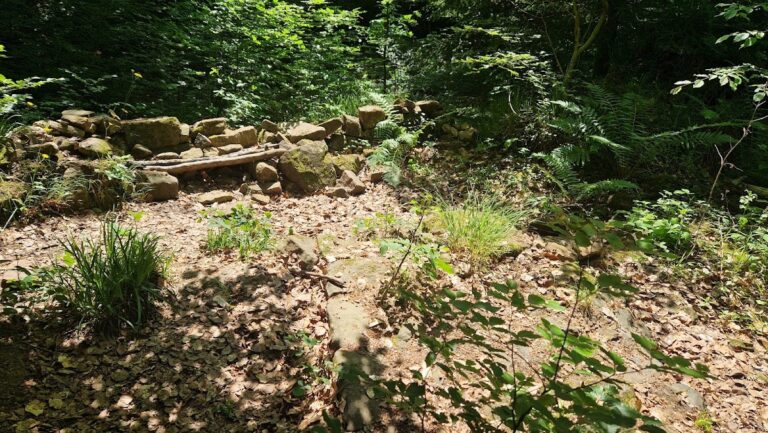
In front of the shield wall lies a neck ditch, a defensive trench carved into the rock to impede approaching attackers. Positioned at the narrowest part of the hill spur, this ditch enhanced the castle’s protection by isolating the wall from the surrounding terrain. Adjacent to the ditch, there is a stepped area where builders extracted stones used in the shield wall’s construction, providing tangible evidence of the castle’s building process.
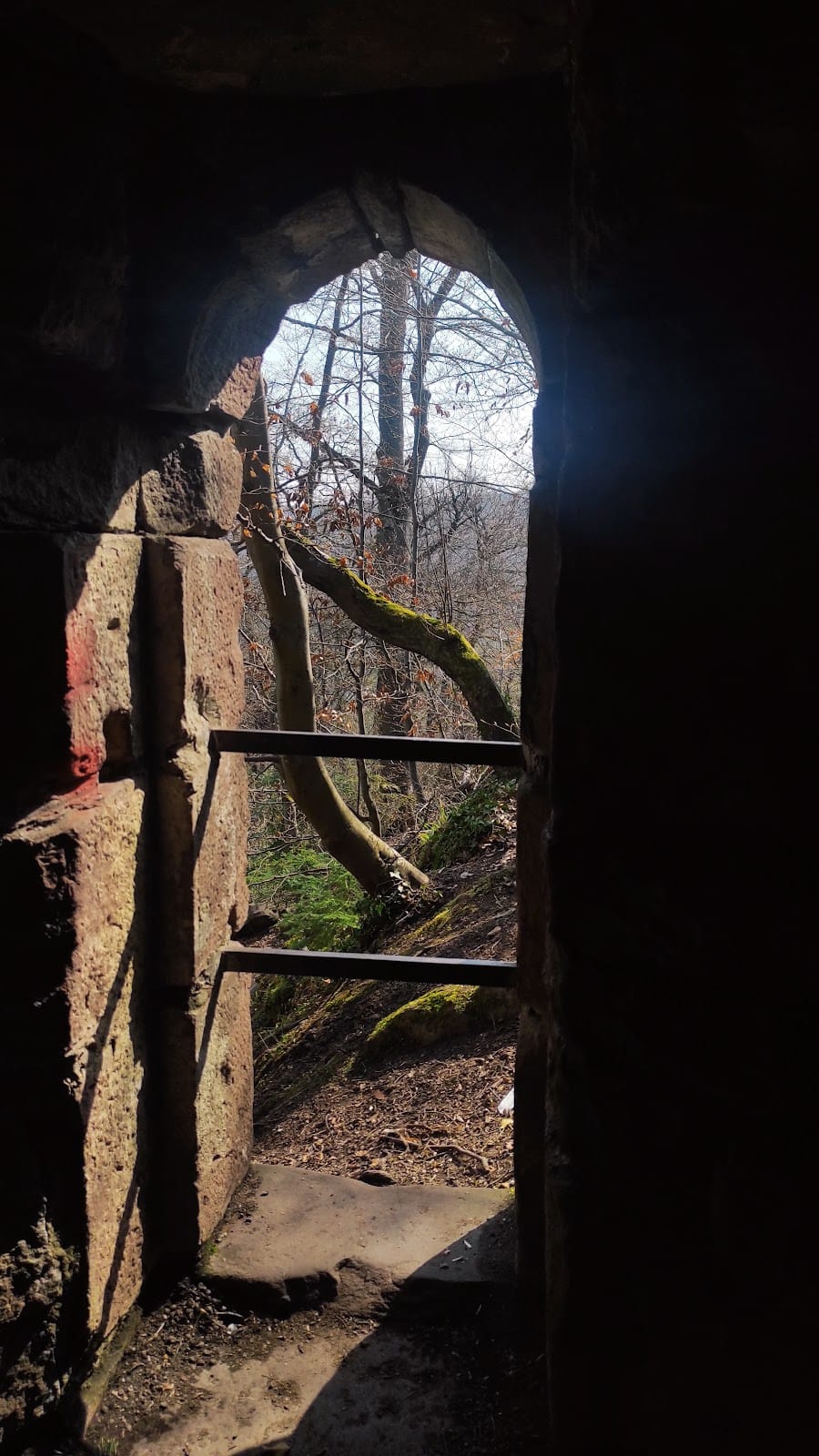
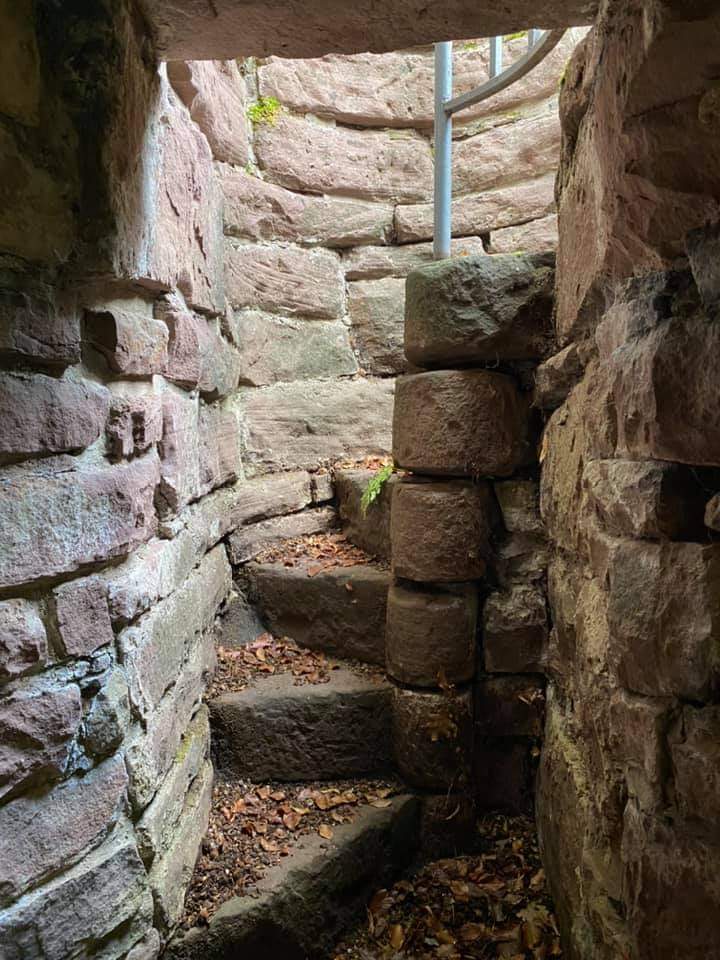
Within the northern angled section of the shield wall, remnants of a chamber remain visible, including a shooting slit—an opening designed for archers or crossbowmen to defend the castle while remaining protected. This chamber also contains the remains of a spiral staircase, which would have provided access between different levels of the wall. Traces of a similar chamber on the southern side can be faintly discerned, though less well preserved.
While Kräheneck lacks surviving residential or economic buildings, the substantial preservation of its defensive features conveys its original military intent. The current state of the ruins showcases in situ portions of the fortification dating from the medieval period, allowing for a clear understanding of the castle’s structural focus on defense rather than domestic use.
Nearby sites