Burg Triberg: A Medieval Noble Castle in Germany


Site at a Glance
- Rating
- 4.3
- Popularity
- Low
- Country
- Germany
- Primary era
- Medieval
- Eras represented
- Medieval
- Civilizations
- Habsburg, Holy Roman Empire
- Site type
- Military
- Remains
- Castle
On this page6 sections
History
Burg Triberg is a medieval noble castle in Germany, situated above the city of Triberg in the Black Forest. Its beginnings are uncertain: it may have existed in the early thirteenth century, emerged after the former Lordship of Hornberg was divided around 1200, or been established around 1325. The settlement of Triberg grew below the castle during the first half of the fourteenth century.
Origins and early development
The name Triberg appears in 1239, when the ministerial, a member of the service nobility who served a ruler or territorial lord, Peter von Triberc witnessed a legal transaction involving Count Berthold of Neuenburg and Lüthold, Bishop of Basel. The castle may have been built by Burkhard I of Triberg and was held by a collateral branch of the Lords of Hornberg. When the Triberg line died out, the town and castle passed to the Counts of Hohenberg.
Habsburg rule and repeated rebuilding
Duke Albrecht II of Austria purchased the lordship in 1355. The Habsburgs, a major European ruling dynasty with extensive possessions in the German-speaking lands, repeatedly pledged the castle as security. The Margraves of Baden received it in 1372, the Counts of Fürstenberg in 1493, and during the sixteenth century it was pledged to the Freiburg jurist Ulrich Zasius and the military commander Lazarus von Schwendi. The lordship ultimately became part of Austria in 1654, within Further Austria, the Habsburg territories in the western German and Alpine regions.
Fire destroyed the castle in 1489, prompting reconstruction. In 1525, during the German Peasants’ War, a widespread uprising in the German-speaking lands, insurgent Black Forest peasants and townspeople burned it again. Its rebuilding then required compulsory labor. The castle suffered further partial destruction in 1616. Swedish soldiers finally destroyed it during the Thirty Years’ War, a European conflict from 1618 to 1648 involving religious, dynastic, and territorial struggles, during the Christmas days of 1642.
Archaeological investigation
Excavations in 1934 cleared several surviving wall sections and exposed the ground plan of the former castle complex, along with a pillar. These remains clarified the physical extent and organization of the destroyed stronghold.
Remains
Hilltop spur and surviving masonry
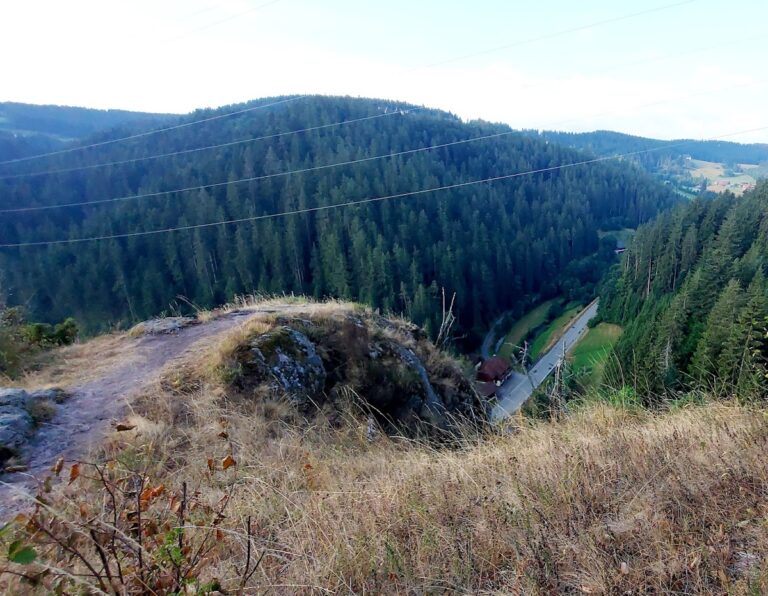
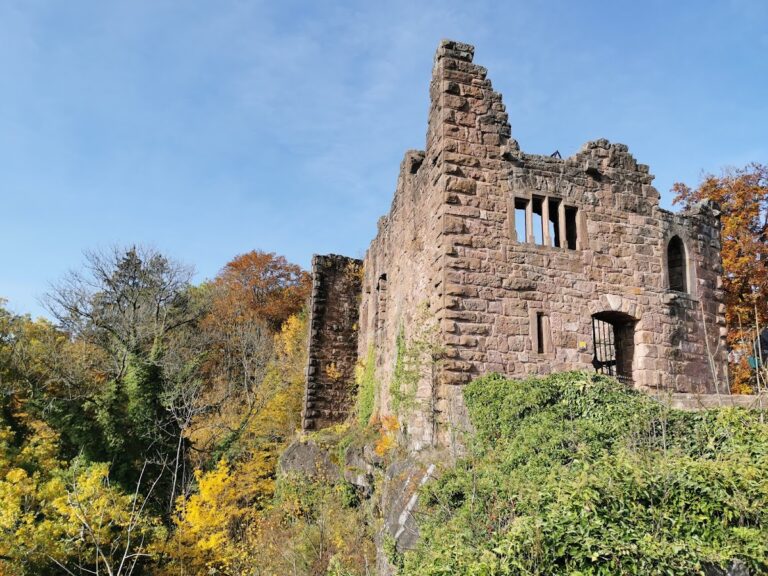
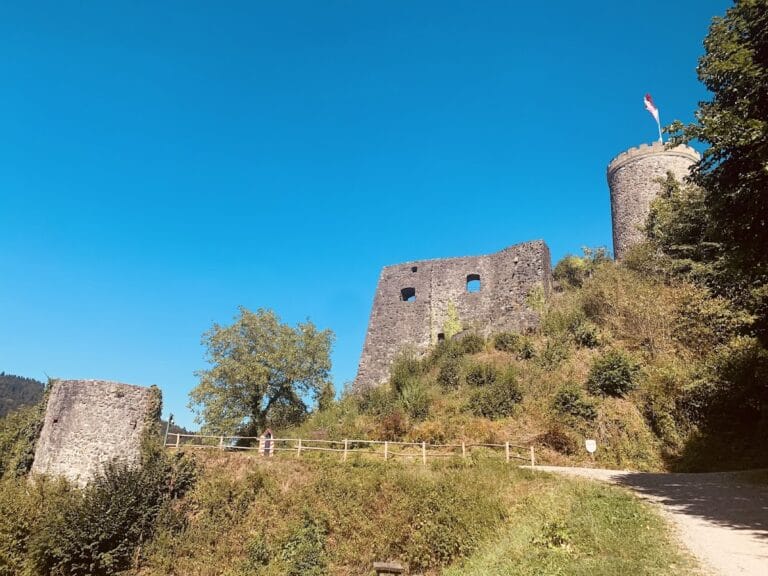
Burg Triberg was a hilltop spur castle on a projecting mountain ridge southeast of Triberg, in Baden-Württemberg’s Black Forest. This type of fortification used the surrounding slopes as part of its defensive setting. The visible remains comprise sections of masonry in the Burggarten beside the Kurhaus. The 1934 excavations revealed portions of the former complex’s ground plan and a surviving pillar, allowing elements of its original arrangement to be identified among the remaining walls.