Ardvreck Castle: A MacLeod Tower House on Loch Assynt
Site at a Glance
- Rating
- 4.6
- Popularity
- Medium
- Country
- United Kingdom
- Primary era
- Medieval
- External website
- Open
- Eras represented
- Medieval, Early Modern
- Civilizations
- Kingdom of Scotland
- Site type
- Military
- Remains
- Castle
On this page15 sections
History
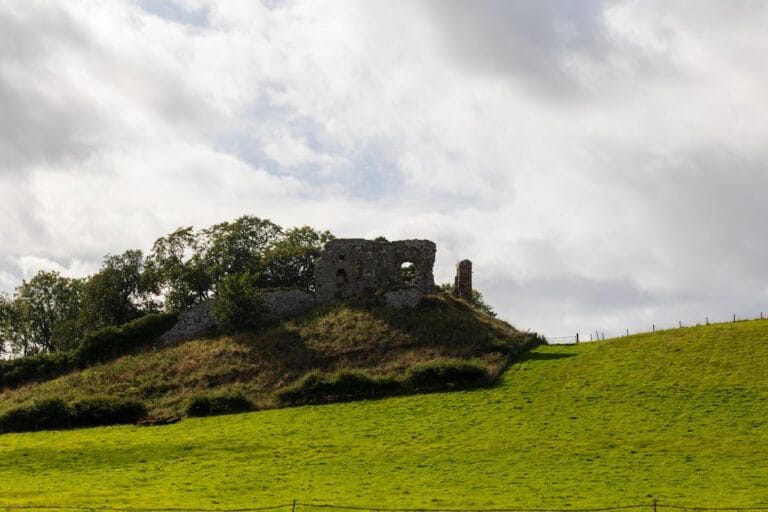
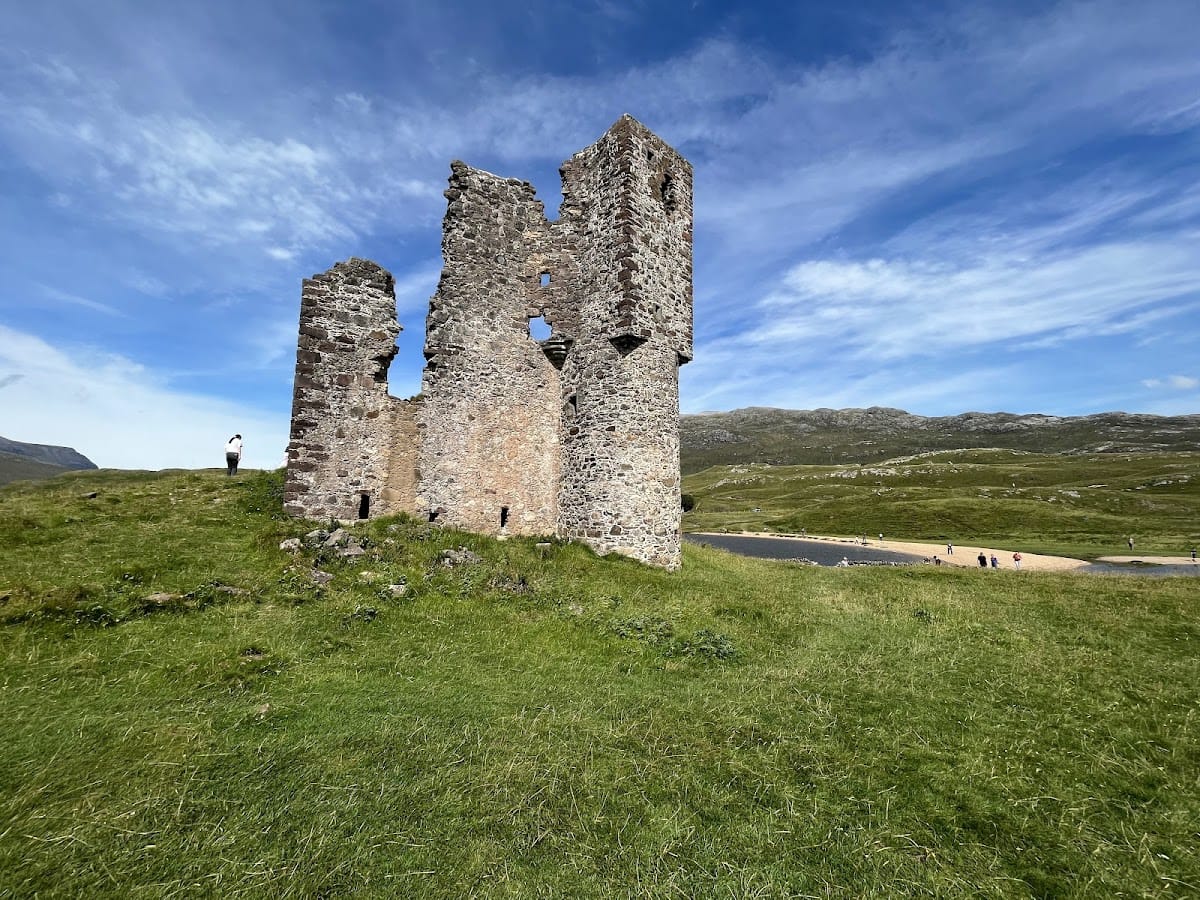
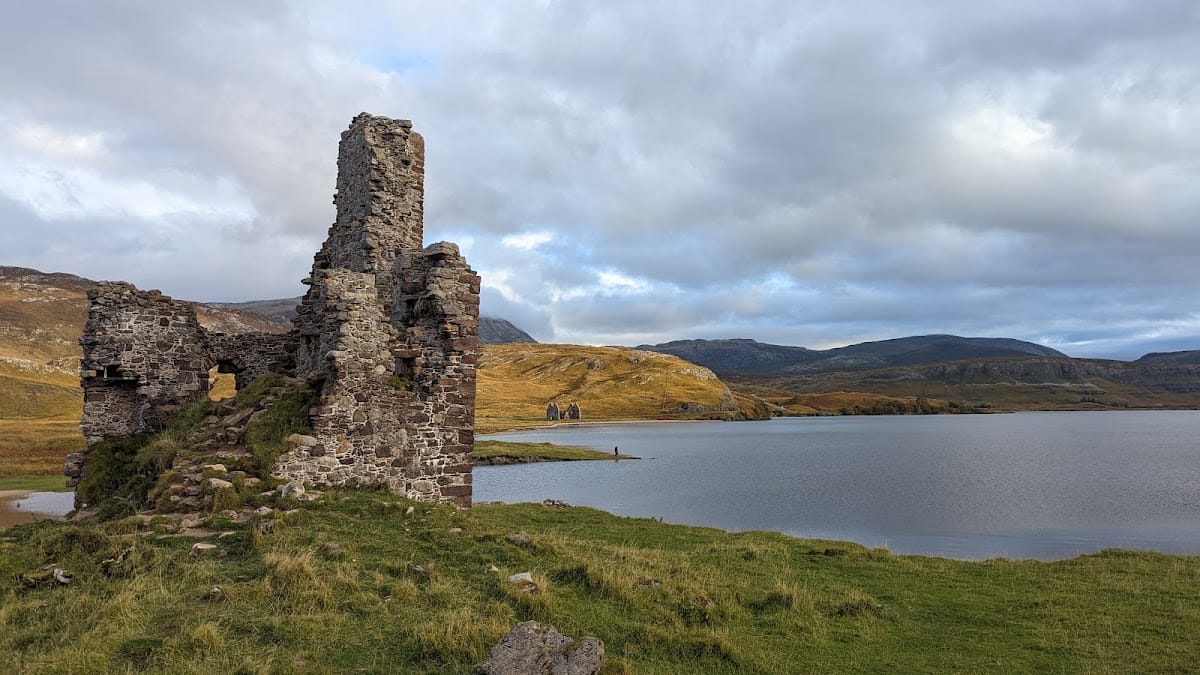
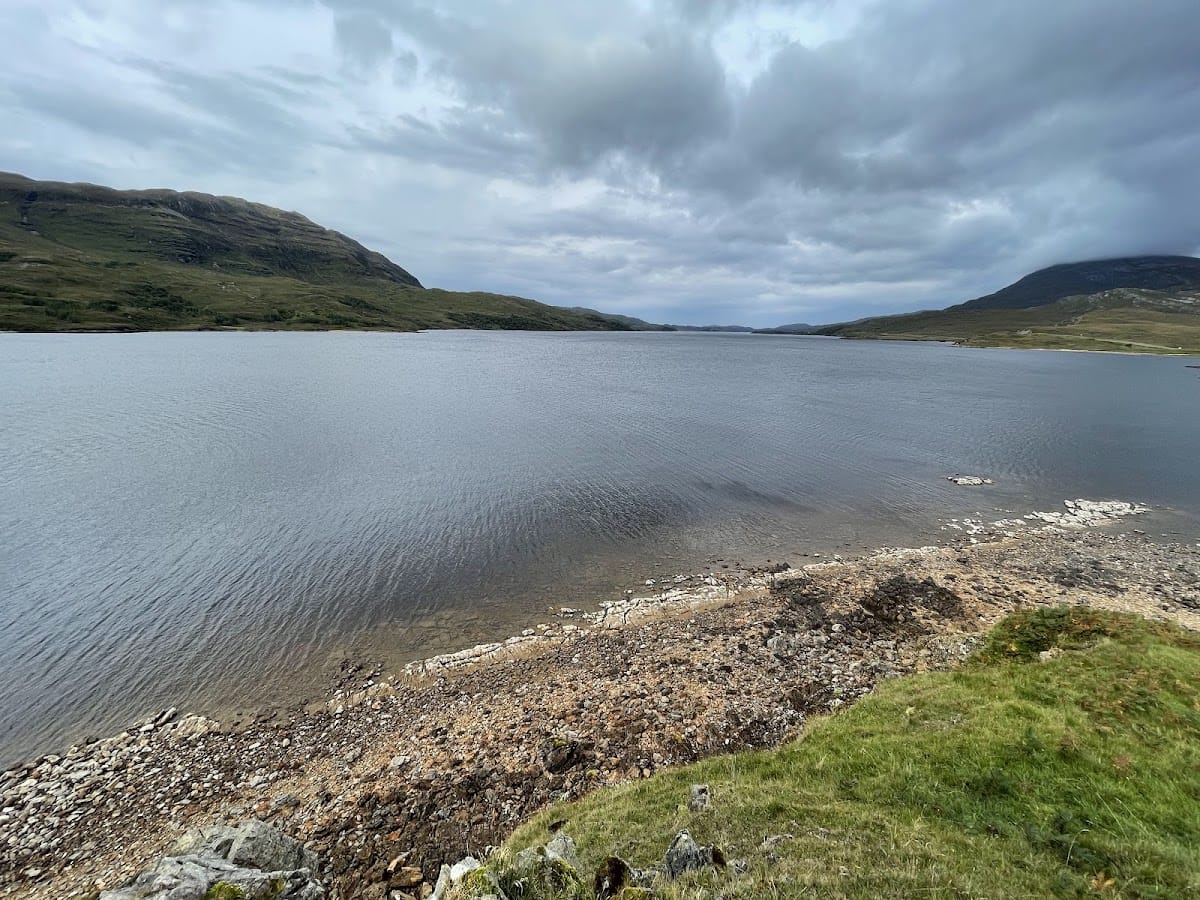
Ardvreck Castle is a ruined fortified residence on the north shore of Loch Assynt in Scotland, United Kingdom, built by the MacLeods of Assynt around 1490. It stands on a small peninsula that can become an island when the water level rises. The castle developed from a simple rectangular tower house into a larger stronghold and later became associated with the surrender of James Graham, 1st Marquess of Montrose, during the Wars of the Three Kingdoms.
MacLeod Origins and Expansion
The MacLeods of Assynt were a branch of Clan MacLeod, one of the Highland kinship and political networks that organized allegiance, landholding, and military support. They had held Assynt since the early fourteenth century. The earliest castle at Ardvreck was probably erected around 1490 as a relatively simple rectangular tower house, a fortified residence arranged as a tall, compact building with defensive lower levels and domestic rooms above.
Around 1590, Donald Ban MacLeod of Assynt substantially enlarged the stronghold. The work included an additional tower and extensive enclosing walls, transforming the earlier residence into a more imposing defended complex. Another dating places the castle’s construction generally in the 1590s, while the earlier foundation of the MacLeod castle is associated with the period around 1490.
Sieges and the Surrender of Montrose
Clan MacKenzie unsuccessfully besieged Ardvreck Castle in 1646. The episode took place during the Wars of the Three Kingdoms, a series of mid-seventeenth-century conflicts in Britain and Ireland over monarchy, parliament, and religious authority.
On 30 April 1650, the royalist James Graham, 1st Marquess of Montrose, surrendered at Ardvreck after his defeat at Carbisdale. Montrose had hoped to obtain protection from Neil MacLeod of Assynt, but Neil was absent. Neil’s wife, Christine, imprisoned Montrose and delivered him to the Covenanters, Scottish opponents of royal religious and political policies who supported the National Covenant and a Presbyterian settlement during the civil wars. Neil MacLeod’s own involvement in the surrender remains uncertain.
Montrose was taken to Edinburgh and executed on 21 May 1650. Neil MacLeod later faced political reprisals after the restoration of the monarchy. He was treated as a rebel and condemned as one in July 1672, although his later fate is unknown.
MacKenzie Control and Abandonment
In 1672, the Seaforth MacKenzies captured Ardvreck Castle after a fourteen-day siege and took possession of the MacLeod estate. Their claim had a financial basis, since they had previously acquired obligations arising from MacLeod debts. The capture transferred control of the stronghold and the surrounding estate from the MacLeods to the MacKenzies.
The MacKenzies replaced the relatively uncomfortable castle with the more modern Calda House in 1726. Ardvreck was then abandoned, and some of its masonry was reused in the construction of the new house. Calda House burned in 1737 and was not rebuilt. Its masonry was later reused in other local buildings.
Destruction, Estate Changes, and Preservation
The destruction of Ardvreck Castle is not fully resolved. The castle is described as having been almost completely burned in 1737, while its remaining walls are also said to have collapsed after a lightning strike in 1795. These accounts leave the precise sequence of the castle’s destruction uncertain.
The MacKenzies supported the Jacobite rising of 1745, an attempt by supporters of the exiled Stuart dynasty to restore it to the British throne. After the Jacobite defeat at Culloden in 1746, the MacKenzies lost their estate. The Earl of Sutherland acquired it in 1757, and the estate remained in Sutherland ownership until the end of the First World War.
The Historic Assynt Trust secured and renovated the ruins of Ardvreck Castle and Calda House in 2003 and 2004. Ardvreck Castle and its surroundings are protected as a Scheduled Monument, a legally protected archaeological or historic site considered nationally important for preservation.
Remains
Ardvreck Castle occupied a substantial area of the peninsula on Loch Assynt. The surviving complex is centred on the remains of a rectangular tower house, with associated foundations, sections of enclosing walls, and traces of defensive works extending across the site. The ruined masonry preserves part of the main building and the stair tower, while the wider layout indicates a defended residence with a central court, garden enclosure, service buildings, and outer protection.
Central Tower and Defences
Tower House
The main building was a rectangular, probably three-storey tower house positioned at the centre of an inner court. Its ground floor contained vaulted spaces, including three vaulted rooms. A large hall occupied the level above and was probably vaulted as well, while the upper floors had timber ceilings. This arrangement combined strongly built lower rooms with more spacious domestic accommodation above.
Stair Tower
A circular stair tower was added at the south-eastern corner of the main building, probably during the late-sixteenth-century enlargement. Its upper storeys were rectangular and extended beyond the base on corbels, projecting blocks that supported the overhanging parts of the structure. The surviving masonry includes sections of this stair tower as well as part of the south side of the main tower house.
Enclosing Walls and Outer Works
Extensive walls probably enclosed a garden around the central buildings. A stone wall crossed the narrowest part of the peninsula. Traces of an outer defensive wall and ditch also survive, showing that the castle’s protection extended beyond the central tower and its inner court.
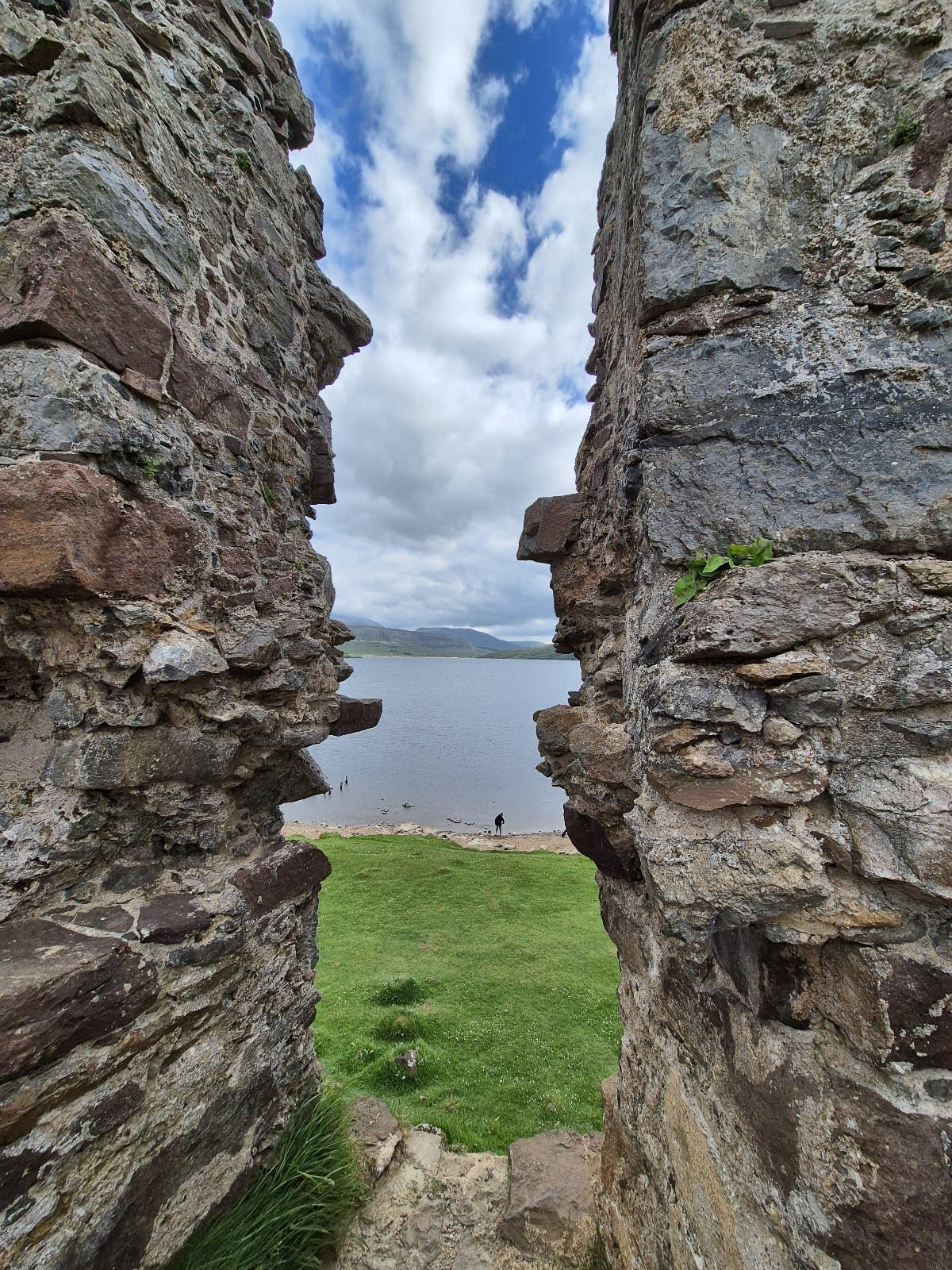
The main building is highly fragmentary. The north wall has disappeared completely, and only small remains survive on the east and west sides. The surviving sections nevertheless preserve the position and general form of the central tower house within the larger defended enclosure.
Associated Buildings and Finds
Service Structures
Other buildings on the peninsula probably formed part of the castle complex, including stables and small houses for servants. Their foundations contributed to the wider arrangement of the stronghold beyond the principal residence.
Oven Structure
South-west of the main building are the foundations of a rectangular structure containing identifiable remains of an oven. The feature belongs to the service area of the complex and provides physical evidence of activity outside the central tower house.
Iron Guns
Two iron guns were found in one of the vaulted rooms on the ground floor. They were later moved to Lochinver for preservation, linking the surviving lower-level spaces with the castle’s military function.
Legends of Ardvreck
Local traditions describe two ghosts associated with Ardvreck Castle. One is a tall man identified with Montrose. The other is a weeping girl said in different versions to have been the daughter of a MacLeod clan chief or of the castle’s builder. One tradition claims that her father promised her to the Devil in exchange for help constructing the castle, after which she threw herself from a tower.