Castillo de los Cornel: A Medieval Fortress in Alfajarín, Spain
Site at a Glance
- Rating
- 4.3
- Popularity
- Low
- Country
- Spain
- Primary era
- Medieval
- Eras represented
- Medieval
- Civilizations
- Crown of Aragon, Taifa Kingdoms, Taifa of Zaragoza
- Site type
- Military
- Remains
- Castle
On this page9 sections
History
Castillo de los Cornel is a Muslim fortress in Alfajarín, Spain, built in the eleventh century as part of the defensive belt of Islamic Zaragoza. Its origins may instead lie in the tenth or eleventh century. The stronghold protected routes approaching Zaragoza, including the road toward Lleida, and was one of the important fortresses surviving within that network.
Muslim and Aragonese rule
Alfonso I of Aragon, known as Alfonso the Battler, conquered Zaragoza in 1118, beginning the Christian takeover of surrounding fortresses. Alfajarín and its castle surrendered in 1119. Muslim forces soon regained the fortress, but Alfonso retook it in 1131 and appointed Fortún Galíndez as its military governor.
After Alfonso I died in 1134 from wounds received at the Battle of Fraga, the castle again came under Almoravid control. The Almoravids were a North African Islamic dynasty that ruled parts of al-Andalus. The fortress was permanently reconquered in 1141 during the rule of Ramón Berenguer IV, count of Barcelona and prince of Aragon. It was then administered by appointed military governors until 1196. During this period, records used the names Alfagareno and Alliagerin for the site.
The Barony of Cornel and later decline
From the late thirteenth century to the late fourteenth century, the castle belonged to the Barony of Cornel. James II of Aragon donated it to the barony in 1293. After the barony became extinct, the fortress passed among different owners, including Ramón de Espés and the Alagón family. It was later abandoned and entered a long process of ruin.
Castillo de los Cornel is protected as a historic monument and listed as a cultural-interest property. The declaration was issued on 17 April 2006 and published on 22 May 2006.
Remains
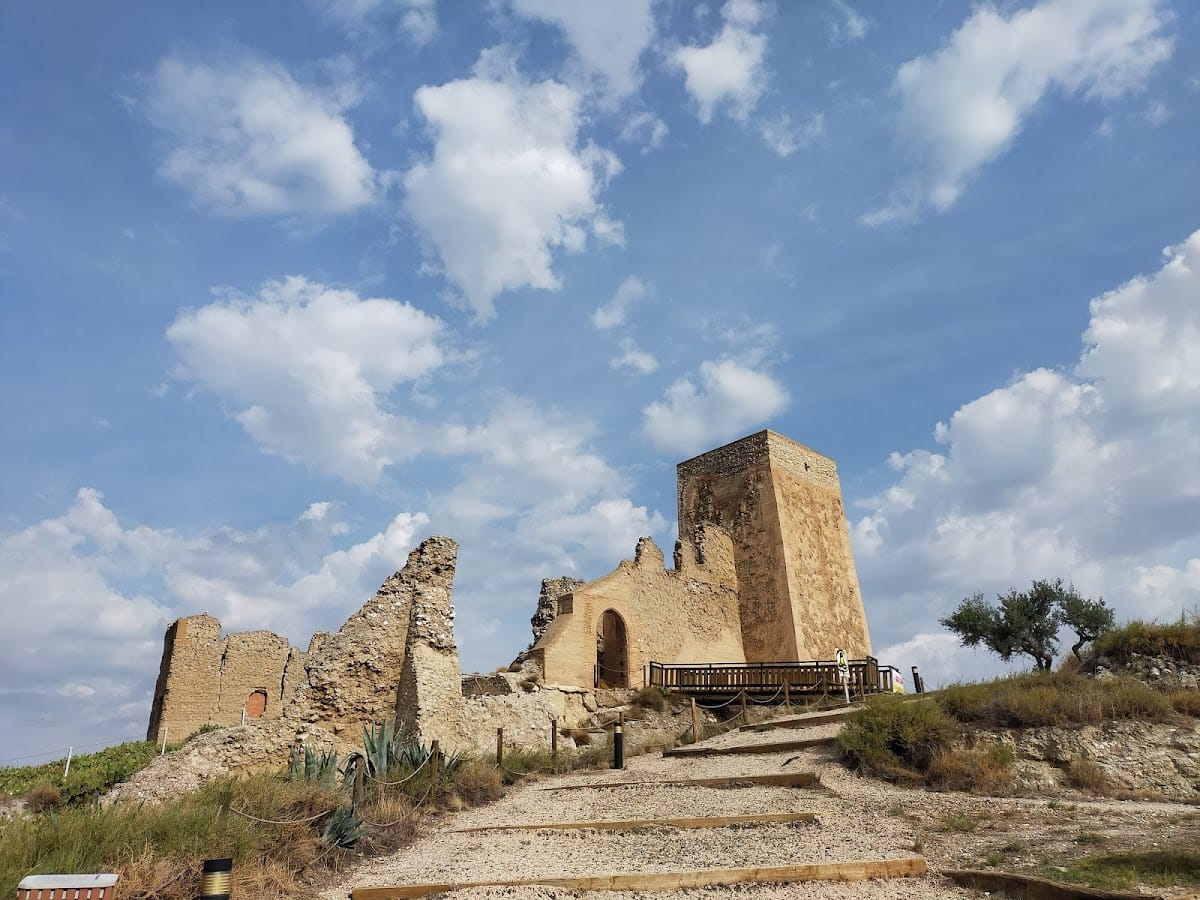
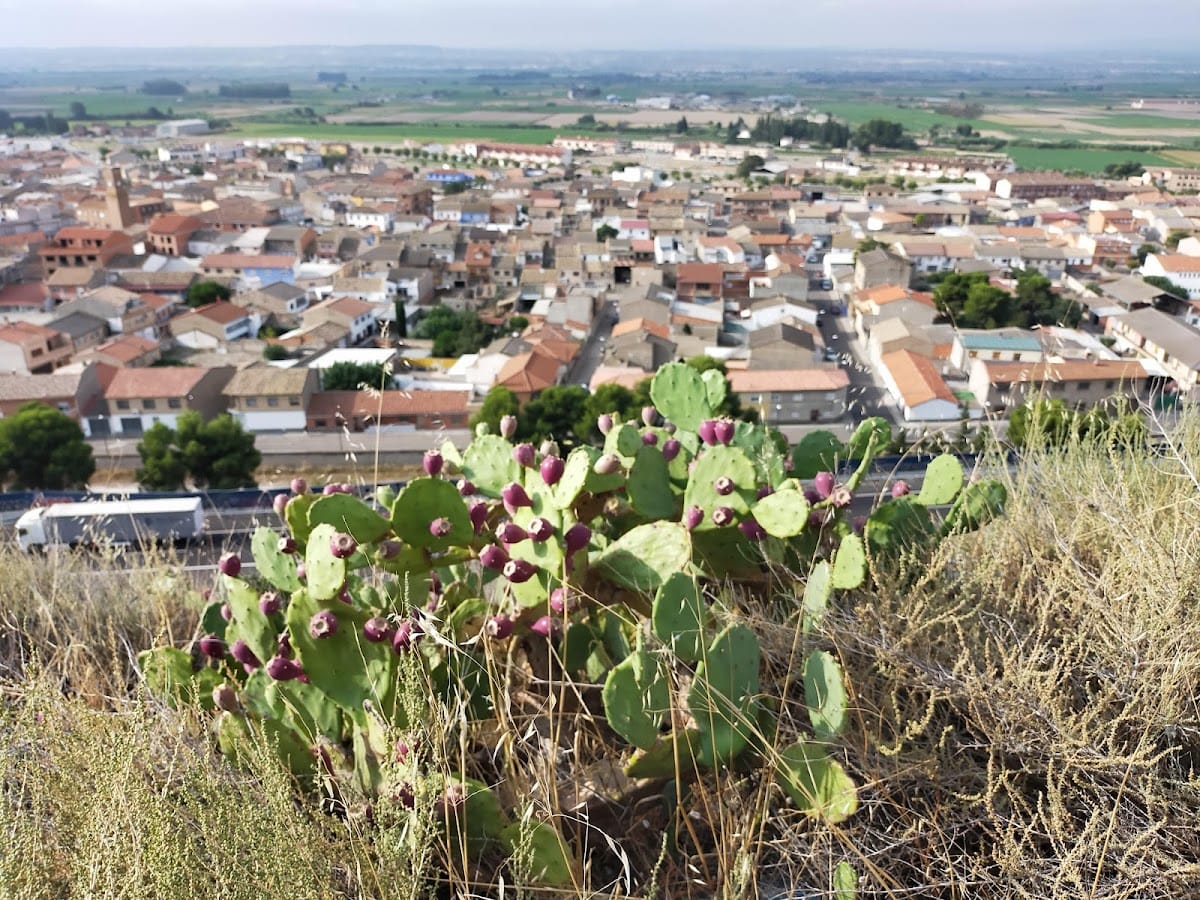
The fortress occupies a rocky spur above the Ebro riverbank, on a summit of the Montes Blancos beside the Hermitage of the Virgin of the Rock. Natural cliffs defend the north and east sides, while an artificial ditch protected the other approaches. The castle is arranged around an irregular pentagonal enclosure measuring approximately 100 by 60 metres.
Fortress entrances and defenses
Drawbridge towers
Access was provided by a drawbridge defended by two towers. One tower contained a bent entrance passage with a pointed arch faced in brick. The entrance is now severely deteriorated. The second tower is a tall square structure, approximately 6 metres on each side. Its interior was divided into two levels, each covered by a pointed barrel vault, a longitudinal vault with a pointed cross-section rather than a semicircular one. The vault at the lower level has disappeared. On the side facing the enclosure, two doors and a pointed-arch window remain as distinctive features.
Main enclosure
The north wall is the least deteriorated part of the enclosure. It contains a small postern, or secondary gateway, linking the enclosure with the keep, and a rectangular turret guarded this connection. At the eastern end, a pentagonal turret survives in very poor condition. The artificial ditch extends along this side of the fortress.
Keep
The keep was built in the fourteenth century, when the castle as a whole was reinforced. Two very thick walls of the once-imposing tower survive. The structure was made of rammed earth, a technique in which compacted earth forms the structural wall, and was faced with solid brick up to approximately half its height.
Hermitage of the Virgin of the Rock
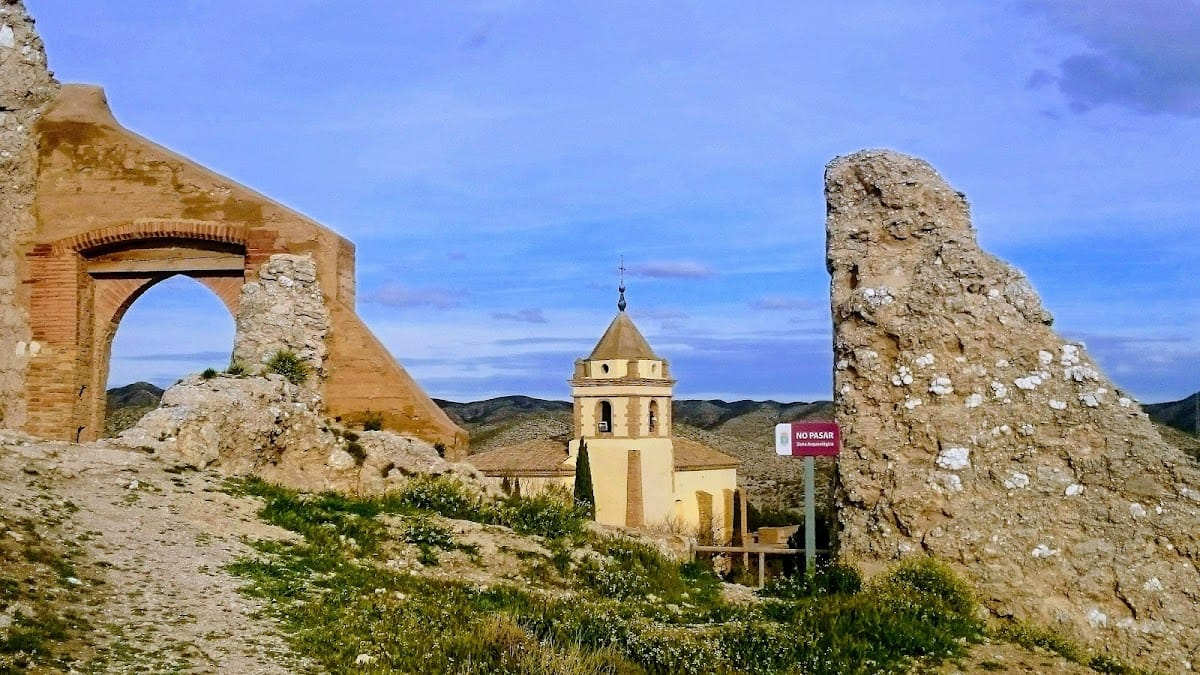
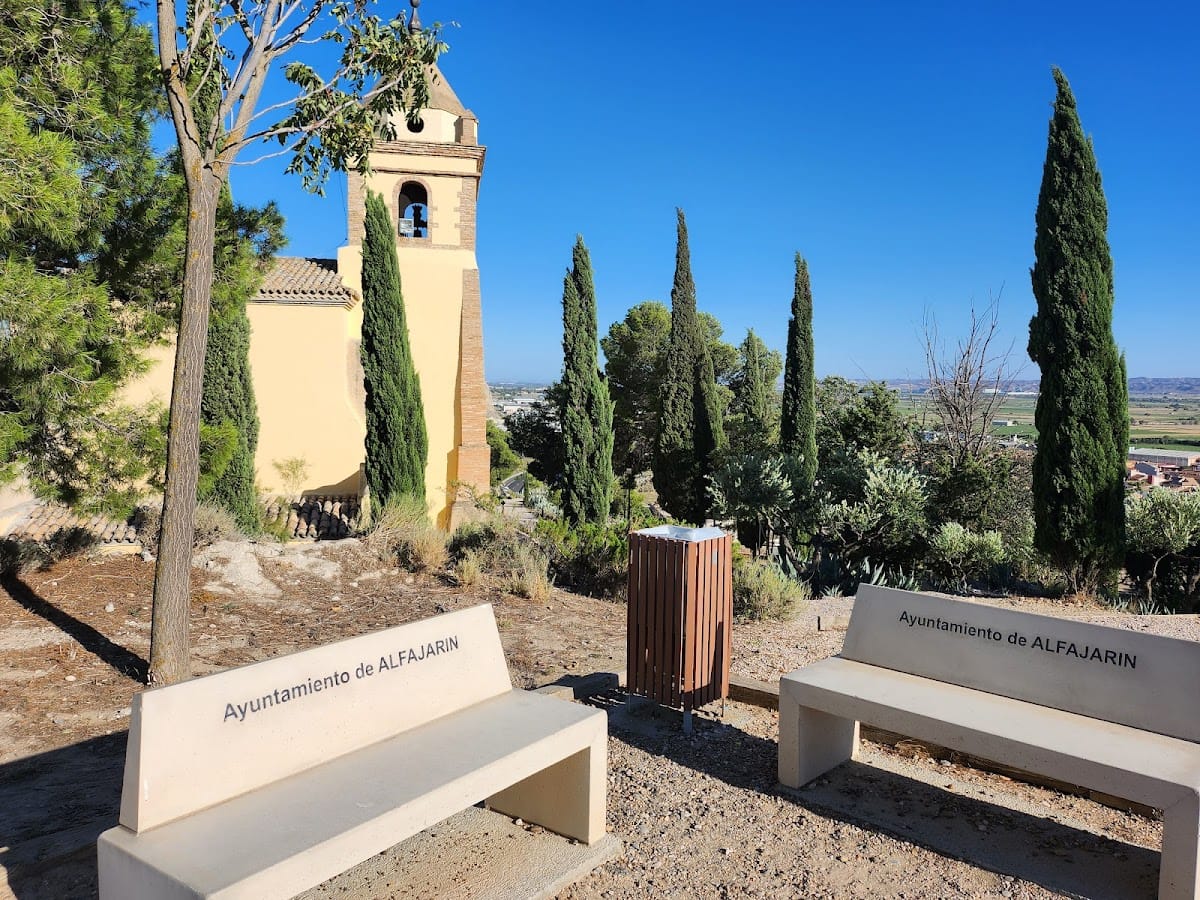
The neighboring Hermitage of the Virgin of the Rock was built from the same gypsum rammed-earth material as the castle. Its façades were later coated and painted. Older views of the west façade, which faces the fortress, show thick flanking walls. The surviving wall stubs indicate that the original building was larger and initially served a military purpose.
The hermitage’s dedication may be connected with a proposed meaning of Alfajarín as “the Two Rocks,” suggesting that it formed a second fortification associated with the castle. Shortly after the Christian conquest, it may have been consecrated as a church dedicated to Saint Mary. It was enlarged toward the apse, the sanctuary end of a church, in the early thirteenth century, when a Romanesque apse was added. A similar conversion may have taken place at the church of the former San Miguel district, now the parish church.