Castle of Muñatones: A Medieval Fortress in Muskiz, Spain
Visitor Information
Google Rating: 4.1
Popularity: Low
Official Website: www.bizkaikoa.bizkaia.eus
Country: Spain
Civilization: Medieval European
Site type: Military
Remains: Castle
History
The Castle of Muñatones is situated in the San Martín neighborhood of Muskiz in Spain. It was originally constructed by members of the medieval Basque nobility, reflecting the feudal society of the region during the 14th century.
The construction of the castle began around 1339 when Juan López de Salazar and his wife, Inés de Muñatones, established the fortress at a site known as San Martín. At that time, the castle overlooked an active river port, now lost to history, and was located near a coastal road linking the towns of Portugalete and Castro Urdiales. This strategic position highlights its early importance for both defense and regional control.
In the latter half of the 14th century, the castle underwent significant reinforcement under Juan Sánchez, who focused on strengthening its defensive walls. This phase set the groundwork for a more extensive transformation in the first half of the 15th century, led by Lope García de Salazar, the grandson of the castle’s founder. Between 1439 and 1446, he carried out a comprehensive renovation that included expanding and raising the tower, thickening its walls, and shifting the main entrance to enhance both its defensive and residential qualities. His work further established the structure as a fortified residence and a symbol of the Salazar family’s status in the Somorrostro valley.
Continuing improvements occurred until the close of the 15th century. The last documented changes date to 1476, carried out by Juan Salazar, heir to Lope. He reconfigured parts of the residential floors, replacing an open terrace with a wooden chamber topped by a four-sloped roof. Additionally, he built new structures within the castle’s courtyard and reinforced the outer walls and defensive perimeter with additional towers, bastions, and an expanded moat.
The castle was once part of a larger ensemble that included the San Martín de Muñatones chapel and a Renaissance palace that has since been restored. Over the centuries, its significance became recognized officially in the 20th and 21st centuries: the Spanish government declared it a historic-artistic monument during the 1940s, and in 2001 the Basque Government designated it a cultural asset. Although it sits within the modern industrial environment of Petronor’s petrochemical complex, which incorporates the castle’s battlements into its corporate logo, the ownership and care of the castle now fall under the Provincial Council of Bizkaia.
Remains
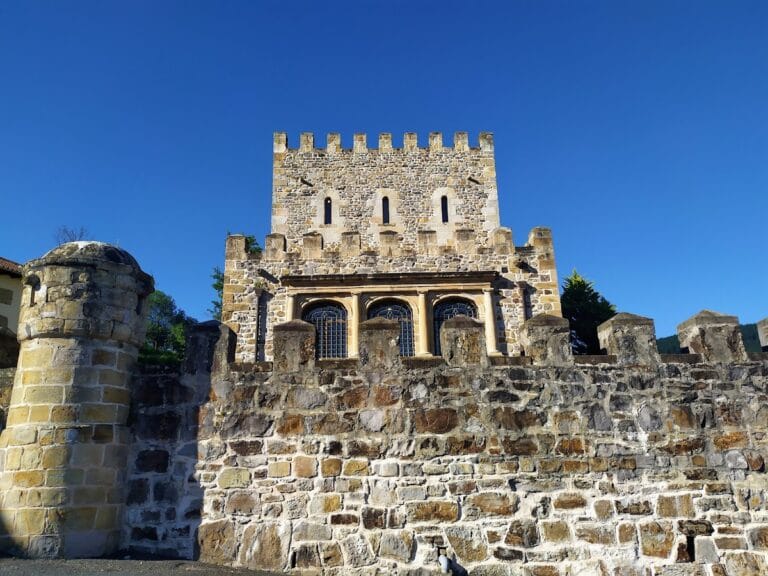
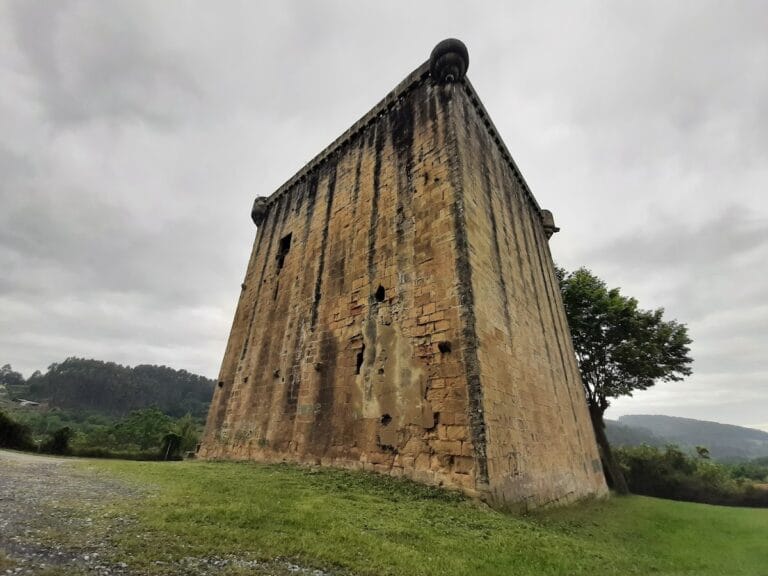
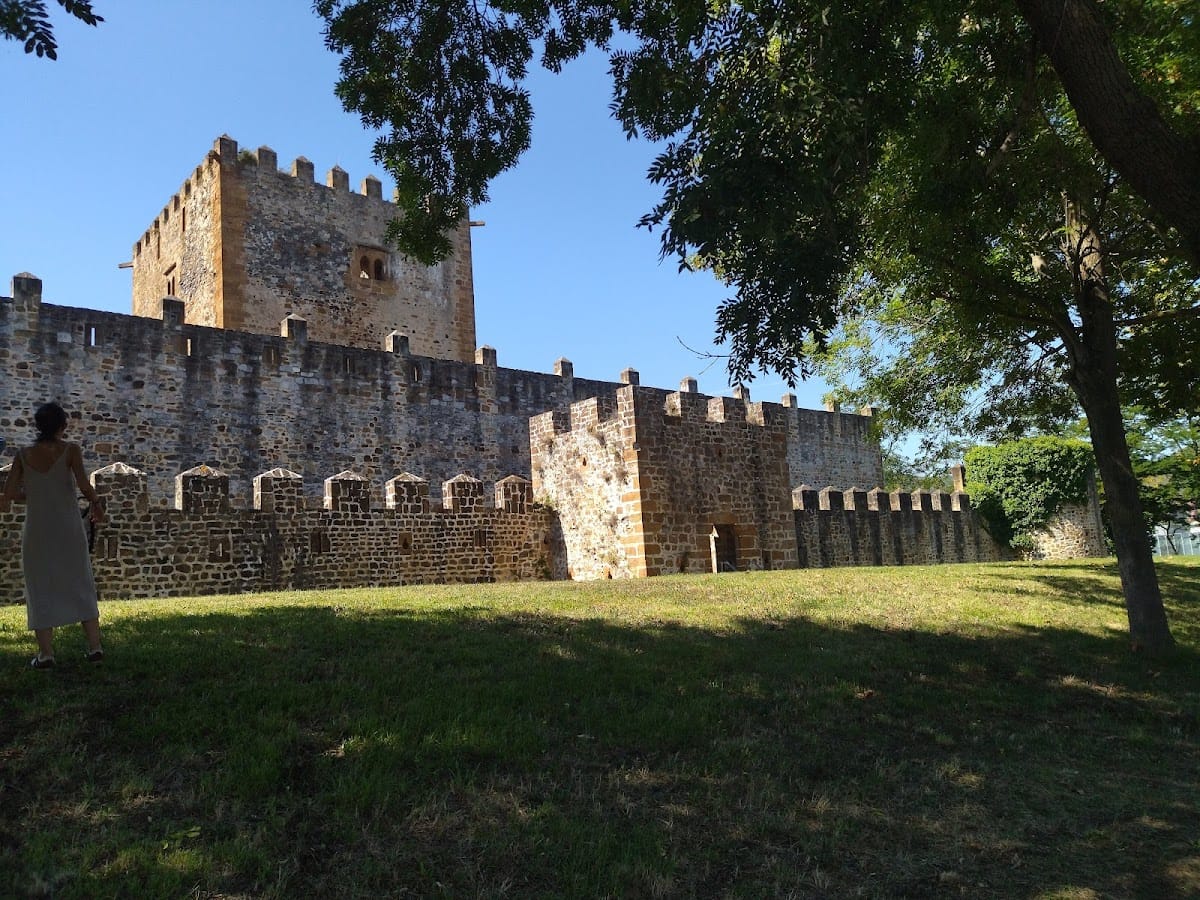
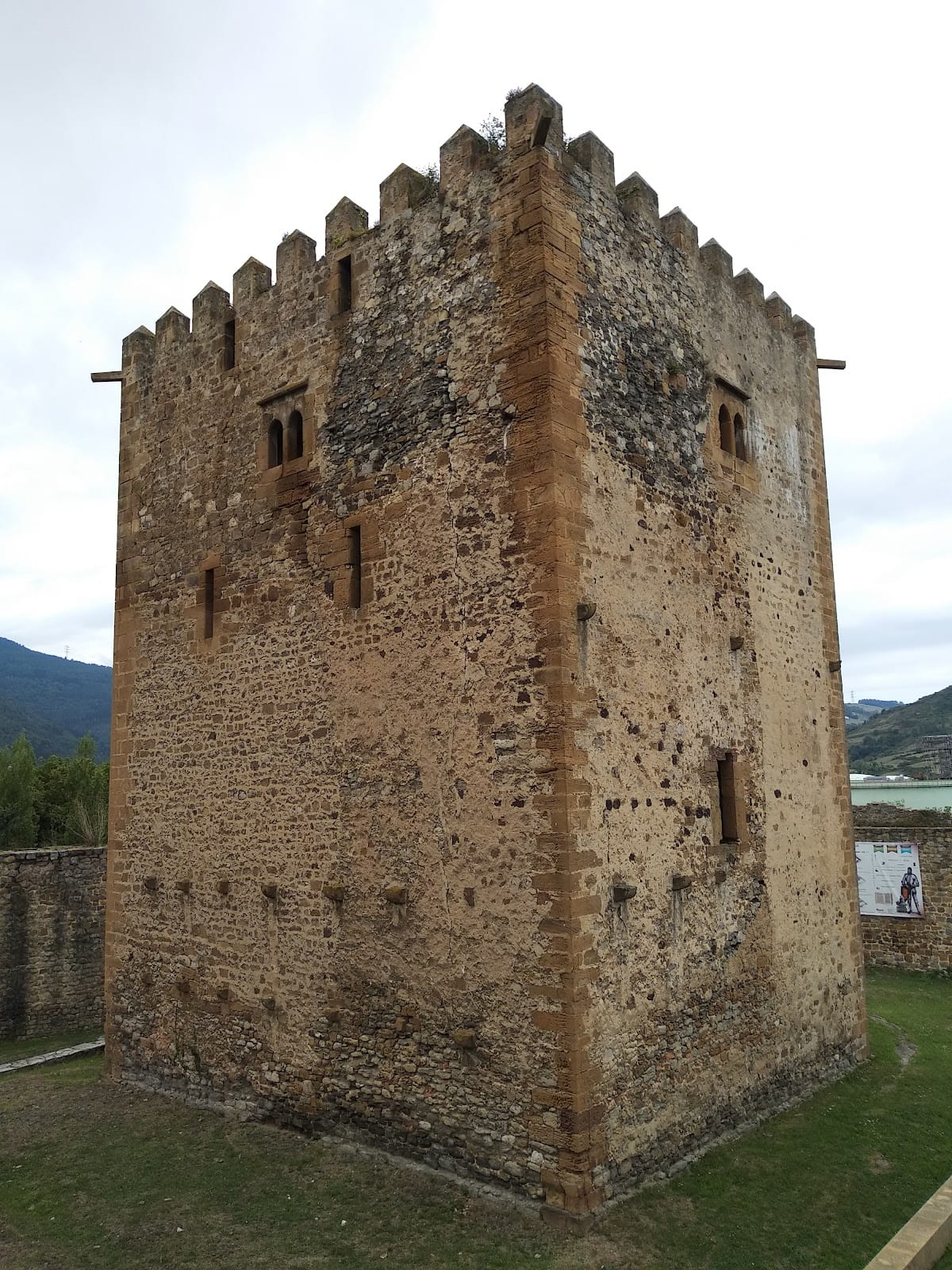
The Castle of Muñatones presents a fortified complex centered around a square tower built with a combination of finely cut stone (ashlar) and rubble masonry. Originally, the tower’s walls were about 1.10 meters thick, symbolizing noble strength and providing solid defense. Today, the tower reaches a height between 20 and 25 meters and consists of two full floors plus the beginning of a third. Its vertical form gives it a prominent appearance in the surrounding landscape.
Uniquely among Basque towers, the ground floor of Muñatones lacks any external entrance. Instead, it is illuminated only by three narrow arrow slits, angled inward and wide on the inside to maximize natural light rather than to provide defensive firing positions. These small windows are topped by lintels resting on corbels—projecting stone supports fixed to the walls.
The first floor served as the main living space and is unusually tall, occupying almost two-thirds of the tower’s height. The original entrance here was a pointed arch framed by a flattened barrel vault, slightly offset from the center. This vaulted entrance has since been sealed, replaced by a newer doorway on what was previously a lateral side of the tower—an alteration reflecting architectural trends from the 15th century. To improve lighting in this large hall-like floor, broad openings were added near the top, just below the next level’s floor.
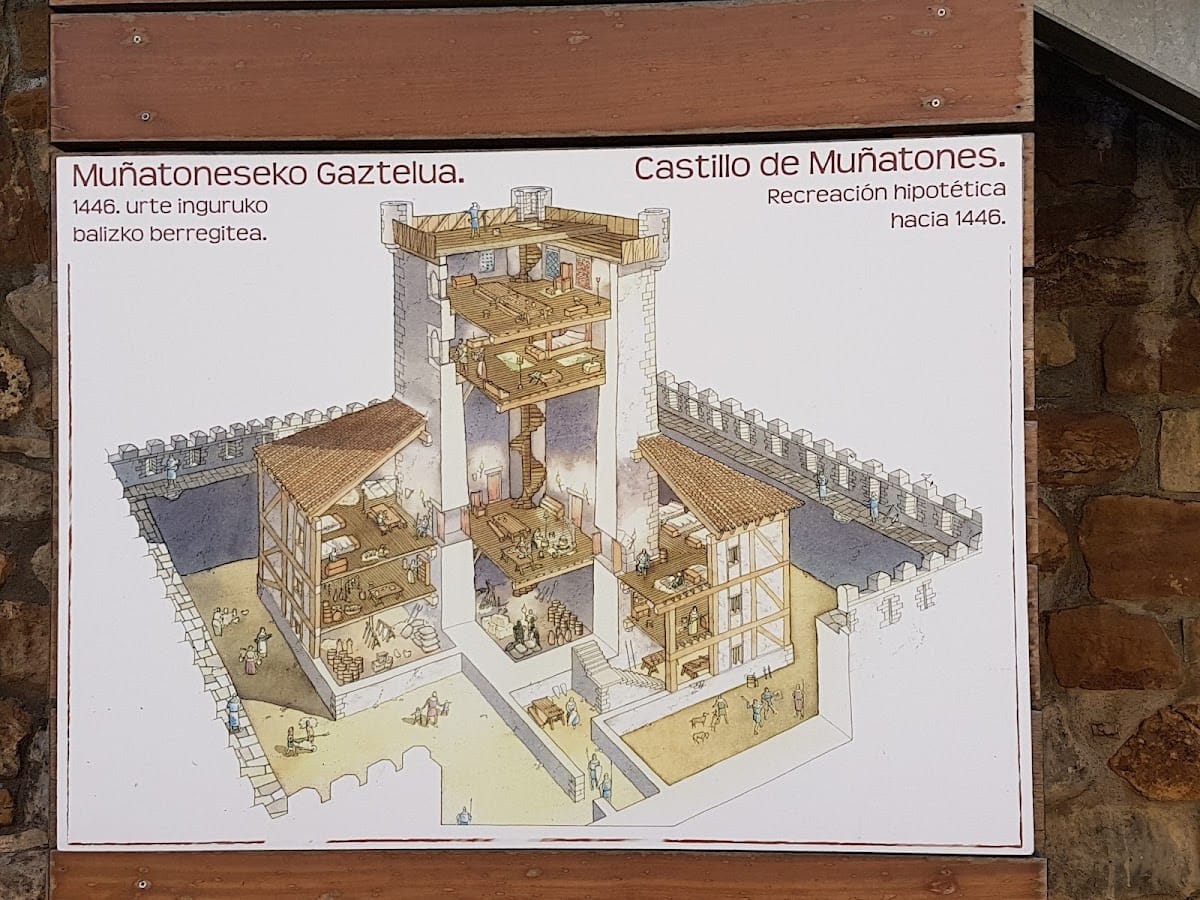
Significant 15th-century renovations by Lope García de Salazar transformed the castle extensively. The small earlier tower was removed, the walls were thickened to approximately 2.80 meters, and the tower was raised to four stories. A crenellated terrace was added at the top, bordered by a protective parapet and flanked by two corner turrets. At this stage, the tower’s main façade was shifted from a side wall to a more frontal position, creating a shape deeper than it is wide—a feature more typical of urban fortifications than rural ones.
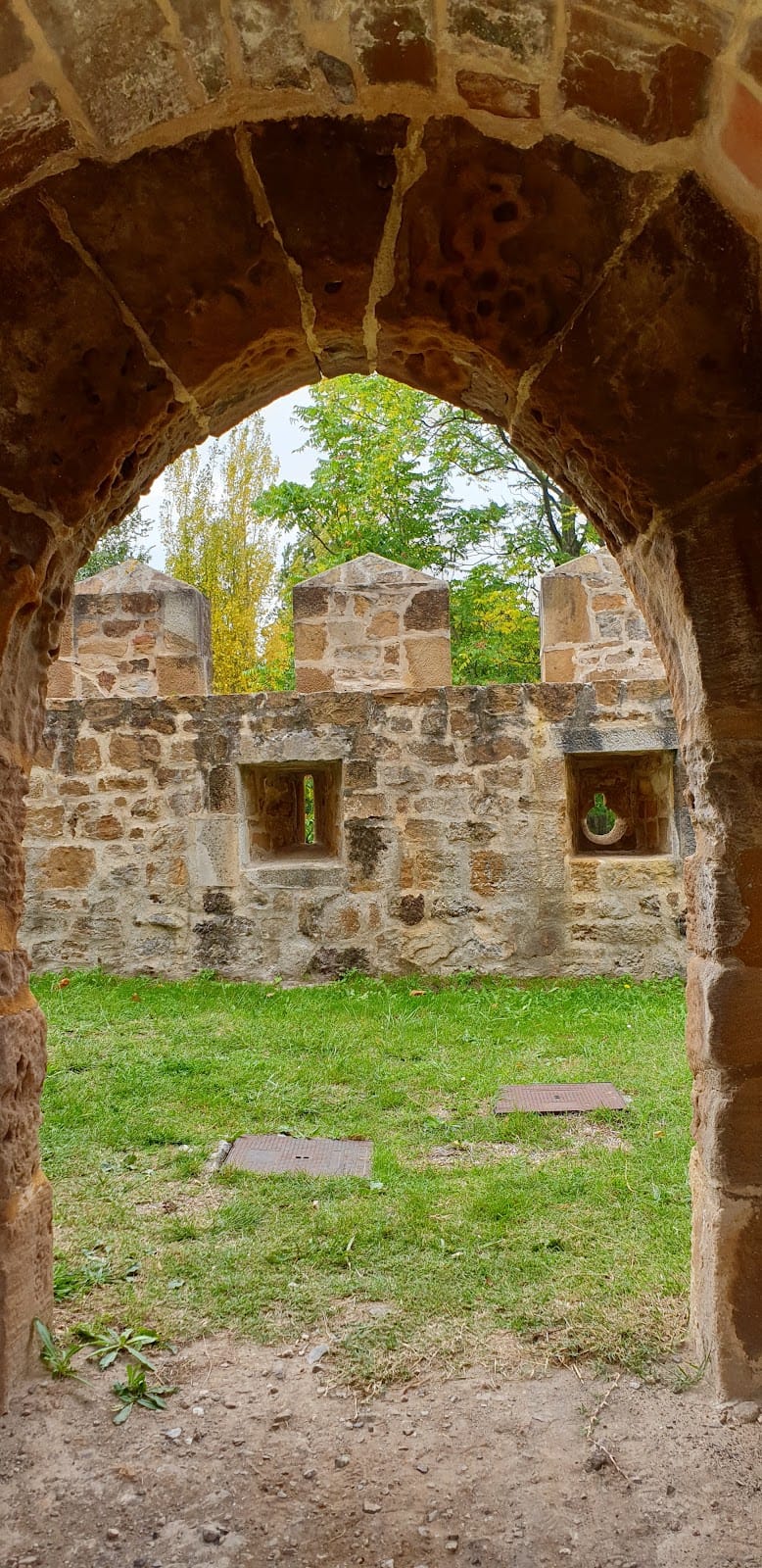
Around the tower, Lope García de Salazar constructed several palatial residential buildings. These were supported on stone masonry walls and included three levels: the lower floors functioned as service areas or bedrooms, while the upper floor extended the main house’s attic space. These residential structures were enclosed by a large curtain wall, made from irregular rubble stone and originally about 10 meters high, though it currently stands around 7.5 meters. This outer wall incorporated a singular entrance with a pointed arch and a laterally offset flattened barrel vault. Remarkably, the doorway’s heavy-duty iron hinges and double-bar locking holes remain preserved.
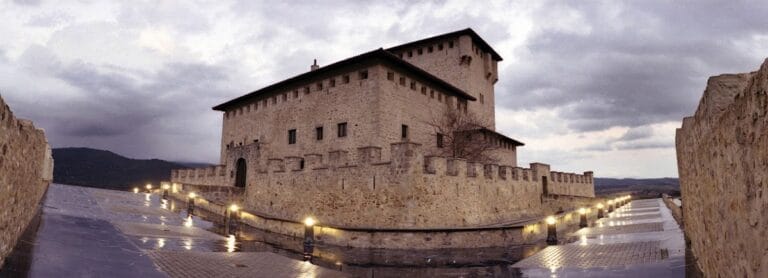
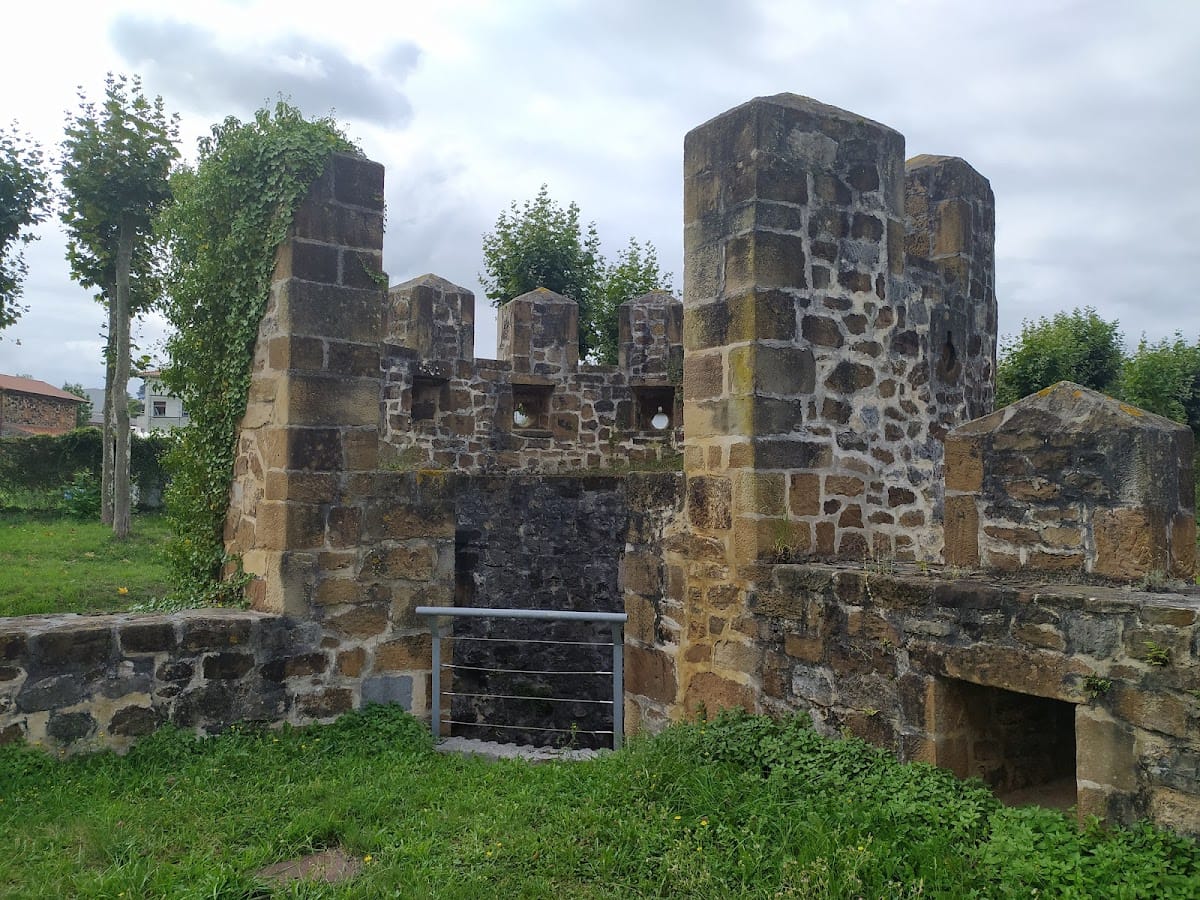
The castle’s defensive system was expanded further with a second outer wall. Initially a simple earthwork rampart, this was upgraded to a proper defensive wall reinforced with cylindrical towers and square bastions, all protected by a surrounding moat. A barbican, a fortified outer defensive enclosure, enveloped the complex on three sides, adding an extra layer of protection.
The last notable construction phase, overseen by Juan Salazar, included remodeling the upper residential floors by replacing the castle’s crenellated terrace with an enclosed wooden chamber capped by a sloped roof. Additional courtyard buildings were erected, and outer defensive walls were strengthened with new towers and bastions alongside an enlarged moat. Interior spaces were enhanced to improve living conditions as well as storage and artisanal activities.
Altogether, the Castle of Muñatones survives as one of the most architecturally complex medieval fortifications in the Basque Country, with well-preserved structural features bearing witness to centuries of noble residence, strategic renovation, and layered defense.
Nearby sites