Alt-Wädenswil Castle: A Medieval Fortress and Commandery in Richterswil, Switzerland
Visitor Information
Google Rating: 4.7
Popularity: Low
Official Website: www.richterswil.ch
Country: Switzerland
Civilization: Medieval European
Site type: Military
Remains: Castle
History
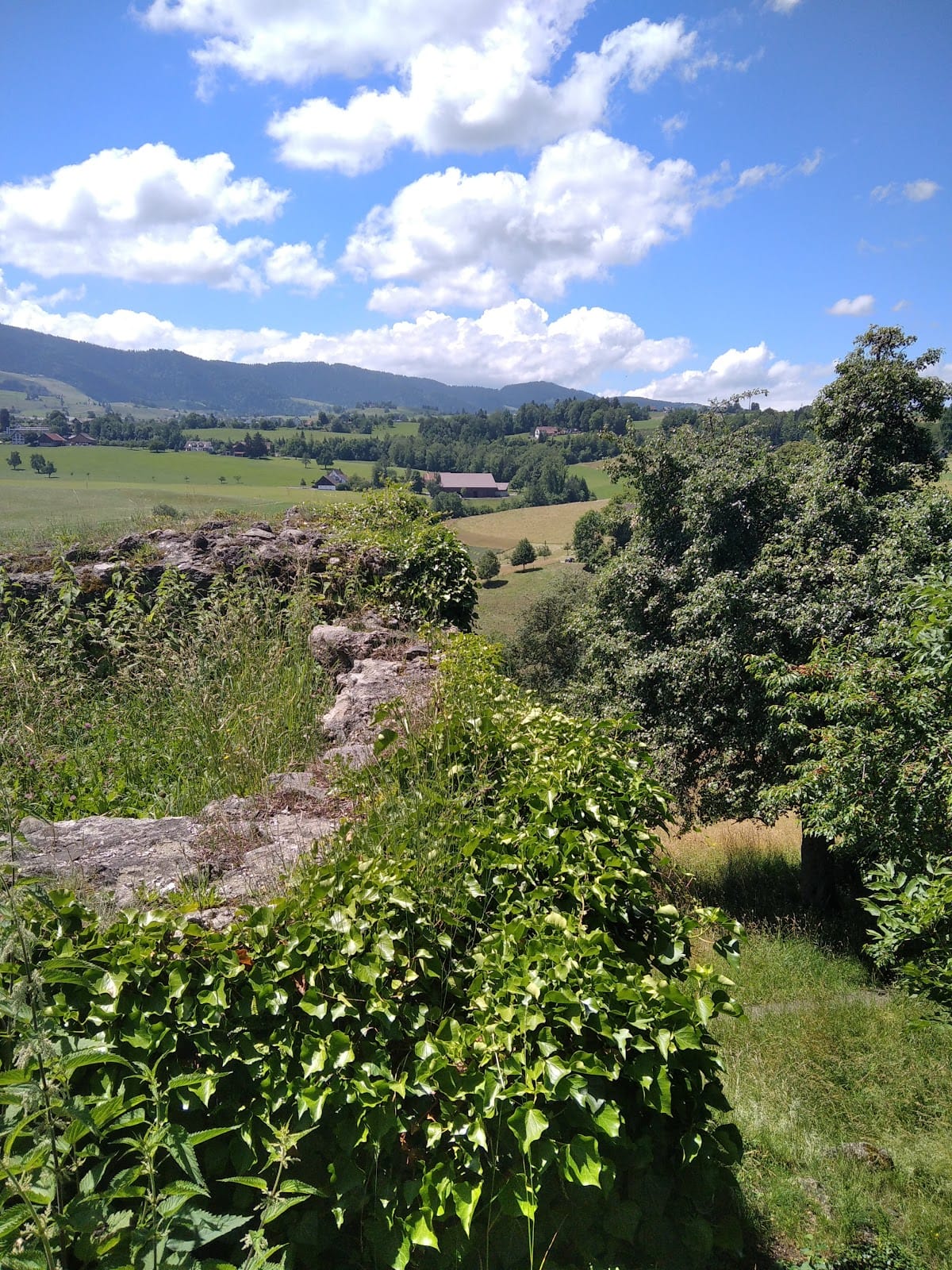
Alt-Wädenswil Castle stands on a hill west of the Burghalden railway station in the municipality of Richterswil, Switzerland. It was originally built by the Freiherren von Wädenswil, a noble family first recorded in the early 12th century. This castle became their residence in the 13th century and was first mentioned in written records in 1265.
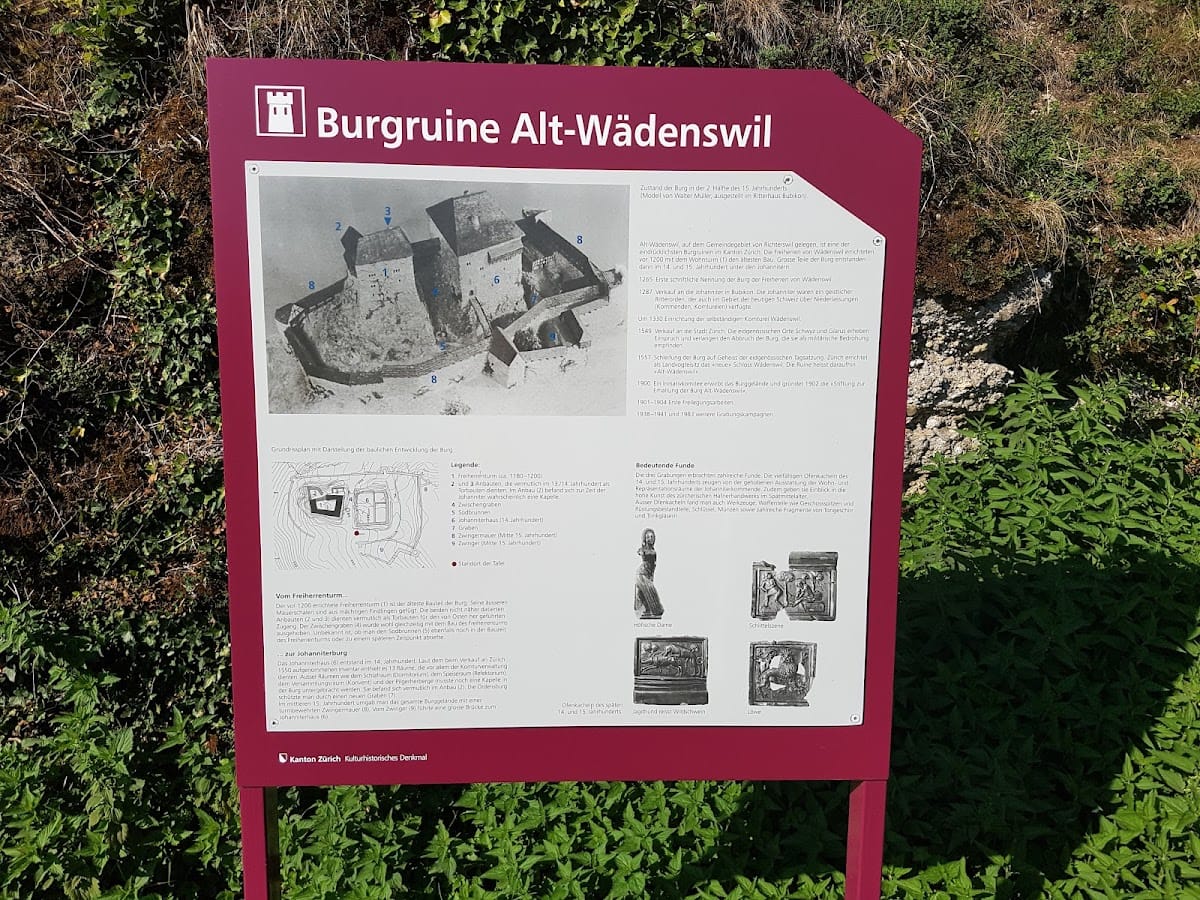
The earliest phase of the site is marked by the construction of the Freiherrenturm, or baronial tower, erected before 1200. This tower served as the core of the castle and reflected the status of its noble owners. The family’s presence ended in 1287 when the last lord, Rudolf III, lacking heirs, sold the entire Wädenswil lordship to the Knights Hospitaller. This religious and military order transformed the castle into a commandery — a local administrative center for their activities.
Throughout the 14th century, the Knights Hospitaller expanded the fortress, enhancing its defensive features and adapting it to meet the needs of the order. They added a new protective ditch around the site and constructed thirteen rooms that included a dormitory for residents, a refectory for communal meals, convent quarters, a pilgrims’ hostel, and a chapel. These additions reflect the castle’s function as a religious command post as well as an administrative hub under the commander’s oversight.
In the 15th century, further fortifications were introduced with the erection of a zwinger wall. This outer ward, enclosed by towers, enclosed the entire castle area, providing an additional line of defense against potential attacks. The improvements reinforced the site’s strategic importance during a time of ongoing regional conflicts.
After the Reformation in the 16th century brought religious and political change, the Knights Hospitaller surrendered their control of the lordship in 1549, selling it to the city of Zürich. Zurich established the territory as a bailiwick, or official district, and constructed a new castle nearby between 1550 and 1555 to house the bailiff responsible for local governance.
Concerned about Zürich’s growing influence, representatives of the Swiss confederation decided in 1557 to partially demolish the old Alt-Wädenswil Castle. This destruction aimed to prevent the fortress from being used in conflicts, particularly as the neighboring canton of Schwyz viewed Zürich’s expansion with suspicion. Over the following centuries, the ruined castle was subjected to quarrying, losing much of its stone to local building projects. In the 1870s, substantial parts of the site were blasted to supply material for the construction of the Wädenswil–Einsiedeln railway, further damaging the historic remains.
At the turn of the 20th century, efforts to preserve what remained of the castle began in earnest. A committee purchased the site and established a foundation in 1902 with the goal of conserving the ruins. Archaeological excavations and clearing between 1901 and 1904 uncovered parts of the structure, a process that continued with additional investigations from 1938 to 1941 and again in 1983. Today, Alt-Wädenswil Castle is recognized as a Swiss heritage site of national significance, preserving the legacy of its medieval origins, religious affiliations, and later political transformations.
Remains
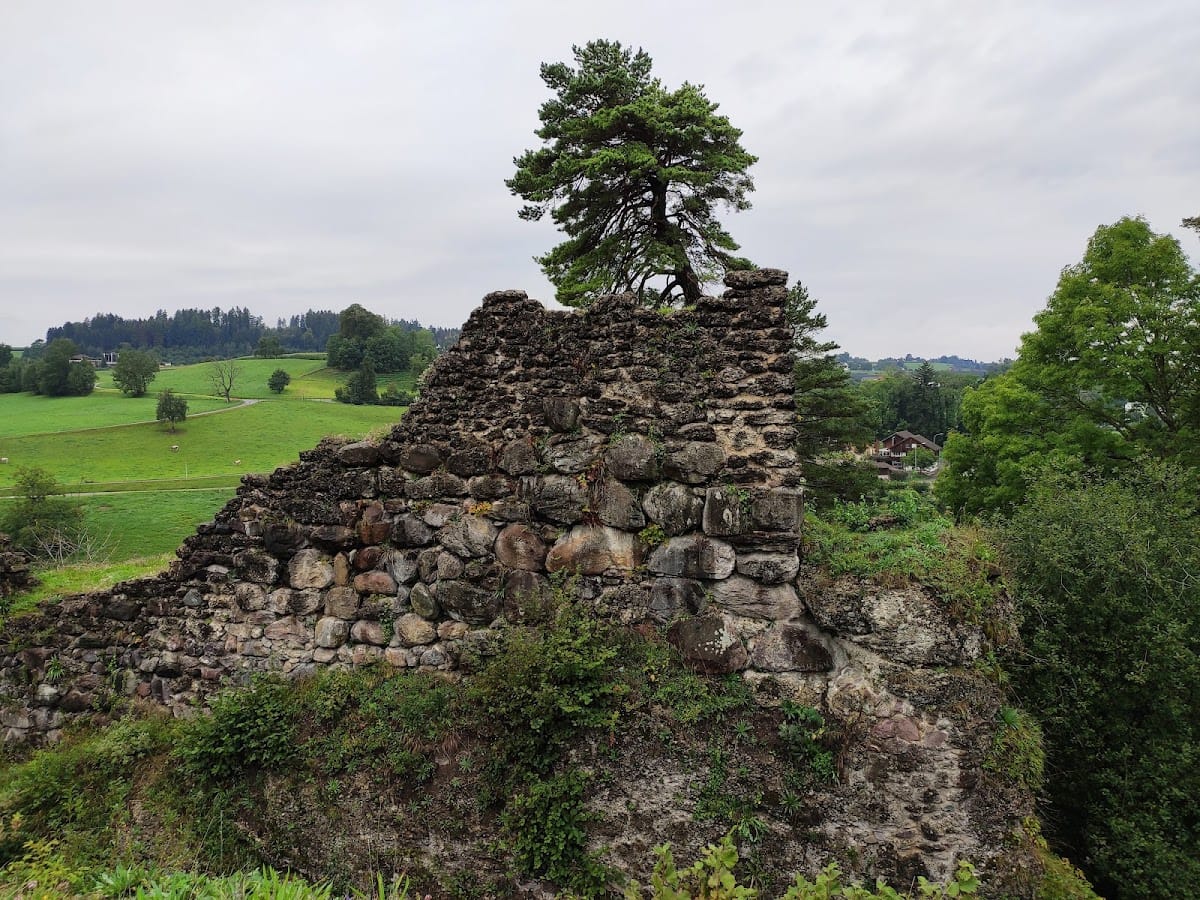
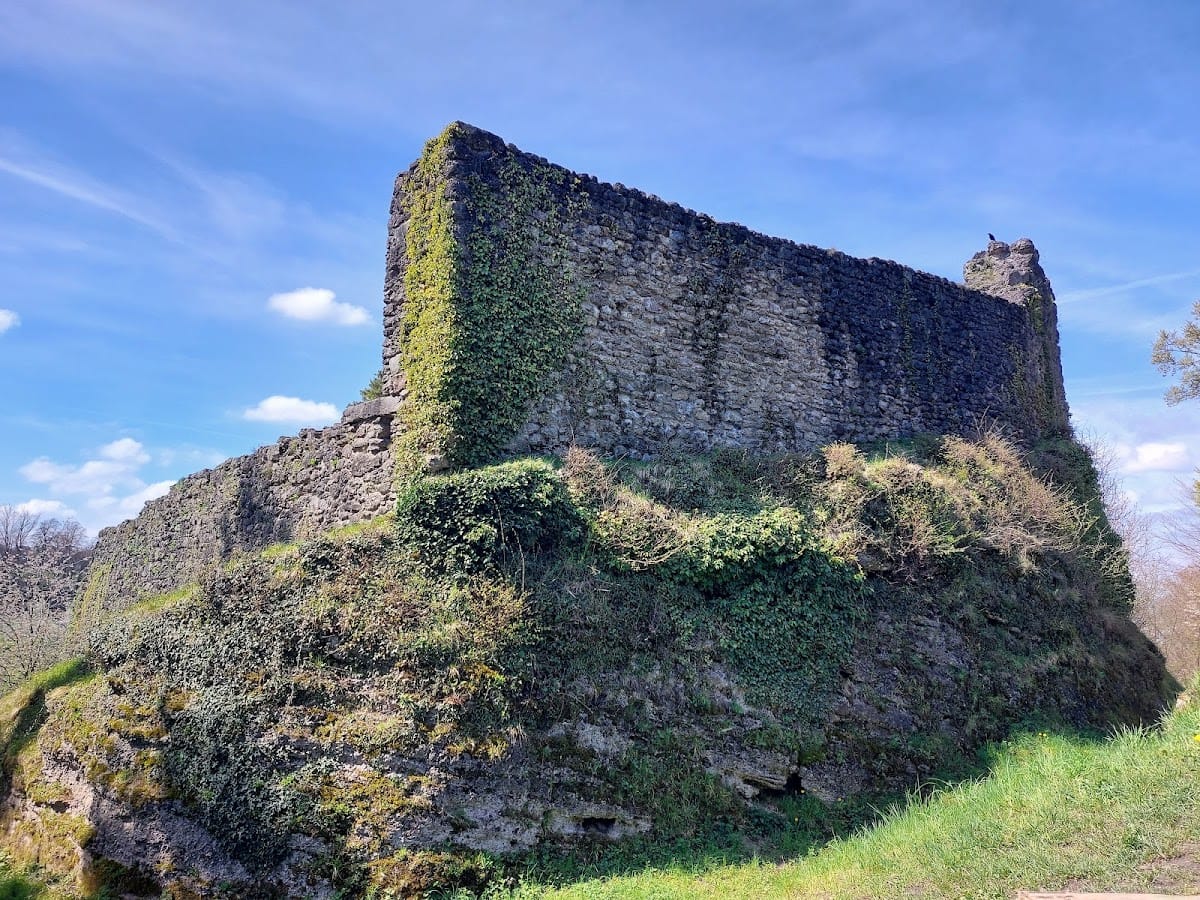
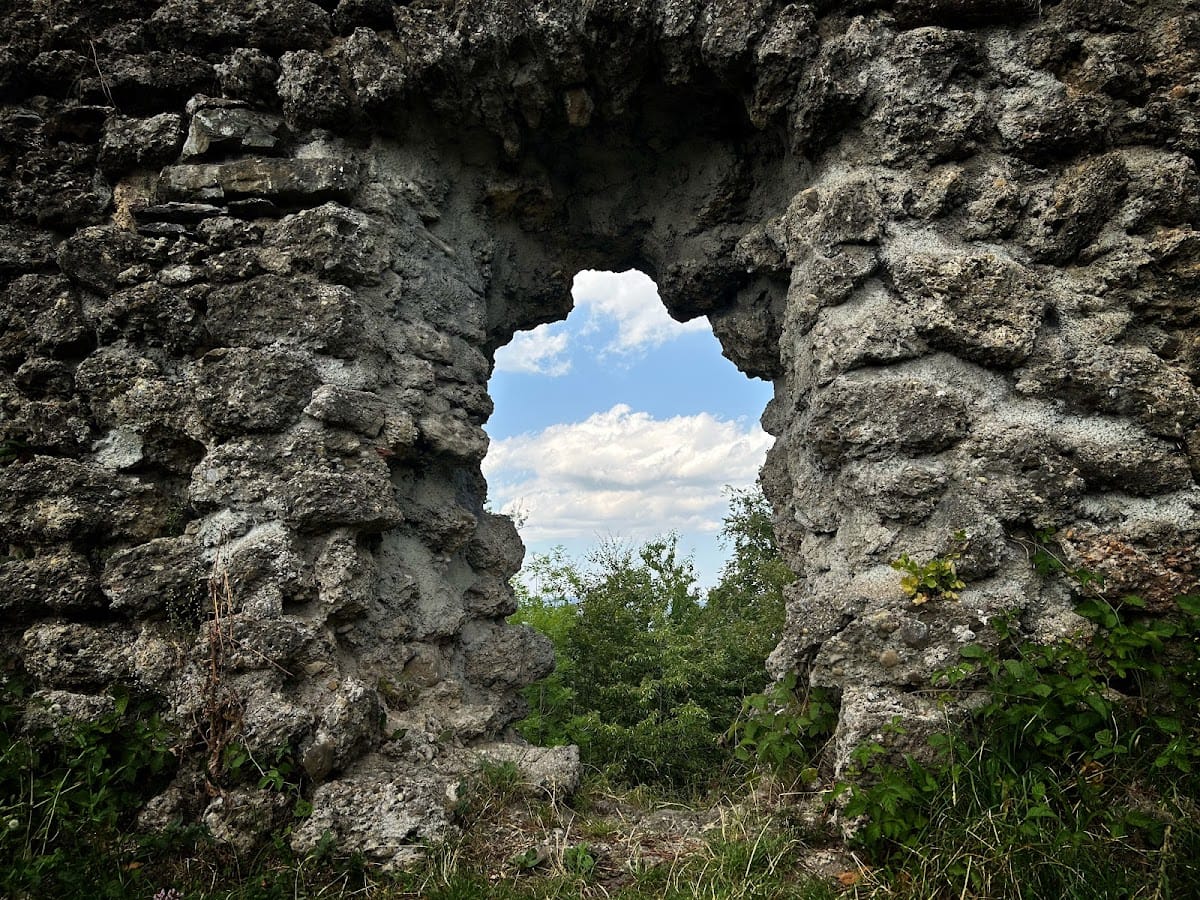
The surviving ruins of Alt-Wädenswil Castle present a layered history of construction, adaptation, and partial destruction. The site is situated on a hilltop, which provided a commanding view of the surrounding area and significant defensive advantage. The core structure is defined by its massive outer walls, made from large glacial erratic stones, locally known as Findlingen. These stones were carefully arranged to create thick fortifications, notably in the Freiherrenturm, the baronial tower dating to before 1200.
This tower stands as the oldest identifiable part of the castle. Its robust walls exemplify medieval building methods aimed at withstanding attack. Archaeological work around the tower has revealed features such as a sod well, known in German as a Sodbrunnen. This well would have supplied water to the castle’s inhabitants and is an important indicator of early utilities within the fortress.
The expansions undertaken by the Knights Hospitaller in the 14th century introduced a cluster of rooms designed to support both administrative functions and communal living. Among these, archaeologists have identified spaces that served as a dormitory, where members of the order rested; a refectory, or dining hall; convent quarters for religious officials; a pilgrims’ hostel to shelter travelers on religious journeys; and a chapel for worship. These additions transformed the site into more than just a military stronghold, reflecting its role as a center of both spiritual and administrative activity.
In the following century, the castle’s defensive system was enhanced by the construction of a zwinger wall. A zwinger is a type of enclosed outer ward that encircles the main living and administrative buildings. This particular wall was fortified by multiple towers, creating layered defenses designed to slow or repel attackers. Although much of this wall survives only in fragmentary form today, its layout still defines the boundaries of the castle precinct.
The ruin bears marks of its deliberate destruction and later reuse. Significant sections were dismantled or quarried over centuries, with some walls blown up in the 19th century to provide stone for railway infrastructure. Despite this, archaeological excavations have uncovered foundational remains and structural elements that offer insights into the castle’s design and function over time.
Not far from Alt-Wädenswil Castle lies the newer Schloss Wädenswil, built mid-16th century as the seat for the Zürich bailiff who took over the lordship after the Knights Hospitaller left. This spatial relationship underlines the transition from medieval fortification to Renaissance administrative center in the region’s governance.
Today, what remains of Alt-Wädenswil Castle reflects a complex history of noble residence, religious command, military fortification, intentional demolition, and preservation. The site’s archaeological record continues to reveal details about its construction, use, and evolution throughout several centuries.
Nearby sites