Zug Castle: Medieval Castle and Museum in Switzerland


Site at a Glance
- Rating
- 4.5
- Popularity
- Low
- Country
- Switzerland
- Primary era
- Medieval
- External website
- Open
- Eras represented
- Medieval, Early Modern
- Civilizations
- Habsburg, Holy Roman Empire
- Site type
- Military
- Remains
- Castle
On this page10 sections
History
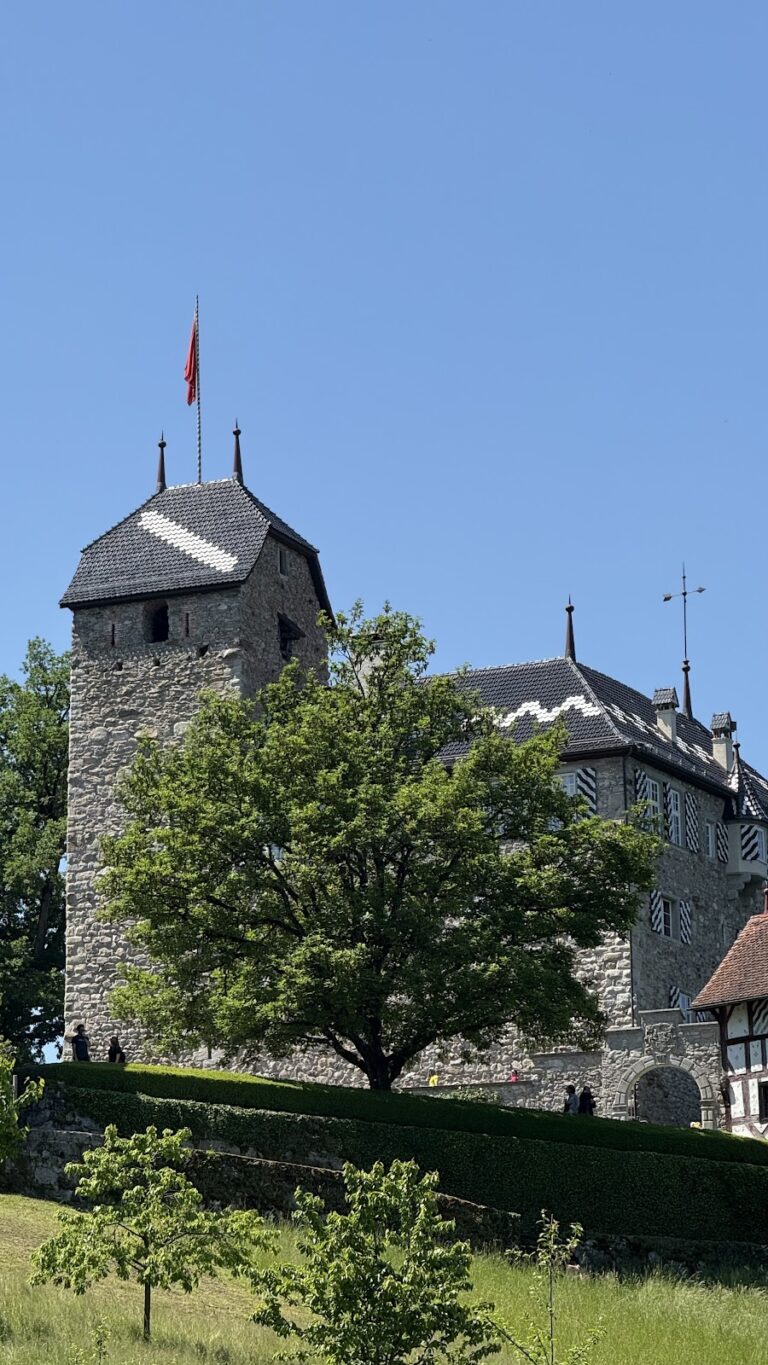
Zug Castle is a medieval castle in Switzerland, in the city of Zug. Its origins probably date to around AD 1000, when a wooden manor house stood on an island between two small streams. The site later became a Habsburg stronghold and is now home to the cultural and historical museum of the city and canton of Zug.
From manor house to stone castle
The early manor belonged to a ministerialis family, a group of medieval service nobles who held administrative, military, or courtly positions for higher-ranking lords while remaining socially dependent on them. The family served either the Counts of Aargau or the Counts of Lenzburg. While the local nobleman occupied the manor and island, his men formed a village along the streams. The watercourses were later dammed to prevent flooding.
Around the end of the eleventh century, the manor was enclosed by a stone wall about 70 to 90 centimetres high, although the buildings within it remained wooden. The enclosure was destroyed during the twelfth century, when tradition also places an attack that damaged the castle. In the thirteenth century, the Counts of Kyburg, the medieval dynasty associated with the region and the founders of the city of Zug around 1200, acquired the estate. They rebuilt the ruined castle in stone.
Kyburg and Habsburg control
When the Kyburg dynasty became extinct in 1264, Zug and the castle passed to the Habsburgs. This major European ruling dynasty had secured all rights to the castle by 1273. Under Habsburg control, the residential quarters were enlarged, and further buildings were erected between the tower and the city wall.
After the Habsburg defeat at the Battle of Morgarten in 1315, an early major victory by the Swiss Confederation over Habsburg forces, Zug became a Habsburg stronghold in an increasingly hostile environment. Duke Leopold, a Habsburg ruler and military commander, gathered his army at Zug Castle on 14 November 1315 before the battle and spent his final night there.
The Swiss Confederation, an alliance of Swiss communities and cantons that opposed expanding Habsburg control, besieged Zug for two weeks. The surrounding villages surrendered immediately, while the city remained strongly aligned with the Habsburgs. The city and castle eventually fell to the Confederation without the castle being damaged. Its importance declined after Zug joined the Confederation as a full member in 1352.
Private residence and municipal museum
After Zug entered the Confederation, the castle passed into private ownership. Zug families used it as a representative residence for subsequent centuries. In 1477, the Brothers of the Righteous Life gathered in Zug after returning from the Battle of Nancy beneath the blue Saubanner, a historical military or political banner.
In 1555, Johannes Zurlauben, one of the owners, demolished the old wall and built a decorative enclosure around the castle. He also added a half-timbered structure, made with a visible timber framework and infill, on the west side of the tower. During the sixteenth century, the former Habsburg residential quarters were enlarged and connected to this addition.
The municipality of Zug purchased the castle from the Hediger family in 1945. A major restoration from 1979 to 1982 gave it an appearance associated with around 1770. Since 1982, the building has housed the cultural and historical museum of the city and canton of Zug. The museum closed for refurbishment in 2012 and reopened in November 2013 with a new permanent collection. Zug Castle is protected as a Swiss cultural property of national significance.
Remains
Zug Castle stands within Zug’s later old town and inside the town’s second wall. Its physical development can be traced from an island manor surrounded by a wooden palisade to a stone castle centered on a substantial tower, with residential buildings occupying the space between the tower and the city wall.
Early enclosure and setting
The first manor occupied an island between two small streams and was protected by a wooden palisade. The settlement that developed around it followed the watercourses, whose later damming altered the local drainage to prevent flooding. The late-eleventh-century enclosure was built of stone, but its wall was only about 70 to 90 centimetres high and the structures within it were still wooden. Following the destruction of that enclosure in the twelfth century, the castle acquired a new stone enclosure and the tower that survives today.
Tower and later residential buildings
Principal tower
The principal tower measures approximately 9 by 9 metres and rises about 16 metres. Its walls are around 2 metres thick at the first story, taper slightly upward, and measure approximately 1.5 metres at the upper stories. Two semicircular walls surrounded the tower on its north and east sides.
Residential quarters and half-timbered addition
The Habsburg-period residential quarters and additional buildings occupied the area between the tower and the city wall. In the sixteenth century, these quarters were expanded and joined to the half-timbered structure added on the tower’s west side by Johannes Zurlauben. The castle’s preserved buildings now contain the permanent collection and other exhibitions of the Zug town and cantonal museum.
Saubanner
The original Saubanner associated with the 1477 gathering is preserved in the castle museum. It is a blue banner bearing a club and a boar.