Orchardton Tower: A Late-Medieval Cylindrical Tower House in Scotland
Site at a Glance
- Rating
- 4.4
- Popularity
- Low
- Country
- United Kingdom
- Primary era
- Medieval
- External website
- Open
- Eras represented
- Medieval, Early Modern
- Civilizations
- Kingdom of Scotland
- Site type
- Military
- Remains
- Castle
On this page8 sections
History
Orchardton Tower is a late-medieval fortified residence near Castle Douglas in the United Kingdom, built by John Cairns in the later fifteenth century. Its unusual cylindrical form belongs to a period when Scottish tower houses were generally square or rectangular. The tower probably followed Cairns’s receipt of the lands of Irisbuitle, also known as Orchardton, in 1456.
The Cairns family and the fifteenth century
The Cairns family had been connected with the area since the early fifteenth century. Alexander Cairns served as provost of Lincluden Collegiate Church until his death in 1422. His brother John was a customs officer at Linlithgow and a military engineer who designed King David’s Tower at Edinburgh Castle.
The grant of the former Douglas lands to John Cairns may have rewarded his support for King James II, who ruled Scotland from 1437 to 1460 and sought to break the political power of the Black Earls of Douglas, a powerful branch of the Douglas family. Orchardton’s round plan was already old-fashioned by the time it was built. Round towers had been common in the thirteenth century but were largely replaced by rectangular tower houses in the fifteenth. The prevalence of similar round towers in Ireland has led to speculation about Irish influence, although no specific connection has been established.
From the Cairns to the Maxwells
John Cairns’s grandson William was in Edinburgh in 1527 when Thomas McLellan of Bombie was killed outside St Giles’ Cathedral. William supported his relatives Agnew and Lochinvar in the events surrounding the killing. After William died in 1558, the estate was divided between his three daughters.
The part containing Orchardton Tower passed to Robert Maxwell in the early seventeenth century. Maxwell had already acquired other portions of the estate, and his family later held the baronetcy of Orchardtoun, created in 1663.
Religious conflict and the Maxwell inheritance
During the religious divisions of the Scottish Reformation, Mungo Maxwell was illegally disinherited by his half-brothers because of his religion. His son Robert was brought up in France, served in the French Army, and joined the Jacobite rising of 1745, an attempt to restore the Stuart line to the British throne. He was wounded and captured at Culloden in 1746, when the Jacobite army was defeated, but avoided execution because he was treated as a foreign soldier and prisoner of war rather than as a Scottish traitor.
Robert Maxwell later declared himself a Protestant to pursue his inheritance. He resigned his French commission in 1753, returned to Scotland, and brought a long legal case that ended in 1771, when he was confirmed as Sir Robert Maxwell, 7th Baronet. These events provided material for Sir Walter Scott’s novel Guy Mannering.
Abandonment and conservation
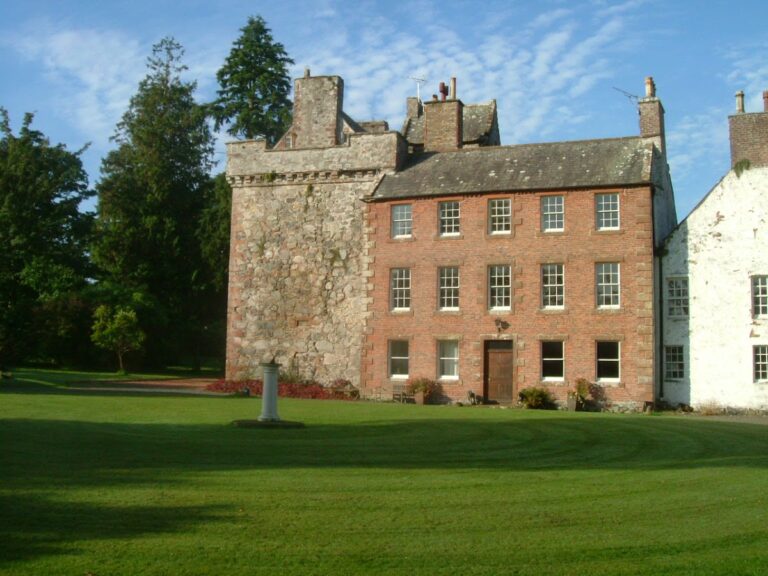
Using stone from the original castle beside the tower, Robert Maxwell built a more comfortable manor house several miles away, now known as Orchardton Castle. Financial dealings later led to his bankruptcy, and the estate was sold to the Douglas family in 1785. Orchardton Tower probably ceased to be inhabited after this period and had been abandoned by the end of the eighteenth century.
Orchardton Tower is a Scheduled Monument, a site protected under United Kingdom heritage law because of its archaeological or historical importance. It is cared for by Historic Environment Scotland, the Scottish public body responsible for protecting and managing many historic sites and monuments.
Remains
The cylindrical tower
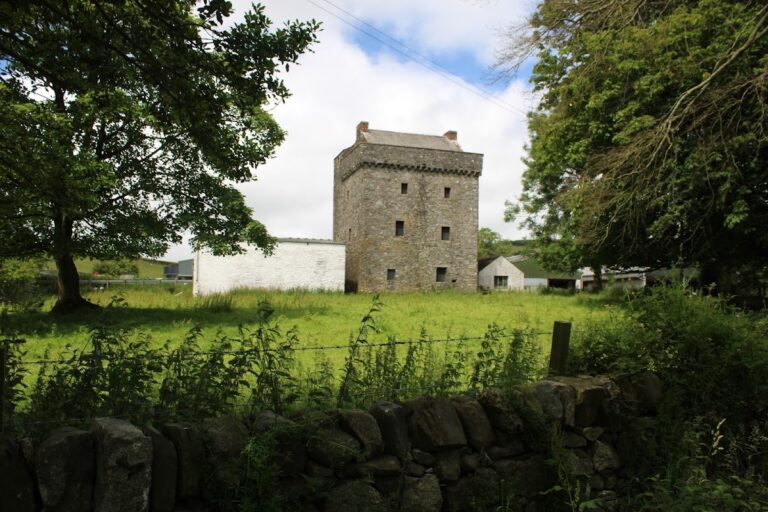
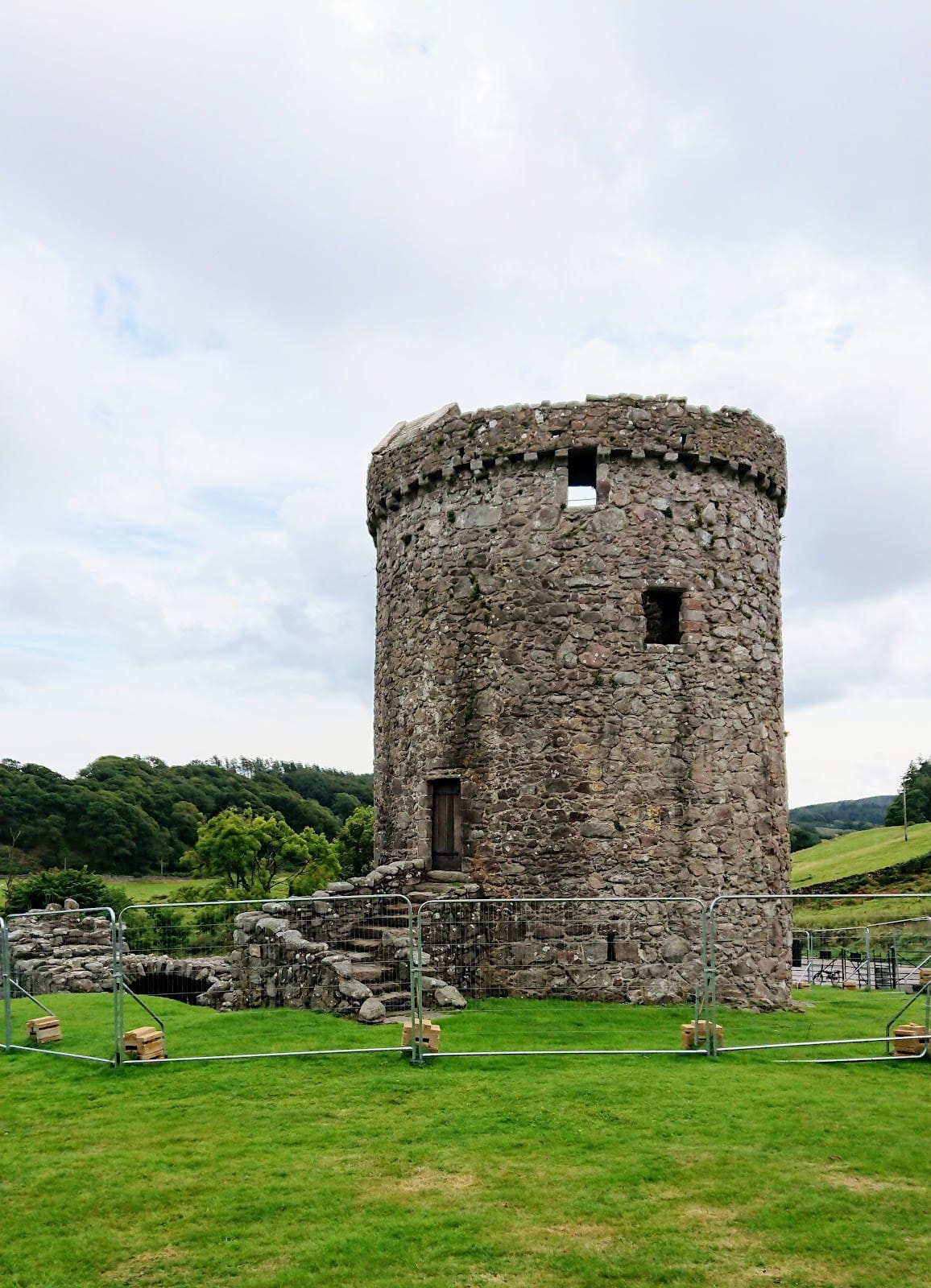
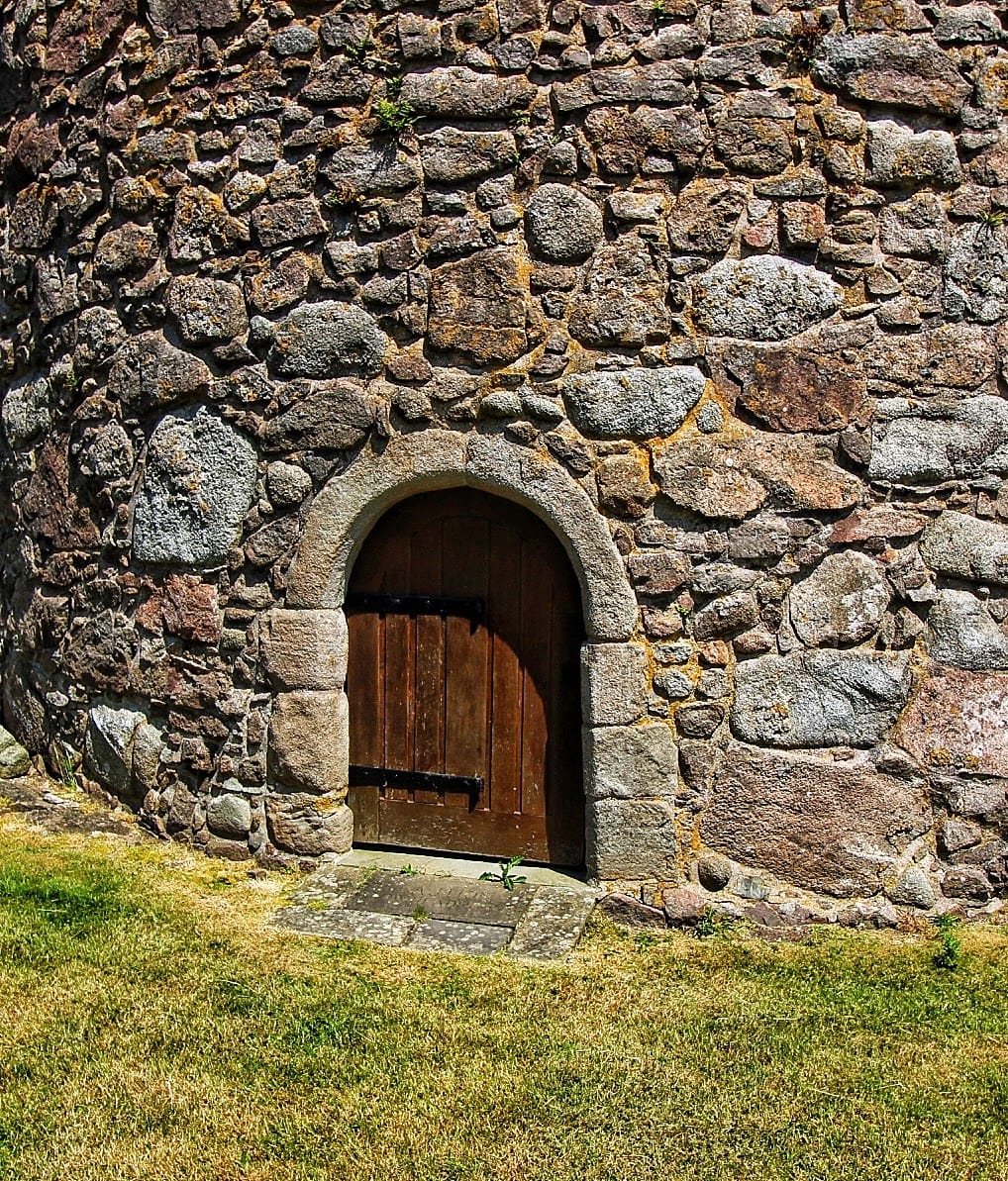
The ruined tower is built of rubble stone and stands approximately 11 metres high, with a diameter of about 9 metres. Its walls taper slightly toward the top. The small diameter allowed only one room on each level, making the tower the only cylindrical tower house in Scotland.
The ground floor contains a vaulted storage cellar reached through a doorway in the outer wall. This cellar was separate from the residential rooms above. The principal room had a fireplace, deeply recessed windows with seats, and a carved lavabo or piscina, a stone basin used respectively for washing or for washing sacred vessels in a church. Two further rooms probably stood above the main room, creating three residential rooms above the cellar. Their wooden floors and ceilings have collapsed.
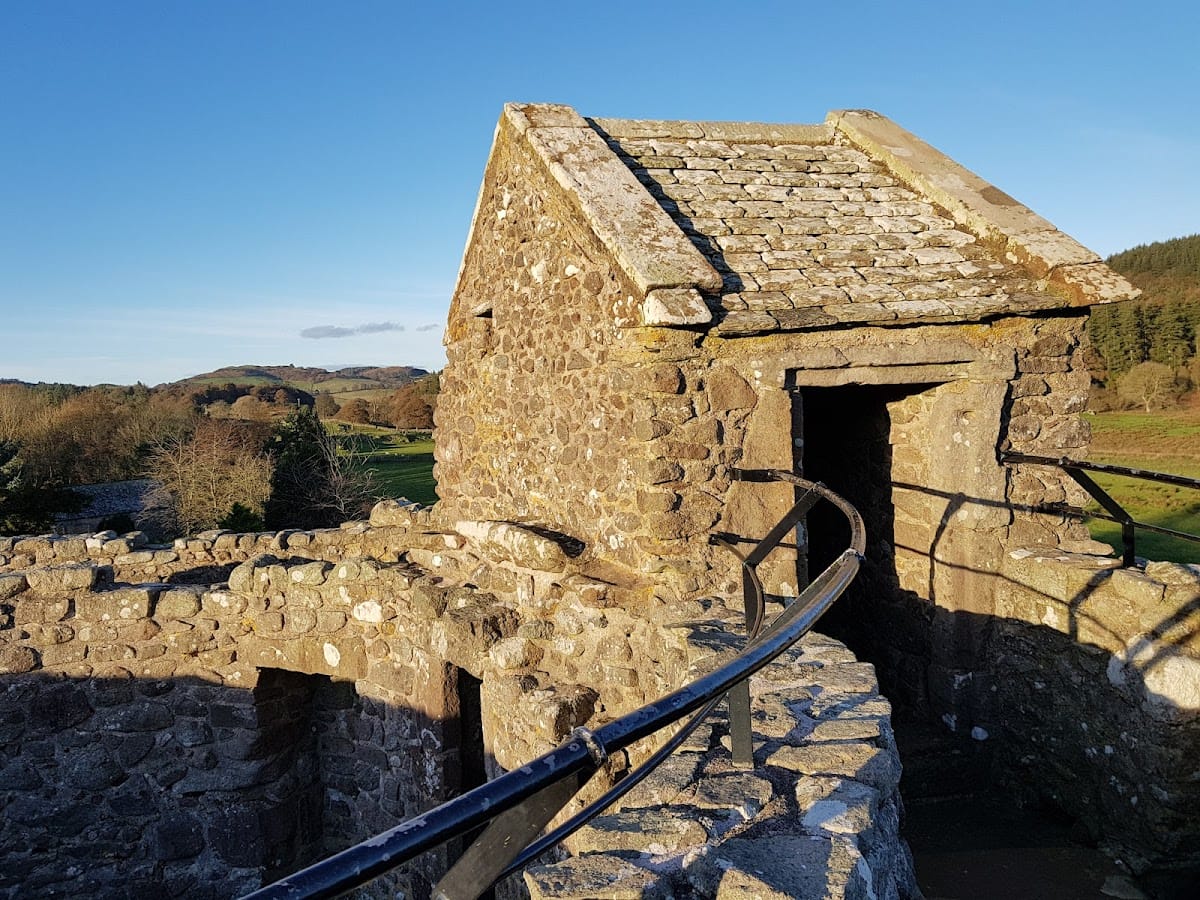
A spiral stair is contained within the tower’s walls, which are approximately 1.8 metres thick. It rises to a gabled caphouse, while a parapet supported on projecting stone corbels forms the upper edge of the walls.
The fortified yard
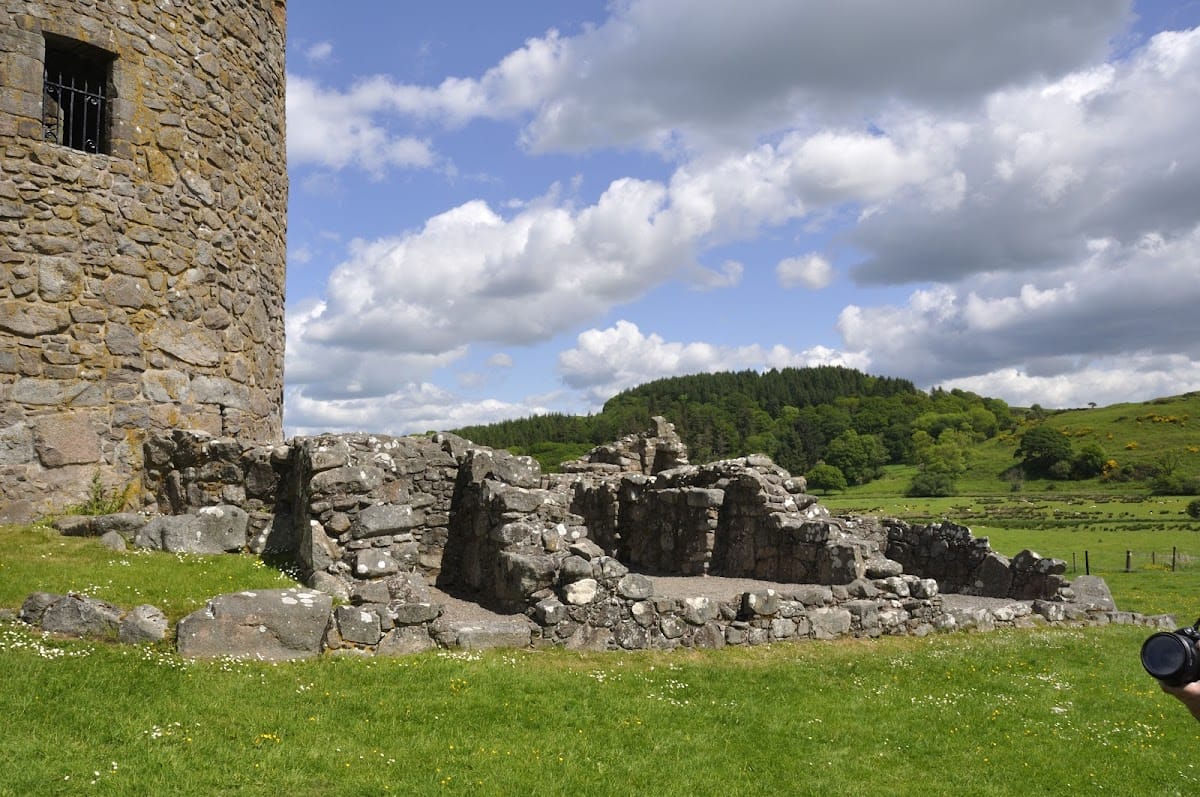
The tower occupied the north-east corner of a fortified yard, or barmkin. A barmkin was an enclosure around a Scottish tower house or castle that protected livestock and accommodated service buildings. Orchardton’s enclosure contained storage cellars and a bakehouse, and probably also had a hall on an upper level. These service functions were separate from the tower’s living quarters.
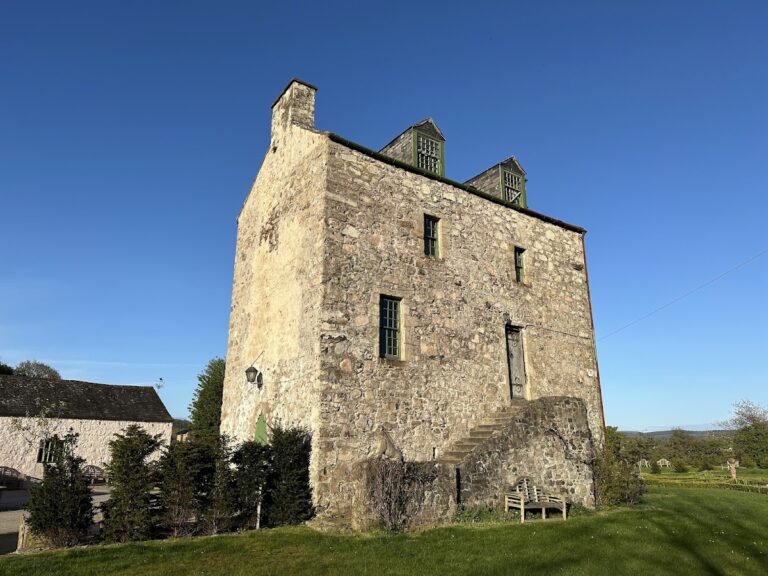
The original entrance was approached from the yard by a possibly movable stair leading to a doorway on the first floor. The present entrance on the north side was created in the seventeenth or eighteenth century by converting an existing window into a doorway. A permanent external stone stair was then built to reach it.
Nearby sites