Cardoness Castle: A Fifteenth-Century Tower House in Scotland
Site at a Glance
- Rating
- 4.5
- Popularity
- Low
- Country
- United Kingdom
- Primary era
- Medieval
- External website
- Open
- Eras represented
- Medieval
- Civilizations
- Kingdom of Scotland
- Site type
- Military
- Remains
- Castle
On this page10 sections
History
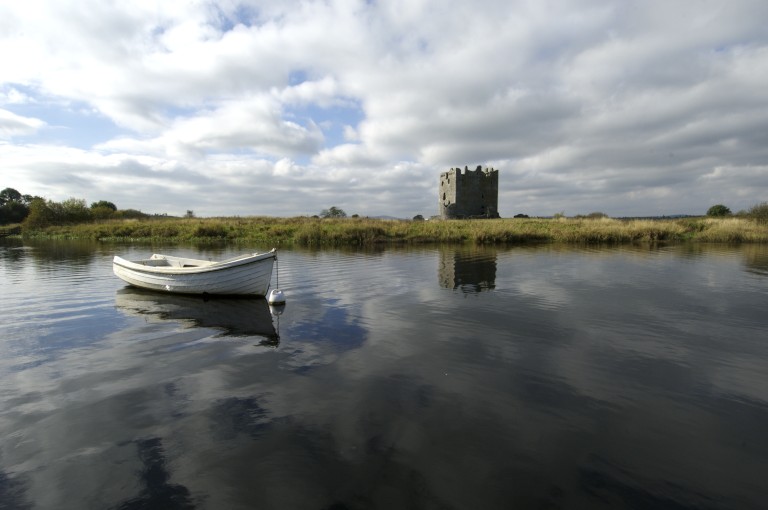
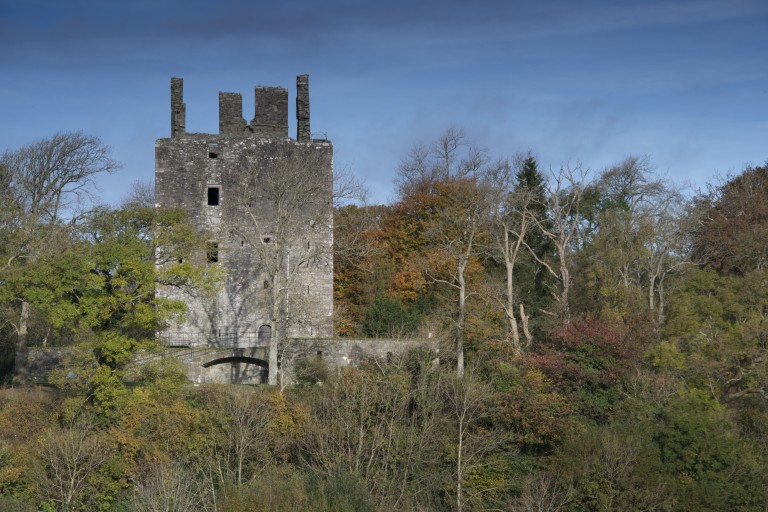
Cardoness Castle is a fifteenth-century tower house in the United Kingdom, standing south-west of Gatehouse of Fleet in Dumfries and Galloway. Built by the McCulloch family in the late fifteenth century, it combined fortified protection with residential accommodation and remained their home until the late seventeenth century.
Early lordship of Cardoness
The wider area had already acquired a fortified centre by about 1170, when Malcolm IV, a medieval king of Scotland, granted the lands of Anwoth to David fitz Teri, a Cumbrian lord. David built a motte-and-bailey castle at Boreland, west of or near the present castle. This earlier form of fortification consisted of a raised mound carrying a stronghold beside an enclosed courtyard. The movement of Anglo-Norman lords from Cumberland across the Solway Firth contributed to unrest in the region and encouraged the building of strong castles.
The family associated with Cardoness appears in the record by 1220. Nicholas de Kerdenes and his wife Cicely disputed the terms of her dowry with Dundrennan Abbey, and Nicholas eventually appealed to the Pope. In 1277, Bertram de Kerdennes witnessed a charter confirming a grant made by Devorguilla de Balliol, a prominent Scottish noblewoman and patron, to Glasgow Cathedral.
On 18 June 1342, Malcolm Fleming, Earl of Wigtown, received a charter from David II for the lands of Cardoness in exchange for the lands of Mochrum, which the king had previously granted to him. The charter also gave Fleming other lands in Wigtownshire. By 1466, Cardoness was in the possession of the McCullochs, possibly through marriage. Gilbert McCulloch, or his son James, is credited with constructing the present castle. The family was also known as the McCullochs of Myreton.
The McCullochs and their neighbours
The McCullochs were frequently involved in disputes over land with the neighbouring Gordons. James McCulloch of Cardoness, who died in 1500, arranged for his daughter to marry Alexander MacLellan, who was described as mentally incapable. The marriage allowed James to obtain the curatorship of Alexander’s estates.
James’s son Ninian was convicted of breaking into a barn, stealing 1,500 animals, and unlawfully collecting rents belonging to his mother. Ninian died in 1509, possibly as punishment for these crimes. His heir, Thomas, was still a minor, so Patrick MacLellan, Alexander’s brother, took possession of Cardoness Castle that year.
Sir Alexander McCulloch acted as Thomas’s guardian from 1509 until his death at the Battle of Flodden in 1513. Flodden was an Anglo-Scottish battle fought that year. Alexander had enjoyed good relations with James IV, served as administrator of Linlithgow Palace from 1505, and held the office of the king’s master of falcons. His branch of the family later regained Cardoness through marriage.
Raiding, royal conflict, and financial decline
Alexander McCulloch, lord of Cardoness in 1516, was known as Cutlar McCulloch. During the 1530s, after Lord Derby, the English lord governing the Isle of Man, had raided Galloway, Cutlar led a raid against the island. Repeated attacks gave rise to a Manx prayer asking for protection from “Cutlar M’Cullock,” as well as from Satan and sin.
The McCullochs supported Mary, Queen of Scots, Scotland’s sixteenth-century monarch, until her defeat at Carberry Hill in 1567. During the 1560s, an English spy informed Elizabeth I that Cardoness could be taken by surprise by 200 men and then held by a garrison of 100. The proposed English invasion of Scotland did not occur.
Continuing disputes and the resulting financial difficulties contributed to the placing of a mortgage on Cardoness Castle in 1592. The Gordons of Ardwall acquired the mortgaged estate in 1622. In 1668, Alexander McCulloch and his son Godfrey challenged the Gordons’ right to the castle. Alexander assaulted Marion Peebles, the widow of John Gordon, dragging her from her sickbed to a manure heap, where he left her to die.
Abandonment and conservation
In 1690, Godfrey McCulloch shot and killed William Gordon of Buck o’Bield. Godfrey fled to France, but he was arrested in St Giles’ Cathedral in Edinburgh in 1697 and beheaded on the Maiden, a Scottish execution device similar to a guillotine. Cardoness Castle was subsequently abandoned and became uninhabited.
Local tradition, recorded in 1864, tells of a financially ruined laird of Cardoness who joined border raiders and gained wealth through plunder. The story says that, after threatening to drown his wife and nine daughters unless she produced a son, he held a winter celebration on the frozen Black Loch. The ice broke, killing him and his family except for one daughter, who later married a McCulloch. This is a local tradition rather than an established historical event.
After abandonment, the castle passed among the Gordons, Maxwells, Stewarts, the Murray-Baillies of Cally, and the Maxwells again. Lady Maxwell placed it in state care in 1927. Historic Scotland, now Historic Environment Scotland, has managed the castle since that year. It has been protected as a scheduled monument since 1928, a status applied to archaeological or historic sites whose preservation is considered nationally important, and remains in state care.
Remains
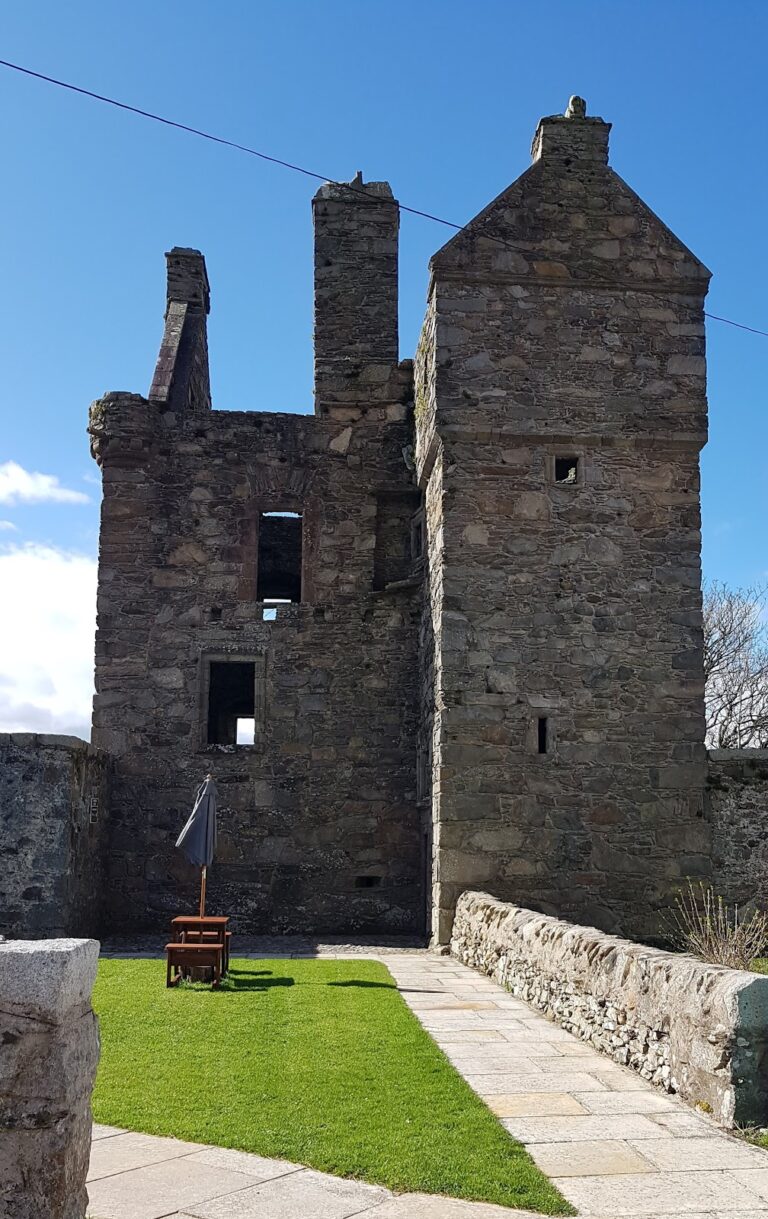
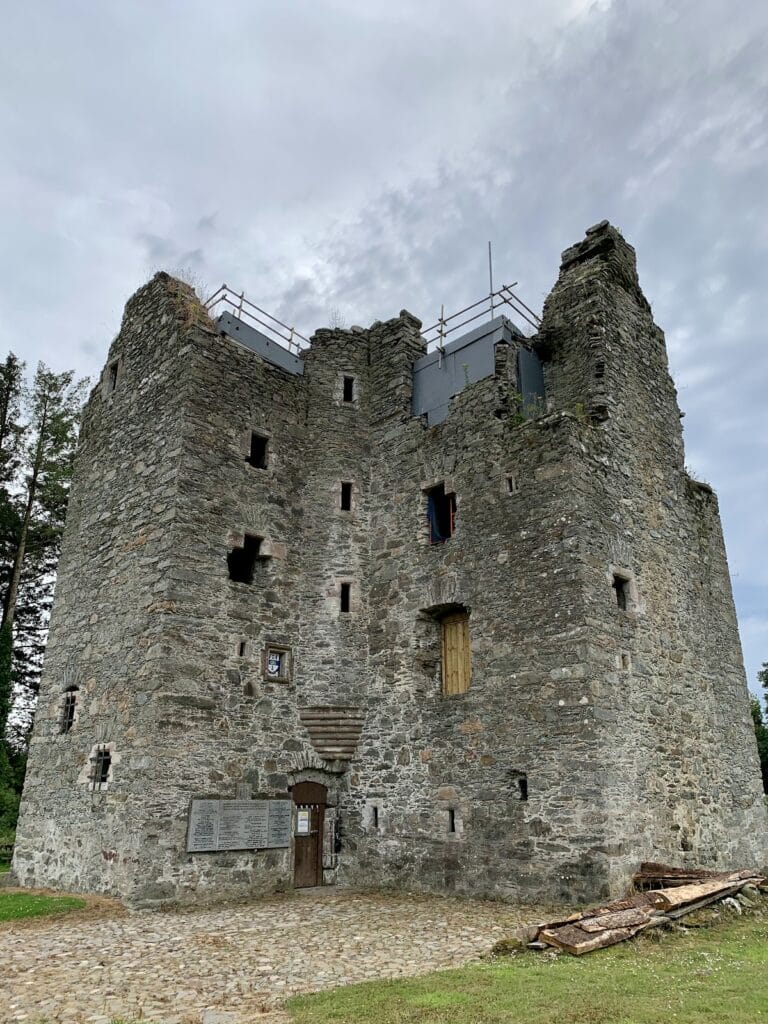
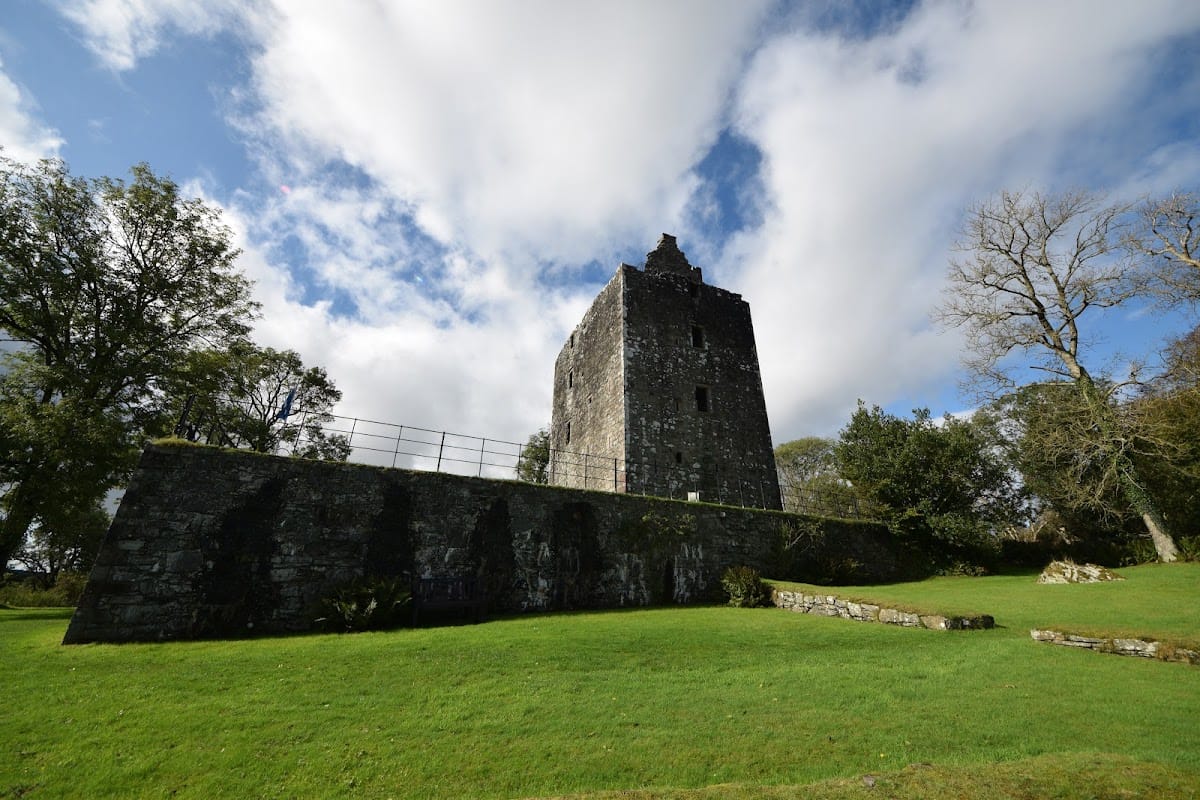
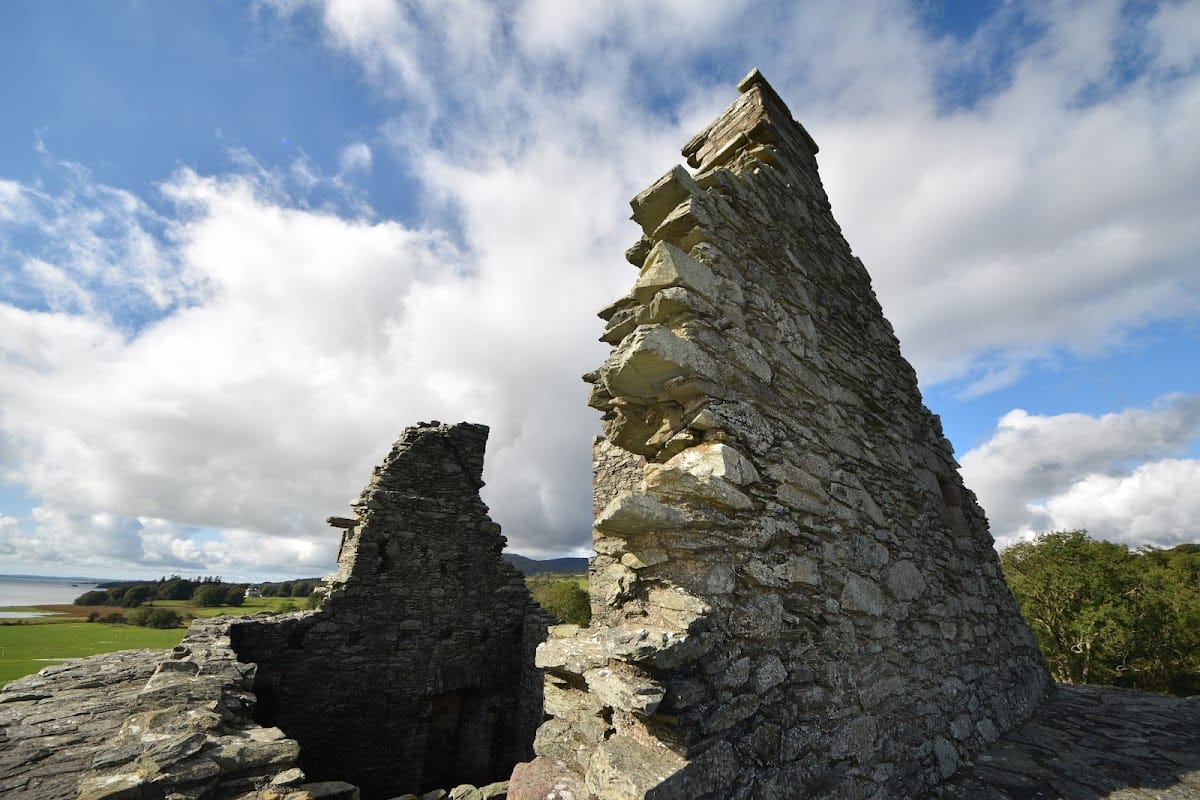
Cardoness Castle is a ruined six-storey tower house built on a rocky rise. Its thick defensive walls, internal storage spaces, great hall, private rooms, and gun loops show how a tower house combined domestic life with military protection. The Solway Firth reached the base of the rock at high tide until 1824. A courtyard and further buildings extended south of the tower; reconstructed in the 1920s, these probably served as a kitchen, stables, and storage areas.
The tower house
Entrance and defence
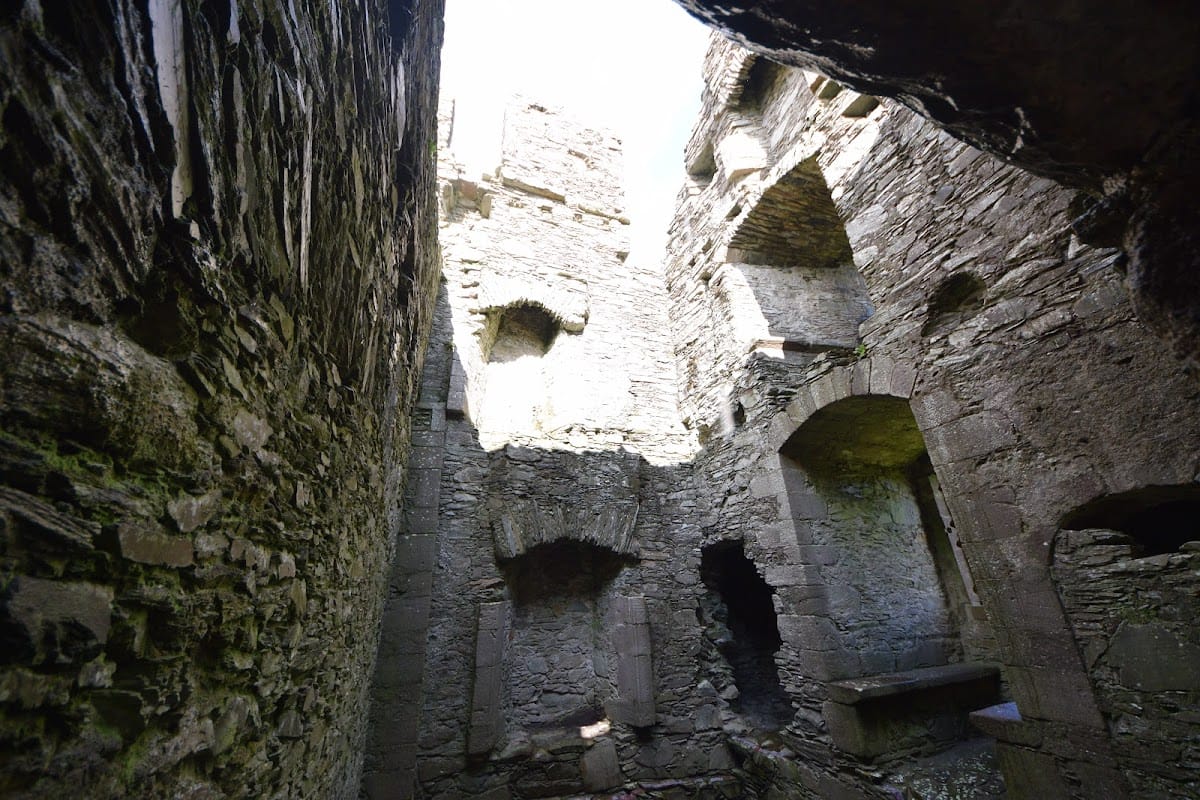
The tower walls are approximately 2.5 metres thick. The only entrance is on the south side, where an oak gate and an iron gate originally protected the approach. A murder hole in the ceiling of the entrance passage allowed defenders to act against people below, while a guardroom lies to the left of the entrance.
Cardoness was built when cannon and firearms were already in use, and its walls contain gun loops with lower openings large enough for a musket. Their form resembles an inverted keyhole. The castle notably lacks a parapet, which may have been removed when the upper floors were reorganized during the 1560s.
Storage and living quarters
The ground and first floors were used for storage. Two storage cellars occupied the ground floor. Their dividing wall has disappeared, but both entrances survive. A prison pit was built into the eastern wall.
The second floor contained the great hall, the principal communal room of the tower house. The lord’s and lady’s private quarters occupied the higher floors, placing the family’s residential spaces above the storage areas and the main entrance level.
Courtyard buildings
The courtyard lay to the south of the tower and was accompanied by additional buildings. These structures were reconstructed in the 1920s and probably accommodated practical activities associated with the household, including cooking, keeping animals, and storing supplies. Their relationship with the tower reflects the castle’s combined residential and defensive function.