Château de Vaumarcus: A Medieval Aristocratic Castle in Switzerland
Site at a Glance
- Rating
- 4.3
- Popularity
- Low
- Country
- Switzerland
- Primary era
- Medieval
- External website
- Open
- Eras represented
- Medieval, Early Modern
- Civilizations
- Holy Roman Empire
- Site type
- Military
- Remains
- Castle
On this page12 sections
History
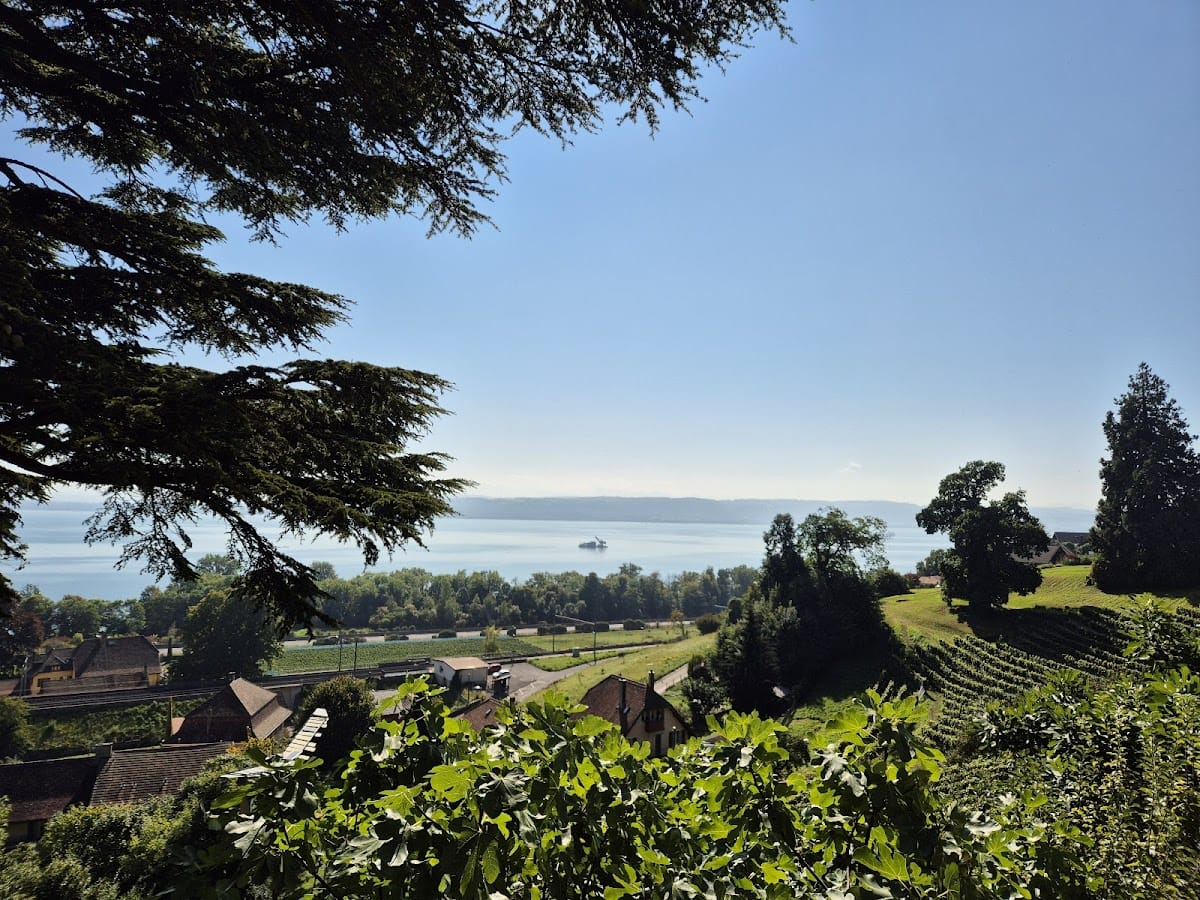
Château de Vaumarcus is a medieval aristocratic castle at Vaumarcus in Switzerland, near the boundary with the canton of Vaud and the former lordship of Gorgier. Its first buildings probably arose during the twelfth century, although the construction date remains uncertain, and the castle of the lords of Vaumarcus is first mentioned in 1285. The site stands above the La Vaux valley near Lake Neuchâtel and developed as the centre of an independent lordship.
The Vaumarcus lordship
The lordship comprised the village of Vaumarcus and the hamlets of Le Moulin and Vernéaz. It remained independent into the fourteenth century under a younger branch descended from Rudolf II of Neuchâtel. In 1308, Peter III of Vaumarcus sold the lordship to Rudolf IV of Neuchâtel, also known as Rolin, for 300 Lausanne pounds, a transaction made to satisfy his creditors.
The sale united Vaumarcus with the possessions of the counts of Neuchâtel. The lords of Vaumarcus left the castle and later held offices and fiefs around Lake Biel from the count of Neuchâtel and the bishop of Basel. Rolin appointed a governor at Vaumarcus, giving the castle an administrative role that included judicial authority.
In 1375, Isabella, Countess of Neuchâtel, granted the lordship as a fief, meaning land or jurisdiction held from a superior lord in return for service, to Girard of Neuchâtel. Girard was the illegitimate son of Jean of Neuchâtel-Vaumarcus, known as Jean-le-Bel, and a grandson of Louis I of Neuchâtel. His inherited fief also included Travers, Rosières, Noiraigue, and Gorgier.
War, fire, and restoration
Girard later opened the castle gates to the troops of Charles the Bold, the Burgundian duke whose expansion brought him into conflict with the allied cantons of the Old Swiss Confederacy. After the Battle of Grandson in 1476, the Swiss Confederates set Château de Vaumarcus on fire. Rudolf of Hochberg confiscated the land from his vassal and ordered the damaged castle to be restored. Most of the present castle dates from this rebuilding.
The succession of the Neuchâtel territories caused a further dispute after Count Philippe of Hochberg died without a male heir in 1487. Claudius of Neuchâtel-Vaumarcus asked Bern to recognize him as owner of the County of Neuchâtel because of his descent from the family. Jeanne de Hochberg, Countess of Neuchâtel, confiscated his property, but Claudius appealed to Maximilian I, the Habsburg ruler who later became Holy Roman Emperor. Maximilian, an opponent of Louis I of Orléans-Longueville, annulled the confiscation.
Bonstetten rule and later ownership
Anne, the last representative of the Neuchâtel house at Vaumarcus, married Johann-Ulrich von Bonstetten on 3 November 1577. The marriage brought the lordship into the Bonstetten family. Johann-Ulrich headed it from 1599, four years after Vaumarcus had been elevated to a barony, a lordship with a higher aristocratic rank and jurisdictional status.
From 1675, the lordship was administered by the descendants of David von Büren and his wife, who was born a Bonstetten. The fief was redeemed in 1831. Until 1832, Vaumarcus maintained its own court for civil and criminal jurisdiction. Civil cases then passed to the castellany of Gorgier, while criminal cases were transferred to the castellany of Boudry.
Rebuilding and protection
Around 1773, a New Castle replaced older buildings in the northeastern part of the site and created a more comfortable aristocratic residence. In 1888, the industrialist and absinthe producer Henri-Louis Pernod acquired the property and restored it. The castle underwent extensive renewal again in the mid-twentieth century.
Château de Vaumarcus has been protected as a heritage monument since 1978 and is listed as a cultural property of regional significance in the canton of Neuchâtel. Its changing form, ownership, and jurisdiction preserve the history of a lordship that was absorbed into the possessions of the counts of Neuchâtel before passing through several aristocratic families.
Remains
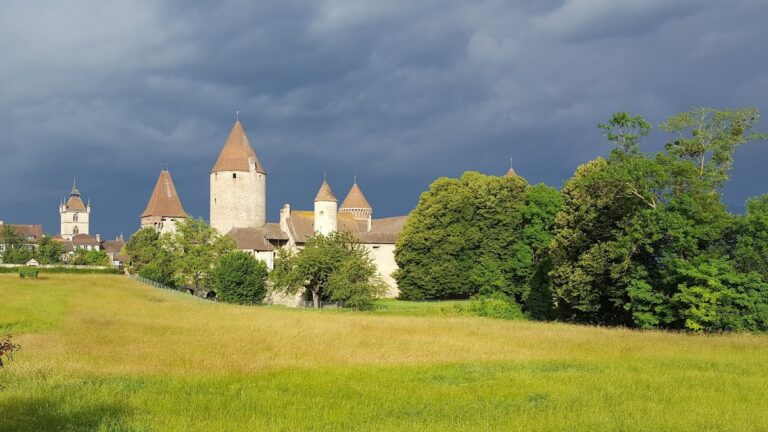
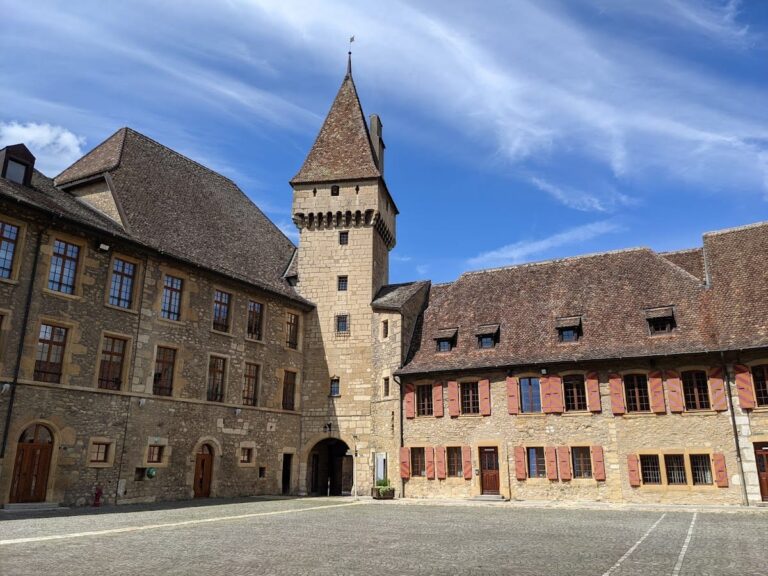
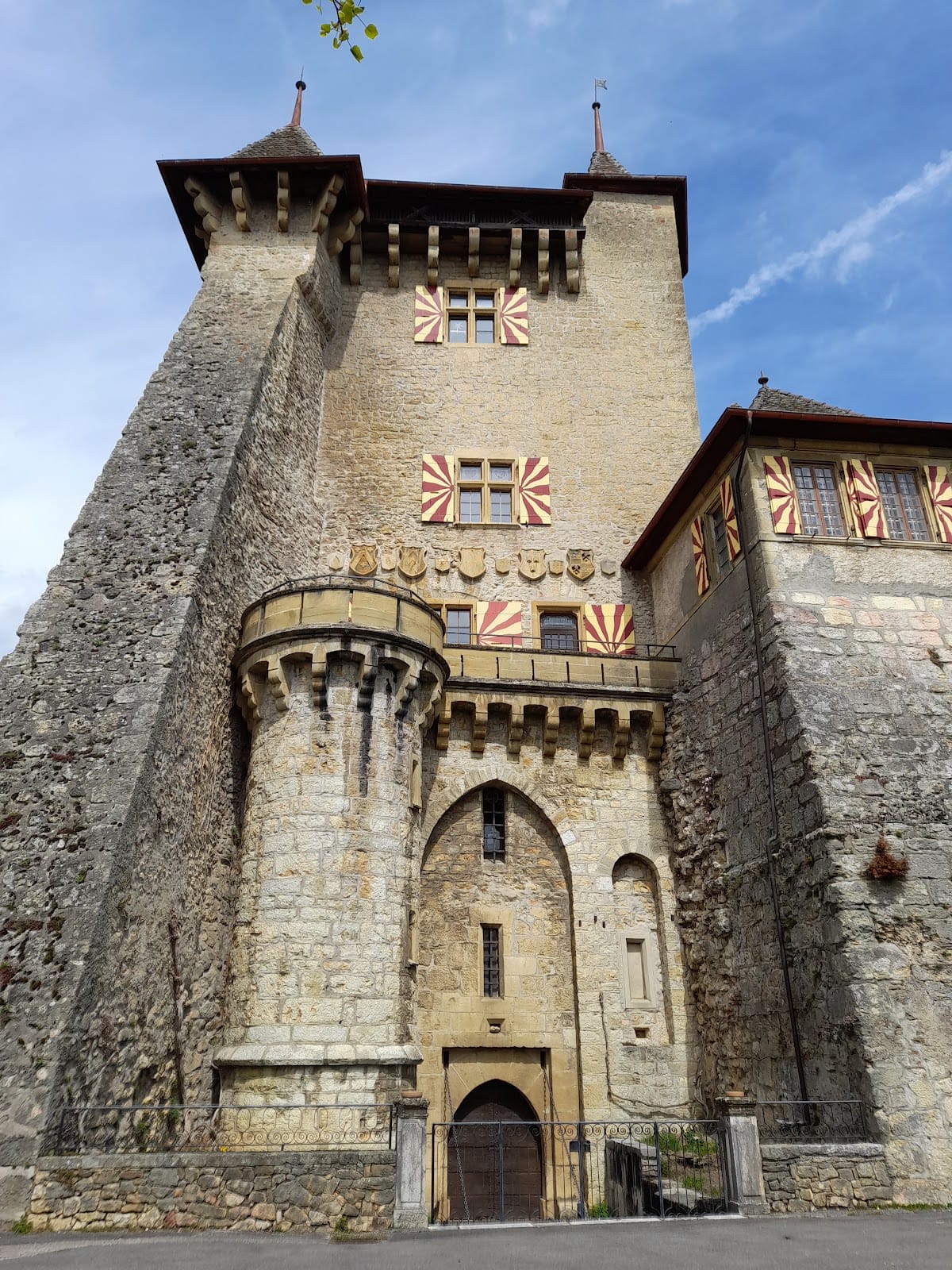
Château de Vaumarcus occupies a hill spur above the valley of the La Vaux stream, near Lake Neuchâtel, at approximately 477 metres above sea level. It is a preserved hilltop castle whose irregular appearance reflects successive building phases. The thirteenth-century complex included the present large keep, an older building, an enclosure, and a small village in front of the castle. The surviving structure is predominantly post-1476, combining defensive and residential elements in an asymmetrical arrangement with varied elevations.
Medieval fortifications
Keep and original entrance
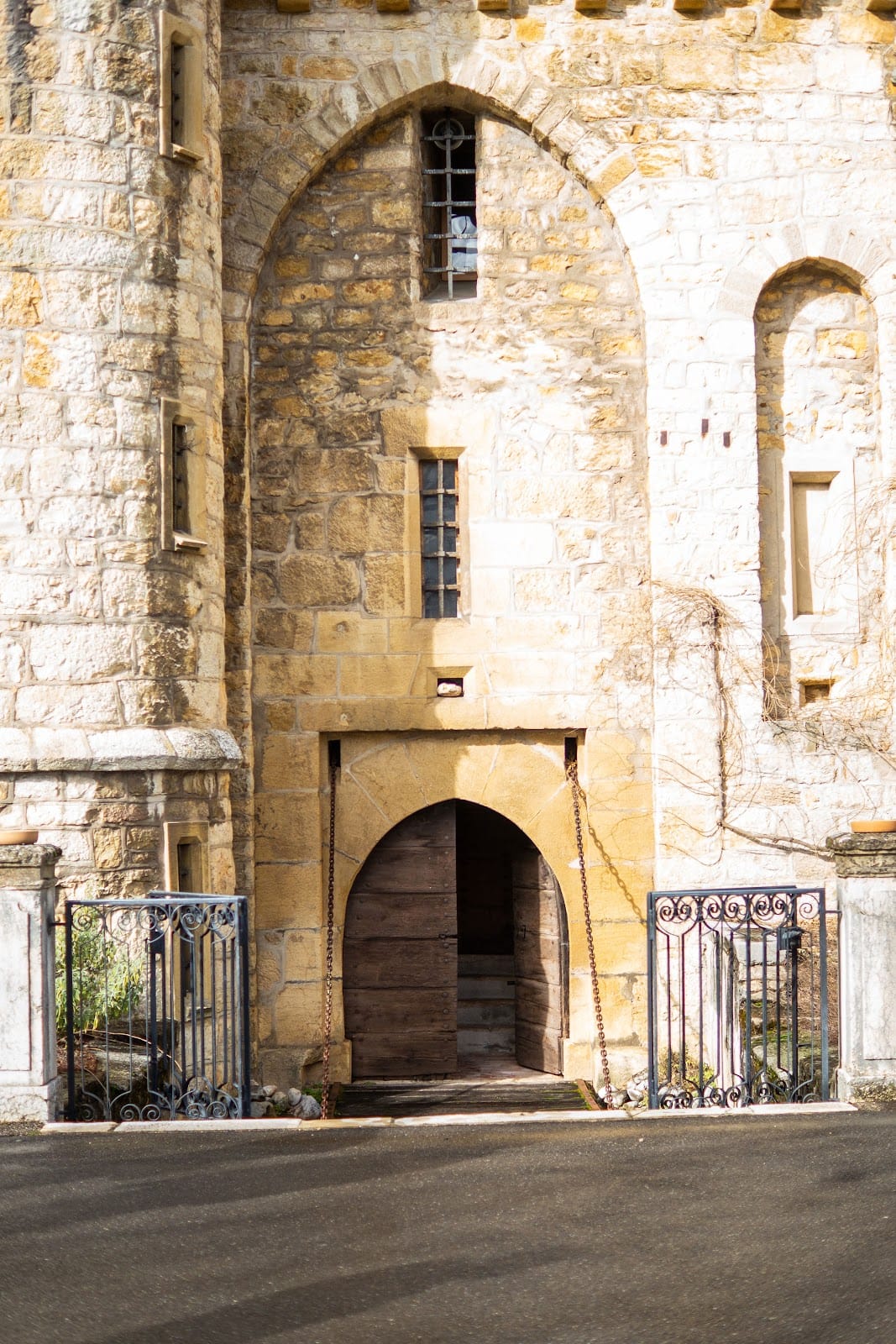
The keep, the principal fortified tower of a medieval castle, belongs to the core of the thirteenth-century complex. Its original entrance stood approximately 7 metres above ground level, and the access stairway could probably be raised during an emergency. Remains of the fireplace from the former kitchen survive on the tower’s ground floor, linking the fortified structure with the domestic activity of the medieval castle.
Gate, towers, and defenses
After 1309, the neglected castle was enlarged with a Gothic gate opened through the ground floor and approached by a drawbridge, a movable bridge that could be raised across a defensive gap. Massive buttresses were added at the corners on the eastern side facing the valley, and turret tops were built above the fortifications. A hexagonal stair tower was erected against the rear of the castle.
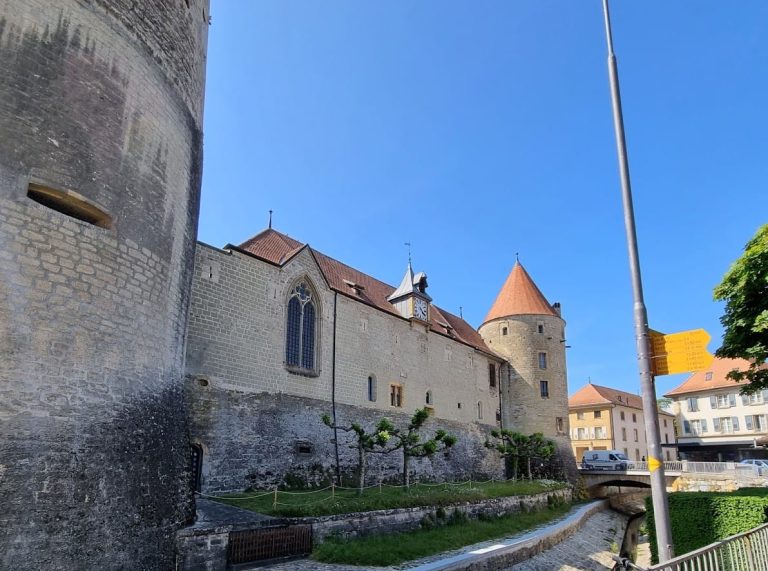
Rows of projecting machicolations, defensive structures with openings for dropping stones or other materials, were built into the wall crowns and above the gate. During peacetime, these openings served as latrines. A round tower beside the entrance strengthened the defenses, with curved walls designed to deflect stone projectiles launched by siege engines rather than allow them to break directly through.
Baroque residence
New Castle
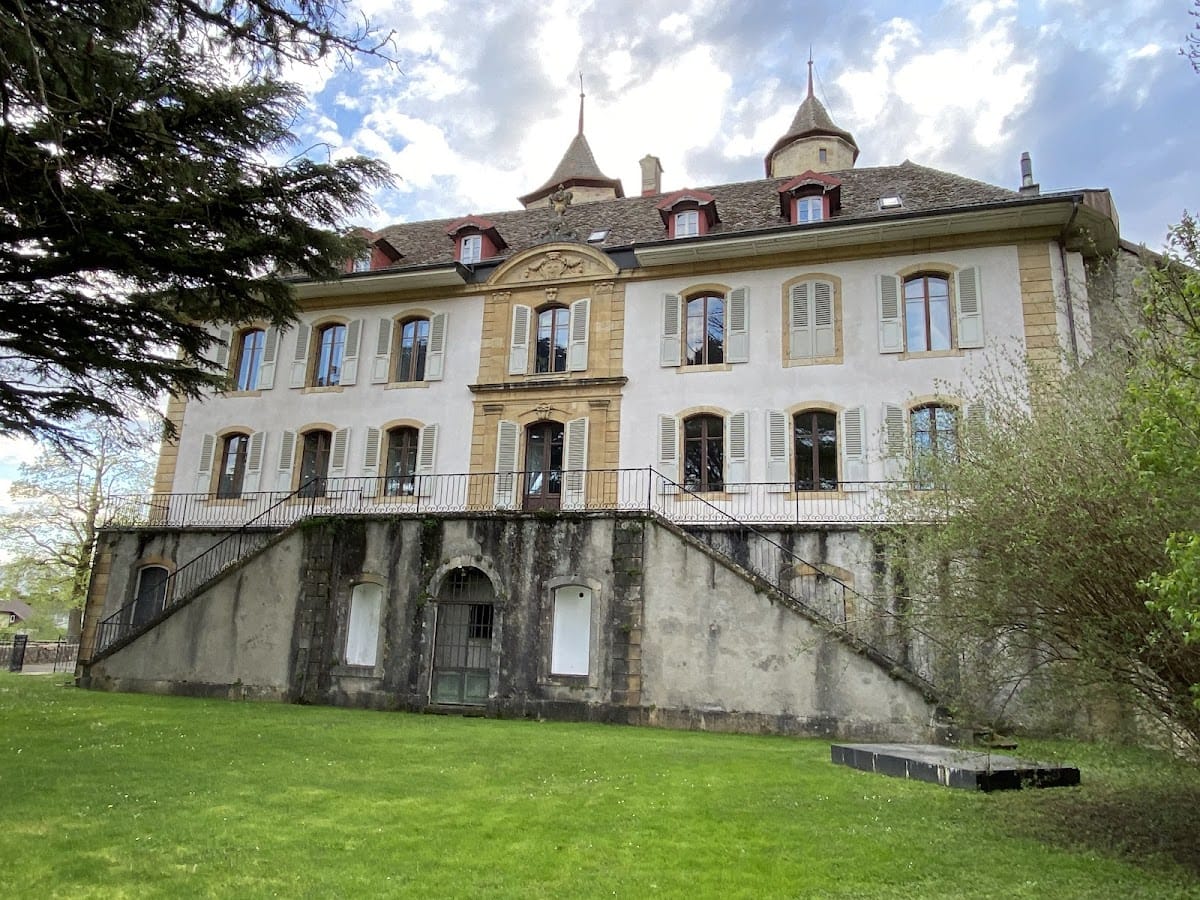
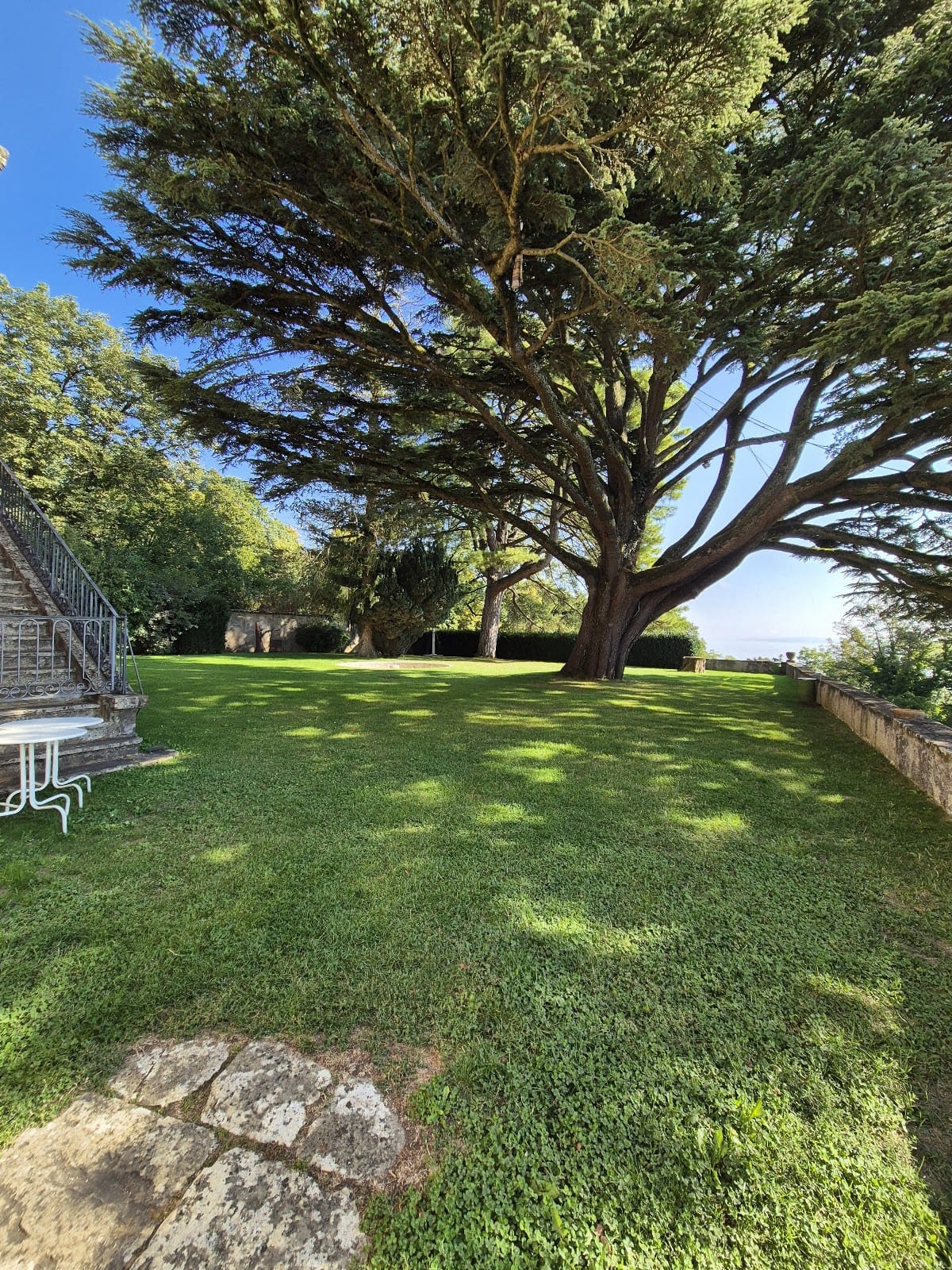
The New Castle, built around 1773 in the northeastern part of the site, is a Baroque residence with a hipped roof and a terrace extending around the building. On the garden side, a grand exterior staircase rises to another terrace, from which the reception rooms are accessible.
Decorated facade
Pilasters support the cornices of the central section of the Baroque facade. A decorative pediment crowns the facade and bears the arms of the von Büren family, preserving a visible link with the family that administered the lordship from the late seventeenth century.