Castell de Sant Mori: A Historic Medieval Castle in Sant Mori, Spain

Visitor Information
Google Rating: 4.4
Popularity: Low
Official Website: castellsantmori.com
Country: Spain
Civilization: Early Modern, Medieval European
Site type: Military
Remains: Castle
History
Castell de Sant Mori is situated in the municipality of Sant Mori, located in present-day Spain. It was originally established by medieval civilization, with origins tracing back to at least the 11th century. The castle functioned as a noble residence through various historical periods.
The earliest documented mention of the castle appears in 1149 within the testament of Guerau de Rupià, confirming its existence in the mid-12th century. In the 13th century, the castle was part of the County of Empúries and belonged to Dalmau de Creixell. During this time, it also maintained a connection with the fortified monastery of Sant Miquel de Fluvià, highlighting its strategic and religious associations in the region.
Significant developments occurred during the Catalan Civil War between 1462 and 1486. Queen Joana Enríquez, mother of Ferdinand the Catholic, sought to reside at the castle. While living there, she commissioned fortifications and carried out renovations that elevated the castle’s status to a royal seat. Notably, a parliamentary session was held within its walls on October 15, 1466. Following these events, Ferdinand the Catholic transferred ownership to Pere de Rocabertí, turning the castle into the administrative center of the barony of Sant Mori.
From the 15th century onward, the castle remained in the possession of the Rocabertí family lineage, a continuity that has contributed to its preservation. Further renewal took place in the 16th century when the building was rebuilt and fully restored, adopting its Gothic-Renaissance architectural style. The castle has continuously served as a noble residence under the same family since that period.
In the early 20th century, Francesca Güell led additional restoration efforts to maintain the structure. More recently, the castle has undergone adaptations to modern uses, including tourist accommodations. This change has led to legal discussions concerning noise from nearby church bells, resulting in regulated ringing times, reflecting the balance between heritage conservation and community life.
Remains
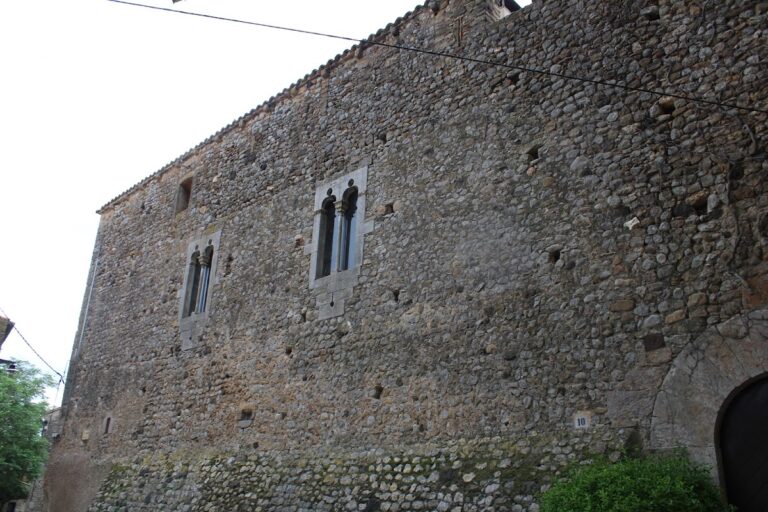
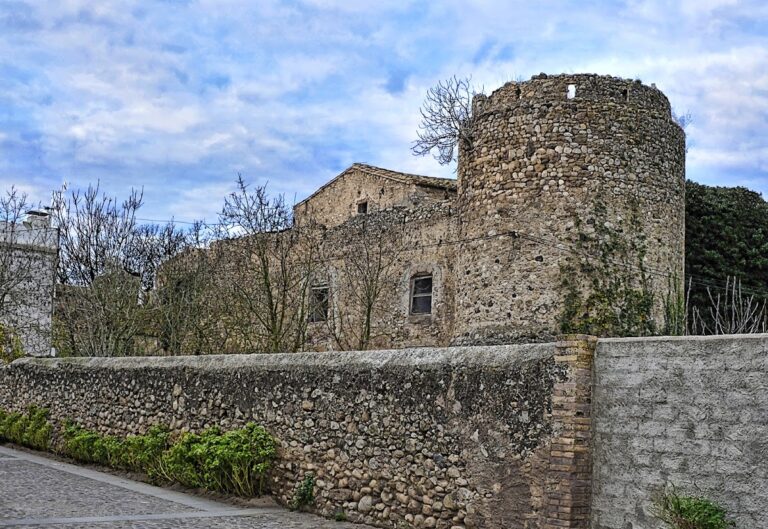
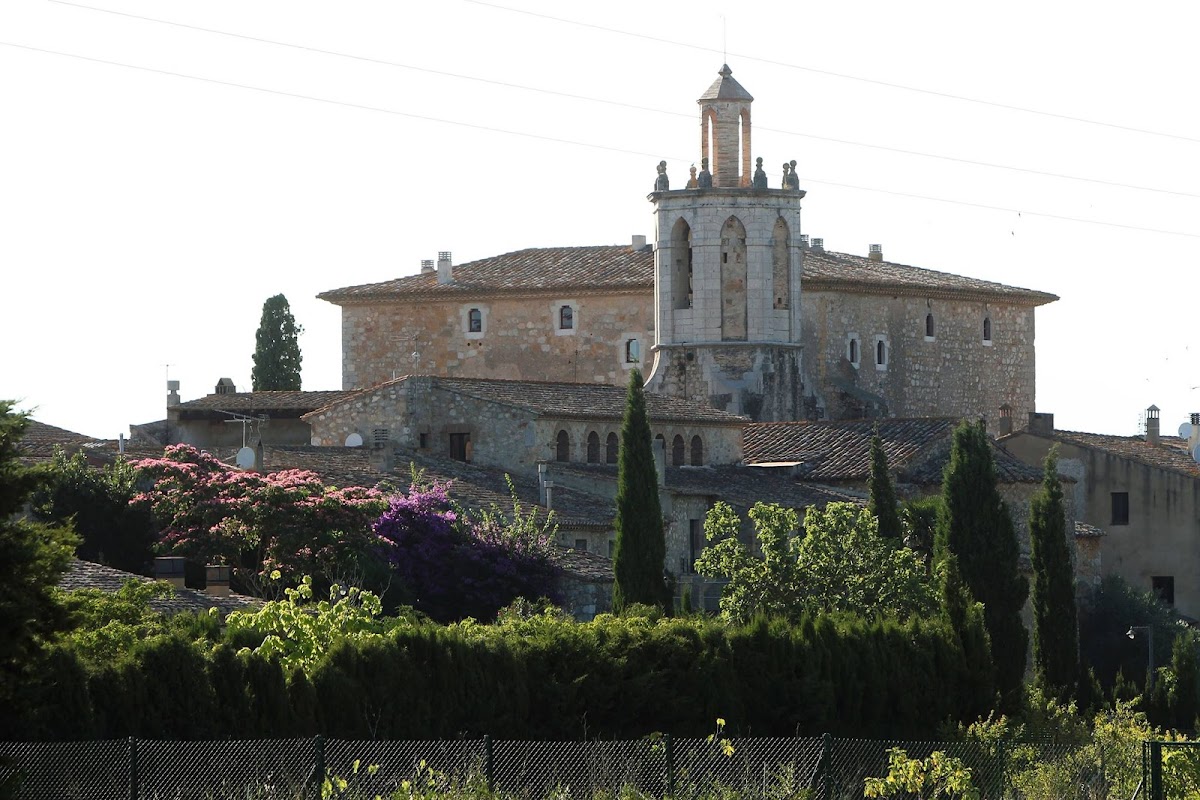
The Castell de Sant Mori is constructed as a rectangular building organized around a central courtyard. Its structure consists of four adjoining wings covered by varied-sloped roofs, combining a ground floor with three upper stories. Large buttresses support the southwest and southeast corners, enhancing its defensive solidity.
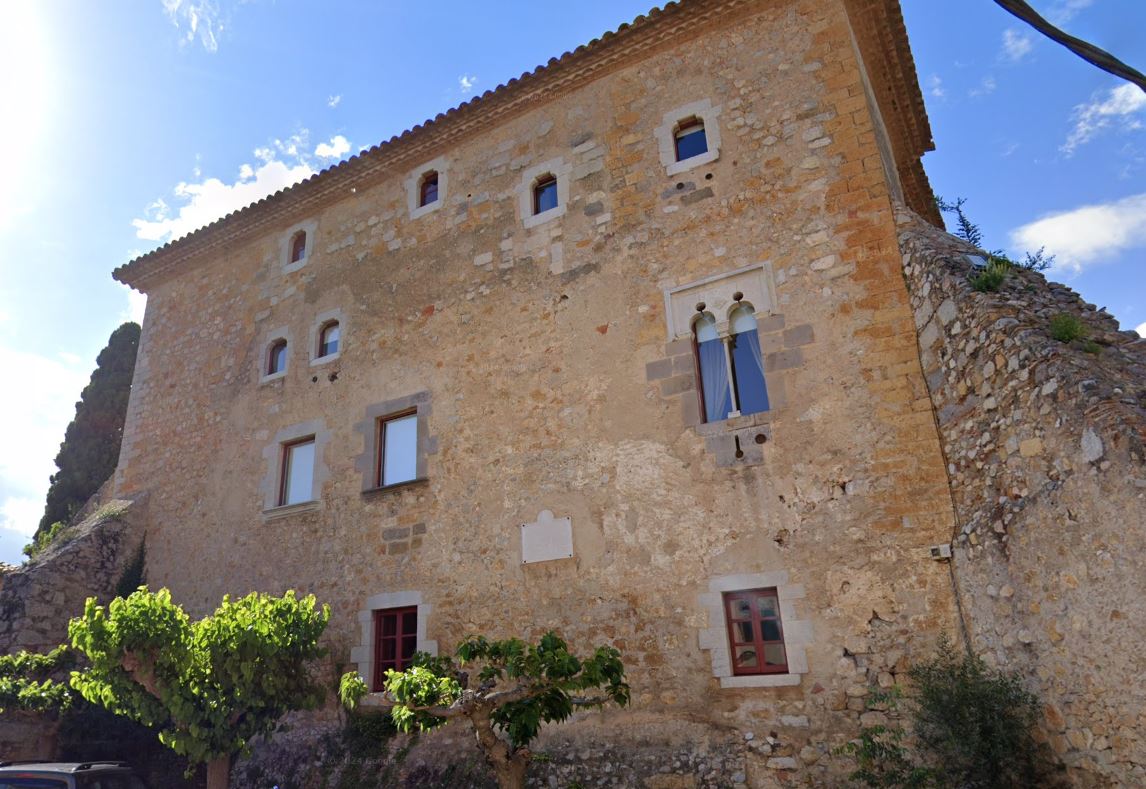
The main façade, oriented to the west, opens to Church Square via a lowered stone-arched portal leading to a large terrace, which now features a modern swimming pool. The principal entrance is located on the ground floor and contains a semicircular stone arch composed of voussoirs — wedge-shaped stones that form the curved arch. Above, the upper floors exhibit rectangular windows framed by carefully cut stone blocks. Some windows rest on curved corbels, with certain elements undergoing restoration to preserve their original appearance.
Prominent on the north and south façades are twin windows crowned with trilobed arches, a stylistic feature partially restored to reveal the castle’s historic character. Defensive architecture is evident in the preserved original loopholes — narrow vertical slits in the walls designed for archery or musketry — particularly near these windows. Decorative shields are arrayed near the roofline, some bearing crosses while others display the heraldic arms of the Cardona family, which signified historical alliances or ownership. On the north side, two twin windows are supported by slender columns with embellished capitals, with shields featuring crosses and Cardona insignia situated nearby.
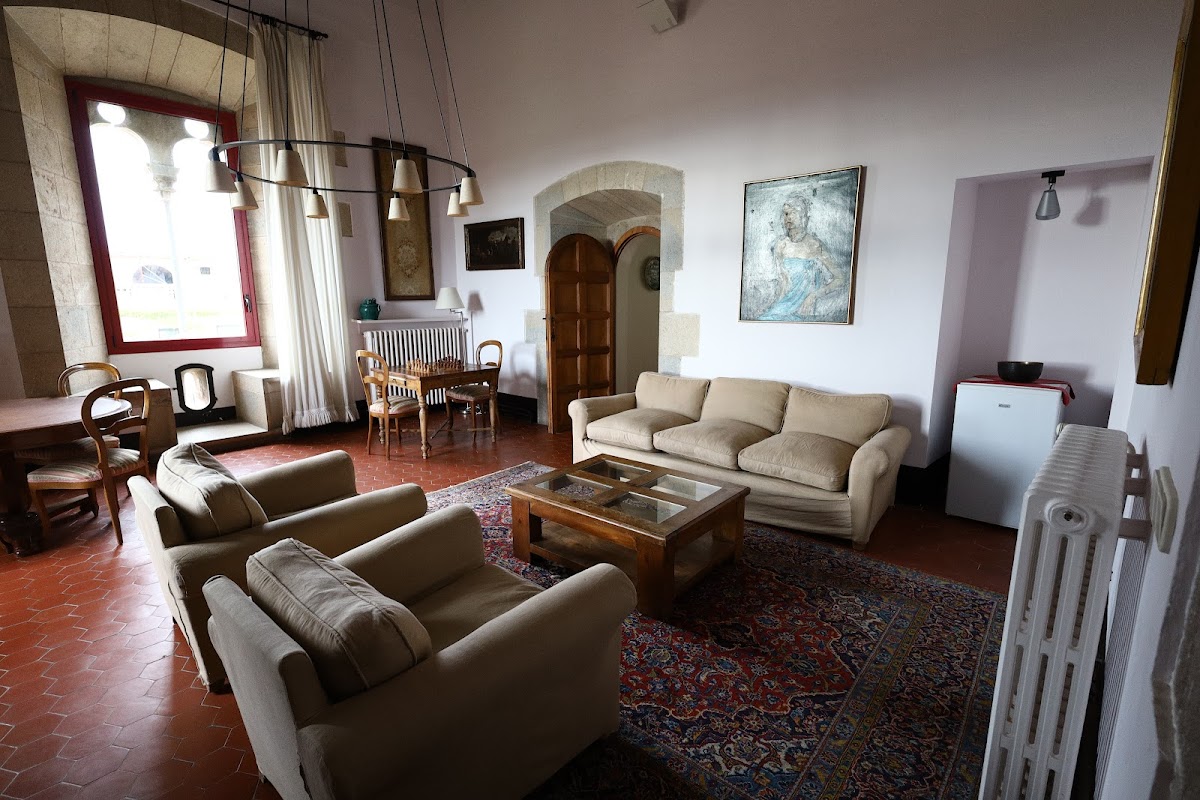
Inside, the ground floor is marked by spacious vaulted areas, including large lowered arch vaults made from bricks laid flat, and barrel vaults which enhance the structural integrity of the chambers. The main hall on the first floor impresses with a restored wooden coffered ceiling, characterized by decorative sunken panels supported by a series of transverse, or diaphragm, arches. The door to the royal chamber reflects Gothic-Renaissance artistry, linking the interior décor to the broader architectural style applied during the 16th-century restoration.
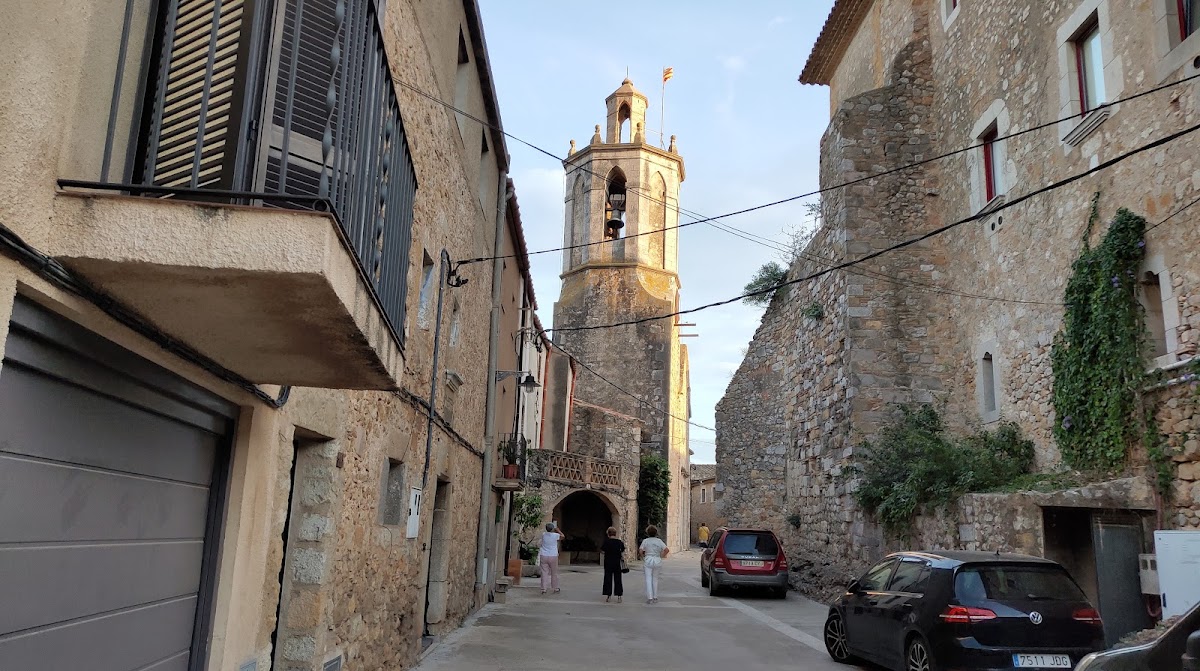
The building rests partially on exposed bedrock, a foundation choice that integrates the castle with its natural terrain. The walls are primarily assembled from unevenly shaped stones bonded with mortar, but some sections, especially at the corners, incorporate precisely cut stone blocks to reinforce structural strength. The overall setting places the castle within Sant Mori’s historic center, bordered by Church and Rectory squares and adjacent to Figueres street, confirming its central role within the old village layout.
Nearby sites