Castello Utveggio: A Neogothic Palace and Former Luxury Hotel in Palermo


Site at a Glance
- Rating
- 4.1
- Popularity
- Low
- Country
- Italy
- Primary era
- Modern
- External website
- Open
- Eras represented
- Modern
- Civilizations
- Italian
- Site type
- Civic
- Remains
- Palace
On this page7 sections
History
Castello Utveggio is a restored Neogothic palace in Palermo, Italy, built between 1928 and 1933 as the Grand Hotel Utveggio. Commissioned by Cavaliere Michele Utveggio, the building was designed as a castle-like luxury hotel on Mount Pellegrino, with views over Palermo and its gulf.
Construction and hotel venture
Michele Utveggio acquired the land from the Municipality of Palermo in 1927. Construction began the following year under the direction of Giovan Battista Santangelo, a professor in the Faculty of Engineering at the University of Palermo. Utveggio, who came from Calatafimi, financed the complete project through his construction company, including the road linking the site and its water-supply system. The building was completed in 1933 and inaugurated in 1934.
The hotel was intended to take advantage of its elevated position and to emulate the nearby Villa Igiea. Despite competitive prices, the enterprise soon declined, and an attempt to establish a casino at the complex was unsuccessful.
War, abandonment, and restoration
The hotel closed during the Second World War. The surrounding area was used first by Italian troops and later by Allied troops. After the war, the complex remained abandoned for many years and suffered vandalism.
In 1984, the Sicilian regional government acquired and restored Castello Utveggio. Four years later, it assigned the complex to CERISDI, a management-research and executive-studies center that operated as an advanced training institution. The interiors were modernized, while the water, electrical, and computer systems were adapted for its new use.
After twenty-six years of activity, CERISDI was permanently closed by IRCA on 23 March 2016. A planned recovery as a training center for regional public administration and local authorities was announced in 2019. In January 2024, the Sicilian Regional Council approved the building’s conversion into a conference center, and the palace was reopened by the Presidency of the Sicilian Region on 5 December 2025.
Association with the Via D’Amelio investigation
Castello Utveggio became associated with the investigation into the 1992 Via D’Amelio massacre, in which the Italian anti-Mafia magistrate Paolo Borsellino was assassinated. During the Borsellino quater trial, a Forest Rangers brigadier testified that a radio operator at the Mount Pellegrino lookout below CERISDI had reported seeing smoke rising from the Via D’Amelio area. Testimony in the same proceeding excluded the building’s use by intelligence services, while the 2020 DIA operation known as “White Shark” raised further investigative questions.
Remains
Promontory palace
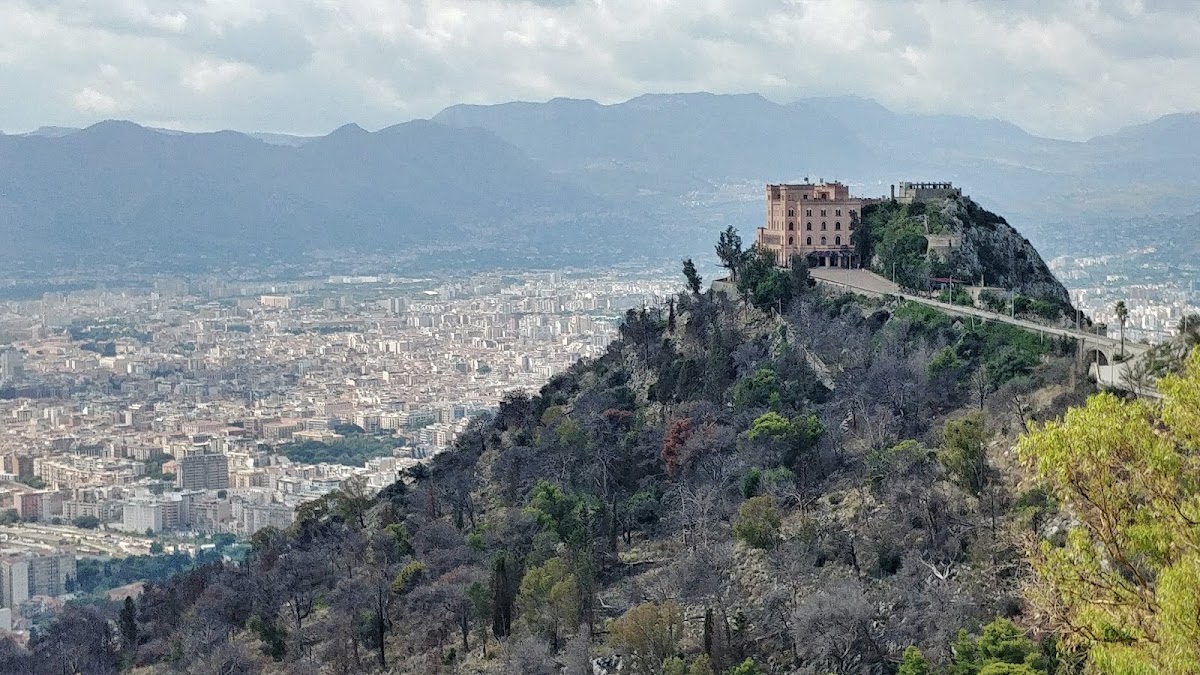
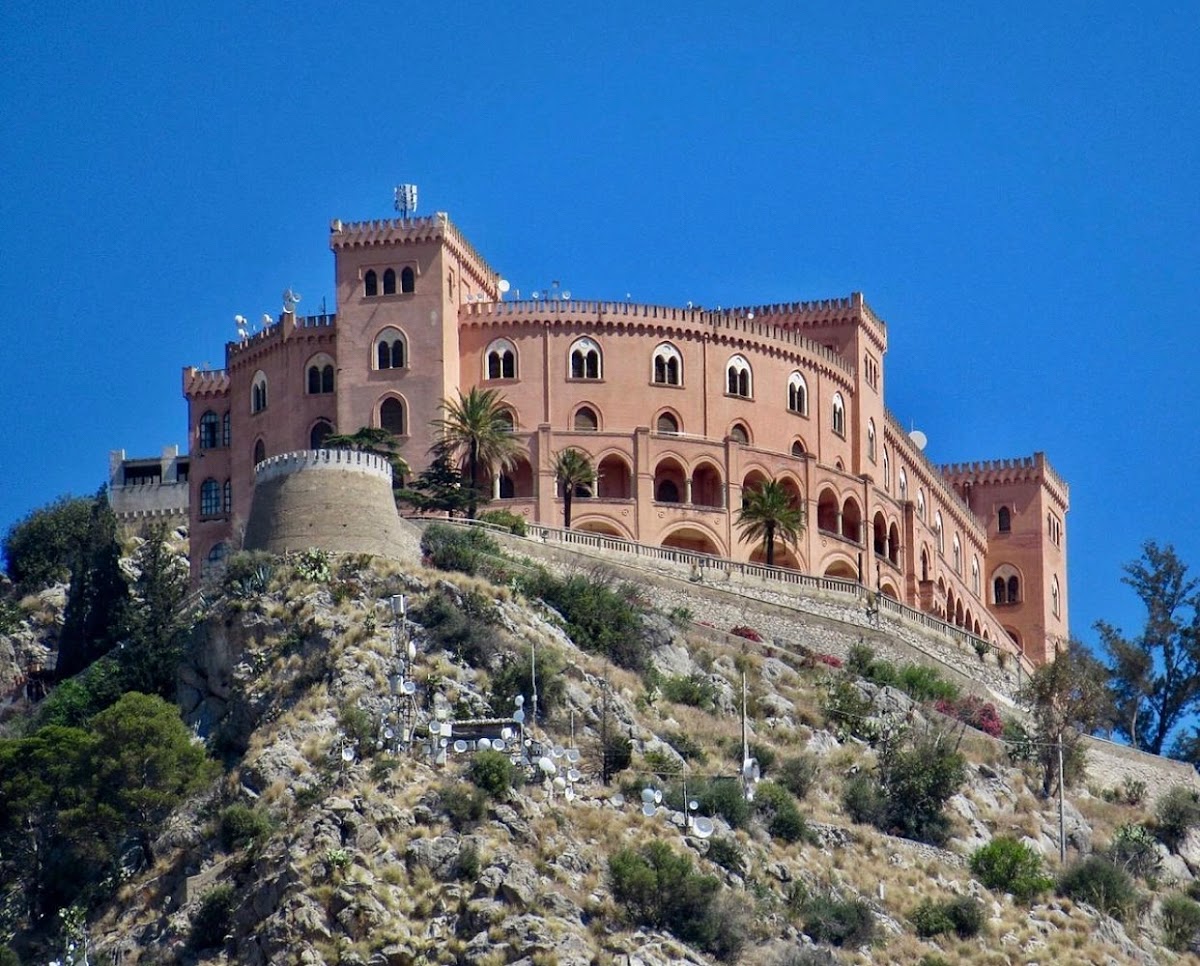
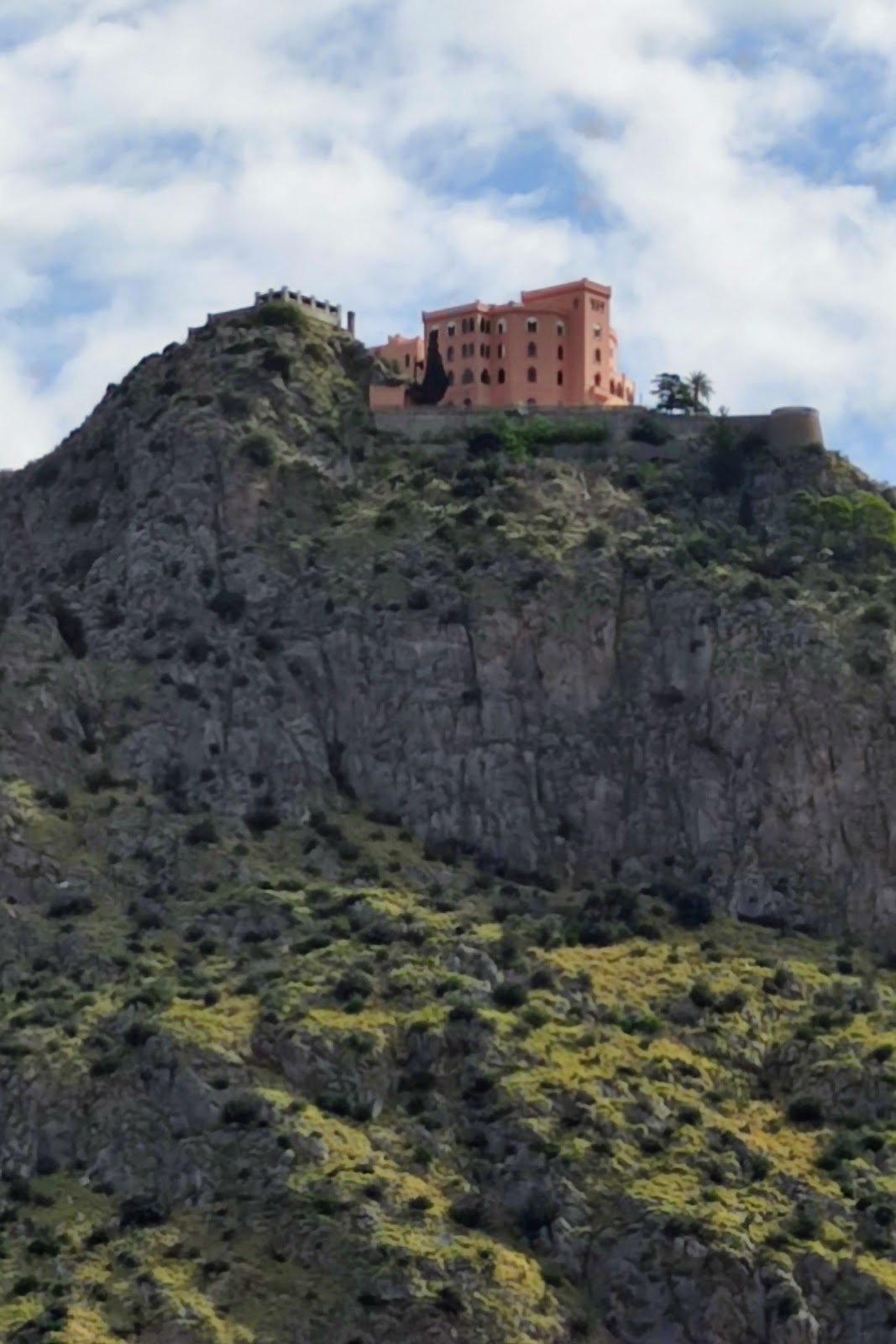
Castello Utveggio stands on a promontory of Mount Pellegrino at approximately 346 metres above sea level, overlooking Palermo and the Gulf of Palermo. Its monumental form follows a Neogothic design that resembles a castle, while its original purpose was hospitality rather than defence. The restored building retains a pale-pink exterior and rooflines finished with crenellations, the regularly spaced raised sections derived from defensive battlements.
Infrastructure and interior adaptation
The original building project extended beyond the palace itself. A purpose-built connecting road and a water-supply system were created and financed as part of the development. During the restoration and conversion for CERISDI, the interiors were updated and the hydraulic, electrical, and computer installations were upgraded for institutional and educational use. The building is currently described as restored.