Clackmannan Tower: A Scottish Tower House and Bruce Family Estate
Site at a Glance
- Rating
- 4.5
- Popularity
- Low
- Country
- United Kingdom
- Primary era
- Medieval
- External website
- Open
- Eras represented
- Medieval, Early Modern
- Civilizations
- Kingdom of Scotland
- Site type
- Military
- Remains
- Castle
On this page8 sections
History
Clackmannan Tower is a medieval tower house in Scotland, United Kingdom, whose origins lie in the thirteenth century and whose surviving form was developed mainly between the fourteenth and sixteenth centuries. Built as a fortified residence combining domestic accommodation with defensive features, it occupies King’s Seat Hill above the valley of the Forth and was associated with the Bruce family for more than four centuries.
Royal origins and the Bruce estate
The area is associated with Scottish kings who used it for hunting during the thirteenth century. A royal hunting lodge was established there, possibly as a timber structure. In 1359, David II, the fourteenth-century king of Scotland, sold or granted the estate to his relative Sir Robert Bruce. The transaction helped meet the ransom promised to the English after David II’s release from eleven years of captivity.
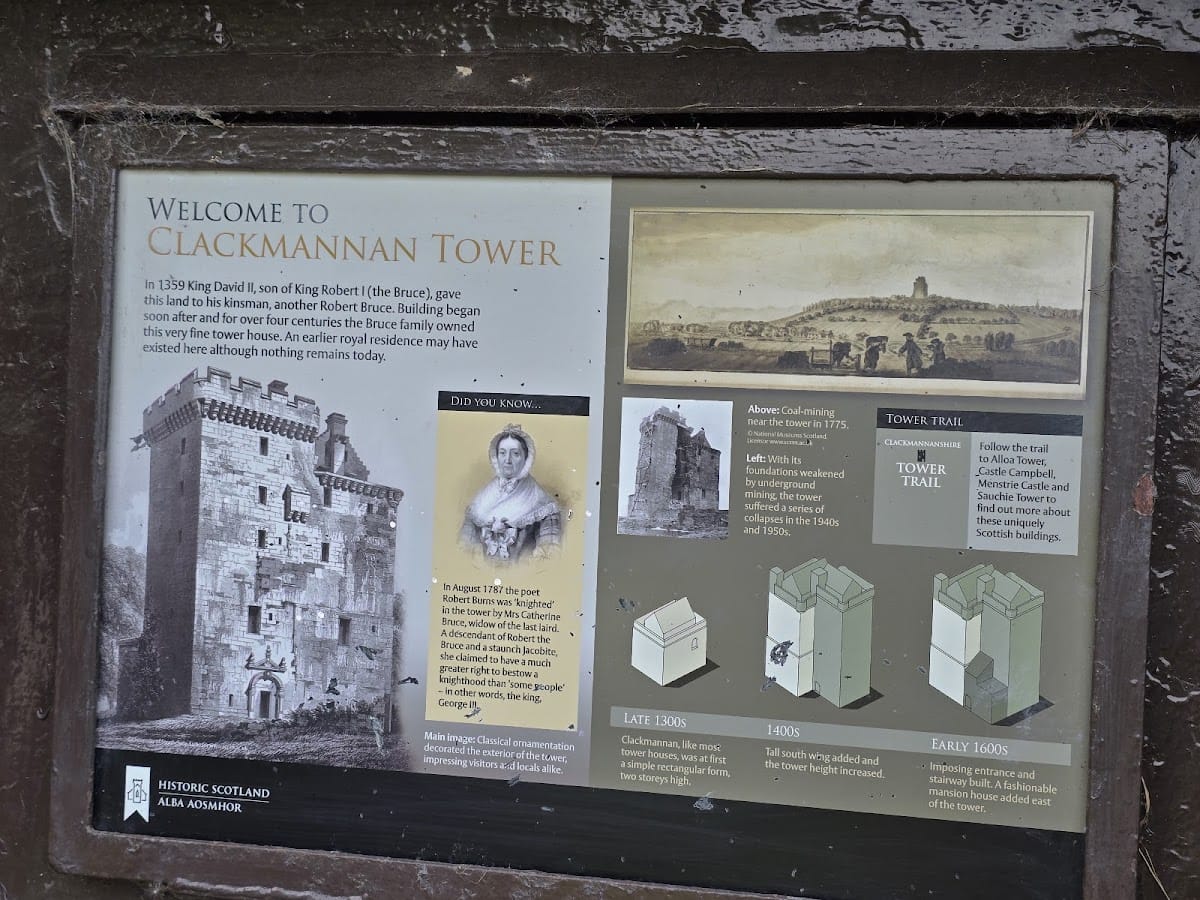
A first stone tower house of two storeys was built around 1365. Its builder is variously identified as David II or Sir Robert Bruce, while local tradition attributes the work to Robert the Bruce, the Scottish king who died in 1329. The lands remained connected with the Bruce family, or Clan Bruce, from 1359 until approximately 1796. The tower was enlarged during the fifteenth century, and a substantial house was later built to its south-west in the sixteenth century.
Decline of the estate
Financial difficulties altered the family’s position in the eighteenth century. In 1708, David Bruce was declared bankrupt and had to sell lands. His son Henry Bruce supported the Jacobites, followers of the exiled Stuart dynasty who opposed the Hanoverian succession to the British throne, during the 1745 uprising. Henry Bruce died in 1772.
Clackmannan Tower was also associated with a notable ceremony in the later eighteenth century. On 26 August 1787, Robert Burns was knighted there by Lady Catherine Bruce, a descendant of Robert the Bruce. She used her ancestors’ two-handed sword and claimed that her lineage gave her greater authority to confer the honour than the Hanoverians then occupying the British throne.
Abandonment and preservation
After Lady Catherine Bruce died in 1791, the tower was abandoned and gradually became ruinous. The adjoining mansion was demolished, and some of its stones were reused in the construction of the parish church in 1815. The Marquess of Zetland later purchased the castle but did not occupy it.
Mining activity caused subsidence and damage, including the collapse of part of the eastern wall. Historic Scotland, the Scottish state heritage body formerly responsible for historic monuments, took responsibility for the tower during the 1950s, with management recorded from 1955, and undertook restoration and preservation work. Clackmannan Tower has been protected as a Scheduled Monument since 1935. It was also placed in Scotland’s Category A listed-building category in 1960, the highest level of protection for buildings of national or exceptional architectural or historic interest.
Remains
Original tower and later wing
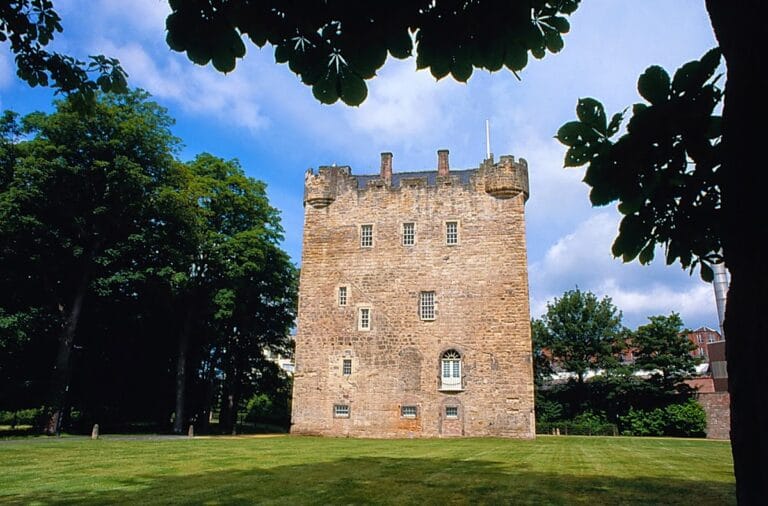
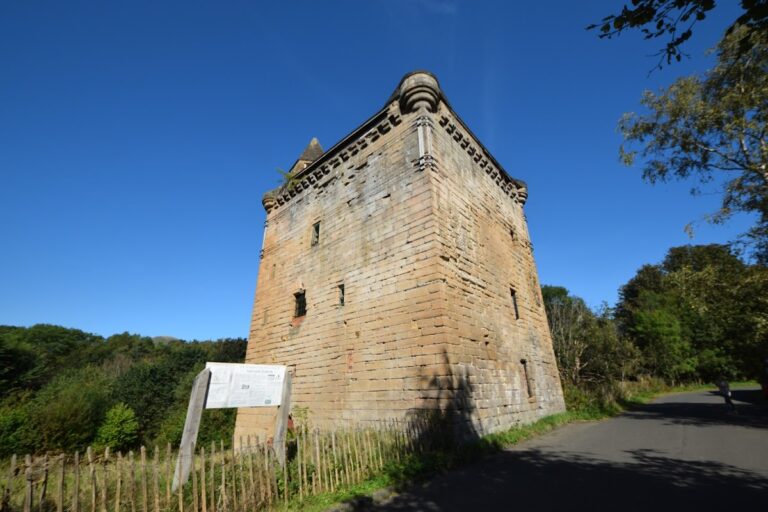
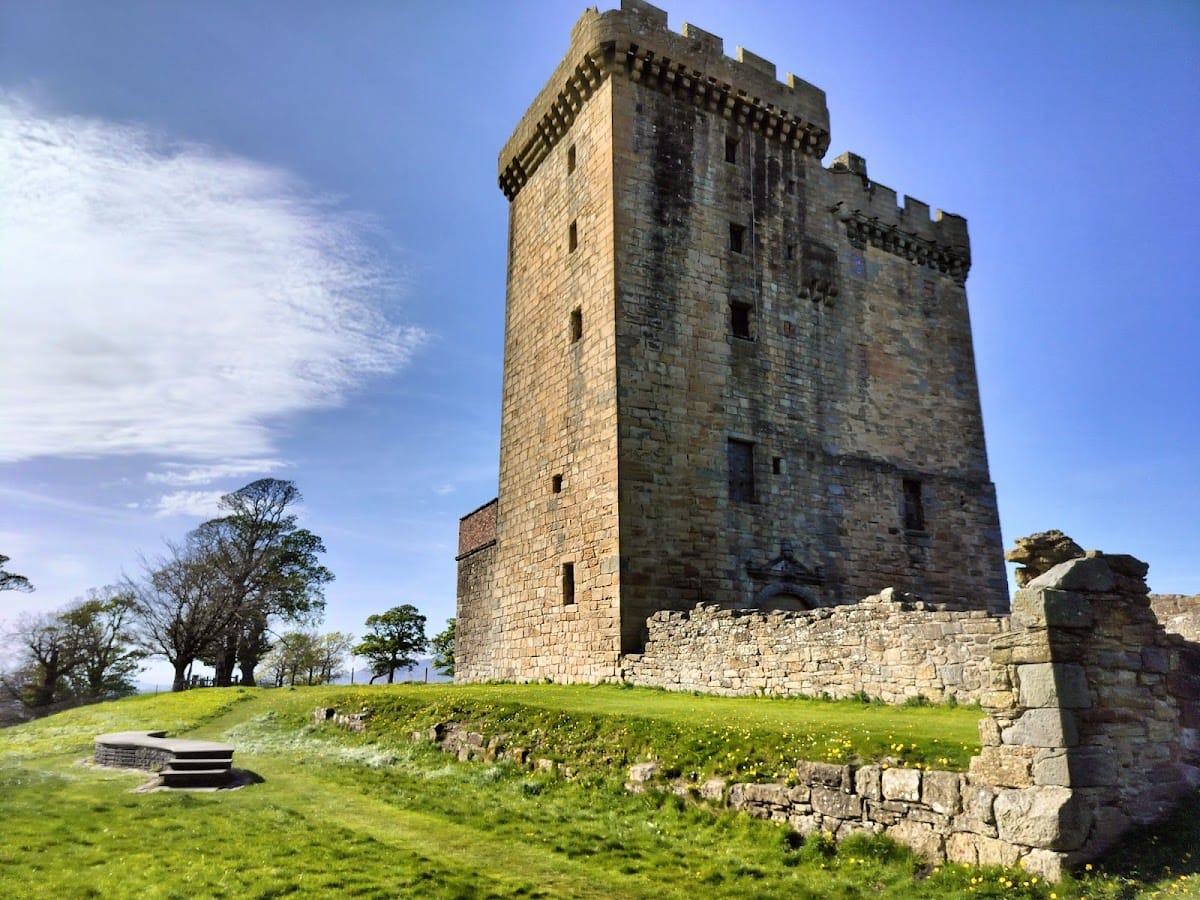
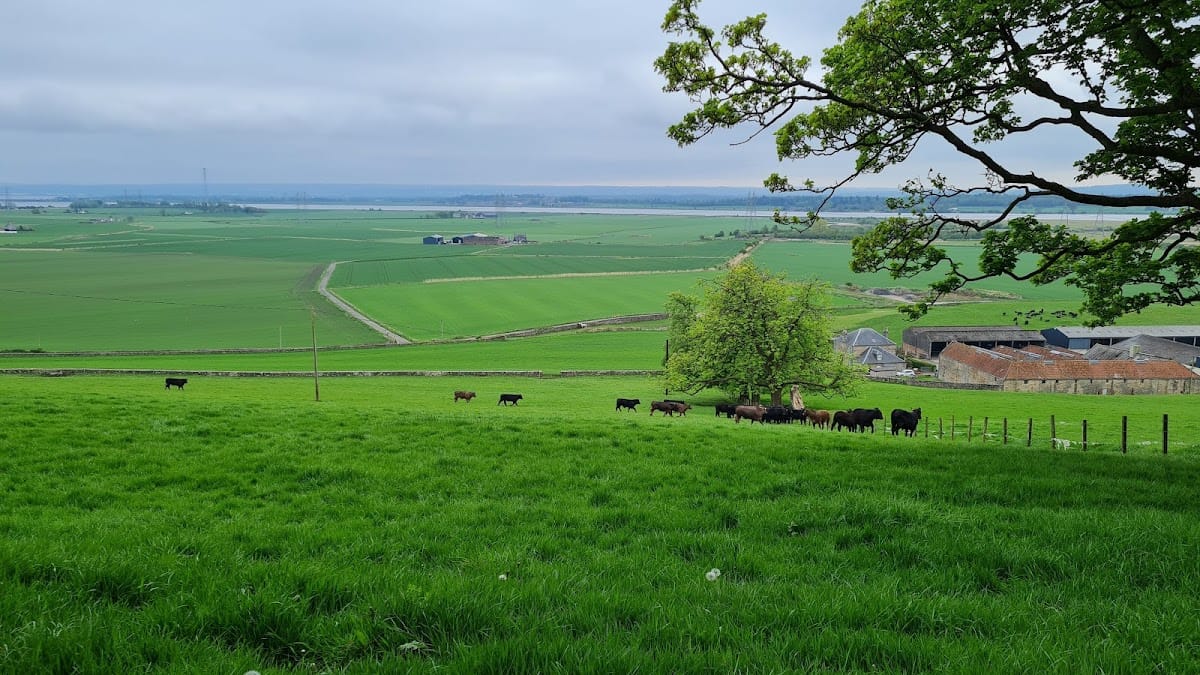
Clackmannan Tower stands on the summit of King’s Seat Hill as a five-storey, L-shaped tower house approximately 24 metres high. Its elevated position provides a strategic panorama over the valley of the Forth. The original rectangular tower dates from the fourteenth century, with an interior measuring about 7 by 5.5 metres and walls nearly 2 metres thick. Its masonry is chiefly rubble stone, incorporating some dressed stone blocks.
The earliest building had two storeys and was entered at first-floor level by an external stair. A stair was formed inside the thickness of the wall. The principal room occupied the first floor, upper rooms contained chambers, and the garret provided accommodation for the garrison. During the fifteenth century, two additional storeys were added to the original tower. A taller wing was also built at right angles to its south, creating the L-shaped plan visible today.
The wing joined the original tower through a doorway at the first-floor angle. Its first floor contained a kitchen, while a private chamber occupied the second floor and further chambers were placed above. The private chamber has an elaborate fireplace associated with the late fifteenth or sixteenth century. Its east wall contains a lavabo, a wall-built washing basin with an outlet that carried water outside the building.
Entrances and defensive features
The parapet above both parts of the tower incorporates projecting corbels, stone supports that carry an overhanging structure, and machicolations, projecting openings or galleries through which defenders could attack people below the wall. The machicolations are noticeably rougher on the later part of the building. The tower is roofed with slate, although the present roof is relatively recent.
During the seventeenth century, the inconvenient earlier entrance was replaced by a nearly 3-metre-wide entrance in the later wing. This opened onto a broad, straight stair occupying the space between the wing and the original tower. The stair led to the first-floor passage and to a mezzanine probably used as a guardroom. It continued to a doorway opening onto a terrace on the roof of the lower section of the wing.
Courtyard and mansion remains
A walled enclosure or courtyard, a drawbridge, and a surrounding moat were probably added around the tower during the seventeenth century. The moat measures approximately 2 metres wide and 1 metre deep, while the later enclosed courtyard lies on the east side. These features formed an additional defended setting around the tower.
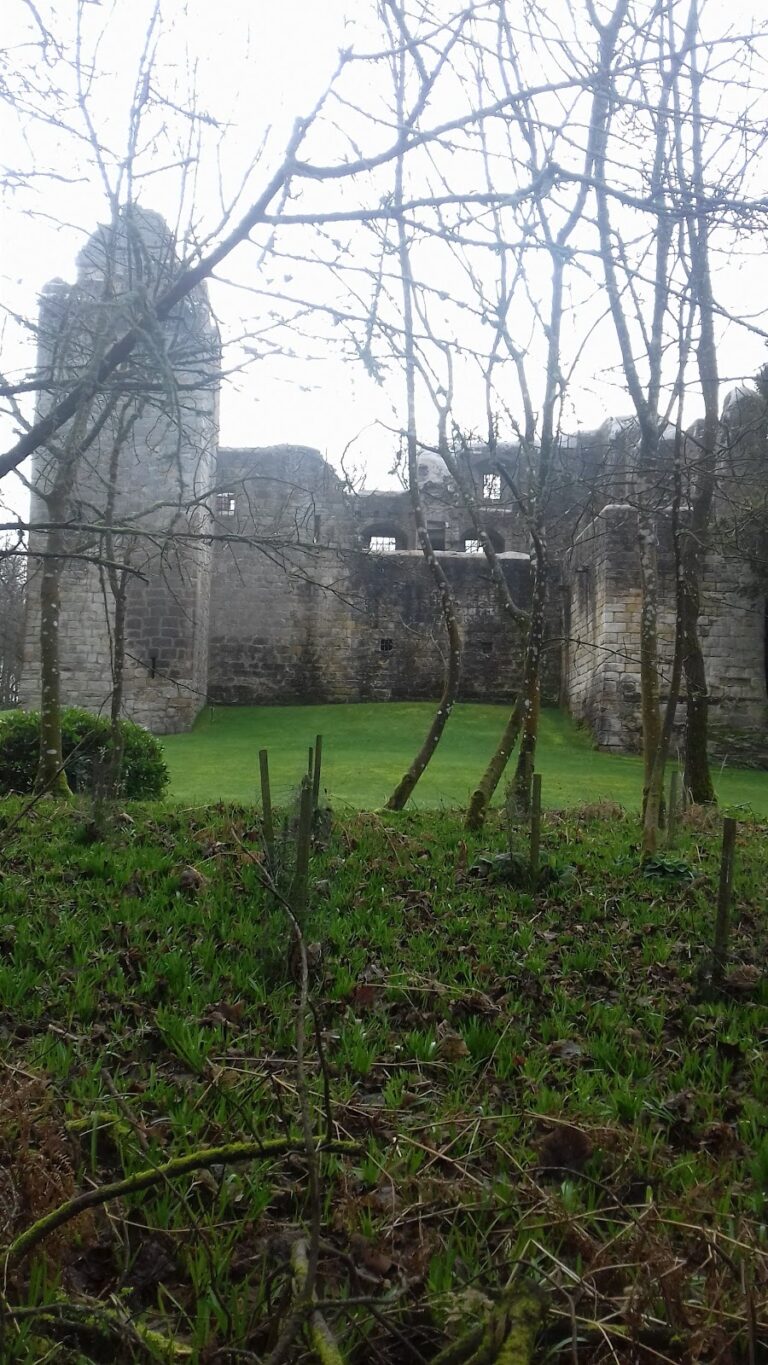
The sixteenth-century mansion formerly stood south-west of Clackmannan Tower. The mansion has been demolished, but fragments of its ancillary buildings remain. Together with the tower, the surviving courtyard and moat preserve elements of the estate’s later residential and defensive arrangement.