Český Krumlov Castle: A Bohemian Medieval and Baroque Palace Complex
Site at a Glance
- Rating
- 4.8
- Popularity
- Very High
- Country
- Czechia
- Primary era
- Early Modern
- External website
- Open
- Eras represented
- Medieval, Early Modern
- Civilizations
- Habsburg, Holy Roman Empire, Kingdom of Bohemia
- Site type
- Domestic
- Remains
- Castle
On this page26 sections
History
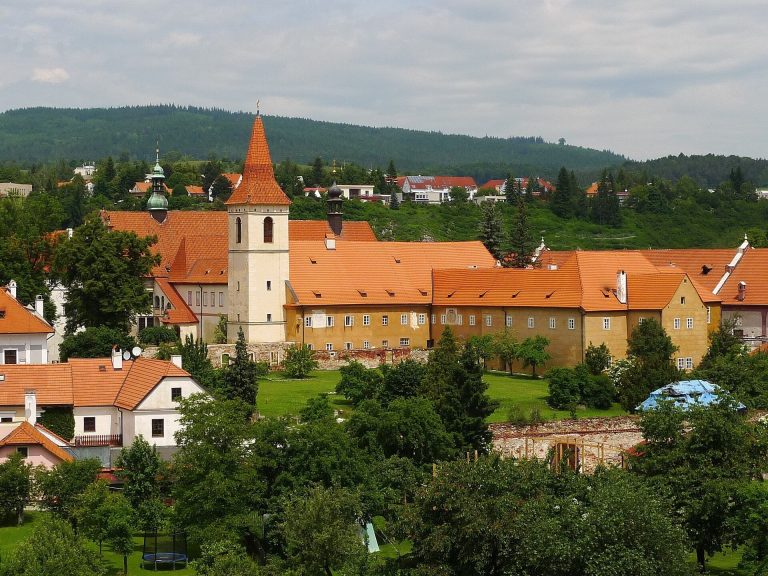
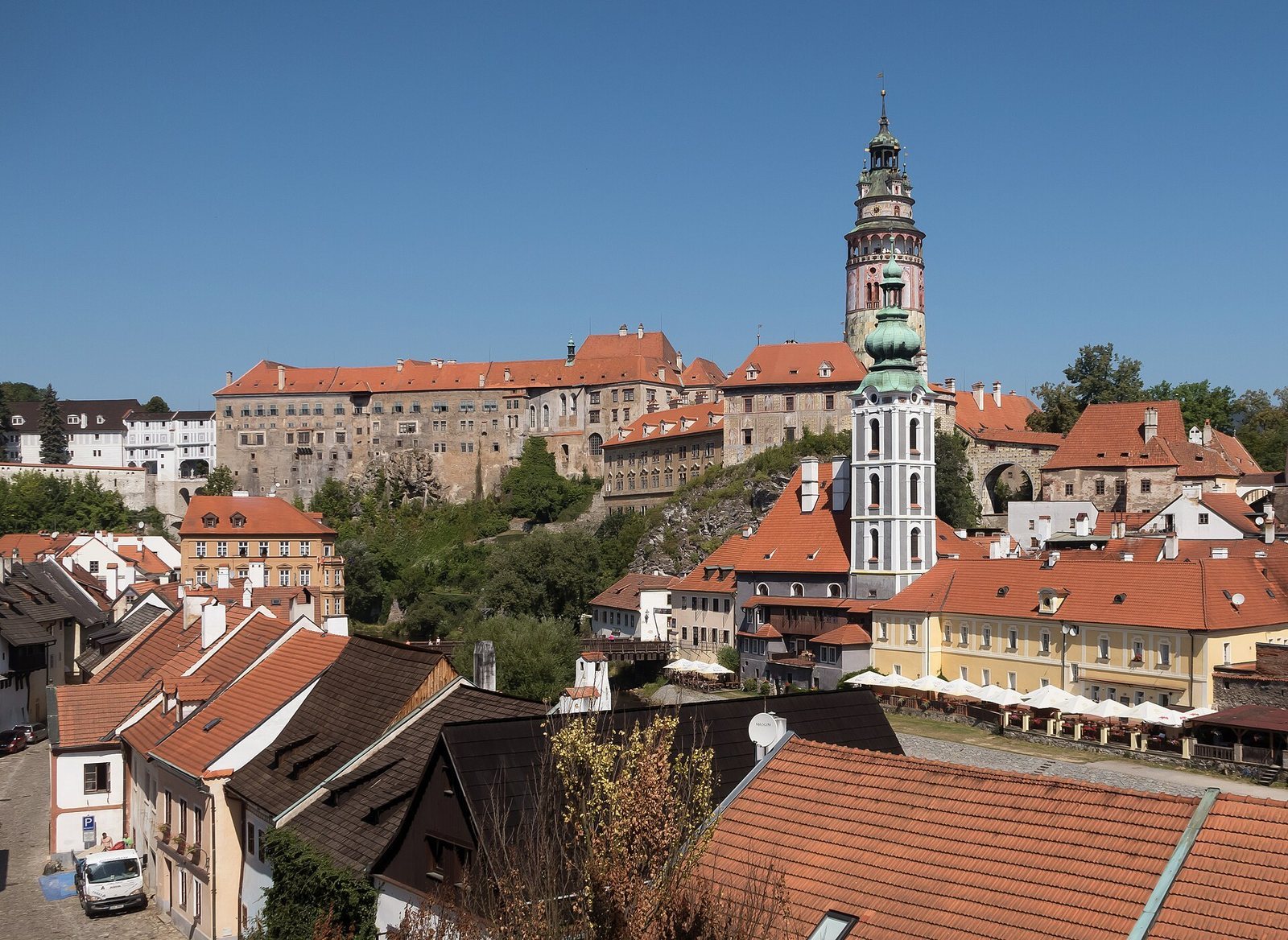
Český Krumlov Castle in Czechia was founded during the first third of the thirteenth century by members of the Vítkovci, a powerful Bohemian noble lineage. It developed from a medieval Gothic fortress into a large Renaissance and Baroque complex on a steep rocky promontory between the Vltava and Polečnice rivers. Covering more than 6 hectares, it is described as the second-largest castle and palace complex in Bohemia after Prague Castle.
Foundation and the Krumlov Vítkovci
The earliest reliable written reference dates from 1 April 1253, when Vítek of Krumlov witnessed a charter issued by Přemysl Otakar II. A reference to Krumbenowe around 1240 in Ulrich von Liechtenstein’s Frauendienst is uncertain, since it may have described a floodplain or wetland rather than a castle. The founder has variously been identified as Vítek I of Krumlov, his father Záviš of Nechanice, or his grandfather Vítek II the Elder of Krumlov.
In 1302, the Krumlov branch of the Vítkovci family became extinct, and the castle passed by inheritance to Jindřich I of Rožmberk. He moved his residence to Český Krumlov and enlarged the Lower Castle. His son Petr I of Rožmberk built the Upper Castle, which Oldřich II of Rožmberk later remodelled. Major alterations followed under Vilém of Rožmberk, whose brother Petr Vok eventually sold the castle to Emperor Rudolf II around 1601–1602 because of his debts. Rudolf gave the estate to his illegitimate son Julius Caesar, also known as Juan d’Austria.
Eggenberg and Schwarzenberg ownership
In 1622, Emperor Ferdinand II granted Český Krumlov to the Eggenberg family. The new owners commissioned Baroque rebuilding, established the gardens, and built the first wooden theatre in 1680. The Eggenberg line died out in 1719, after which the Schwarzenberg family inherited the estate. The Schwarzenbergs held it until 1947 and remodelled the complex in the style of Viennese Baroque during the second half of the eighteenth century.
The castle’s role changed after the Schwarzenbergs based themselves at Hluboká from 1871, and Český Krumlov lost some of its former importance. The estate was also affected by the land reform proclaimed in 1921. In 1923, the State Land Office offered numerous residual farms, agricultural holdings, a brewery, an inn, and other parts of the estate for ownership or lease. The castle later became state property, and its administration is carried out by the National Heritage Institute.
Protection and modern conservation
Český Krumlov Castle has been protected as a national cultural monument since 1989. Together with the historic centre of Český Krumlov, it was inscribed on the UNESCO World Heritage List in 1992. The UNESCO World Heritage List identifies cultural and natural properties considered to have outstanding universal value. The castle was also entered on the Czech register of cultural property under enhanced protection in December 2025.
The castle theatre required major restoration in the 1960s because its building and equipment were in poor condition. Further conservation followed, including extensive reconstruction in the 1990s. This work preserved the theatre’s historical stage technology and allowed the building to serve as a theatre museum. Its continuing cultural interpretation also led to the 2009 world premiere of Antonio Vivaldi’s opera Argippo, recovered from archival sources and prepared by Ondřej Macek with the Hof-Musici ensemble. Vivaldi was an Italian Baroque composer and violinist.
Remains
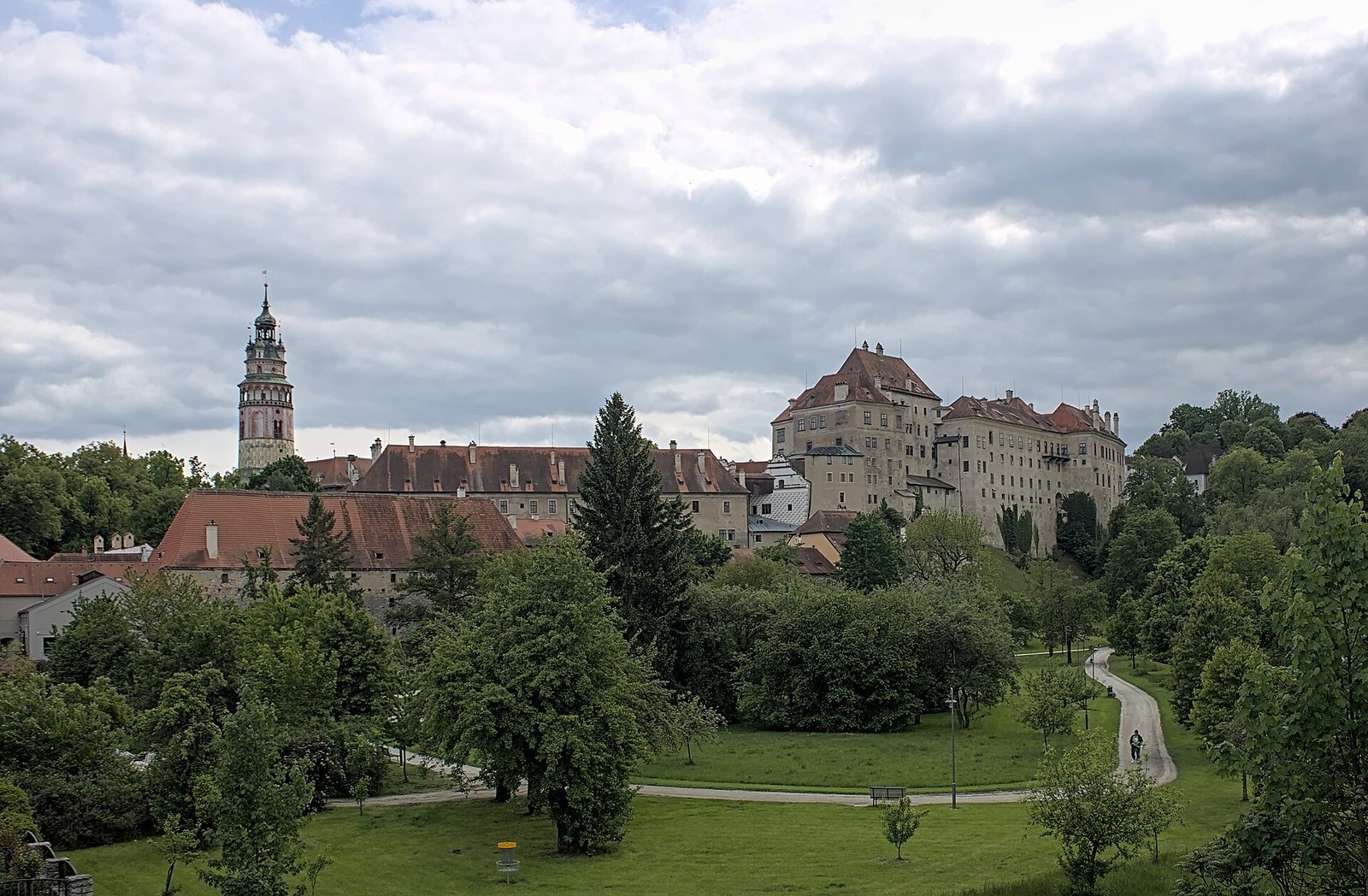
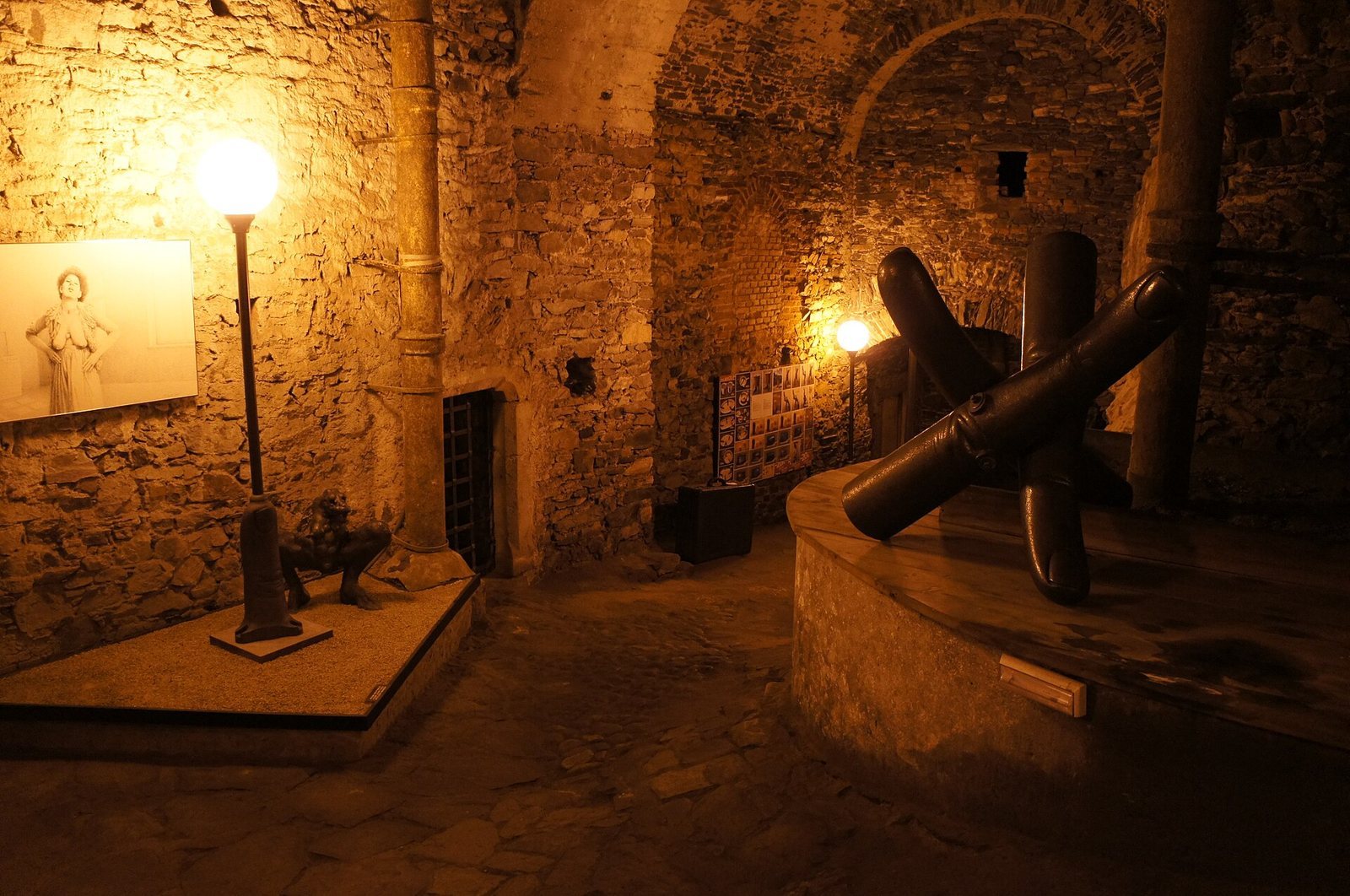
The surviving complex stretches along an elongated rocky promontory bordered by the Vltava River on the south and the Polečnice River on the north. Its buildings occupy several connected courtyards and levels, with the medieval castle at the core and Renaissance and Baroque additions extending around it. The varied fabric includes defensive towers, palace wings, courtyards, chapels, gardens, a theatre, and service buildings.
Early castle and Upper Castle
Hrádek and the first fortress
The earliest castle, known as Hrádek, was a small fortress composed of a rectangular palace, a circular bergfried, and a perimeter wall. A bergfried is a usually freestanding defensive tower characteristic of Central European medieval castles. The tower measures 11.6 metres in diameter. The oldest securely dated surviving element is a Late Gothic window surround from the middle of the fifteenth century. Another interpretation identifies the Upper Castle as the oldest part and proposes that its tower was formed by encasing an earlier, more slender structure.
Upper Castle ridge
By the end of the thirteenth century, the area of the later Second Courtyard had been fortified and entered through a gate with a rocking drawbridge. A silver-smelting works stood in the courtyard around the turn of the thirteenth and fourteenth centuries, while the eastern part of the later Upper Castle was probably already secured.
The Upper Castle was built during the first half of the fourteenth century on a higher, narrow rock ridge. Its eastern approach probably crossed two ditches by a wooden ramp. Square towers protected the eastern and western sides, and the eastern tower also defended the gate. The principal western palace joined an adjoining tower, while a chapel projected from the eastern palace. The core may also have included a third tower above the chapel.
Fifteenth-century remodelling
Toward the end of the first half of the fifteenth century, both Upper Castle palaces were altered. The chapel was enlarged with a sacristy covered by a star vault and lit by two tracery windows. A square hall beside the tower received new groined vaults. These changes reshaped the earlier medieval buildings while retaining their position within the fortified core.
Outer bailey and Lower Castle
Renaissance outer bailey
A new courtyard was created west of the Upper Castle around the turn of the sixteenth century. Palace wings enclosed it on three sides and occupied the former ditch, producing three basement levels below the ground-floor level. The western palace contains a passageway and large first-floor halls with oriel windows. The new section had no separate fortifications and instead relied on masonry up to 5 metres thick.
Part of a side wall and the stump of a square bastion or tower survive from the outer bailey. A bastion is a projecting structure designed to strengthen a fortification. Its principal defence was a massive shield wall, later replaced by the Renaissance House. The outer bailey could be entered from Latrán, from the south by the Castle Stairs, or from the east through the Red Gate.
Outer-bailey buildings
A rectangular salt storehouse dating from around 1500 stands on the north side of the outer bailey, while Renaissance stables occupy the south side. A stone fountain dated 1561 stands at the centre. From this area, a bridge over the Bear Moat leads through a passageway to the Lower Castle.
Great Courtyard
Hrádek forms the southern side of the Lower Castle. It combines the old thirteenth-century palace with a tower, a Renaissance upper structure, and paintings from 1580. The eastern and northern sides of the irregular Great Courtyard are formed by the Burgrave’s Offices, built in 1578. The southern wing is the Mint, and the western corner contains the Gothic Butter Tower. Renaissance paintings and sgraffito decorate the facades. Sgraffito is a technique in which a surface layer is scratched through to reveal a contrasting layer beneath. A stone fountain dated 1641 stands in the courtyard.
Rožmberk Palace and chapels
Rožmberk Palace
A masonry bridge crosses another ditch from the Lower Courtyard to the Upper Castle and the Rožmberk Palace. The palace has two small courtyards. Its eastern wing contains the Rožmberk Rooms on the first floor, where wooden Renaissance ceilings, surviving fragments of paintings, and Flemish tapestries from Brussels dating from the sixteenth and seventeenth centuries remain.
Chapel of Saint George
The Chapel of Saint George in the southern wing began as a Gothic structure in the early fourteenth century. Its first recorded mention dates from 1334, while its present appearance reflects Baroque alterations carried out in 1750–1753. The walls have imitation-marble finishes. A statue of Saint George above the main altar came from the workshop of Jan Antonín Zinner, and relics of Saint Calixtus are kept in a reliquary beneath the altar.
Small Rožmberk Chapel
The Small Rožmberk Chapel on the south side dates from 1430–1440 and retains a Gothic net vault. Its position and surviving vault belong to the medieval development of the palace complex.
Interiors and ceremonial rooms
Masquerade Hall
The western wing contains the Masquerade Hall, the castle picture gallery, and a wooden theatre box. Josef Lederer, a Viennese painter, created the hall’s illusionistic Rococo paintings in 1748 for Josef Adam of Schwarzenberg. They show 135 life-sized figures at a masquerade, including characters from the Italian commedia dell’arte, Schwarzenberg guards, villagers, and musicians. The commedia dell’arte was a form of professional Italian comedy based on recurring masked character types. Lederer included a self-portrait of himself drinking coffee in one corner.
Eggenberg Hall
The Eggenberg Hall displays a ceremonial carriage made in 1638 from walnut wood by the Roman carver Giuseppe Fiochini. Covered with gold leaf, it measures 300 centimetres high, 200 centimetres wide, and 560 centimetres long. It was used once to transport gifts from Emperor Ferdinand III to Pope Urban VIII. The interior was upholstered in black velvet with gold embroidery and enclosed by yellow curtains embroidered with gold. The carriage was modified in the nineteenth century. Costumes of the accompanying trabants and portraits of Eggenberg family members are also displayed in the hall.
Baroque dining room and Canopied Salon
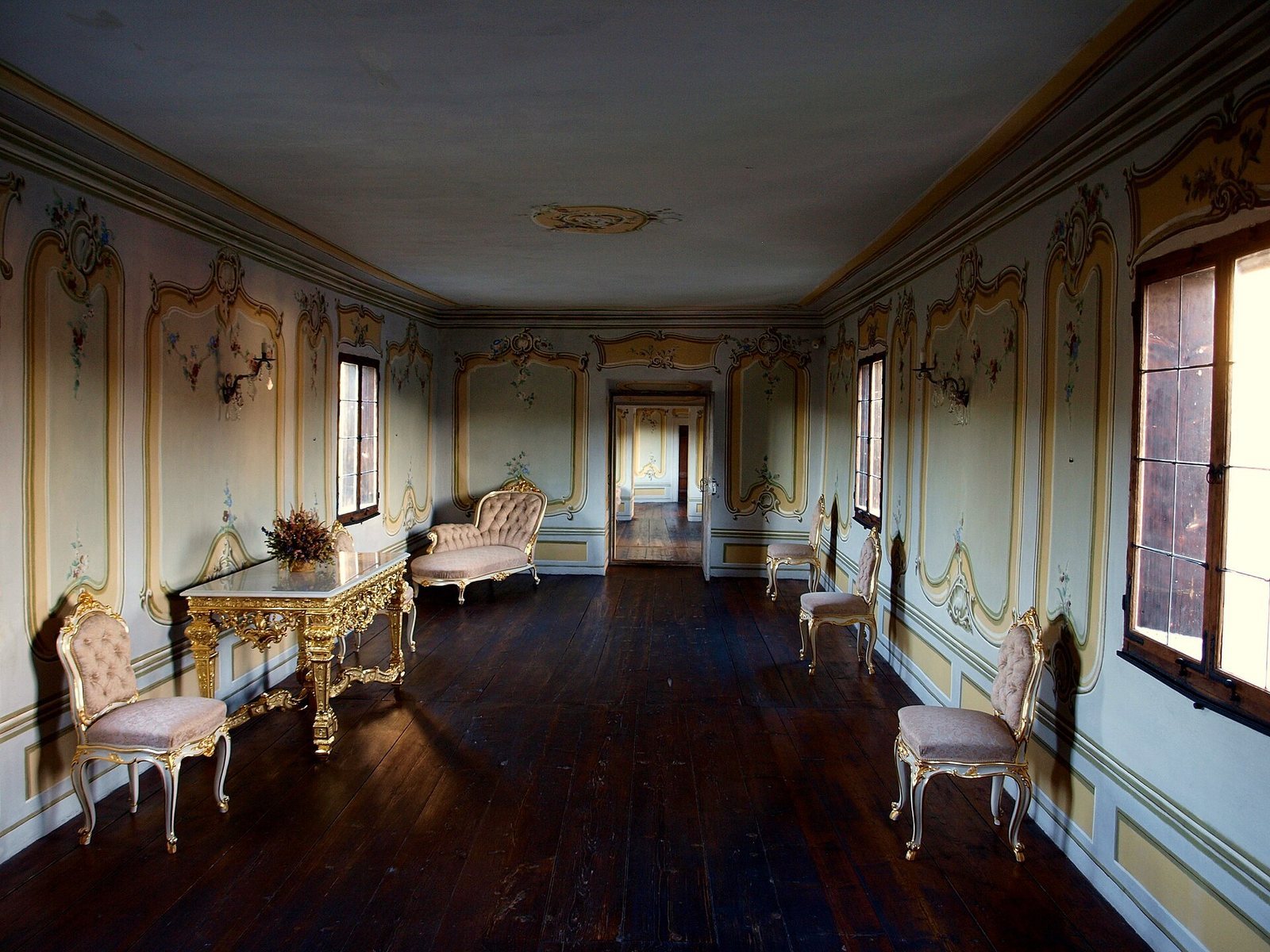
The Baroque dining room contains a seventeenth-century Brussels tapestry from the Judith and Holofernes series. The Canopied Salon has red textile wall coverings, a canopied sofa, Oriental cabinets, porcelain vases, talc figures, and two cut Venetian mirrors in gilded frames. It served for receptions, informal conversation, and board games.
Renaissance rooms
The Renaissance Hall contains The Division of the Roses, a painting of the tradition that Vítek I of Prčice divided his property among his five sons and gave each a five-petalled rose on a differently coloured heraldic field. The Renaissance rooms include a bedroom, a dining hall, two antechambers, a small room for pages, a painting of Perchta of Rožmberk, original pewter tableware, and welcoming cups known as wilkoms. An antechamber was a reception room before a more private chamber, where visitors waited for an audience. A Renaissance corridor displays the coats of arms of the Rožmberk, Eggenberg, and Schwarzenberg owners, together with an imposing Rococo sleigh.
Theatre and western grounds
Cloak Bridge
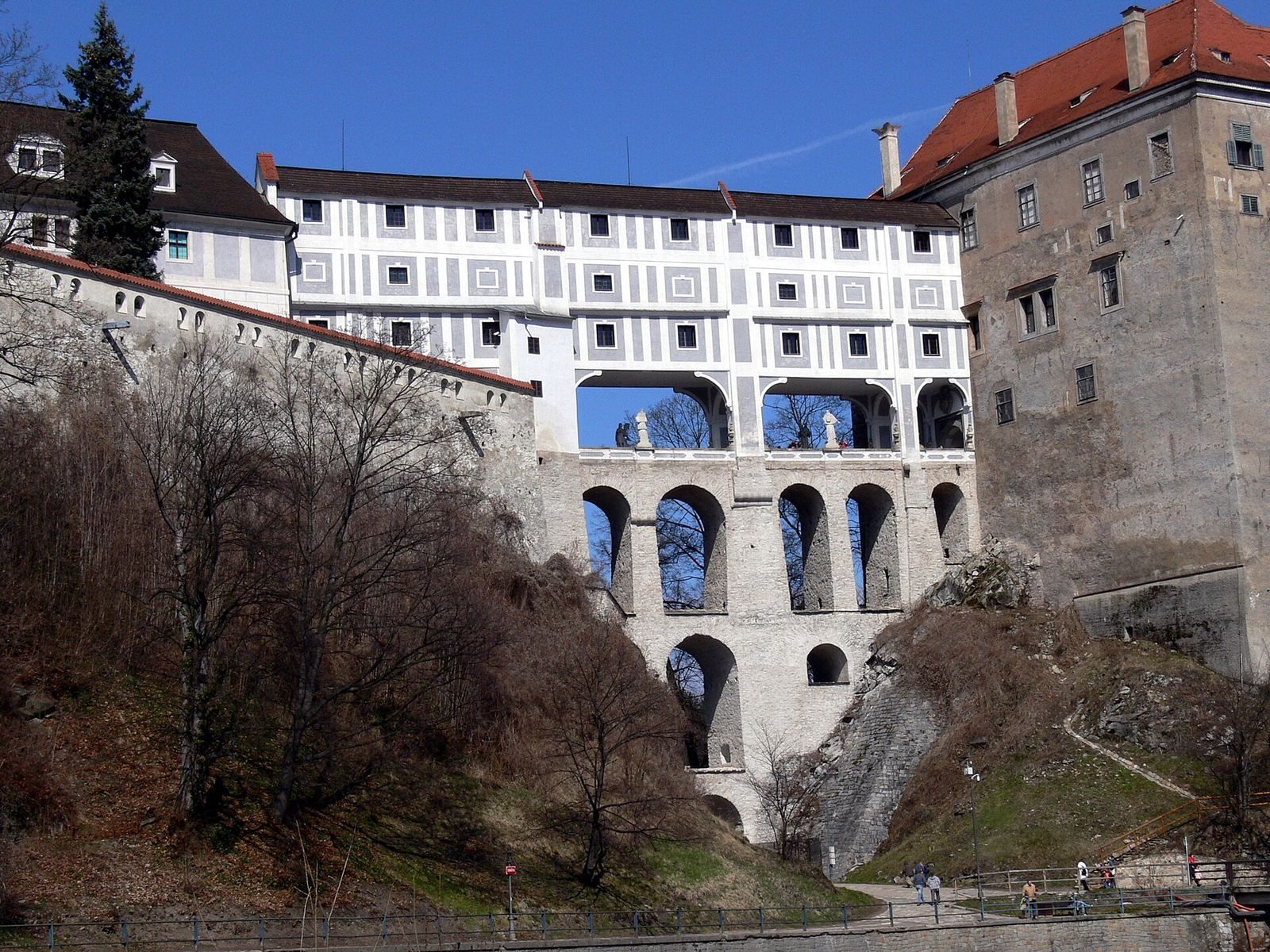
The five-storey Cloak Bridge was built in 1764 across a deep cut ditch. Its two upper levels are covered passageways connecting the palace, theatre, and gardens. Copies of sculptures displayed in the castle museum stand on the parapet. They represent Anthony of Padua, Felix of Cantalice, Saint Wenceslas, and John of Nepomuk.
Castle Theatre
The separate Baroque Castle Theatre was built in 1766–1767 after earlier theatrical activity within the castle. A professional company performed in castle rooms from 1675 to 1691. An independent theatre building followed in 1682 to designs by the Italian architects Jacopo de Maggi and Pietro Spinetti. The theatre later accommodated opera, ballet, and drama. Performances became occasional during the nineteenth century, and the building closed in 1898 for safety reasons.
The theatre retains a small auditorium with tall wooden benches, a balcony, and a separate princely box for the nobility. Its narrow orchestra pit is lowered below the audience level, while the stage is exceptionally deep. Original wooden machinery survives for rapid scene changes and theatrical effects, together with historical costumes, scenery, and stage props. Beneath the stage, a machinery room controls scenery and curtains. The orchestra pit was designed for two groups seated opposite one another, one playing for the actors and the other for the audience.
Artificial lighting gives the auditorium a half-dark appearance, and ceiling paintings represent day and night skies with gods and mythical animals. The preserved stage technology, costumes, scenery, and props form the material basis of the theatre’s museum interpretation.
Park and Bellaria pavilion
West of the Cloak Bridge are the riding school and a late-Baroque castle park covering approximately 11 hectares. The park contains a cascade fountain from the middle of the eighteenth century. Its sculptural decoration includes Amphitrite with tritons at the top, Neptune below, and a nymph with a triton opposite. Stone vases and figures representing the seasons decorate the balustrade. The layout was altered into an English landscape garden during the nineteenth century, and later restoration reintroduced Rococo elements.
The two-storey Bellaria pavilion in the northern part of the park was built in 1706–1708 and remodelled and decorated with frescoes in the middle of the eighteenth century. A modern rotating metal auditorium stands opposite it for summer theatre festivals. A viewpoint on the ramp between the bridge and garden overlooks the town and river, while another cascade fountain from the middle of the eighteenth century forms part of the park’s surviving features.