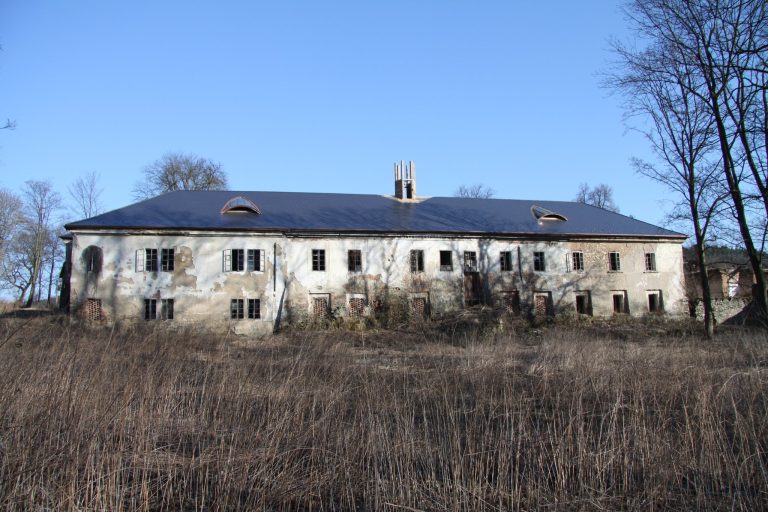
Chateau Březnice: A Gothic Fortress Transformed into a Renaissance Residence
Site at a Glance
- Rating
- 4.7
- Popularity
- Medium
- Country
- Czechia
- Primary era
- Early Modern
- External website
- Open
- Eras represented
- Medieval, Early Modern, Modern
- Civilizations
- Habsburg, Holy Roman Empire, Kingdom of Bohemia
- Site type
- Domestic
- Remains
- Castle
On this page18 sections
History
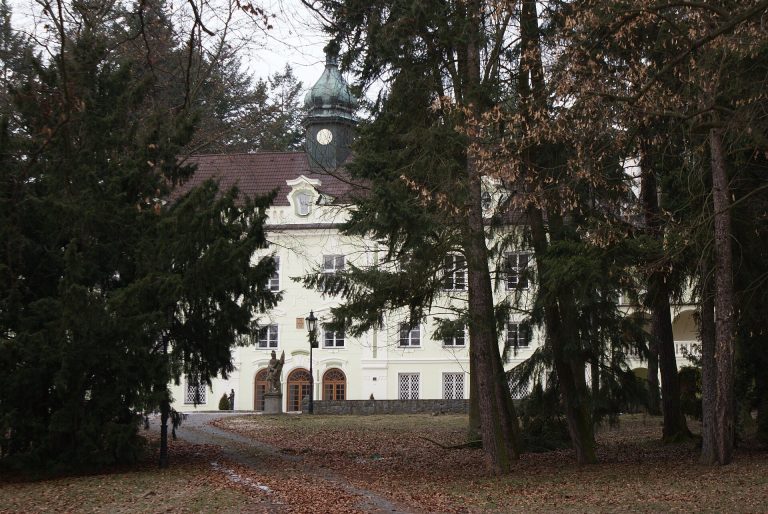
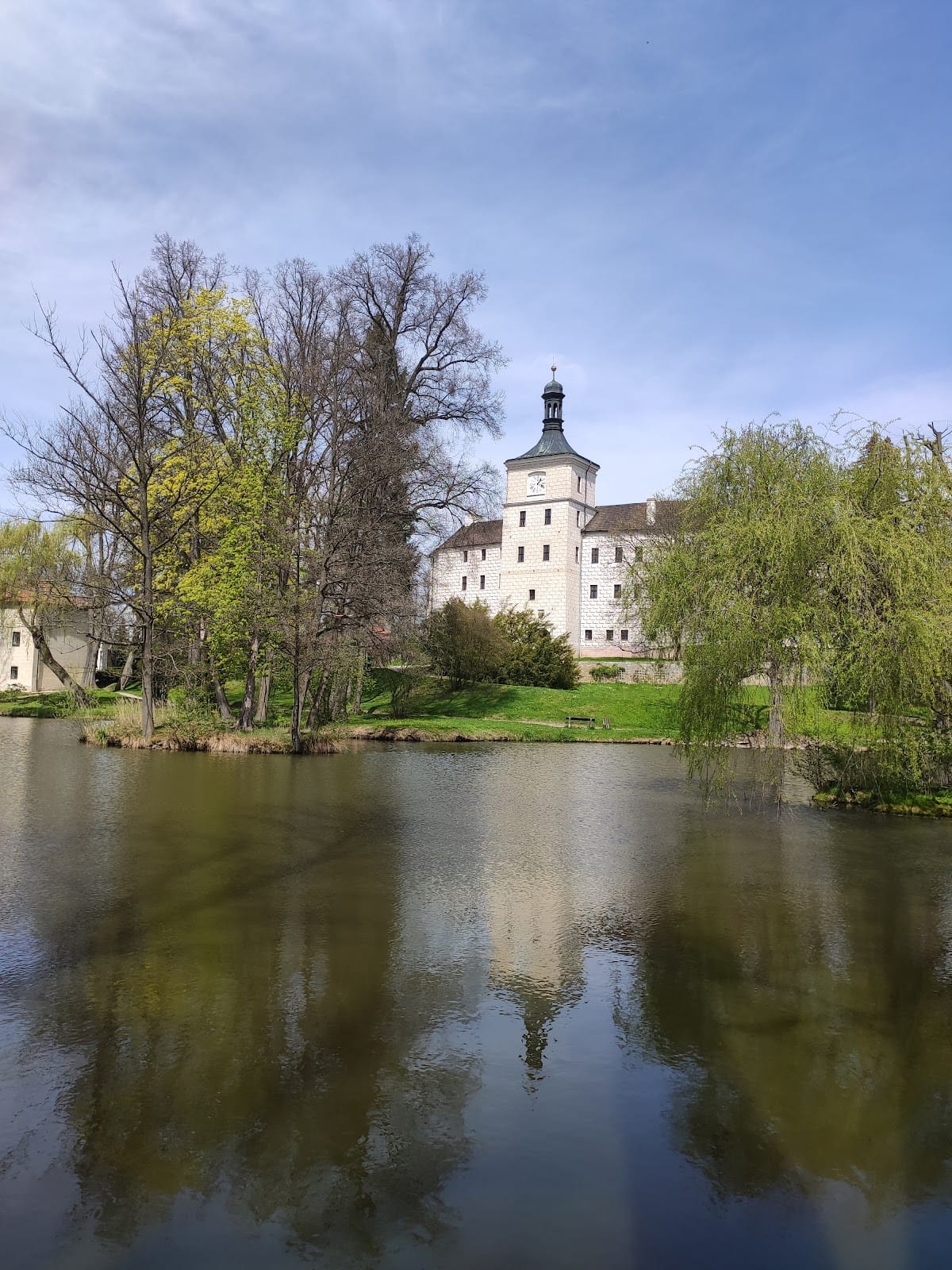
Chateau Březnice is a historic noble residence in Czechia, in the town of Březnice on the Vlčava stream. It developed from a Gothic fortified residence established by the medieval Bohemian Buzic family, probably in the second half of the thirteenth century, beside a trading settlement on the route from Passau to Prague. The site served successively as a fortified seat, aristocratic residence, and representative noble center.
Medieval fortress and the Hussite Wars
Budislav of Březnice, a member of the Buzic family, is recorded from 1224. The family later adopted the name of Březnice, linking its identity to the settlement and fortress. The original stronghold protected a strategically placed residence and incorporated a palace, an oval perimeter wall, and a smaller building along the eastern side.
In 1415 Březnice passed to the Zmrzlík family of Svojšín, who held it for nearly a century. Peter Zmrzlík, a Bohemian mint master and supporter of the religious reformer Jan Hus, possessed the fortress when Catholic troops stormed and burned it in 1422 during the Hussite Wars, the fifteenth-century religious and political conflicts associated with the Hussite reform movement. Repairs began after 1457, following the end of the wars.
The Malovecs and the Renaissance rebuilding
The Malovec family acquired Březnice in 1506. Peter Malovec later joined the Estates’ revolt against Ferdinand I, the Habsburg king of Bohemia and Holy Roman Emperor. After the uprising was defeated in 1547, the estate was confiscated and transferred to the Bohemian royal chamber.
In 1548, Jiří of Lokšany acquired Březnice as confiscated property and began converting the Gothic fortress into a representative Renaissance chateau. His experience in royal and imperial service included the office of secretary to Ferdinand I, Bohemian vice-chancellor, court councillor, and imperial captain. Travels in Italy influenced the rebuilding. After his death, his widow, Kateřina Lokšanská, née Adlerová, continued the work.
During Kateřina’s tenure, Březnice became an important social center. In 1557 it was the setting of the secret marriage of Archduke Ferdinand of Tyrol, a Habsburg prince and governor of Bohemia, and Philippine Welser, who was Kateřina’s niece. Philippine initially lived at Březnice, and their children were reportedly left before the chateau portal as supposed foundlings.
The Lokšany family and its descendants continued the chateau’s representative embellishment between 1548 and 1600. The family later adopted Protestantism and took part in the Bohemian Estates’ revolt of 1618, an uprising by representatives of the Bohemian estates against Habsburg rule. After the Battle of White Mountain, Adam of Lokšany fled the country with Frederick V, the “Winter King,” while Wenceslas, Baron of Lokšany, was dispossessed. Bavarian troops then devastated Březnice.
The Jeníšeks and later noble owners
In 1623 the Bohemian chamber sold the estate to Přibík Jeníšek of Újezd, the royal procurator. He altered the chateau, built the Church of Saint Ignatius and Saint Francis on the town square, and established a Jesuit college in Březnice. His descendants retained the estate until 1728.
The Jeníšek family became extinct in 1728. Jan Josef Jeníšek’s will required every future owner to adopt the Jeníšek coat of arms and name. The later Kolovrat and Pálffy owners followed this condition and used the title “of Újezd” until 1945. Březnice then passed to Vilém Albrecht Krakovský of Kolovrat, the Bohemian high chancellor. The Kolovrats divided their residence between Březnice and the Hradiště estate, and their line became known as the Březnice branch.
In 1872 Březnice and Hradiště were inherited by Count Eduard Pálffy of Erdöd, a member of an old Hungarian noble family. The Pálffys carried out the chateau’s last major nineteenth-century alterations and sold the Hradiště estate in 1918. Jan Nepomuk Pálffy, who identified himself as Hungarian, was the last private owner.
State ownership and museum use
In 1945 the estate was nationalized under the Beneš Decrees, postwar Czechoslovak presidential decrees that provided the legal basis for the confiscation of certain property. Administration initially passed to the local national committee, followed by responsibility from the National Heritage Institute, the Czech state authority responsible for protected historic monuments.
The National Heritage Institute began reconstruction and restoration intended to recover the chateau’s Renaissance appearance. A comprehensive renovation started in 1966, after which the building opened as a museum. Further extensive reconstruction followed during the 1980s and 1990s. Březnice is state-owned and administered by the National Heritage Institute, and its exceptional cultural and historical value has led to its designation as a National Cultural Monument of the Czech Republic.
Remains
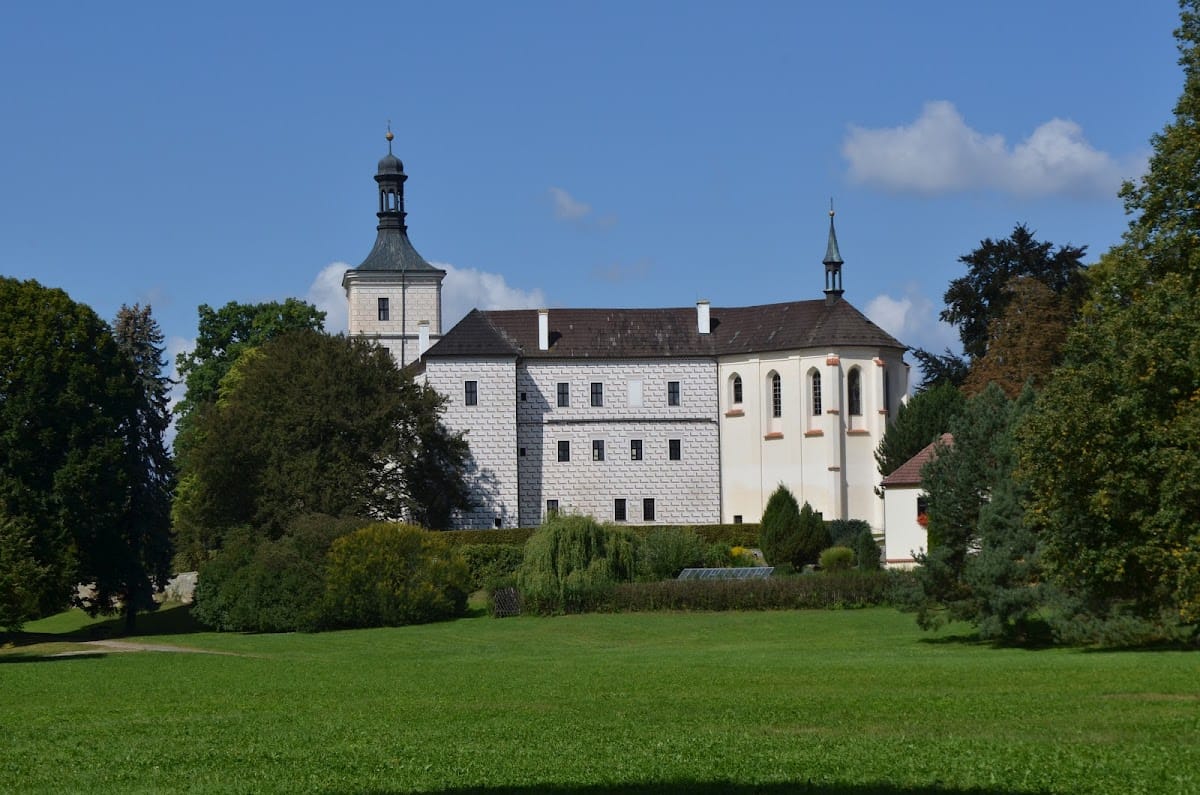
Chateau Březnice has a broadly square layout with four corner towers and a passage tower on the front. Within this later form, substantial elements of the earlier oval fortress survive. The complex developed around an inner courtyard during the Renaissance rebuilding, while the exterior and interiors preserve layers from the Gothic, Renaissance, Early Baroque, Rococo, Empire, and Neo-Renaissance periods.
Gothic fortress remains
Original palace
The first fortress was enclosed by an oval perimeter wall. Its principal defensive and residential building was a two-storey palace, whose ground and first floors each contained three spaces, while the second floor had two rooms. A chamfered pointed portal remains as a Gothic architectural detail. The palace was incorporated into the later chateau and forms part of the surviving medieval structure.
Eastern building
A smaller building along the eastern wall retains a ground floor covered by a barrel vault and a first floor with a flat ceiling. A basement was added later, probably during alterations after 1500, and the ground-floor rooms received small gabled portals. These changes reflect the building’s incorporation into the developing residence.
Gate tower
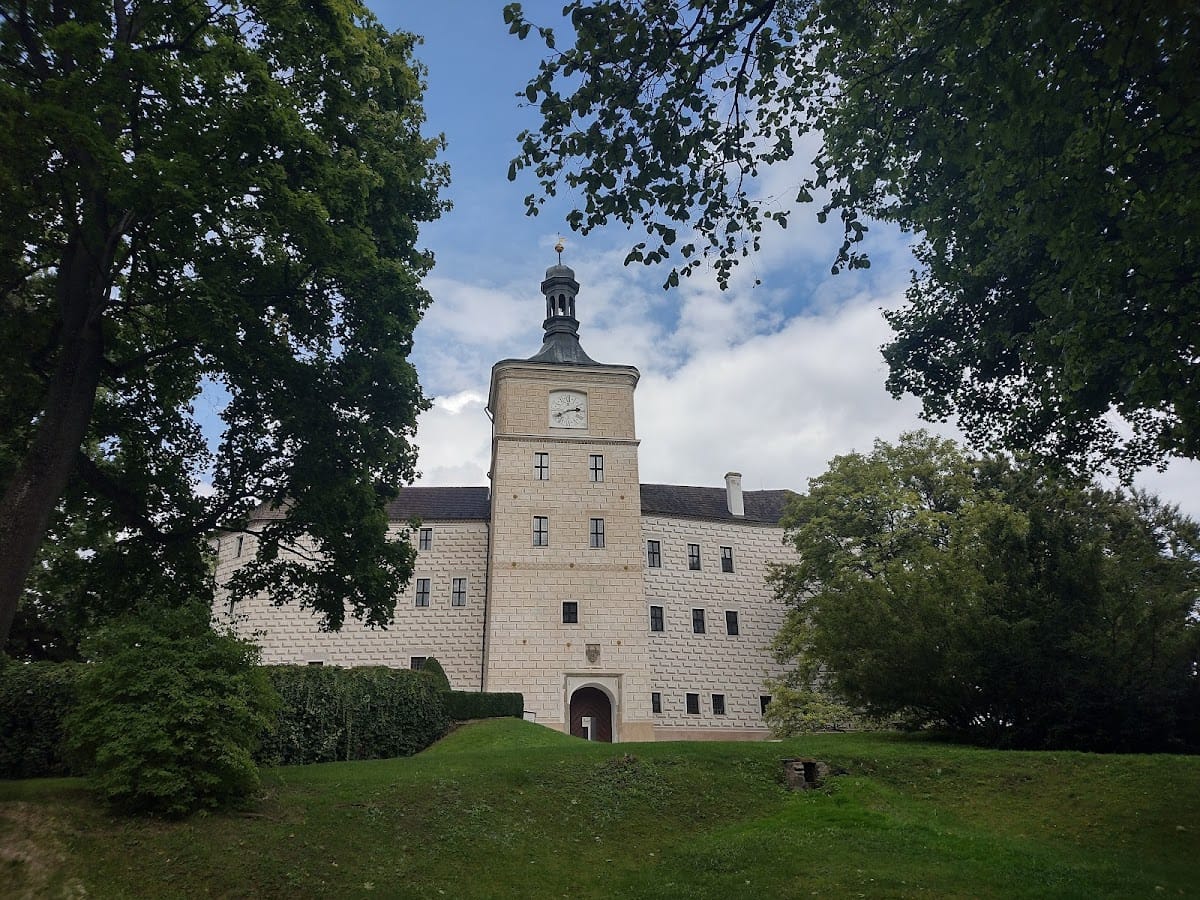
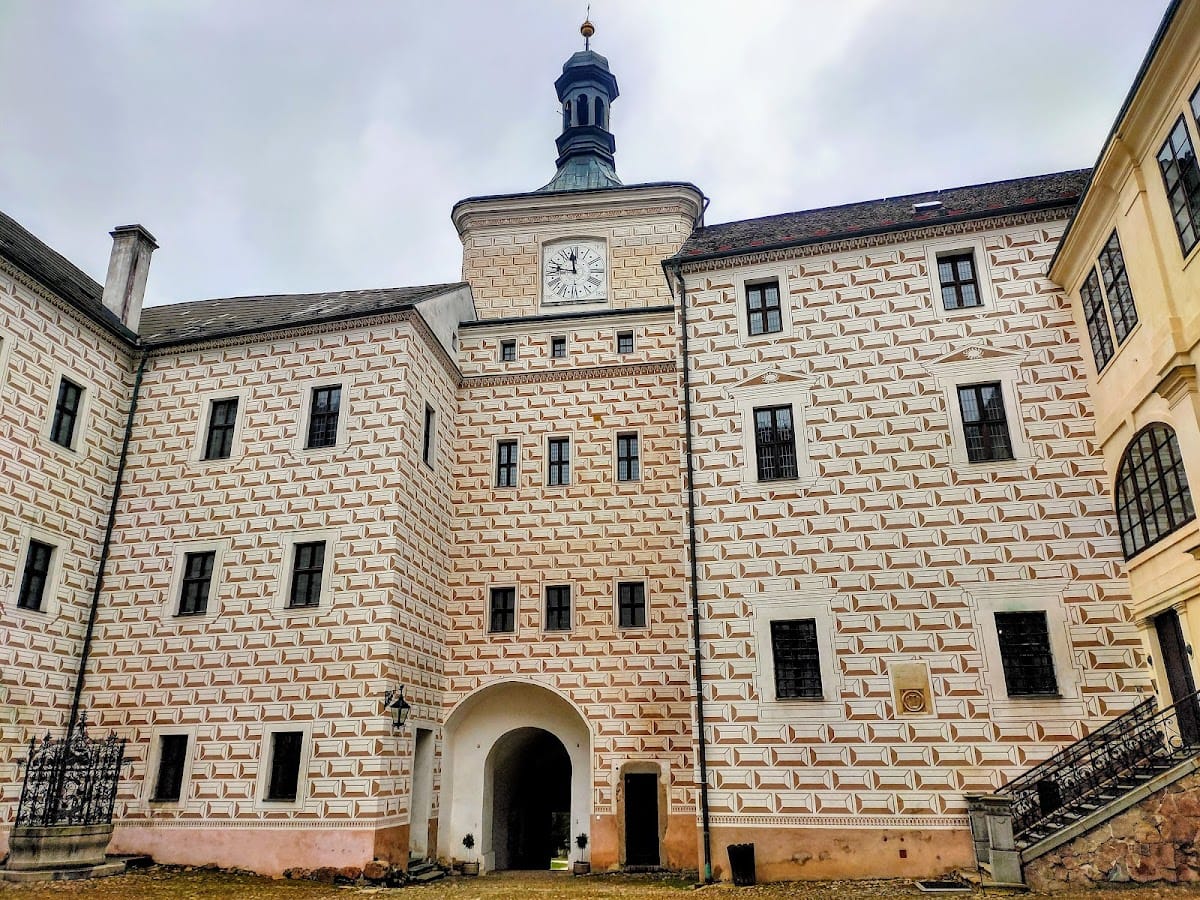
A substantial gate tower, probably constructed in the fourteenth century, formed the entrance to the fortress. Its upper levels included residential rooms. The tower survives as the present entrance or passage tower, linking the chateau’s later circulation with its medieval defensive arrangement.
Fortifications and gardens
After 1531, extensive outer defenses were built around the earlier fortress. A perimeter wall with numerous loopholes was combined with semicircular bastions open toward the interior. Their design was influenced by fortifications associated with Benedikt Ried, although the relatively weak walls limited their defensive effectiveness. The Malovec-period works also included an outer defensive enclosure and a water moat.
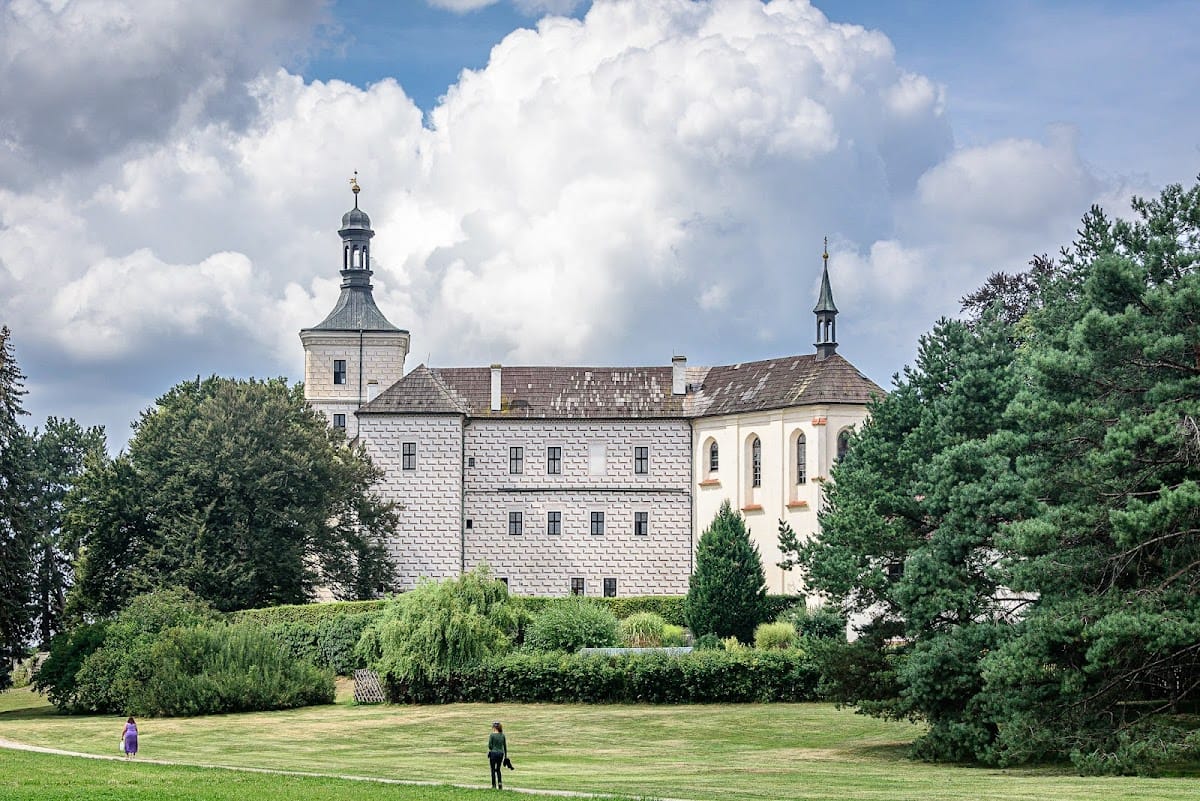
Under Přibík Jeníšek, the moats were filled and the earlier defensive earthworks were demolished or altered. The bastions were reused as garden arbors, while a garden and a large surrounding park were created. The park covers about 20 hectares and includes two fishponds. A medicinal-plant garden extends along the chateau’s fortification wall.
Renaissance courtyard and interiors
Courtyard complex
The Renaissance rebuilding formed a ring-shaped complex around the inner courtyard. The western palace, including a banqueting hall, belongs to this phase, as does the unification of the façades with sgraffito decoration. Sgraffito is produced by scratching through a surface layer of plaster to reveal a contrasting layer beneath. Wooden galleries or access balconies in the courtyard were later removed under the Lokšans and replaced by stone arcades. Low arcades were also added to the exterior.
Lokšan Library
The Lokšan Library was established in 1558 on the first floor of the tower. Its surviving interior includes a painted timber ceiling, wall paintings, and original decorated cupboards. These elements preserve the character of a sixteenth-century noble library within the former defensive structure.
Baroque and later alterations
Chapel of the Immaculate Conception
The Chapel of the Immaculate Conception of the Virgin Mary was built between 1625 and 1632 under Přibík Jeníšek. This Early Baroque addition is attributed to the Italian architect Carlo Lurago. Its interior contains Rococo furnishings and a coffered ceiling.
Riding hall and Neo-Renaissance façades
The Kolovrats built an Empire-style riding hall below the chateau, which was later demolished by the Pálffy owners. In 1889 and 1890, the Pálffys applied Neo-Renaissance sgraffito render to the chateau and glazed the courtyard arcades. In 1933, the sgraffito was covered with plain gray render, an alteration later addressed through restoration.
Collections and surviving rooms
The accessible historic interiors include a portrait gallery of the noble families associated with Březnice, an African salon, Baroque and Empire-style rooms, a Renaissance dining room, the chateau armory, the Lokšan Library, and the Ludvík Kuba Gallery. Kuba was a Czech folklorist and painter. The library retains its painted timber ceiling, wall paintings, and decorated cupboards, while the broader interiors present the history of the owners, artistic styles from the Renaissance to the nineteenth century, and arms.