Castles in Jordan: Explore Crusader Strongholds, Roman Forts and Desert Palaces
Castles in Jordan include Crusader strongholds on steep hills, Roman garrison buildings and early Islamic palaces with towers, courtyards and vaulted rooms. The collection extends beyond castles built for warfare: fortified residences also appear on the map. Their surviving structures reveal how soldiers and households occupied enclosed compounds, stored water and controlled their entrances.
Primary Function: All
Type: All
Civilization: All
Popularity: All
Rating: All
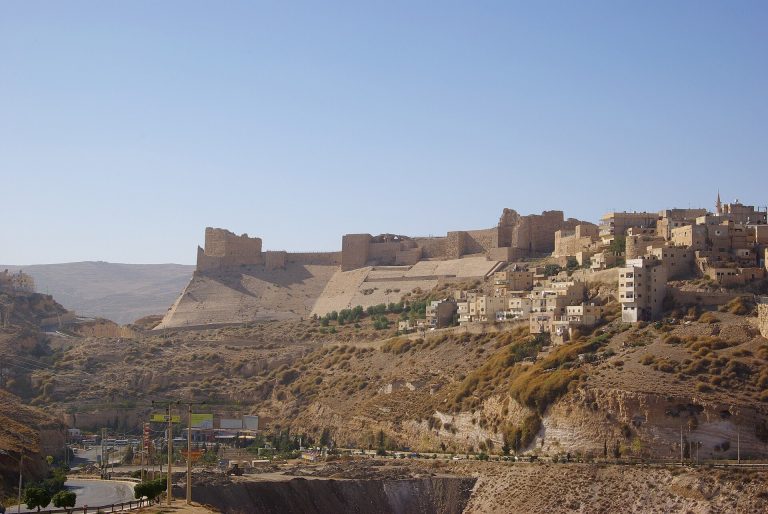
Kerak Castle in al-Karak developed from an ancient fortified site into a major Crusader, Ayyubid, Mamluk, and Ottoman stronghold controlling routes…

Al-Azraq Castle developed from Roman military installations guarding the Azraq oasis and routes across the eastern Jordanian desert. Its basalt walls…
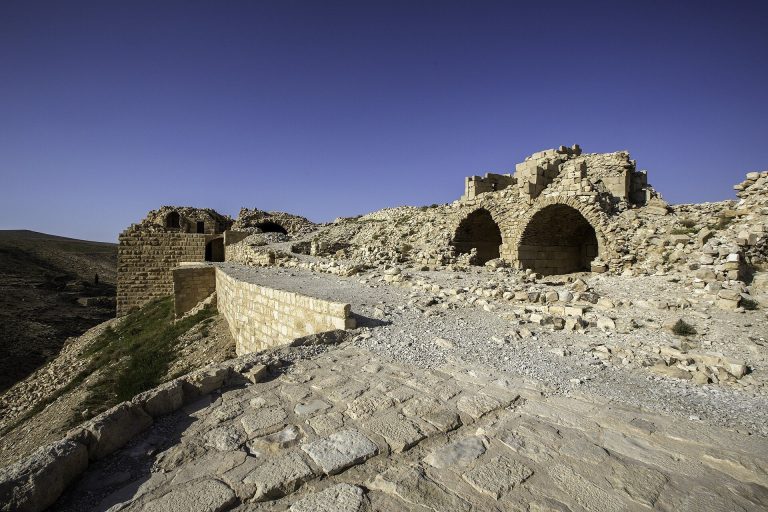
Montréal Castle, also known as Saubak, was a Crusader stronghold founded in 1115 to control routes across Edom. It later served Ayyubid, Mamluk, and…

Aqaba Castle in southern Jordan developed from earlier Islamic occupation into a Mamluk and Ottoman fortified caravanserai on the pilgrimage route to…

Umm ar-Rasas preserves the remains of a Roman military station that developed into a Byzantine Christian and early Islamic town, with churches,…
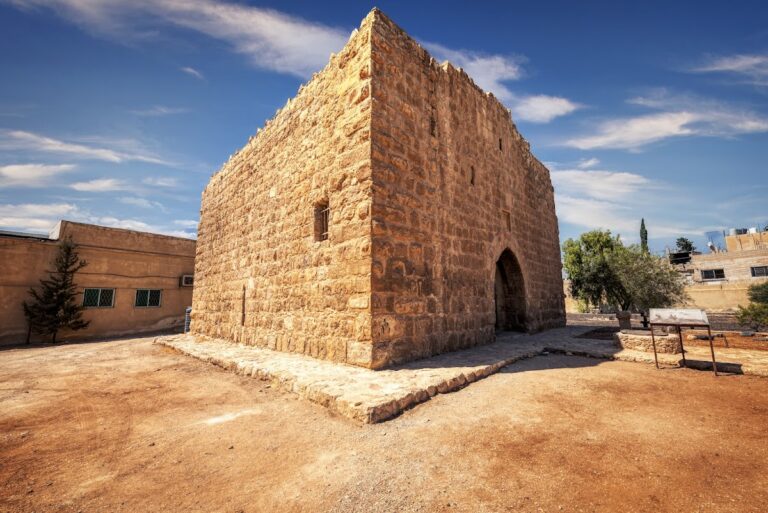
Qasr Shabeeb is an archaeological castle in western Zarqa, Jordan, with Roman, Islamic, Ottoman, and Hashemite-period associations. Its square plan,…
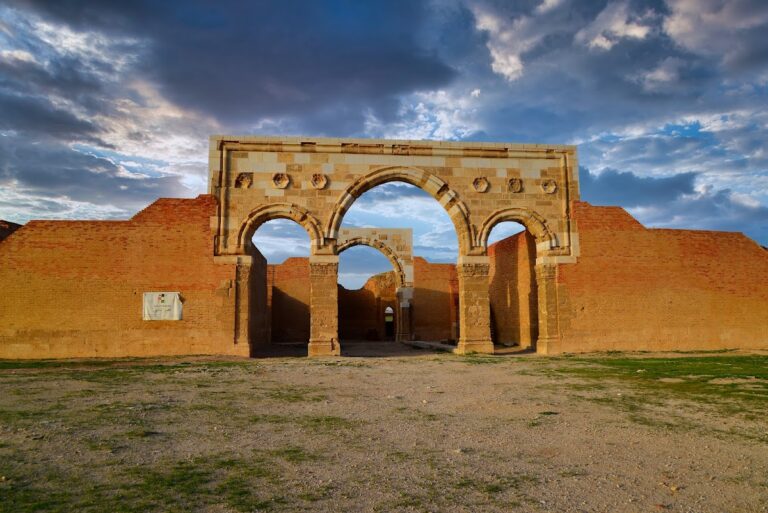
Qasr Mshatta is an unfinished Umayyad winter palace south of Amman, known for its monumental enclosure, reception hall, carved facade, and early…
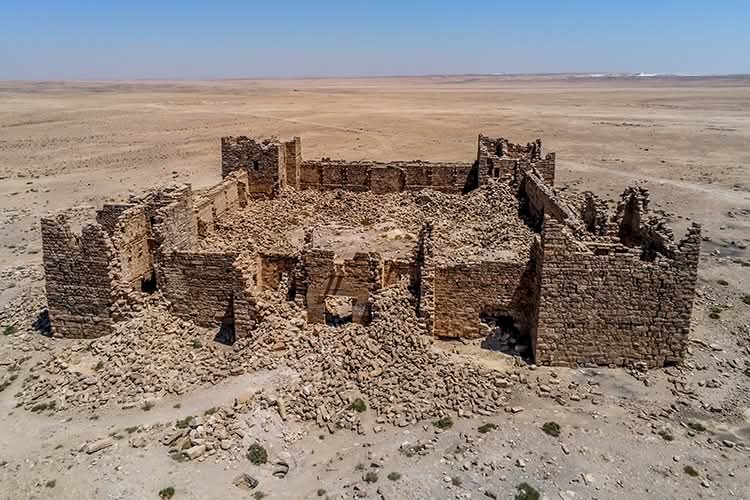
Qasr Bshir is a late Roman military fort on the eastern frontier of the province of Arabia. Built during the Tetrarchy, it controlled movement,…
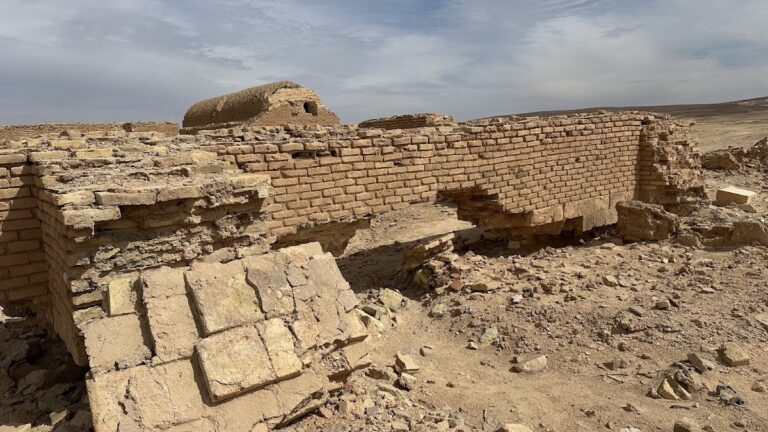
Qasr Tuba is an unfinished eighth-century Umayyad palace complex in southern Jordan that also served the caravan route linking al-Balqa with northern…
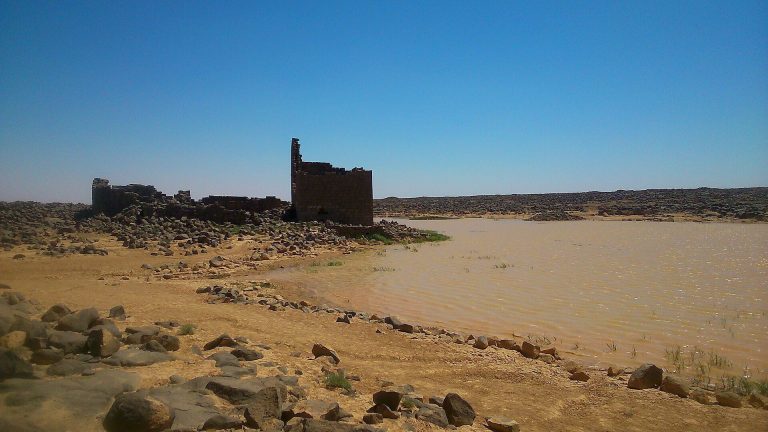
Qasr Burqu' is an archaeological site beside an oasis in eastern Jordan, preserving evidence of prehistoric herding, Roman and Byzantine occupation,…
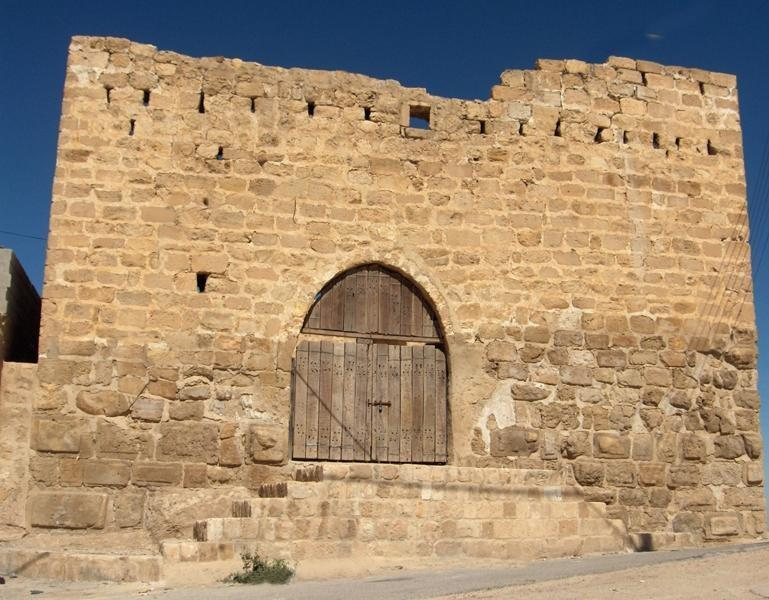
Tafilah Castle is a fortified hilltop site in southern Jordan whose history includes possible Edomite origins, Mamluk and Ottoman use, repeated…
For details on how to use the maps, which sites are included, how popularity and ratings are determined, and how sites are classified, see the help page.
On this page5 sections
Shobak Castle: churches and a protected water supply
At Shobak Castle, also known as Montréal, the defences follow a steep, roughly conical hill. The approach curves towards the interior, while rectangular and rounded towers belong to successive phases of rebuilding. The irregular enclosure makes sense against this terrain: the builders used the slopes rather than imposing a regular courtyard plan on the summit.
Inside, the remains include a three-aisled church and a smaller chapel. These buildings served the community occupying the stronghold, alongside its military accommodation. A descending passage into the mountain gave access to water below the castle. The churches and water system add useful detail to a site that might otherwise be understood only through its outer walls.
Aqaba Castle: an inscribed entrance and courtyard
Aqaba Castle has a more regular, quadrilateral layout. Its monumental arched entrance leads through a vaulted vestibule into the courtyard. Inscriptions in the gate hall record building work associated with the Mamluk sultan Qansuh al-Ghuri and a later Ottoman rebuilding under Murad III.
The enclosure developed on the footprint of an earlier khan, a building used to accommodate travellers and their animals. That background helps explain the courtyard arrangement. Later military damage removed parts of the walls and towers, so the gate and its inscriptions are particularly useful surviving features for understanding the sequence of construction.
Qasr Bshir: projecting towers and stone-built rooms
The Roman fort at Qasr Bshir is nearly square, with four projecting corner towers. The entrance occupies the southwestern side, and substantial tower masonry rises above the surrounding enclosure. The towers projected beyond the wall faces, giving defenders positions from which to cover the adjoining sides.
Within the towers, stone arches supported stone beams between levels, while internal stairs connected the rooms. These structural details show how accommodation was fitted into the defensive corners. The upper portions of much of the enclosure have collapsed, but the surviving towers retain enough height to convey the fort’s compact, enclosed form.
Mshatta and Qasr Tuba: early Islamic palace compounds
Mshatta was planned as a large square enclosure with towers, but substantial construction concentrated on its central strip. A courtyard led towards a reception building arranged around a three-aisled hall and a throne room with three curved recesses. Residential suites were placed beside the ceremonial spaces. Limestone exterior walls and brick construction within the compound served different parts of this ambitious plan.
Much of Mshatta’s celebrated carved façade was removed to Berlin. The remains in Jordan should therefore be understood through the enclosure and reception-wing layout, without expecting the complete decorated frontage to stand on site.
At Qasr Tuba, the intended arrangement paired two rectangular compounds. The surviving western portion includes rooms set around a courtyard, rounded projecting towers and brick barrel vaults. Decorated lintels carry leaf and rosette patterns. The standing vaulted rooms make the domestic scale of the palace easier to grasp than its extensive, partly unfinished overall plan. Together, these palaces broaden the collection beyond garrisons and Crusader castles to include residences whose walls enclosed ceremonial and household spaces.
Explore the collection
Explore sites on the map or in the grid. Map icons reflect each site’s primary function, helping you identify different kinds of places at a glance. Narrow this collection by primary function, by a site type within the castle and residence group, or by civilization and era. Additional filters cover popularity and rating. Select a map marker to view the site’s details and open its article, or open the article from its grid entry.