Tafilah Castle: An Ottoman Military Fortress in Jordan
Site at a Glance
- Rating
- 4.4
- Popularity
- Very Low
- Country
- Jordan
- Primary era
- Early Modern
- External website
- Open
- Eras represented
- Early Modern
- Civilizations
- Ottoman
- Site type
- Military
- Remains
- Fort
On this page6 sections
History
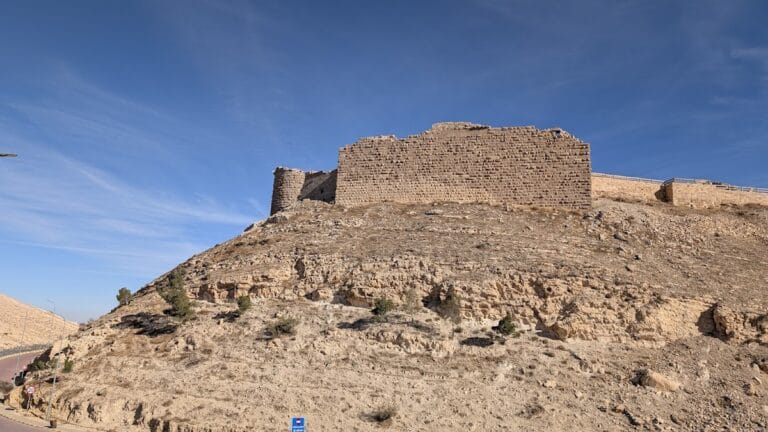
Tafilah Castle is an Ottoman-period military fortress in Jordan, occupying the northwestern hill of Tafilah. An Edomite origin has been proposed, linking the site to the ancient kingdom and people associated with the area south of the Dead Sea and parts of present-day southern Jordan, but its earliest phase remains uncertain. The present castle was built during the Ottoman period and served as a military stronghold.
Early and Ottoman phases
The fortress was used by successive occupants during different periods. The Mamluks, a Muslim ruling dynasty that governed Egypt and Syria, including Jordan, before the Ottoman conquest, used the castle before Ottoman rule. The Ottomans later took control of the region and were the last users of the fortress.
Military use and rebuilding
Houses once formed a ring around the castle. Its large entrance gate could be closed during wartime, while the fortress maintained a continuous guard role. From the stronghold, defenders observed activity outside the walls and the movements of people under siege. Destructive earthquakes and damage caused by wars led to repeated rebuilding during the castle’s history.
Remains
Fortress layout
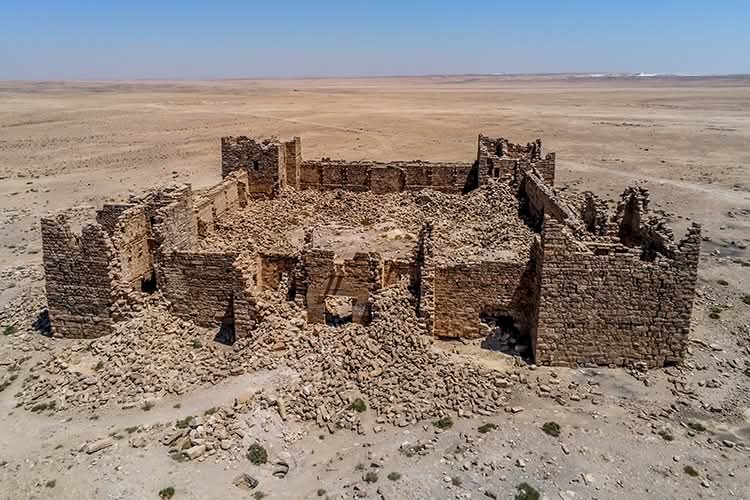
Tafilah Castle covers approximately 400 square metres and measures about 19 by 21 metres. Its main gate opens to the east. A broad entrance leads to stairs that rise toward the central courtyard, which is approximately 9 metres wide and 14 metres long. Large stones pave the courtyard, and a deep water well occupies its centre. The well supplied water during periods of siege.
Defensive works and water access
The castle walls rise to about 8 metres. They contain loopholes, defensive openings through which weapons could be fired from protected positions. These openings are broad on the inner side and become progressively narrower toward the exterior. They served archers and were later used for firearms. The inner wall includes a step midway along its length rather than forming one straight line. This intermediate level helped defenders climb to the wall top and provided room for equipment, weapons, and provisions.
Numerous concealed underground tunnels extend beneath the castle and connect it with nearby water springs. One of these springs lies approximately 300 metres away, creating an additional water connection beneath the fortified site.
Nearby sites