Rocca Possente: A Riverside Defensive Fortress in Italy
Site at a Glance
- Rating
- 4.6
- Popularity
- Low
- Country
- Italy
- Primary era
- Early Modern
- External website
- Open
- Eras represented
- Early Modern
- Civilizations
- Papal States
- Site type
- Military
- Remains
- Fort
On this page4 sections
History
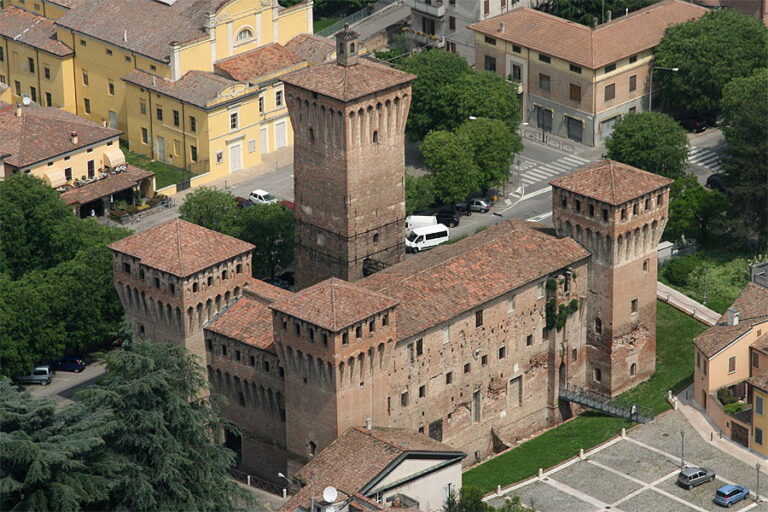
Rocca Possente, also known as Rocca di Stellata, is a riverside defensive fortress in Italy, built near the Po around the year 1000 to control navigation on the river. It stands at Stellata, a hamlet of Bondeno in the Province of Ferrara, and later became part of the Este family’s network of fortified positions.
Este Rule and Renaissance Fortification
The fortress belonged to the Este dynasty, the ruling house that governed Ferrara and surrounding territories during the medieval and early-modern periods. Niccolò II d’Este ordered its enlargement in 1362, and Niccolò III d’Este, Marquis of Ferrara, strengthened it in 1433.
Rocca Possente was attacked by Venetian forces in 1483 during the War of Ferrara, a conflict over control of Ferrara and its territories. The Venetians burned the fortress in 1510, but it was rebuilt immediately afterward.
Papal Rebuilding and Later History
Duke Alfonso II d’Este ordered the fortress demolished in 1587. After Este rule ended, the property passed to the Papal States, territories governed by the pope as a temporal ruler until Italian unification. Pope Urban VIII, the head of the Catholic Church, oversaw the erection of the present structure in 1629.
Rocca Possente was part of a defensive system that included Rocca Benedetta at Ficarolo on the opposite bank of the Po. An approximately 600-metre chain stretched between the two fortifications, obstructing river traffic for defence or allowing customs duties to be imposed on merchant vessels. The force of the river destroyed Rocca Benedetta in 1670.
The 2012 Emilia earthquake damaged Rocca Possente, prompting consolidation work. The fortress forms part of the UNESCO World Heritage property Ferrara, City of the Renaissance, and its Po Delta, inscribed since 1995 under criteria (ii), (iii), (iv), (v), and (vi). A World Heritage property is recognized by UNESCO as having outstanding cultural or natural value under specified criteria. Rocca Possente is also Italian national heritage and is owned by the Municipality of Bondeno.
Remains
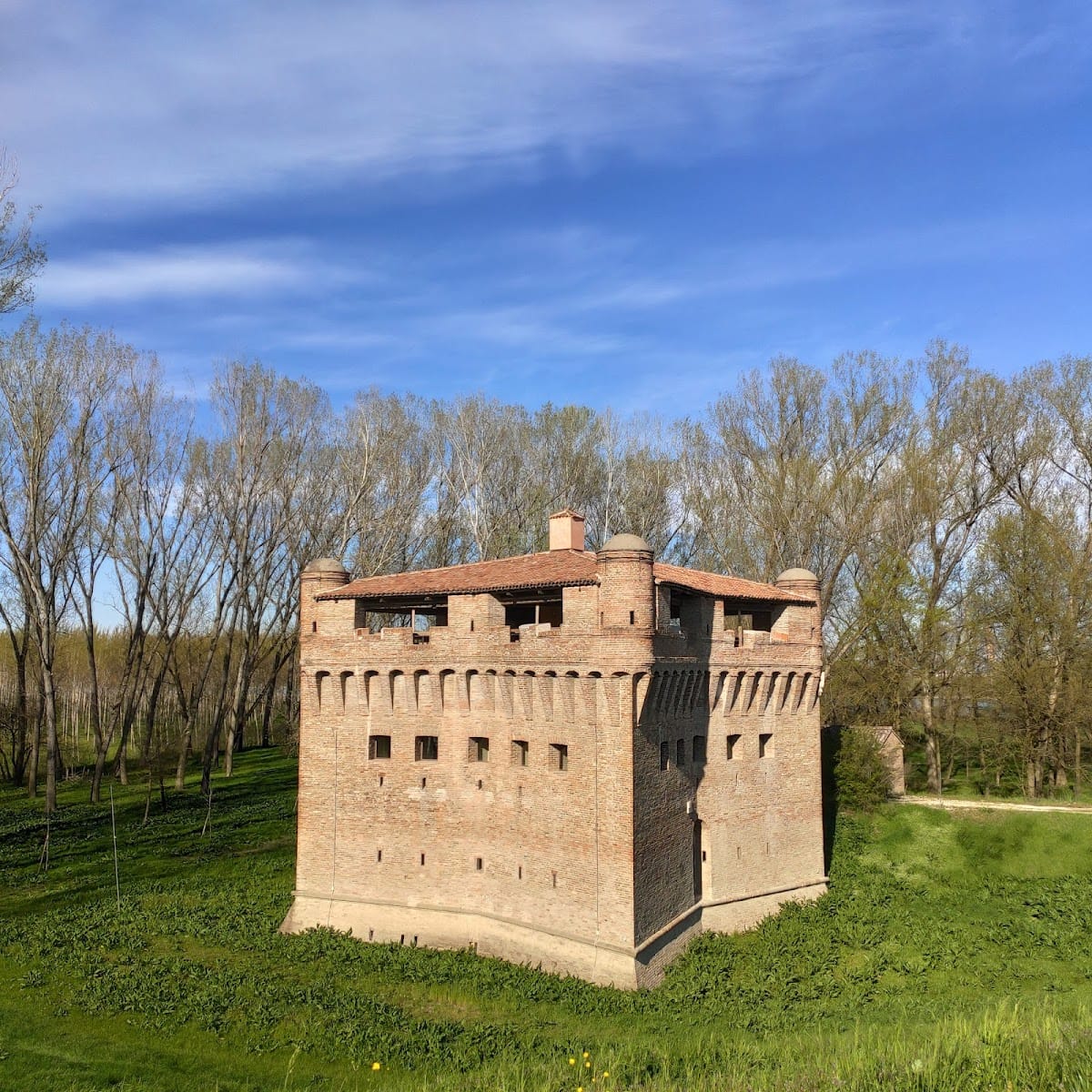
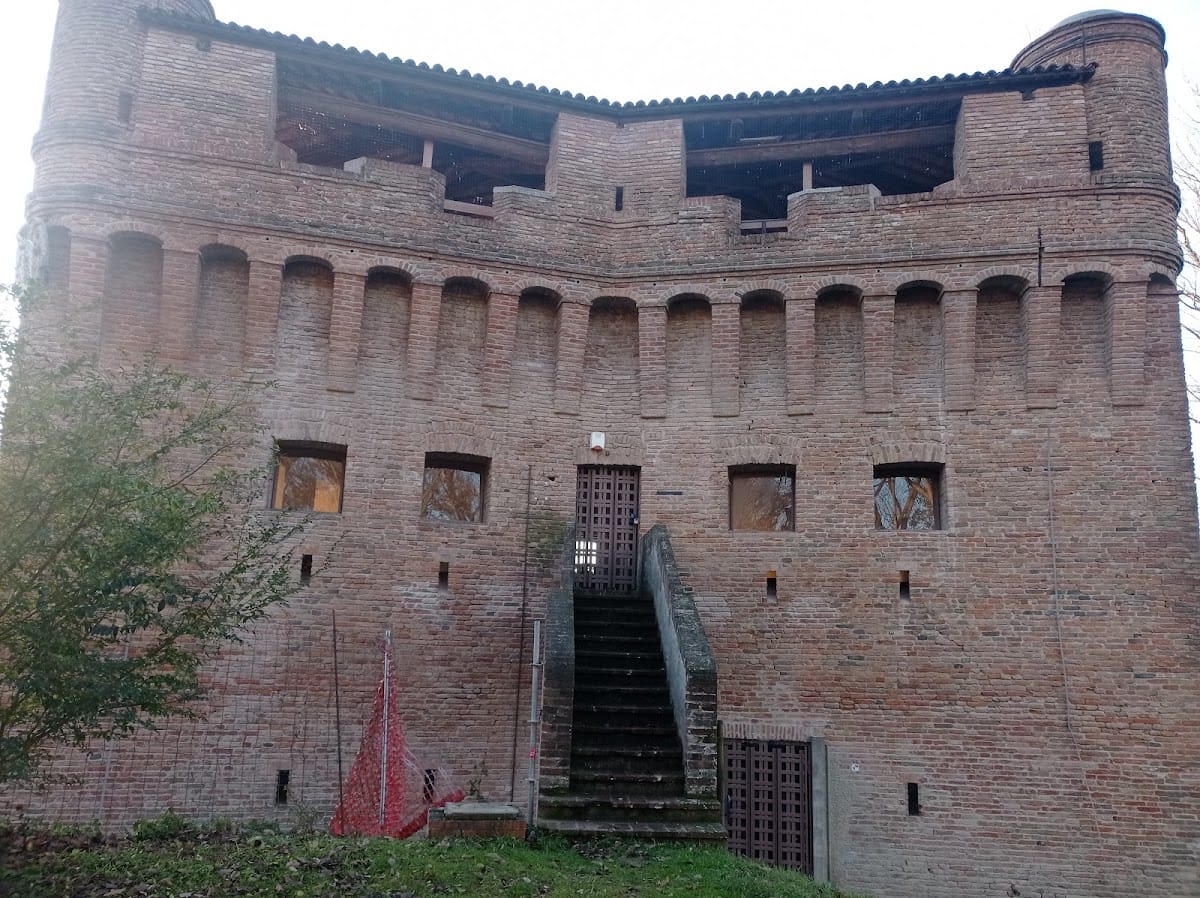
Rocca Possente stands beside the Po on the river’s southern bank. The surviving structure is a tower with a four-pointed, star-shaped plan, built of brick and mortar. Its construction history extends from the eleventh to the fourteenth century, while the present structure dates from the rebuilding of 1629.
The fortress’s river position reflects its defensive purpose. Its connection with Rocca Benedetta was made by an approximately 600-metre chain stretched across the Po, creating a physical barrier that regulated the passage of boats. Consolidation work followed the damage caused by the 2012 earthquake.