Museo Nazionale Atestino: The National Archaeological Museum of Este


Site at a Glance
- Rating
- 4.6
- Popularity
- Low
- Country
- Italy
- Primary era
- Classical
- External website
- Open
- Eras represented
- Iron Age, Classical, Medieval, Early Modern, Modern
- Civilizations
- Roman
- Site type
- Museum
On this page10 sections
History
The Museo Nazionale Atestino is a national archaeological, historical, and art museum in Este, Italy, preserving material from the ancient settlement of Ateste and its surrounding territory. Also known as the Archaeological Museum of Este or the Este Museum, it began as a civic collection before becoming an Italian national museum.
Early Collections and Civic Foundation
Antiquities from the Este area were being noted by the thirteenth or fourteenth century. In the seventeenth century, Giorgio Contarini, a senator of the Republic of Venice, collected inscribed stone slabs at Villa Contarini degli Screni, known as Vigna Contarena. During the eighteenth century, the historian Isidoro Alessi recovered many inscriptions from Este and nearby locations.
The marquis Tommaso Obizzi also assembled an important collection during the eighteenth century at Castello del Catajo in nearby Battaglia Terme. It included coins, inscribed stones, and ceramics. After the collection passed to Ercole Rinaldo III d’Este, formerly duke of Modena and a member of the Austria-Este royal family, many objects, particularly bronze figurines and coins, were transferred to Vienna and Modena in 1822 and again in 1896. Their dispersal encouraged Este residents to preserve local antiquities in the town.
Vincenzo Fracanzani founded the museum in 1834 as a small Civic Lapidary Museum in the church of Santa Maria dei Battuti, within the San Francesco convent complex. The municipality later acquired the collection, which initially contained 89 objects from the holdings of Contarini and Alessi. The new museum attracted considerable attention, including a visit by the German historian Theodor Mommsen in 1867.
Excavation and Nationalization
Excavations begun in 1876 uncovered seven richly decorated tombs and a pre-Roman necropolis. These discoveries revealed evidence of an ancient civilization at Este and greatly expanded the museum’s importance. The growth and distinctive character of the finds led to an enlarged institution, renamed the Museo Euganeo-Romano in 1880.
Financial difficulties led the municipal administration to request nationalization in 1882 and 1883. A royal decree dated 3 April 1887 formally established the Regio Museo Nazionale Atestino and appointed Alessandro Prosdocimi as director. The museum later continued to grow through excavation, with further campaigns uncovering more than 50 tombs.
Villa Mocenigo and Twentieth-Century Changes
On 6 July 1902, the museum moved to Villa Mocenigo, a sixteenth-century palace near Este’s fourteenth-century town walls. During the First World War, its most valuable objects were temporarily moved to Florence and Rome and returned in 1919. In the Fascist period, the museum was renovated and enlarged. Its acquisitions then included a gold medallion of Augustus minted in 2 BC and several sixteenth-century ceramics from the Abbey of Santa Maria delle Carceri.
After the Second World War, the collections were reorganized. The earlier crowded and disorderly presentation was reduced, and a major cataloguing project began. Excavations were halted because of shortages of staff and financial resources. Villa Mocenigo and the museum closed for restoration in 1979 and reopened after five years with a newly organized presentation.
Directorship and National Heritage
The museum’s directors have included Eugenio Gasparini from 1834 to 1874, Francesco Soranzo in 1874, Alessandro Prosdocimi from 1874 to 1922, Adolfo Callegari from 1922 to 1947, Giulia Fogolari from 1947 to 1965, Anna Maria Chieco Bianchi from 1965 to 1985, Angela Ruta Serafini from 1985 to 1993, Elodia Bianchin Citton from 2010 to 2014, Giovanna Gambacurta from 2015 to 2016, Federica Gonzato from 2016 to 2021, and Benedetta Prosdocimi from 2022 onward. Since December 2014, the museum has been managed by the Ministry of Culture through the Veneto Museum Complex, renamed the Regional Museums Directorate in December 2019. It is recognized as Italian national heritage.
Remains
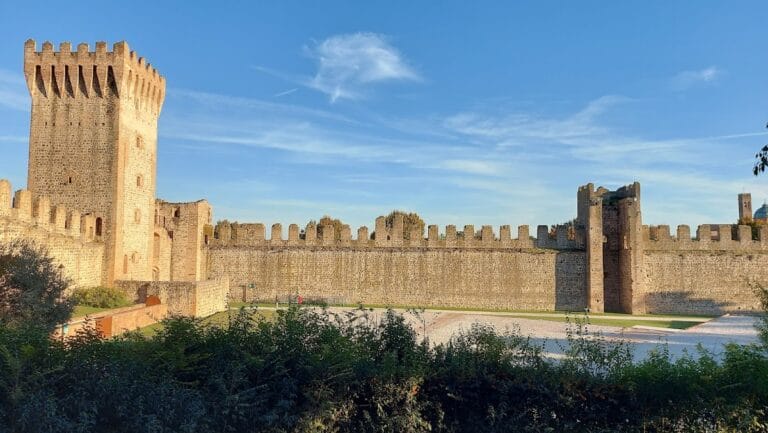
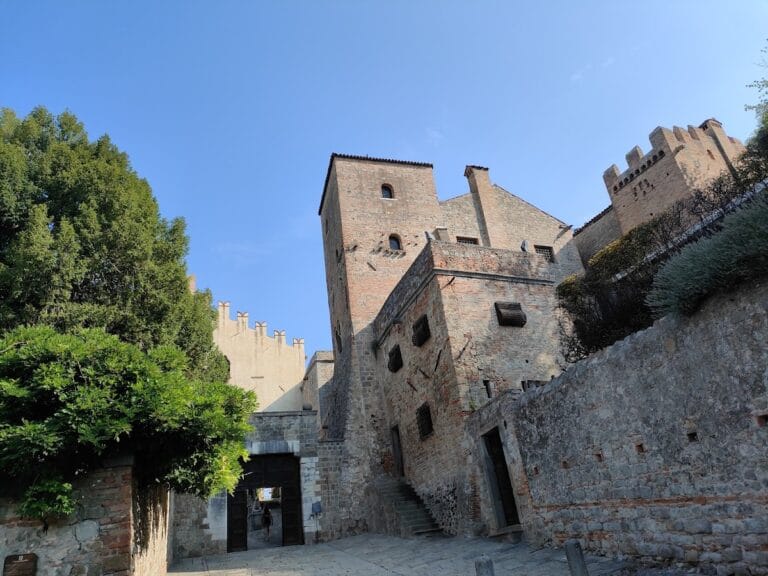
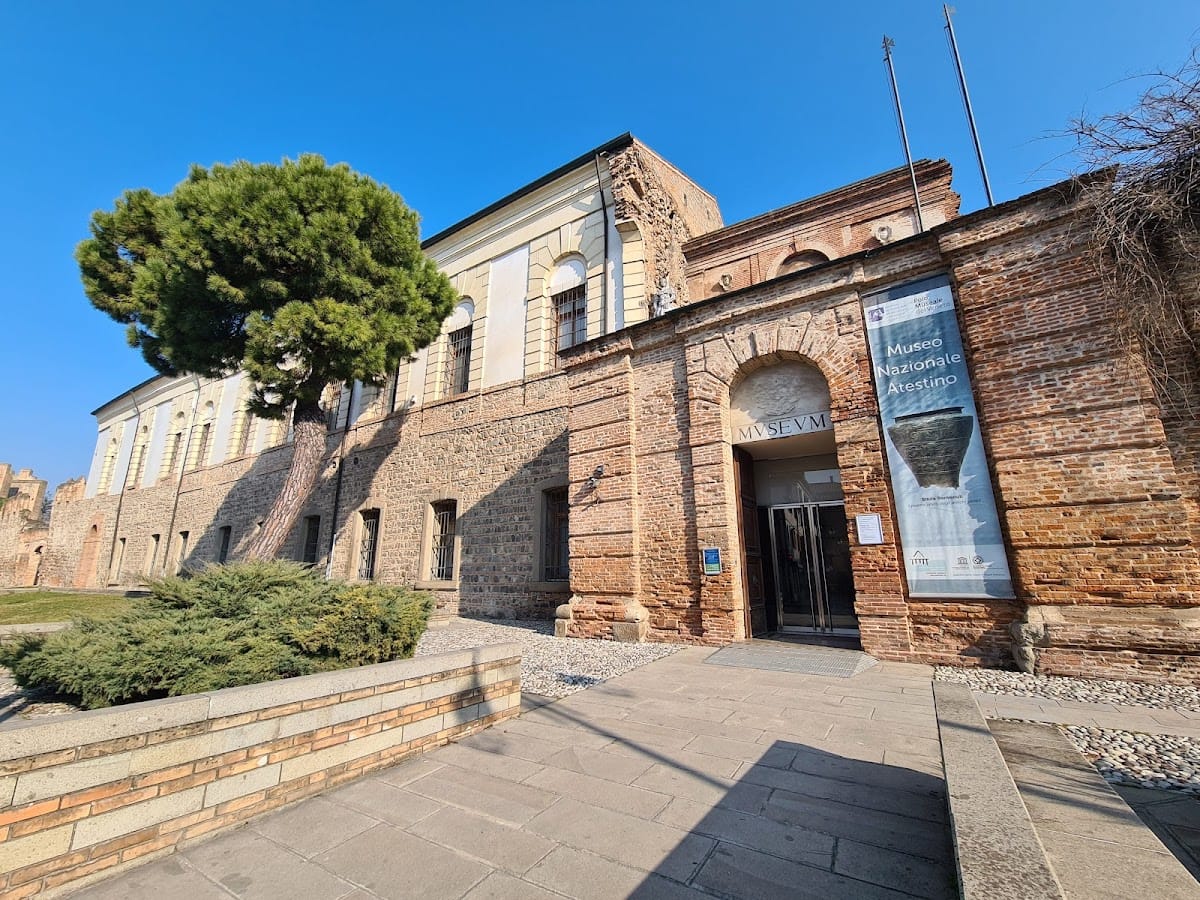
The museum occupies Villa Mocenigo, a rebuilt sixteenth-century palace whose façade incorporates part of the walls of the fourteenth-century Carrarese castle. The castle site had served as a residence of the House of Este in 1056. A fire in 1785 largely destroyed the palace, which was subsequently rebuilt. Three rooms on the piano nobile, the principal residential floor of an Italian palace, retain seventeenth-century frescoes by Giulio Carpioni.
Museum Layout and Collections
The collections contain more than 65,000 objects arranged in eleven rooms with thematic sections. The museum also includes a specialist library, a restoration laboratory, a conference room, and spaces for temporary exhibitions. The arrangement brings together material from the Paleovenetian period, the Roman era of ancient Ateste, and the medieval and modern history of Este.
Roman and Medieval Displays
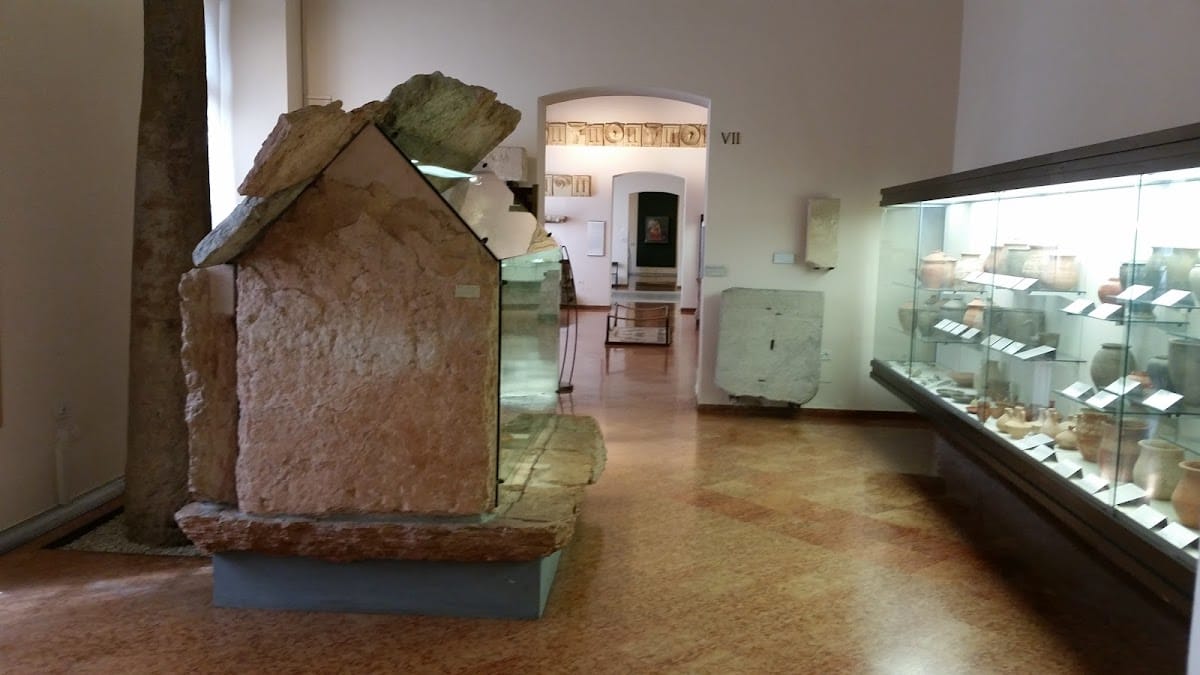
The ground floor presents archaeological material from Roman Ateste. Funerary monuments, inscribed stones, coins, and black-and-white tessellated mosaics, made from small pieces set into a surface, form part of this display. The same level includes a reconstruction of the frescoed ceiling of a villa. Another ground-floor room contains medieval statues and Este ceramics, together with a Madonna and Child painted on panel by the Venetian Renaissance painter Cima da Conegliano in 1504. The panel originally came from the church of the Zoccoli.
Paleovenetian Material
The upper floor opens with a series of historical prints of Este and continues into the protohistoric section. This area preserves evidence of the Paleovenetians, the pre-Roman people of the Veneto region. Its material includes prehistoric finds, vessels, everyday objects, votive offerings, funerary assemblages, and bronze figurines of worshippers associated with Reitia, a major deity of the ancient Paleovenetian religious tradition.
Upper Terrace
The upper terrace contains Renaissance and Baroque coats of arms and statues. Among them are an allegorical representation of Time and a putto holding a headdress shaped like a papal tiara. These features belong to the later artistic history of Villa Mocenigo and complement the archaeological collections displayed inside the palace.