Carpineti Castle: A Medieval Hilltop Fortress in Italy
Site at a Glance
- Rating
- 4.5
- Popularity
- Low
- Country
- Italy
- Primary era
- Medieval
- External website
- Open
- Eras represented
- Medieval
- Civilizations
- Holy Roman Empire
- Site type
- Military
- Remains
- Castle
On this page10 sections
History
Carpineti Castle is a medieval hilltop fortress in Italy, with its first defensive fortification attributed to the tenth century and to Atto Adalberto, a forebear of Matilda of Canossa. Its exact construction date is uncertain, but the castle later became one of the principal strongholds associated with Matilda’s territories in the Reggio Apennines.
The Canossa family and Matilda’s residence
By 1043, the castle was administered by Boniface of Canossa, Matilda’s father. After his death, it passed to Matilda, and her possession of Carpineti is recorded by 1077. That year, Pope Gregory VII, the reforming pope involved in a struggle with Henry IV over papal authority and the appointment of church officials, took refuge at the castle. Numerous acts of government were dated there during this period.
Carpineti became Matilda’s preferred residence and a place for major political decisions. In 1092, she held a placitum, a formal medieval political and judicial assembly, with Eriberto, bishop of Reggio, and other bishops. The meeting considered whether the war against Henry IV should continue. A second placitum took place at Carpineti in 1114.
Under Matilda, the castle formed part of a wider defensive system protecting the Canossa territories. It was the most secure and elevated of three defensive rings formed by castles in the Reggio Apennines. The complex also accommodated popes, emperors, kings, and dukes during negotiations concerning Italy. Matilda’s death in 1115 ended Carpineti’s most active period. Because the castle was part of her allodial property, meaning land held directly by its owner rather than as a feudal tenure, it subsequently followed the history of the wider Matildine inheritance.
Contested inheritance and later lordships
After Matilda’s donation of her estates to the Church, Carpineti was contested and attacked by surrounding powers. These included the lords of Da Baiso, forces from Parma associated with Moroello Malaspina, and the commune of Reggio. In 1218, the commune obtained an oath of loyalty from the inhabitants of Carpineti.
Much of the former Matildine patrimony, including Carpineti, later passed to the Fogliani family. In 1385, Carenza, heir of Almerico da Fogliano, sold much of the castle and its territory to the Sessi family. The remaining Fogliani portion stayed with that family until 1409, when the Fogliani territories passed to the Este family. The Este, a major Italian ruling dynasty, controlled the Reggio mountains as part of the Duchy of Reggio until the nineteenth century.
In 1513, Giovanni Gozzadini, the papal governor of Reggio, granted the castle to Domenico Amorotto, a bandit born in Carpineti, as a reward for his loyalty. Este control returned ten years later. During the seventeenth century, Carpineti was a fief of the Fontanelli marquises and later of the Molza family. In the eighteenth century, it belonged first to Count Giannini and finally to the Valdrighi family, the last feudal holders under the Este rulers. The Province of Reggio Emilia is its current owner.
Remains
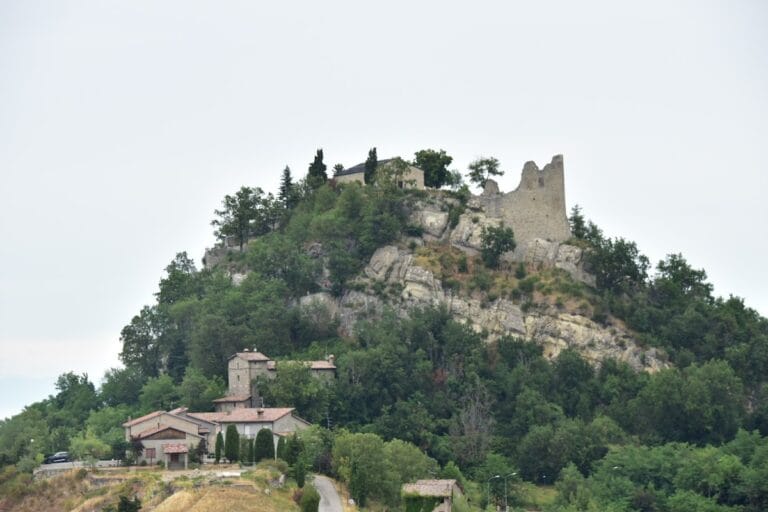
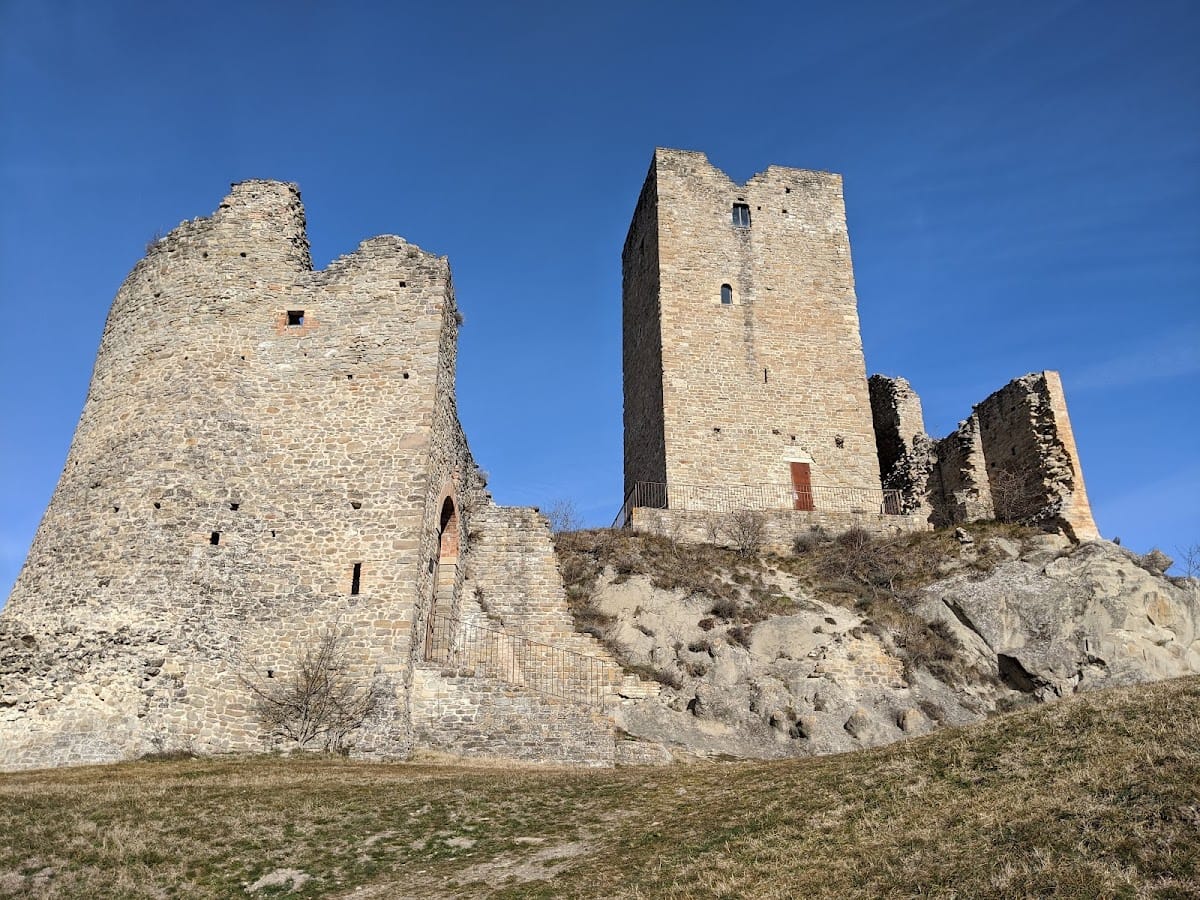
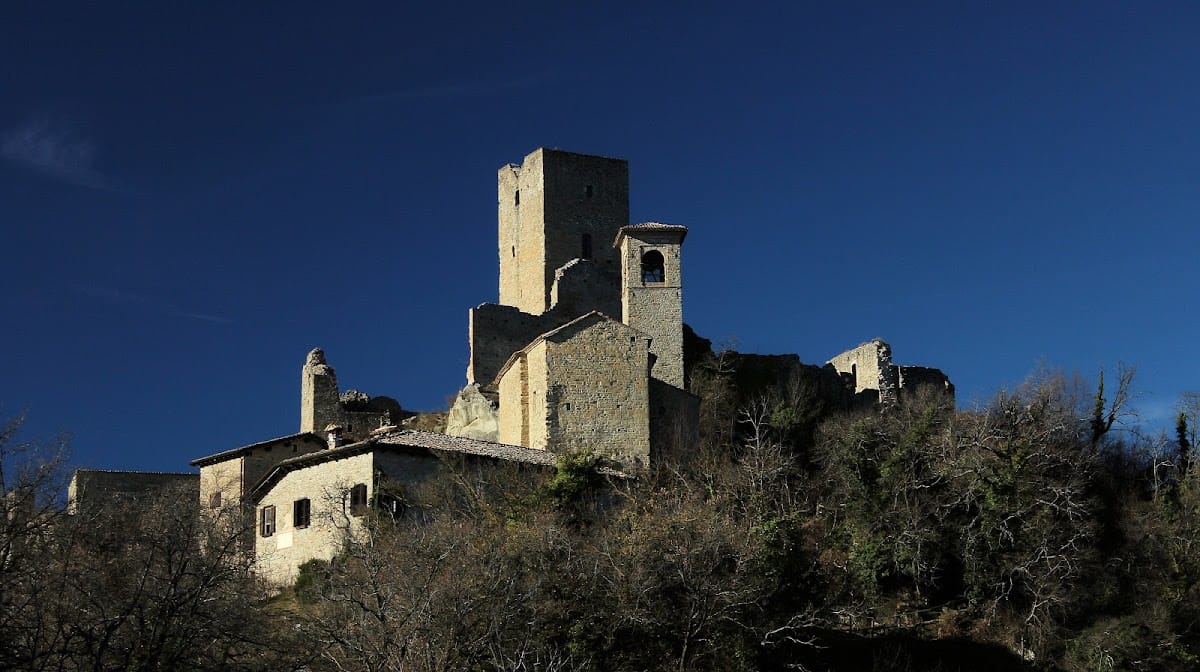
The ruins of Carpineti Castle occupy a high position on Mount Antognano in the Reggio Apennines, at roughly 800 metres above sea level. From this setting above the valleys of the Secchia and Tresinaro rivers, the complex extends across an irregular enclosure whose plan approaches a trapezoid. Two circuits of rubble-stone walls define the surviving castle, while the entrance, residential remains, and towers preserve parts of its defensive and domestic arrangement.
Fortifications and entrance buildings
Entrance tower
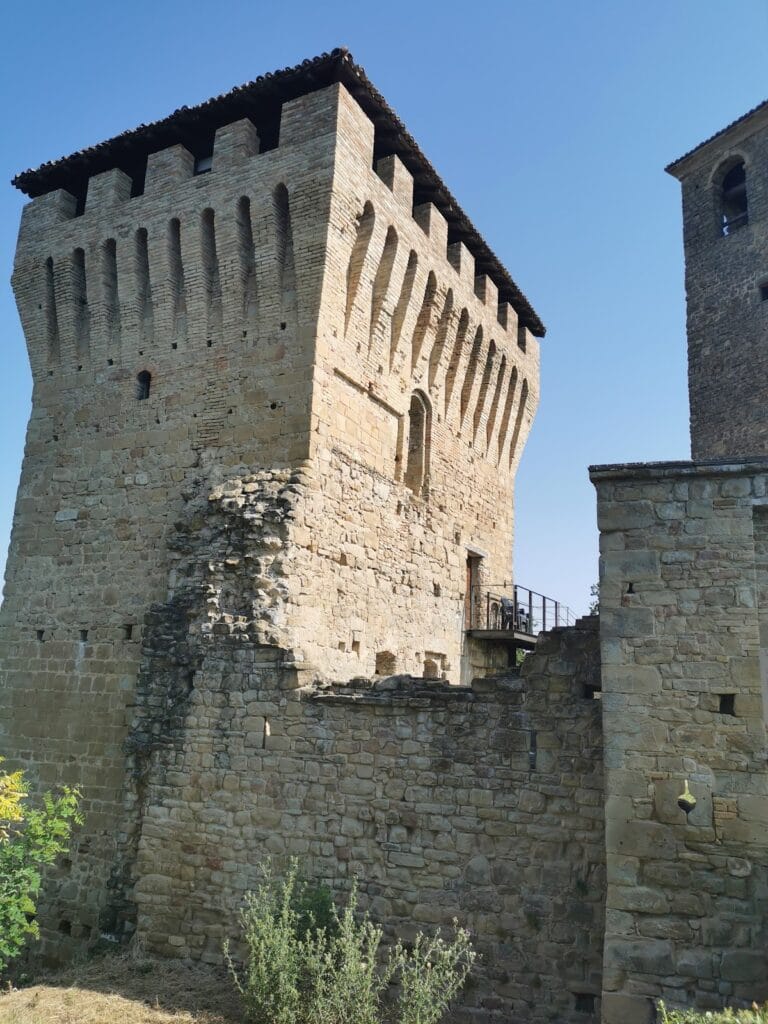
A defensive tower stands beside the shorter side of the entrance. It forms part of the castle’s surviving fortification system, whose irregular enclosure is preserved in ruinous rubble-stone construction.
Church of Sant’Andrea
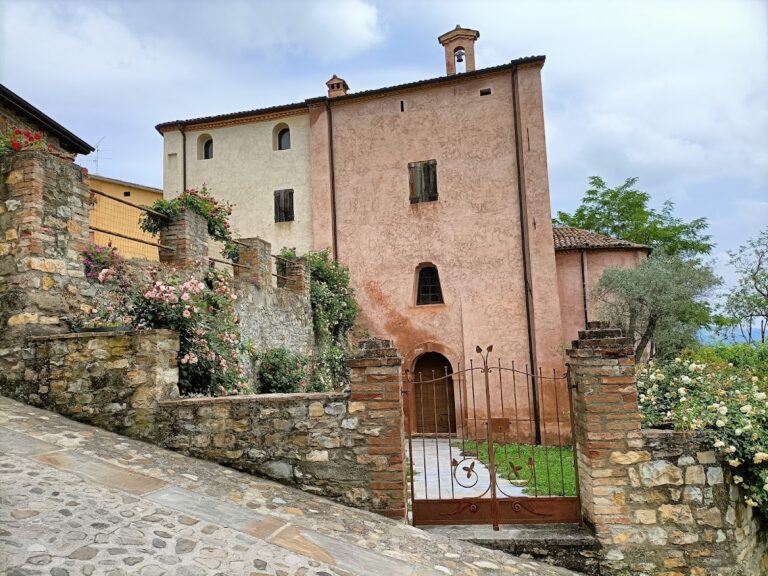
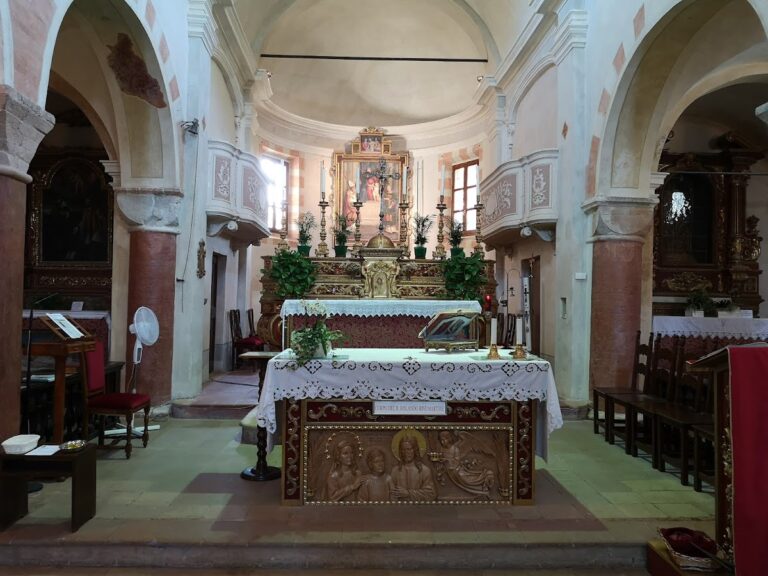
The Church of Sant’Andrea stands beside the castle entrance. This Romanesque building, a medieval form characterized by massive construction, round arches, and relatively thick walls, was consecrated in 1117. It was restored after suffering damage during the Second World War.
Residential and southern remains
Principal residential floor
The ruins include the castle’s piano nobile, or principal residential floor. Its survival identifies the complex as more than a purely defensive enclosure and preserves part of the accommodation associated with the castle’s historic use.
Southern tower
A southern tower also survives among the ruins. Together with the defensive tower beside the entrance and the two wall circuits, it forms part of the remaining fortified structure.