Canossa Castle: Medieval Fortress and Seat of the Canossa Margraves


Site at a Glance
- Rating
- 4.4
- Popularity
- Medium
- Country
- Italy
- Primary era
- Medieval
- External website
- Open
- Eras represented
- Medieval
- Civilizations
- Holy Roman Empire
- Site type
- Military
- Remains
- Castle
On this page10 sections
History
Canossa Castle is a medieval hilltop fortress in Italy, built in the tenth century, probably around 940, by Adalbert Atto, a nobleman of Longobard descent and founder of the Canossa political dynasty. It became the principal seat of the powerful Canossa margrave family and occupied a strategically favourable position on a rocky height in the Apennines.
The Canossa Dynasty and Adelaide’s Refuge
During the tenth century, the fortress was established as the centre of Adalbert Atto’s power. Its position enabled it to defend the settlement associated with the castle and gave the Canossa family a strong base in the region.
Canossa later provided refuge for Adelaide, widow of Lothair II, king of Italy. In 950 she sheltered inside the fortress while Berengar II, margrave of Ivrea, besieged it for more than three years. The siege did not succeed, reinforcing the castle’s reputation as a defensible stronghold.
Gregory VII, Henry IV, and Matilda
Canossa became closely associated with the conflict between imperial and ecclesiastical authority in the eleventh century. Pope Gregory VII, a reforming pope who opposed imperial control over the appointment of bishops, stayed at the fortress in December 1076 and January 1077 as a guest of Matilda of Canossa, the influential countess and territorial ruler whose lands included the castle.
In January 1077, Henry IV, king of the Romans and later Holy Roman Emperor, came to Canossa after his excommunication by Gregory VII. He sought release from excommunication and readmission to the Church. He is said to have waited for three days outside the gates before being admitted and receiving absolution. Matilda played a central role in the reconciliation, and the episode gave rise to the expression “to go to Canossa.”
The relationship between Henry IV and Matilda soon became openly military. During Henry’s second Italian campaign in 1092, Matilda’s forces defeated him near Canossa.
Inheritance, Destruction, and Rebuilding
After Matilda died at Bondeno di Roncore on 24 July 1115, a major struggle developed over her inheritance, which she had formally donated to the Church. Canossa, together with the nearby castles of Rossena and Rossenella, passed among Matilda’s successors, the people of Reggio, the Canossa family once more, and Giberto da Correggio, who died in 1321.
In 1255, fighting between Guelph and Ghibelline forces damaged the castle. These were opposing medieval Italian political factions broadly associated with papal and imperial interests, although their local alliances varied. The people of Reggio are recorded as having destroyed Canossa to its foundations. Giberto da Correggio later restored and altered the complex during the fourteenth century.
The castle returned to the municipality of Reggio at the end of the fourteenth century and remained under its control until 1402. The Visconti, who had ruled Reggio Emilia from 1371, equipped it with firearms during the fourteenth century. In 1392, the Visconti castellan Pisanello de’ Pisi removed the relics of Saint Apollonius, Saint Victor, and Saint Corona from the fortress church and sent them to Ottone Mandelli, who donated them to the church of San Francesco in Pavia.
Este Rule and Later Feudal Ownership
Simone, Guido, and Alberto Canossa regained the castle in 1402. It subsequently entered Este possession and remained associated with the Este family, with brief interruptions, until 1796. Niccolò III d’Este’s troops besieged and damaged the castle in 1412. In 1449, Leonello d’Este acquired the building, and Borso d’Este restored it in 1452.
In 1502, Ercole I appointed the poet Ludovico Ariosto captain of the fortress. Ariosto lived at Canossa for almost six consecutive months. In 1557, Ottavio Farnese, duke of Parma, temporarily occupied the castle.
In 1570, Alfonso II d’Este granted Canossa as a fief to Boniface Ruggeri, count of Reggio Emilia. The castle was also recorded as a fief of the counts Rondinelli in 1593. In 1642, Duke Francesco I granted the fief to the Valentini family, which administered it until 1796.
From Municipality to National Monument
In 1796, the inhabitants of Canossa rebelled and joined the Republic of Reggio. Napoleon I established the municipality of Canossa by decree on 8 June 1805, but in 1809 it was incorporated into the municipality of Quattro Castella. After the Restoration, Quattro Castella became part of San Polo in 1815, and the Valentini counts regained the Canossa fief in 1819.
The Valentini family retained ownership until 1878, when the Italian state purchased the fortress ruins and declared them a national monument. A local mountain association had already drawn attention in 1877 to the castle’s poor condition and the need for excavation. Naborre Campanini promoted archaeological work in the late nineteenth century, and the excavated finds were placed in a small adjacent museum inaugurated in 1913 and later dedicated to him. Successive restoration, recovery, and conservation interventions have limited further deterioration. Since December 2014, the site has been managed by the Italian Ministry of Cultural Heritage and Activities through the Emilia-Romagna museum system, which became the Regional Museums Directorate in December 2019.
Remains
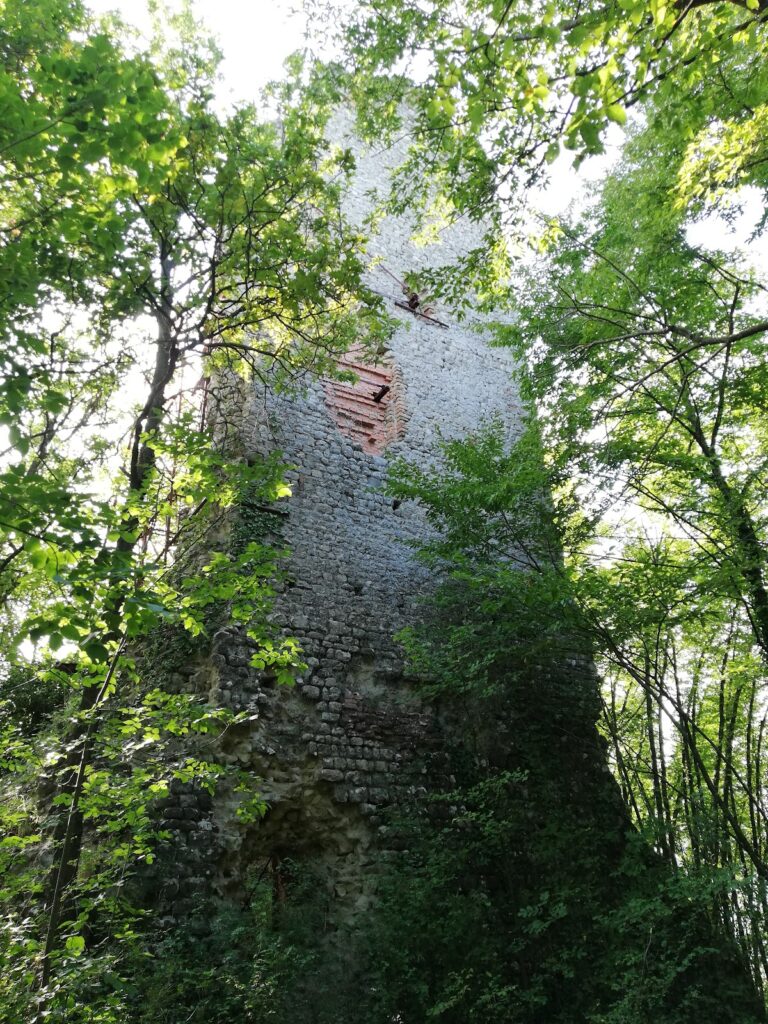
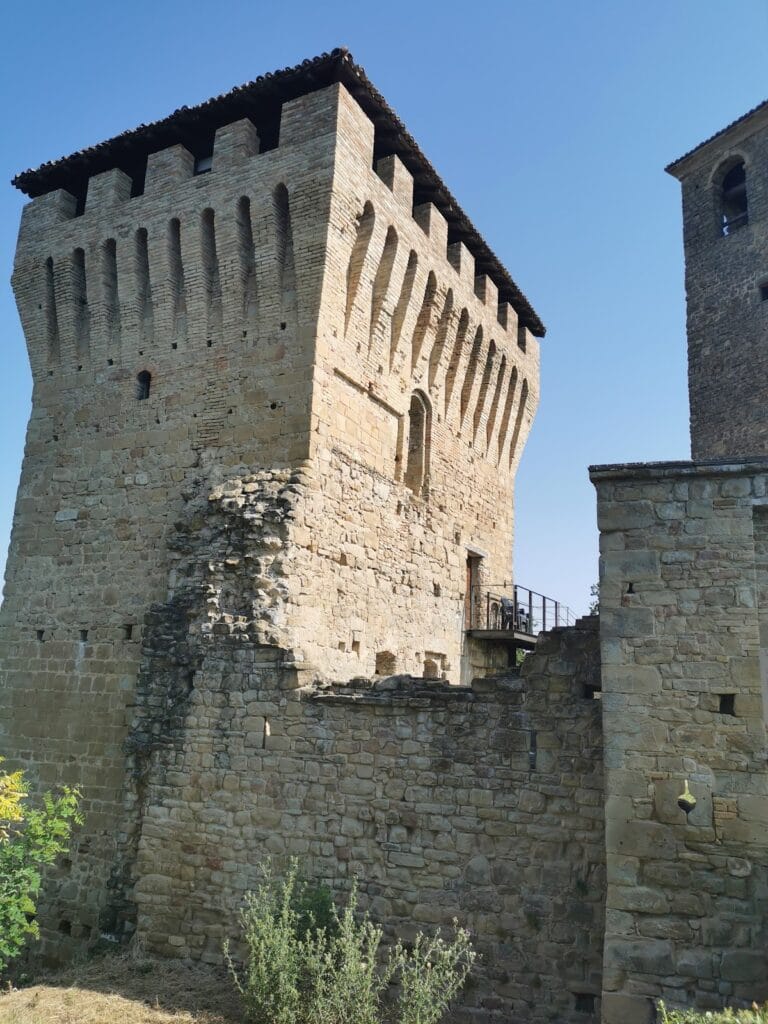
Canossa Castle survives as a ruin on the summit of a rocky height approximately 576 metres above sea level, on the edge of the Apennines between Bologna and Parma and about 18 kilometres southwest of Reggio nell’Emilia. The medieval fortress was built of stone and mortar, including rough-stone masonry. Its elevated position gave the complex a defensible setting above the surrounding settlement.
Walls and Defensive Circuits
The fortress was enclosed by three circuits of walls. The spaces between the two lower circuits contained shelters and service buildings for soldiers and servants, as well as buildings forming the associated settlements. These defensive rings organized the fortified area below the summit residence and connected military protection with the practical needs of the community living within the complex.
Summit Residence and Monastic Buildings
The original complex included a lordly residence on the summit and a monastery that normally housed twelve Cluniac Benedictine monks. Cluniac Benedictines belonged to a Benedictine reform movement centred on the monastery of Cluny, with affiliated monasteries and an emphasis on liturgical and institutional reform. Matilda’s extensions, the destruction of 1255, and Giberto da Correggio’s rebuilding and alterations removed all identifiable traces of the original tenth-century construction.
Church of Sant’Apollonio and Archaeological Museum
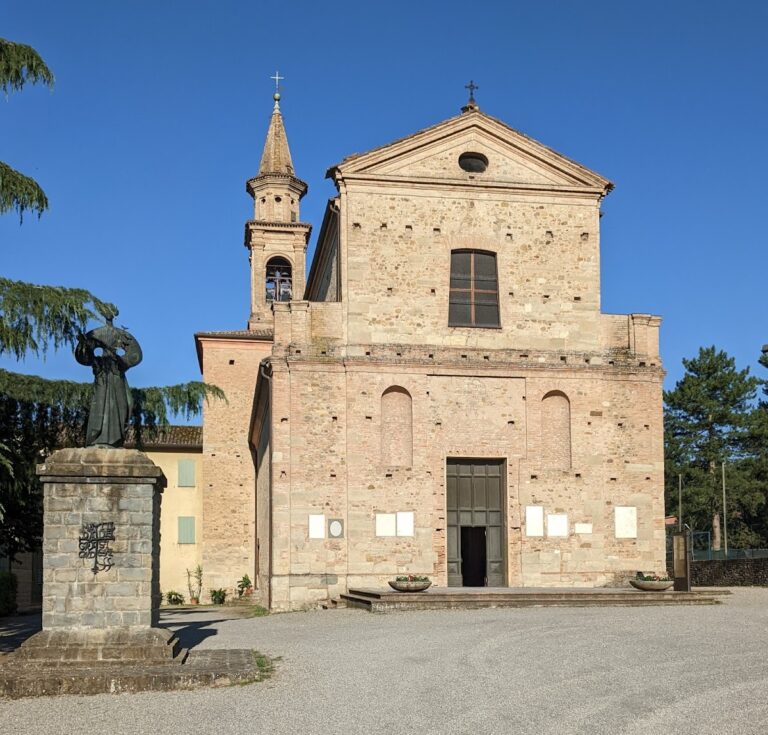
The fortified complex also contained the church of Sant’Apollonio. It formerly held the relics of Saint Apollonius, Saint Victor, and Saint Corona, which were removed in 1392 and transferred to Pavia. Excavations later exposed archaeological material from the castle, and these finds were placed in the adjacent Naborre Campanini Museum, inaugurated in 1913. The surviving walls and structures remain ruinous, while conservation work has helped limit their further collapse.
Nearby sites