Castello di Rossena: A Medieval Fortress in Italy


Site at a Glance
- Rating
- 4.5
- Popularity
- Low
- Country
- Italy
- Primary era
- Medieval
- Eras represented
- Medieval, Modern
- Civilizations
- Holy Roman Empire
- Site type
- Military
- Remains
- Castle
On this page15 sections
History
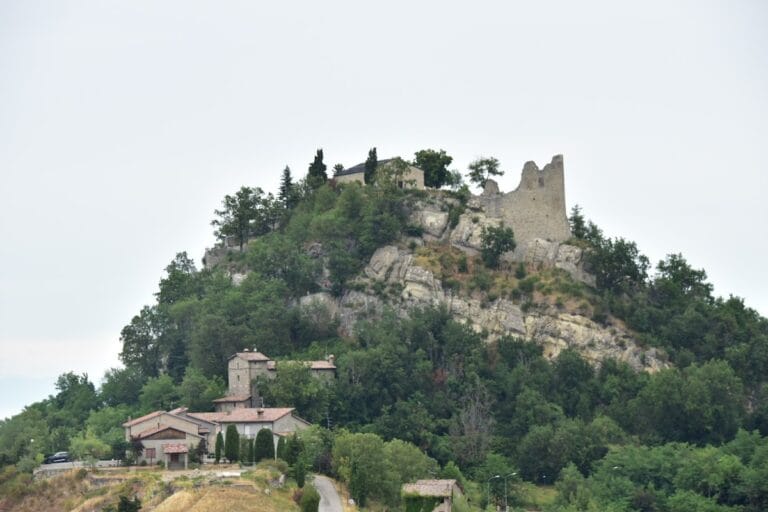
Castello di Rossena is a medieval military fortress in Italy, located in Rossena within the municipality of Canossa in the Reggio Emilia Apennines. Construction probably began around 950, during the medieval period, on the site of an earlier structure that formed the original keep. The fortress defended the nearby Castello di Canossa and helped block enemy forces advancing from the Enza valley.
Origins and ecclesiastical possession
The beginning of construction has been attributed either to Atto Adalberto, the great-grandfather of Matilda of Canossa, or to Bonifacio of Canossa, Matilda’s father. The attribution remains uncertain. Matilda was an eleventh-century Italian noblewoman whose family controlled extensive territories in northern and central Italy and shaped the political and religious history of Canossa and its surrounding fortresses.
During the eleventh century, Rossena belonged to Bonifacio of Canossa, Duke and Margrave of Tuscany. Around 1070, he granted the Castellum de Rossena to the Church as payment for benefits received through a feudal arrangement. Emperor Henry VI confirmed the Church’s possession in 1193.
Medieval and early-modern transformations
In 1246, Umberto Pallavicino, the Podestà of Reggio, took possession of Rossena. Around 1300, Guido da Correggio acquired the castle, which remained with the Da Correggio family until 1612.
Military conflict damaged the fortress in 1558, when troops sent by Alfonso II d’Este attacked Rossena during an attempt to conquer Canossa. The assault was commanded by Cornelio Bentivoglio, and the explosion of the gunpowder magazine caused further damage to the castle.
In 1613, Rossena was confiscated from Girolamo da Correggio after he was accused of taking part in a conspiracy against Ranuccio I Farnese. The castle then passed to Ranuccio, Duke of Parma, and became part of the Duchy of Parma and Piacenza. This early-modern Italian state was ruled first by the Farnese dynasty and later by the Bourbons.
Around 1700, Rossena passed to the Bourbons and changed from a primarily military fortress into a noble residence. Maria Amalia, the wife of Ferdinand I and sister of Emperor Joseph II, visited the castle in June 1772.
Damage, state ownership, and restoration
An earthquake in 1832 caused extensive damage to the fortress. Maria Luigia of Austria, then Duchess of Parma and the castle’s owner, ordered repair works. After her death in 1847, Rossena became part of the Duchy of Modena and Reggio and passed to Francis V of Modena. The castle became state property in 1860.
Count Luigi Rati Opizzoni purchased Rossena in 1871. His heirs retained it until 1938, when they sold it to private owners who began restoration works. One of the heirs, Engineer Guido Tirelli, was a passionate scholar of the castle.
Ownership returned to the Church of Reggio in 1948. In 1979, the Church granted Rossena to the Istituto Superiore di Studi Matildici for use as the site of its summer academy. A major restoration followed in 2000 during the Jubilee. The castle remains closely connected with Canossa and the wider Matildic landscape, while Rossena and the Torre di Rossenella formed part of the defensive system surrounding the principal castle of Canossa.
Remains
Fortifications and defensive circuits
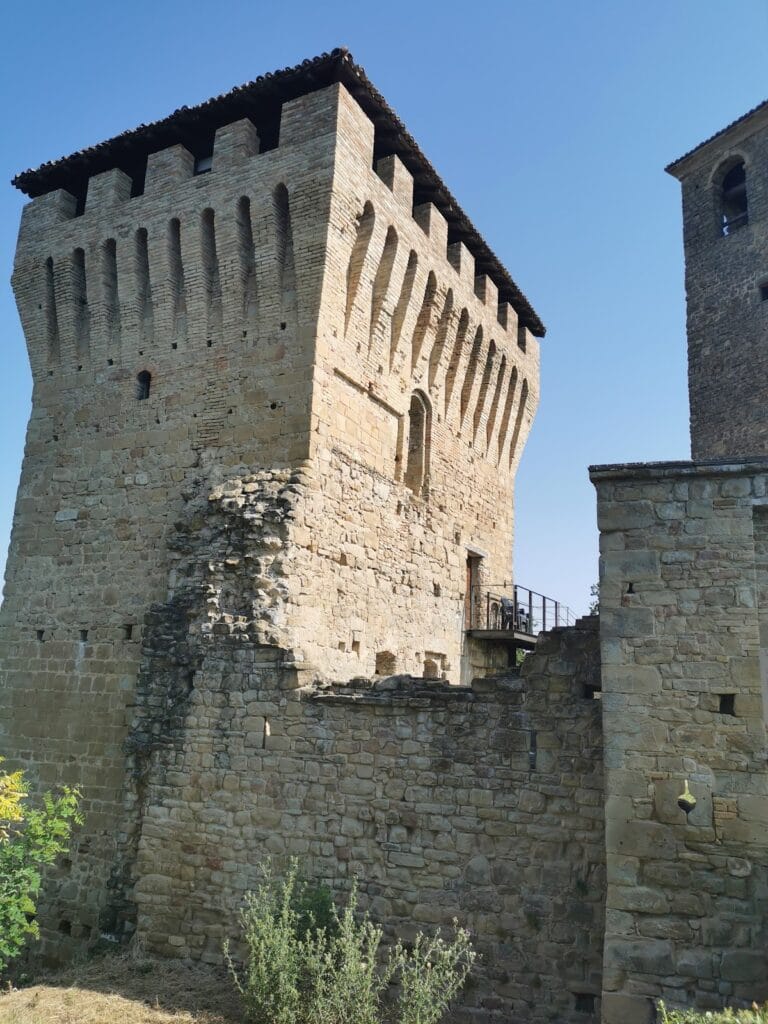
Castello di Rossena stands on a hill of reddish rock at approximately 454 metres above sea level, overlooking the Vico valley and the Ceresola stream, which flows into the Enza. The complex developed from an original keep, or principal fortified tower, and expanded into a group of towers and buildings enclosed by three defensive circuits. Stone, rubble masonry, mortar, and brick were used throughout the construction.
Outer walls and entrance
The original central structure can still be recognized within the principal construction, and its form is comparable to that of the nearby Torre di Rossenella. Remains of towers stand beside the southern end of the wall. The entrance has a gate fitted with a portcullis, a vertically lowering defensive barrier set within the entrance passage.
Three defensive circuits
The first circuit contains the upper fortified portions of the towers and the Piazza d’Armi, or parade ground. The second consists of high walls designed to support defence by vertical fire. Within it are the Church of San Matteo Apostolo, a small settlement of houses, and the guardhouse, which is incorporated into the defensive walls. The third circuit contains bastions, projecting defensive works introduced to allow weapons to cover the approaches to the fortification.
Interior levels and surviving rooms
Sala d’Armi level
The castle is organized on three principal levels. The level known as the Sala d’Armi contains the prison, refectory, and cistern. These spaces are connected by a stairway built of stone and brick, preserving the relationship between the fortress’s service and defensive areas.
Piazza d’Armi level
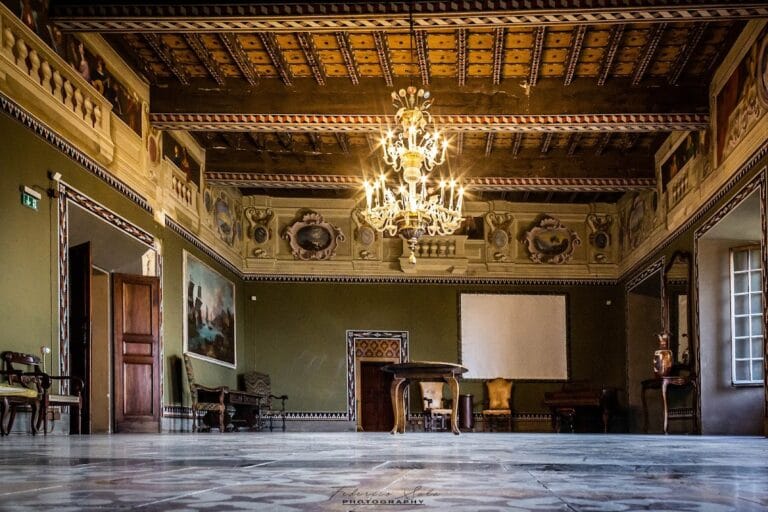
The Piazza d’Armi level contains the original core of the defensive system. Buildings border the square to the north and east, while spacious rooms at this level reveal the interior of the keep. A brick portal built in the nineteenth century provides access to the keep’s interior. Restoration work later revealed decorations from the middle of the eighteenth century on the ceilings of several rooms.
Upper level
The third level is less well preserved. It was formerly reached through a passage cut into the masonry of the keep. Outside, a stone portal leads to a passage projecting above the lower level.
Church and associated tower
Church of San Matteo Apostolo
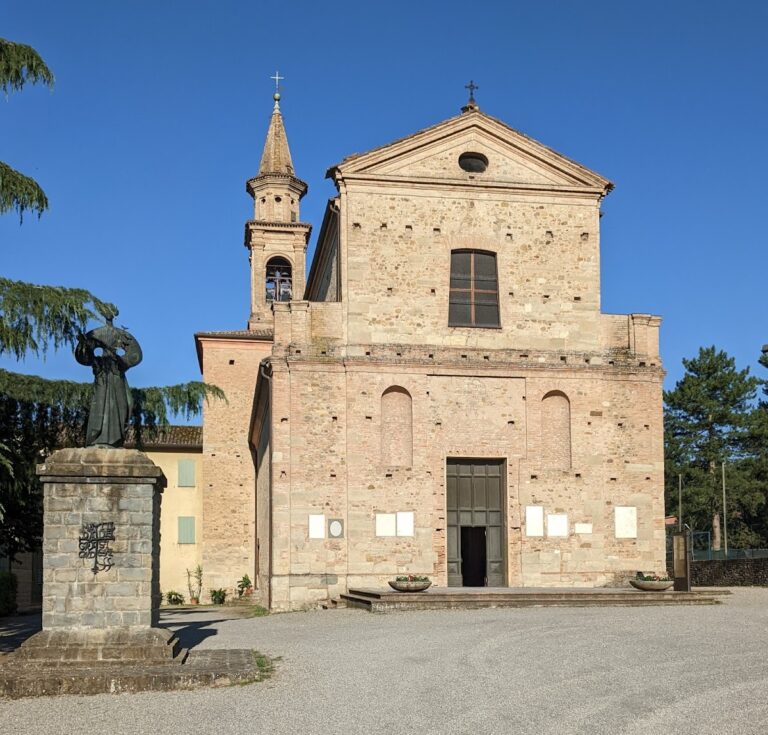
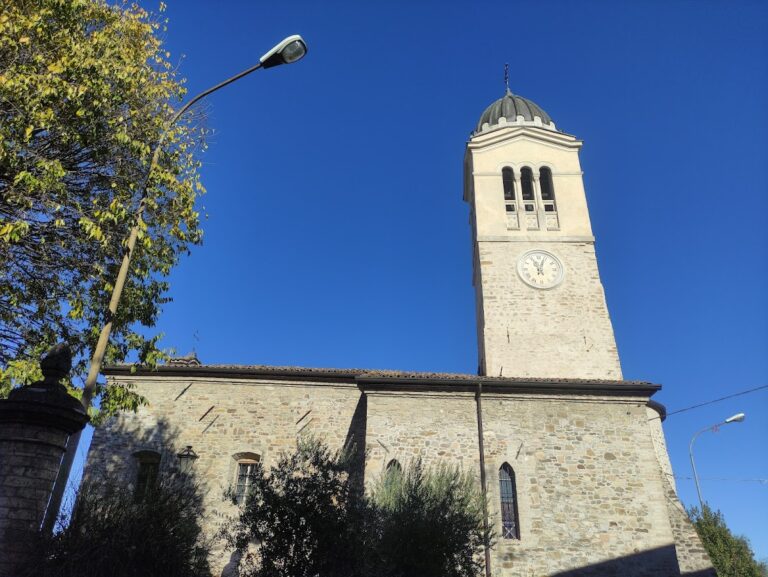
The Church of San Matteo Apostolo stands within the castle’s defensive enclosure, among the buildings and walls forming the second defensive circuit.
Torre di Rossenella
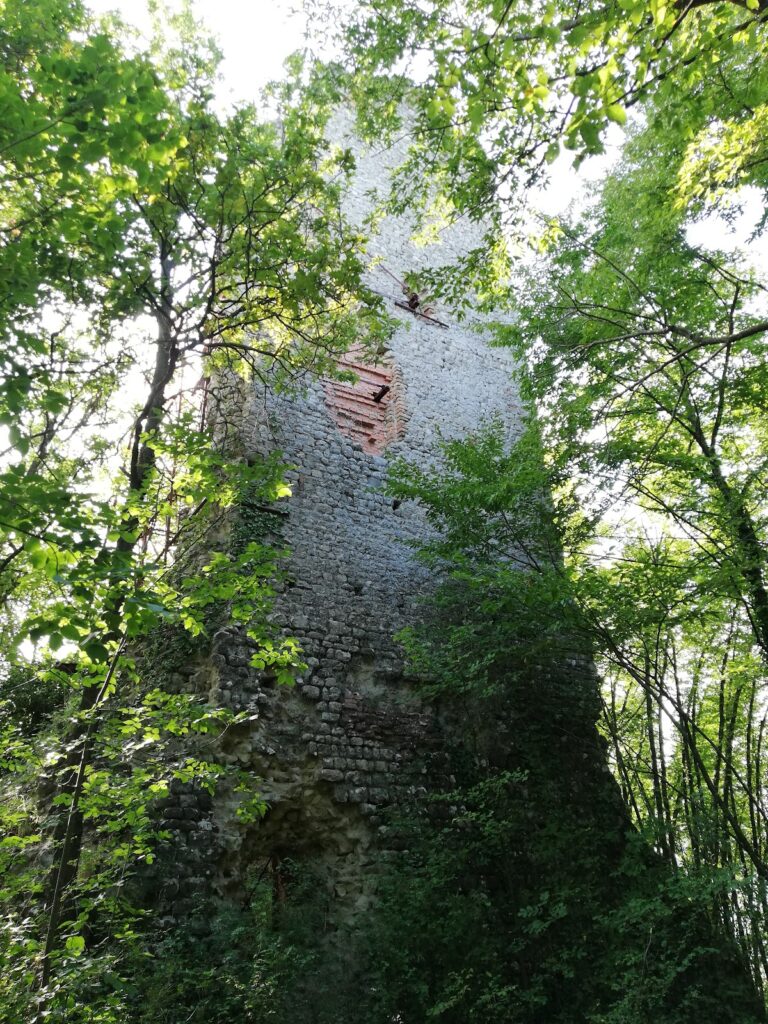
Opposite Rossena, the Torre di Rossenella rises on a rocky outcrop above the Campotrera nature reserve. Later additions did not substantially alter its walls, so its original appearance and construction remain legible. Together with Castello di Rossena, the tower formed part of the wider defensive landscape associated with Canossa.
Nearby sites