Castello di Marostica: A Medieval Fortified Complex in Italy
Site at a Glance
- Rating
- 4.4
- Popularity
- Medium
- Country
- Italy
- Primary era
- Medieval
- External website
- Open
- Eras represented
- Medieval, Modern
- Civilizations
- Holy Roman Empire, Italian
- Site type
- Military
- Remains
- Castle
On this page8 sections
History
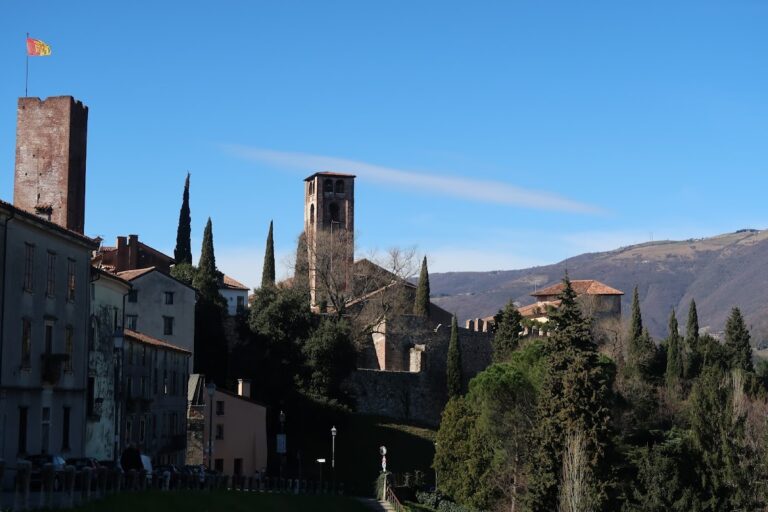
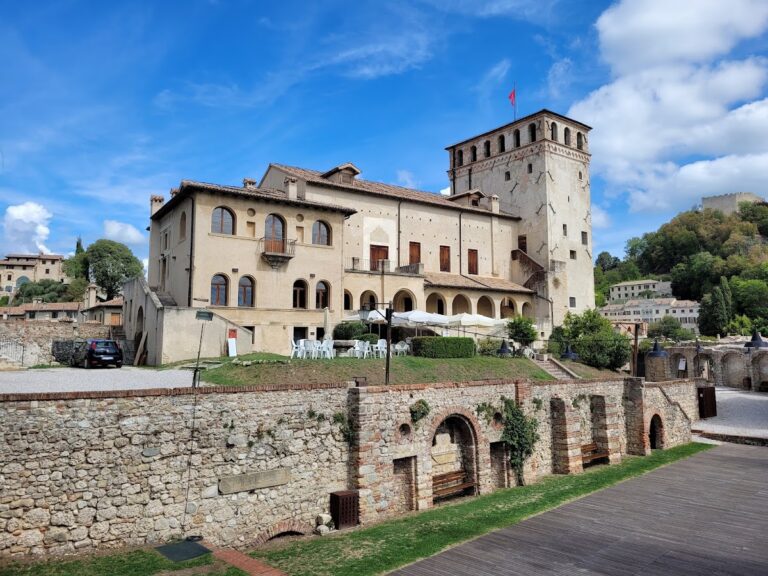
Castello di Marostica is a medieval fortified complex in Marostica, Italy, established under the Scaligeri, the ruling dynasty of Verona, after their conquest of the Vicenza area in 1311. It comprises the Castello Inferiore, or Castello da Basso, the Castello Superiore, and the walls connecting them. Both castles were built in 1312 as part of the reorganization of Marostica’s urban center under Cangrande della Scala, which shifted the town from the older Borgo into the present fortified center.
Scaliger construction
The new urban arrangement placed Marostica within a defensive circuit linking the lower and upper castles. Work on the connecting walls began on 1 March 1372 under Cansignorio, a later Scaliger ruler. The fortified complex thus brought the town’s principal defensive positions together while enclosing its reorganized center.
Marostica’s earlier history remained part of this landscape. The Castello Superiore occupies Pausolino Hill, where an earlier fortification had existed in the Roman period and had also been used during the Middle Ages. A record from 1262 describes a tower on the hill with three sides.
Venetian rule and later changes
After the War of the League of Cambrai, a major European conflict that affected Venetian territories in northern Italy, the Castello Superiore suffered severe damage. The podestà, a civic magistrate responsible for administering the town, transferred his seat to the Castello Inferiore.
Marostica came under Venetian rule from 1404 to 1797. During this period, the Doglione regained importance after its reduced role under the Scaliger rulers. A new opening was created in the southern wall section in 1934 and 1935 to improve access toward the former railway station. The complex is recognized as Italian cultural heritage.
Remains
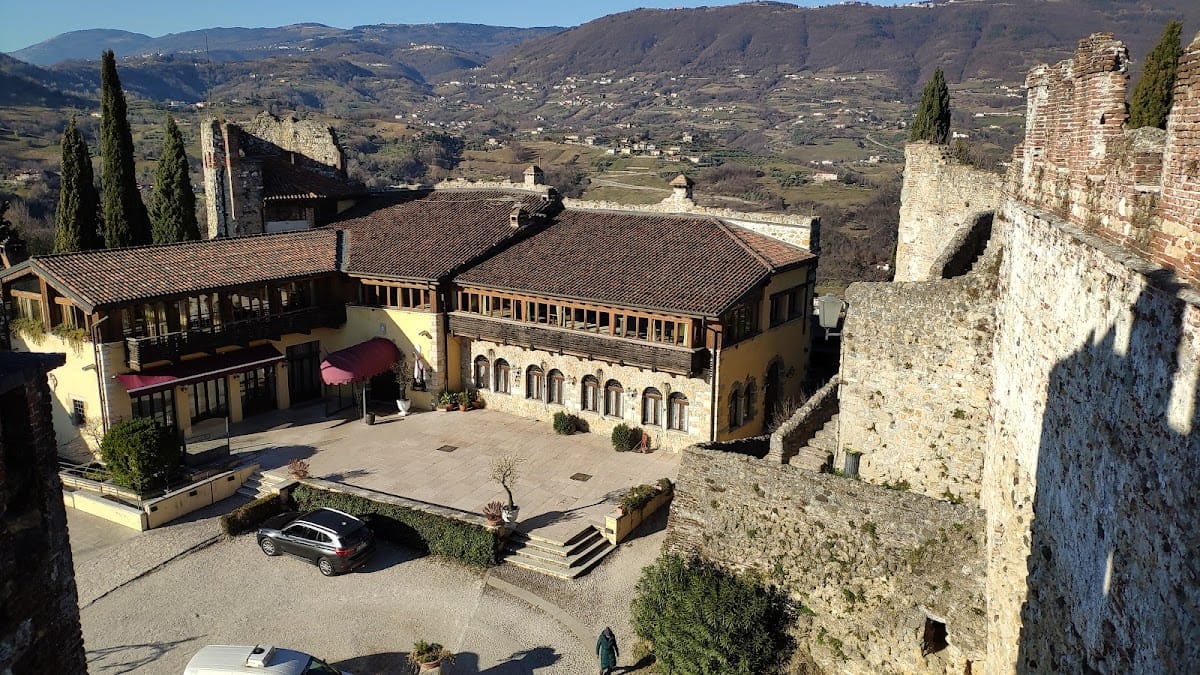
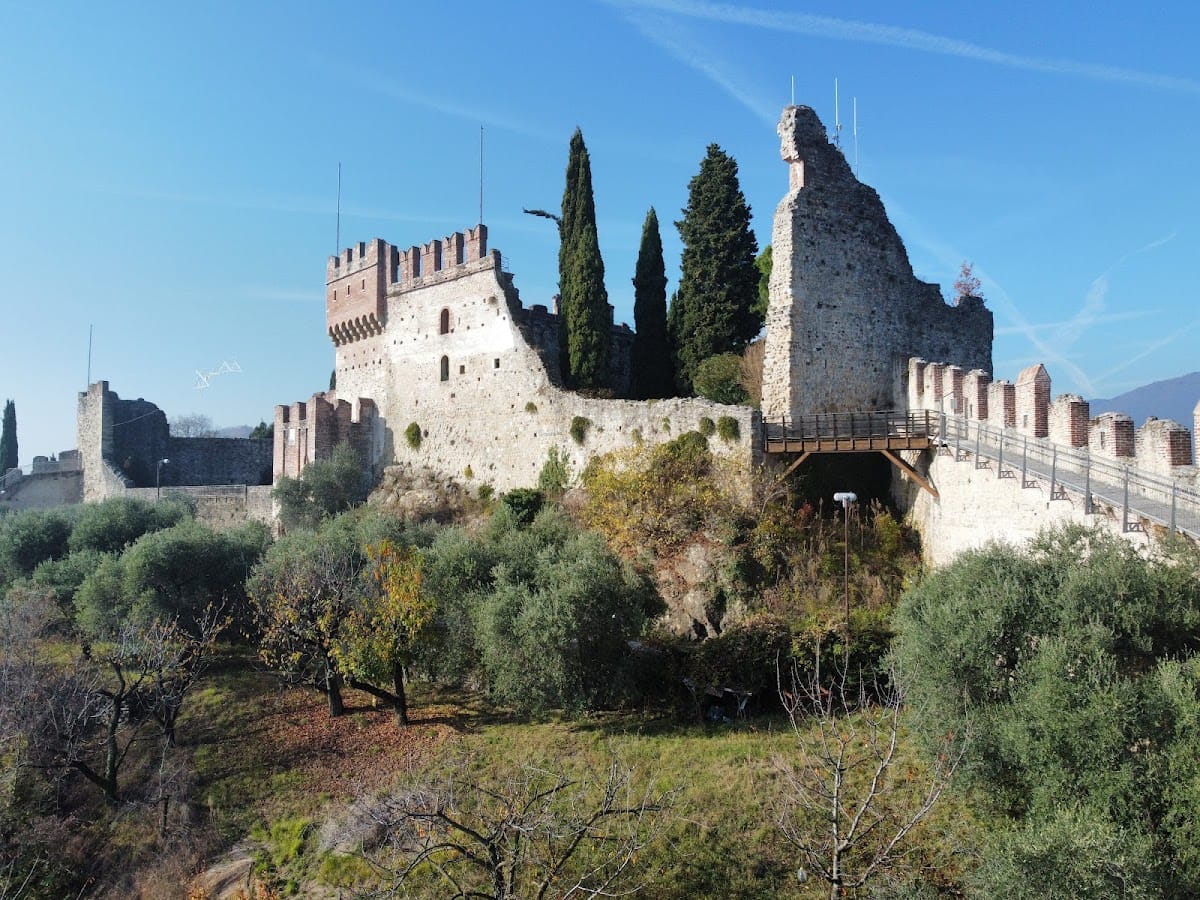
The surviving complex is organized around two castles joined by a fortified circuit approximately 1,800 metres long. Built in stone and brick, the walls enclose the historic center and contain patrol walkways that served as guard routes in antiquity. Four gates connect the circuit with the town and Piazza degli Scacchi: Porta Vicentina on the south, Porta Breganzina on the west, Porta Bassanese on the east, and Porta del Castello Superiore on the north.
The two castles
Castello Inferiore
The Castello Inferiore is a rectangular castle enclosure beside a substantial keep. Its medieval fortification consists of stone and brick, and its position within the lower part of the circuit made it an important component of the defended urban center. After damage to the upper castle during the War of the League of Cambrai, it also became the seat of the podestà.
Castello Superiore
The Castello Superiore has a square plan with four small corner towers and a large central tower. It stands on the highest point of Pausolino Hill, a location associated with an earlier Roman-period fortification and later medieval use. The hilltop castle forms the upper defensive position of the complex.
The Doglione
The Doglione, also called Rocca di Mezzo, stands opposite the Castello Inferiore and Piazza degli Scacchi. A record from 1218 states that Marostica was transferred to Vicenza by Ezzelino II il Monaco, a medieval nobleman associated with the Vicenza area. During the thirteenth century, the building functioned as a customs station for goods entering or passing through Marostica. It now houses the civic library named for Prospero Alpini, a physician and botanist from Marostica.