Antirrio Fortress: An Ottoman Coastal Fortress in Greece
Site at a Glance
- Rating
- 4.3
- Popularity
- Low
- Country
- Greece
- Primary era
- Early Modern
- External website
- Open
- Eras represented
- Early Modern
- Civilizations
- Ottoman, Venetian
- Site type
- Military
- Remains
- Fort
On this page6 sections
History
Antirrio Fortress is an Ottoman coastal fortress in Greece, built in 1499 during the Ottoman period on the orders of Sultan Bayezid II. Constructed in three months alongside Rio Fortress on the opposite shore, it guarded the narrowest point between Central Greece and the Peloponnese, where the strait connects the Gulf of Patras with the Gulf of Corinth.
Ottoman Foundation and Conflicts
Bayezid II, the Ottoman sultan who ruled from 1481 to 1512, recognized that the two fortresses could control the maritime passage by directing artillery fire across the strait. Their position was intended to prevent enemy ships from passing between the two shores.
In 1532, the Genoese admiral and statesman Andrea Doria besieged Antirrio Fortress. The Ottoman defenders eventually blew up the fortress during the attack, but the site was refortified in 1533. In 1543, the Ottoman admiral Hayreddin Barbarossa equipped it with cannon as Mediterranean warfare continued to shape the fortress’s role.
The Knights of Malta, a Catholic military order that maintained fortified bases and conducted military operations in the Mediterranean, destroyed the fortress in 1603. The Ottomans subsequently rebuilt it. In 1687, during an attack led by the Venetian commander Francesco Morosini, the Ottoman garrison again blew up the fortress while attempting to withdraw. Venetian engineers rebuilt it later that year.
Venetian Reconstruction and Greek Control
The fortress returned to Ottoman possession under the Treaty of Karlowitz in 1699. This peace settlement ended the Great Turkish War and redistributed territories in southeastern Europe. Antirrio remained under Ottoman control until 1829, when it was handed over to the Greeks under a treaty signed by Augustinos Kapodistrias, a Greek political figure associated with the transfer.
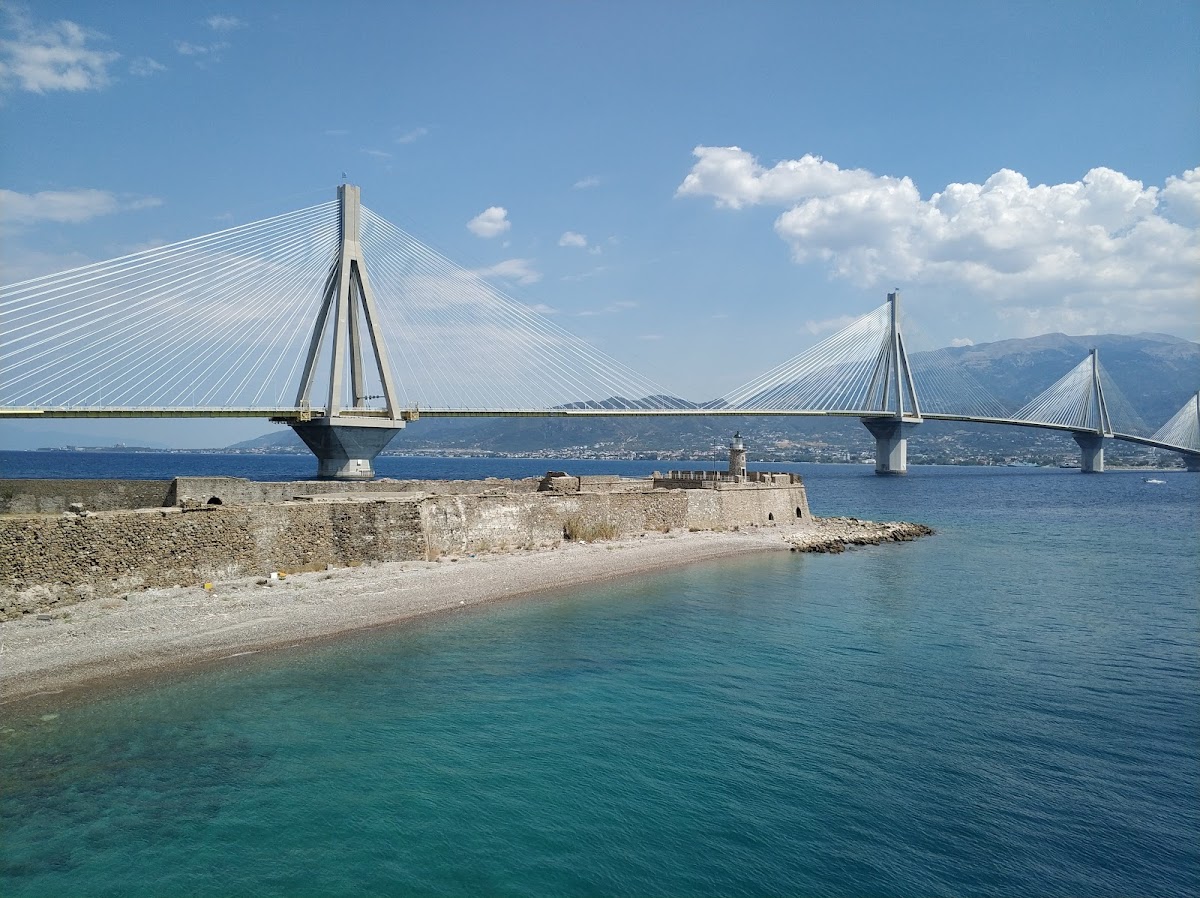
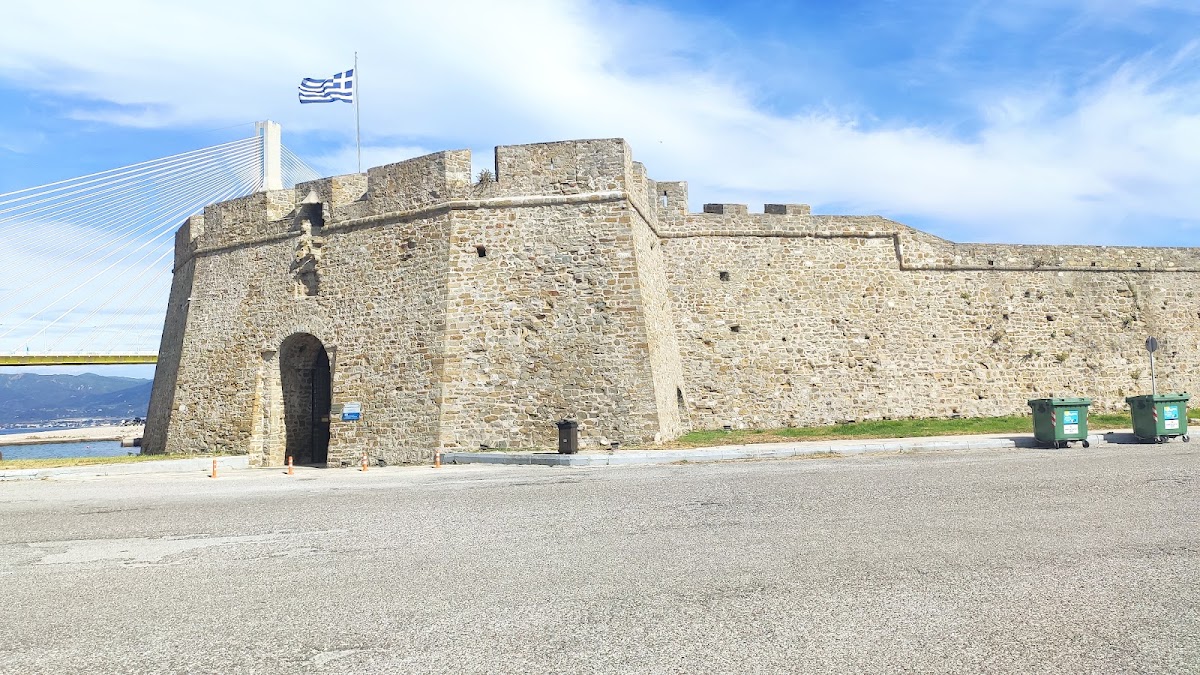
Today, the fortress stands at the southernmost part of Aitoloakarnania, beside the Rio-Antirrio Bridge. The Ministry of Culture makes it available for cultural events, including concerts and theatrical performances, during the summer season.
Remains
Fortifications and Waterfront Setting
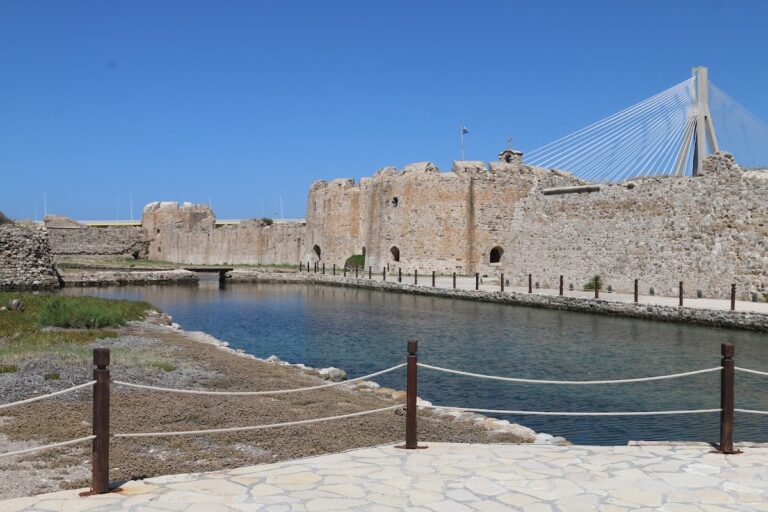
In its final form, Antirrio Fortress follows an approximately hexagonal plan influenced primarily by Venetian fortification architecture. Polygonal bastions, projecting fortified platforms designed to provide defensive fire along the walls and against attackers, occupy the corners. The sea surrounds the fortress on three sides, while a former seawater moat protected the landward side and separated it from the mainland. The moat is now blocked.
The walls rise approximately 8 metres and slope slightly inward. Cannon openings along them face the sea, reflecting the fortress’s control of the maritime passage. The central barred entrance lies on the northwestern side and opens into the fortress through an arched passage.
Interior and Associated Features
During the Ottoman period, the interior reportedly contained 89 houses, two mosques, and a Turkish bath, a bathhouse associated with Ottoman bathing culture. During the Venetian period, the fortress held 30 cannon. The northern end of the Rio-Antirrio Bridge stands immediately east of the fortress, and a lighthouse occupies its southern tip.
Nearby sites