Castello di Arzignano: A Medieval Fortress and Vicariate Seat in Italy


Site at a Glance
- Rating
- 4.5
- Popularity
- Low
- Country
- Italy
- Primary era
- Medieval
- External website
- Open
- Eras represented
- Medieval
- Civilizations
- Venetian
- Site type
- Military
- Remains
- Castle
On this page12 sections
History
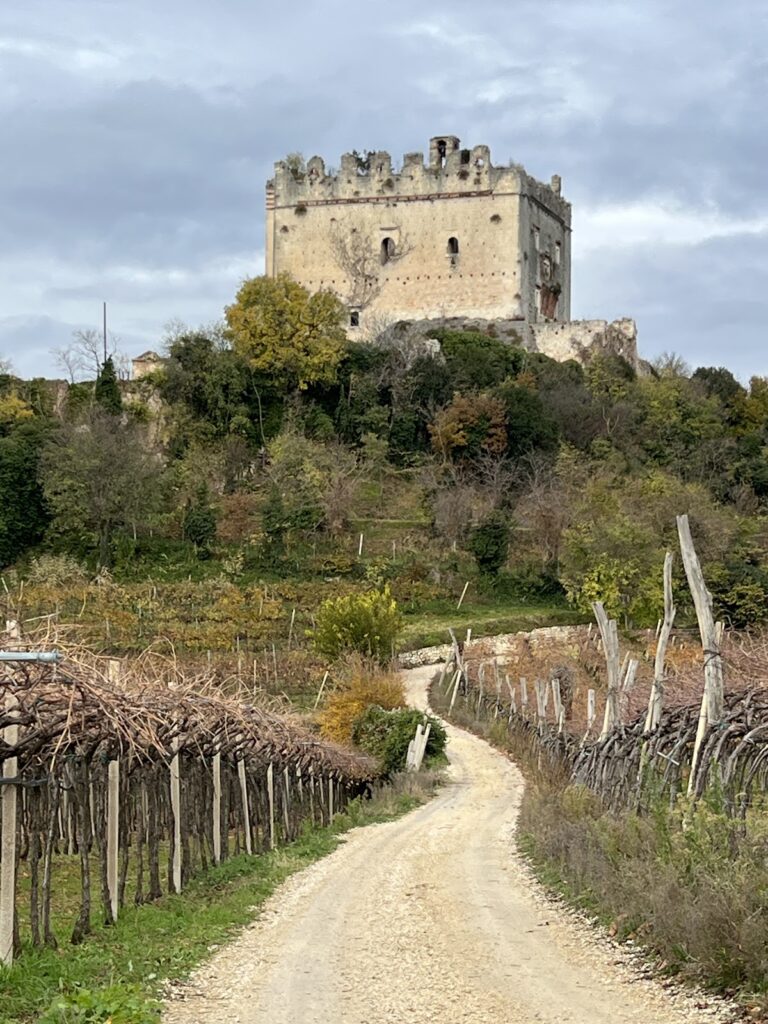
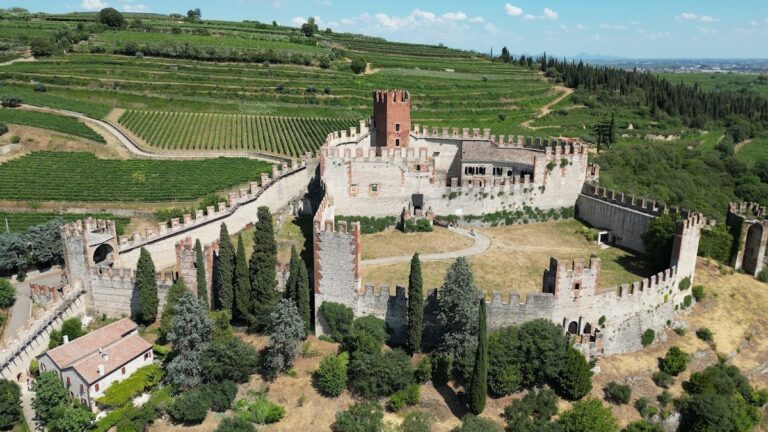
Castello di Arzignano is a medieval fortress in Italy, near the hamlet of Castello in Arzignano. It was built in the Middle Ages to defend the Pieve of Santa Maria, the principal rural church serving the surrounding district, and later became the administrative center of the area.
Early fortifications and the da Arzignano family
Between the tenth and eleventh centuries, Arzignano lay within a struggle for control between the counts and bishops of Vicenza. After the counts prevailed, they established an earlier castle on San Matteo Hill, probably occupied by descendants of the Maltraversi, a medieval noble family associated with the Vicenza area. The fortification helped protect the valley from armed groups commonly called Hungarians.
The present castle was built later in connection with the defense of Santa Maria, which had become the mother church of the surrounding area. The Maltraversi are regarded as ancestors of the da Arzignano family, although the exact family branch and the circumstances through which Egano acquired the title of count remain uncertain.
Egano da Arzignano settled at Arzignano and controlled the castle, while his brother Singofredo lived in Vicenza. Their political loyalties differed sharply. Egano was a Ghibelline, a supporter of the Holy Roman Emperor in the conflicts between imperial and papal parties, whereas Singofredo was a Guelph, who generally supported the papacy and the Church. After Egano was killed by his nephew Rosso, the people of Vicenza destroyed the castle in 1266 to prevent a Ghibelline revolt in Arzignano.
Scaliger, Visconti, and Venetian rule
During the fourteenth century, Arzignano joined resistance to the expanding Scaliger lordship. The Scaligeri were the ruling dynasty of Verona, which extended its power into the Vicenza region. Singofredo’s son Giacomino, supported by inhabitants of the Chiampo Valley, led forces against them. The conflict ended in 1339 with a Scaliger victory under Mastino della Scala.
The Scaligeri rebuilt and reorganized fortifications across their conquered territories. They also replaced earlier administrative arrangements first with captaincies and later with vicariates, administrative jurisdictions governed by an official representing the ruling power. The earliest testimony concerning the structures of the present castle dates to 1370.
In 1377, the Visconti of Milan attacked Scaliger territory. The Chiampo Valley and Arzignano Castle then passed under Visconti control, while the castle continued to serve as the administrative center of the surrounding area and the seat of the vicariate. Venice replaced Visconti rule in 1404. Arzignano retained its position as one of the thirteen vicariate seats, although Venetian administration focused chiefly on collecting taxes and tributes.
In 1436, the Visconti attempted to recover the territory and almost completely destroyed the castle. A plaque dated 1444 commemorates the restoration that followed. During the Venetian period, several rooms were remodeled as residential quarters for the Venetian Vicario. The fortress consequently ceased to function primarily as a military defense and became the official residence of the Vicario, while the mastio, the castle’s principal tower, remained his official seat until 1798.
The siege of 1413
One of the castle’s best-known historical traditions concerns the campaign of Sigismund of Luxembourg, King of Hungary. After meeting Venetian resistance while trying to travel to Rome for an imperial coronation, Sigismund hired Pippo Spano, whose real name was Filippo Buondelmonti degli Scolari. Pippo Spano was a condottiero, a professional military commander who led troops under contract. He entered Italy with 14,000 Hungarian cavalrymen and attacked Venetian territories and fortresses.
In 1413, after plundering the old manor at Chiampo, Pippo Spano reached Arzignano and demanded provisions. The inhabitants initially supplied them after receiving a promise of payment. They then attacked the retreating army near Altura as it prepared to cross the Guà River, recovered the provisions, captured 30 soldiers, and withdrew into the castle.
Pippo Spano besieged the fortress, expecting a rapid victory, but the defenders repelled repeated attacks. After a week, supplies inside the castle were running short, so the Venetian Vicario summoned the council of elders. The council devised a stratagem, while the inhabitants vowed to build a church dedicated to Saint Agatha, a Christian martyr traditionally associated with Catania in Sicily, if she helped free them from the Hungarian forces.
The defenders threw baskets of bread, wineskins, hay, and oats from the walls. The display led Pippo Spano to believe that the castle still held plentiful supplies. He abandoned the siege on 5 February 1413, Saint Agatha’s feast day. The eastern gate became known as Porta Calavena in memory of the oats lowered from the walls, and the steep road from the castle to the plain took the same name.
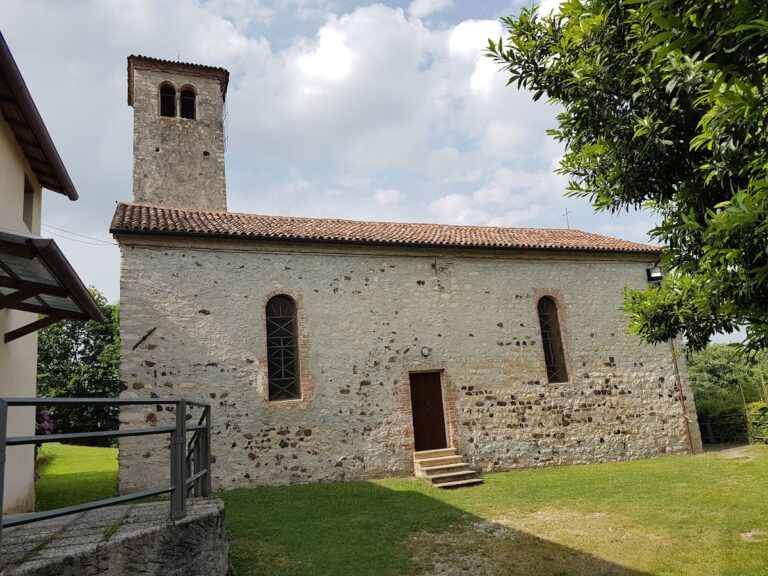
The church built in fulfillment of the vow is identified with the old church at Tezze. Every year on Saint Agatha’s feast, a municipal delegation led by the mayor travels from Castello to Tezze and presents the priest with an offering corresponding to the original promise, four pounds of wax and four silver ducats. During the procession along the ancient Calpeda road, residents still fire blank rounds in memory of the siege.
Later ownership
The property passed to the Church in 1800, and the parish priest has lived there since then. The current owner is identified as the Parish of Arzignano. Castello di Arzignano is also designated as Italian national heritage.
Remains
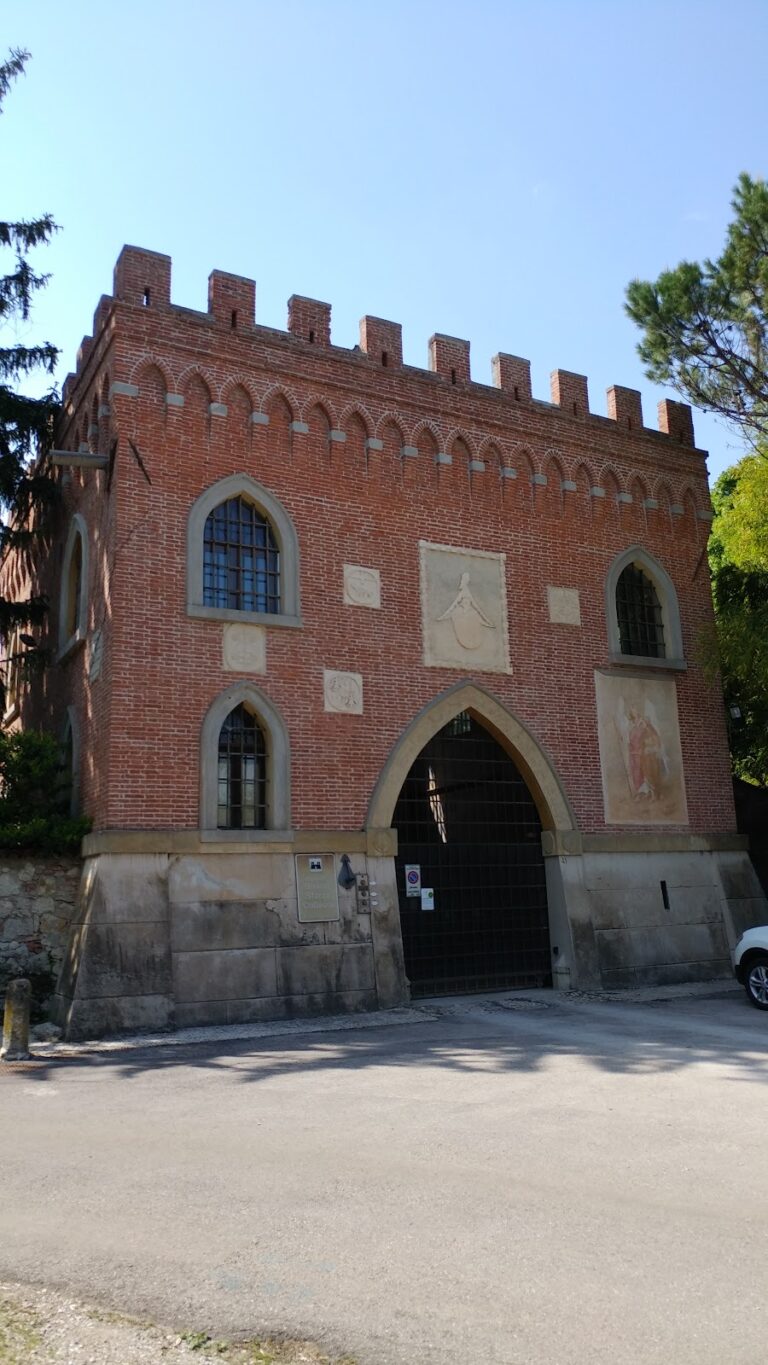
The surviving monumental complex is a brick-and-stone fortress on an elevated, steep site. Its general arrangement follows the structure shown in a 1618 drawing by the surveyor Girolamo Roccatagliata, titled Dissegno della Rocca et Castello d’Arzignano. The drawing presents the defended settlement as an enclosed complex organized around walls, towers, gates, religious buildings, communal structures, houses, and cultivated plots.
Defensive enclosure
Curtain wall and gates
The 1618 plan shows a partly intact curtain wall, a continuous defensive wall enclosing the settlement, equipped with 14 towers. Two gates structure the enclosure: Porta Cisalpina on the left of the drawing and Porta Calavena on the right. Porta Calavena is the eastern entrance associated with the tradition of the 1413 siege and with the memory of the oats cast from the walls.
Rocca and mastio
Within the castle enclosure stood the Rocca, a fortified stronghold placed on the highest and most defensible ground. Its highest tower was the mastio, the principal tower of the castle. The mastio was enclosed within the Rocca and connected with the rest of the castle through a gate. It later retained an official administrative function as the seat of the Vicario until 1798.
Settlement within the walls
Parish church and communal buildings
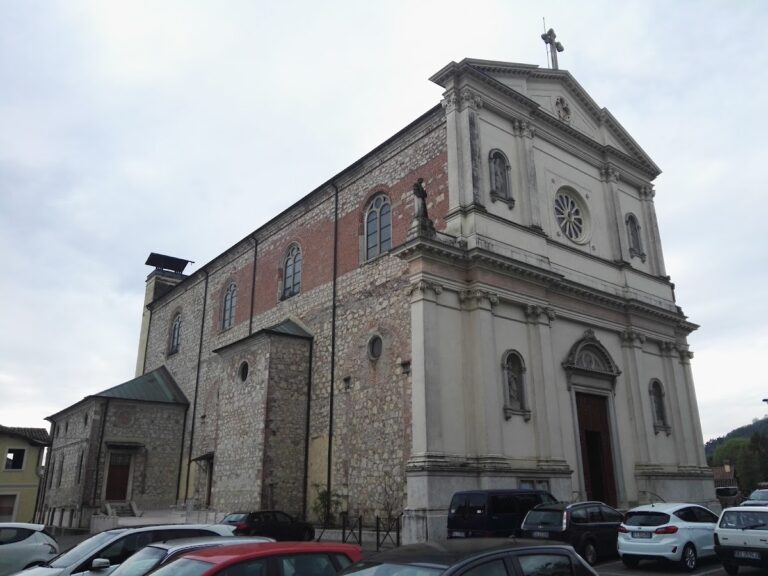
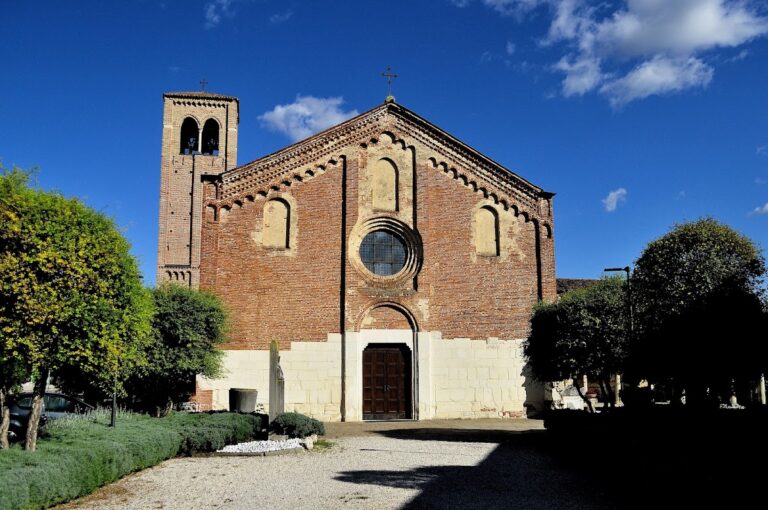
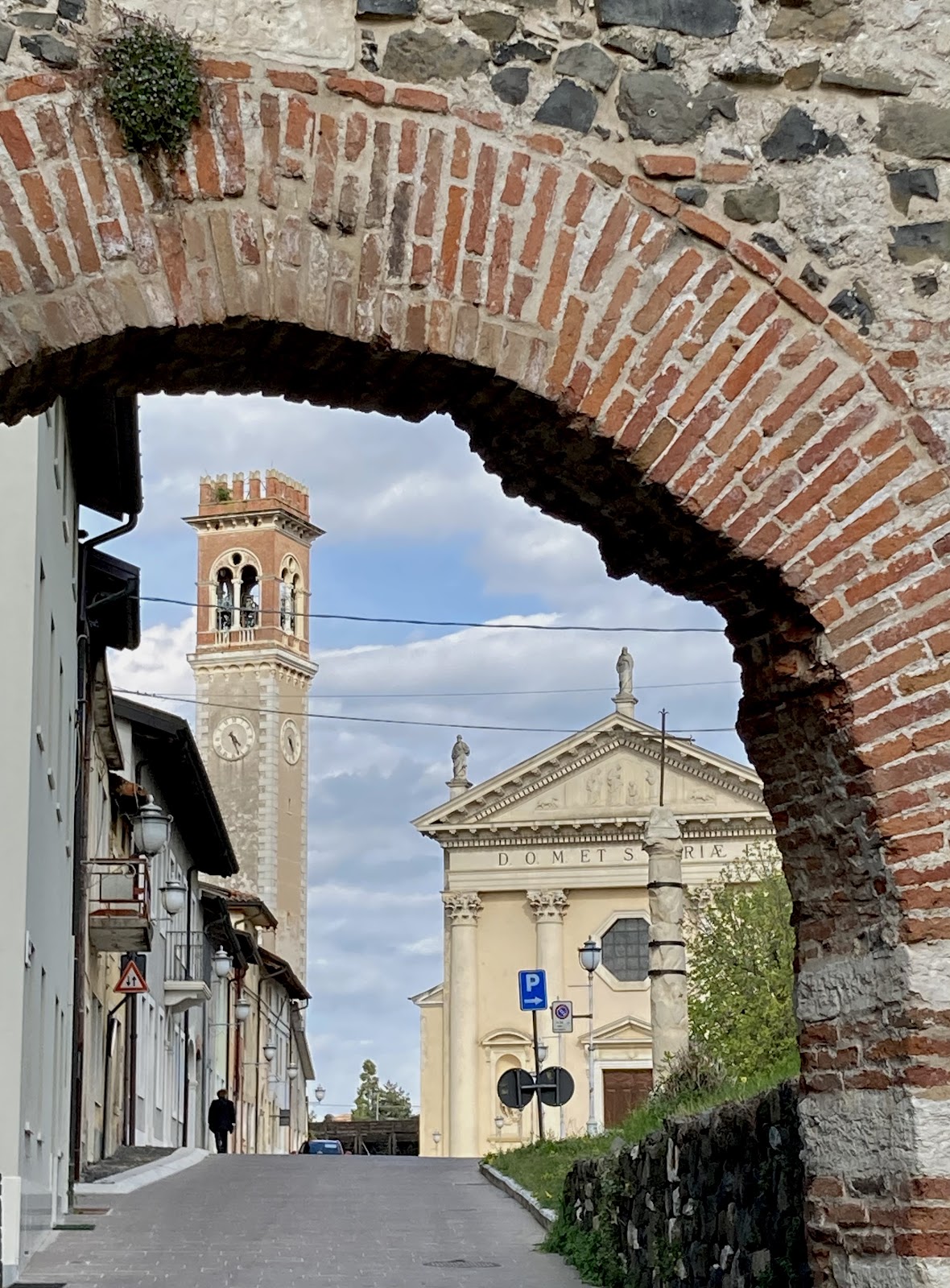
The settlement shown in the plan included the parish church of Santa Maria with its bell tower, communal buildings, and groups of houses. A separate description identifies the parish church as the Church of the Visitation of the Blessed Virgin Mary. Together, these buildings formed the religious and civic core of the enclosed community.
Houses and cultivated plots
Arable land was divided among different owners within the defended settlement. The named proprietors included Zanberto della Negra, Giovanni Zampiva, the noble Camillo di Ferrari Cancelliero, Francesco Rudello, Giacomo, Girolamo Balsemini, Pietro Cavina, and Marco Duro. The houses also provided the setting for the convicinia, an assembly in which heads of families made important decisions for the community.