University of Graz: A Jesuit-Founded University in Austria
Site at a Glance
- Country
- Austria
- Primary era
- Modern
- Eras represented
- Modern
- Civilizations
- Austria-Hungary, Duchy of Styria, German, Habsburg
- Site type
- Civic
- Remains
- University
On this page21 sections
History
Foundation and Jesuit era
The University of Graz in Graz, Austria, was founded on 1 January 1585 by Archduke Charles II of Inner Austria as a Jesuit-led institution during the Counter-Reformation, the Catholic Church’s response to the spread of Protestantism. It was intended in part to discourage Styrian citizens and nobles from attending Protestant universities elsewhere in the Holy Roman Empire. Papal and imperial confirmations granted the university autonomy and special judicial and tax privileges, supporting its aim of educating students across social classes.
On 14 April 1586, the university’s foundation charter, scepter and seal were ceremonially given to Father Heinrich Blyssem, the Jesuit provincial superior, or regional head, and the first rector. Although Charles II had envisaged four faculties, the institution opened with Theology and Arts. Theology was intended to prepare Catholic clergy, while Arts covered the liberal arts and philosophy.
In 1607, teaching moved to a building erected by Archduke Ferdinand II, known as the Old University. Plans to establish law and medicine faculties were discussed from the early seventeenth century, but the Jesuits resisted them for more than a century. From 1648, the Styrian estates, representative bodies of the province’s privileged social orders, nevertheless paid for a one-year course in Roman law.
State reform and restoration
The state took control after the Jesuit order was abolished in 1773, and secular clergy replaced Jesuits in the Theology Faculty. Education was redirected toward preparing loyal civil servants and teaching practical subjects. A Law Faculty opened in 1778. In 1782, Emperor Joseph II downgraded the university to a lyceum, an advanced school without the full status and privileges of a university. Medical and surgical instruction began in Graz, but law and medicine remained limited to lower-level courses, and only theology and philosophy students could earn doctorates.
After Joseph II’s death, the Styrian estates pressed for the university’s restoration. Emperor Francis I re-established it in 1827, the second foundation reflected in its traditional full name, Karl-Franzens-Universität Graz. The restored institution changed little beyond granting law graduates the right to doctoral degrees. It had 23 teaching staff and made limited progress before 1848.
Academic freedoms and campus expansion
In 1848, students and professors called for an end to censorship, greater freedom to teach and study, and university autonomy influenced by the ideas of Prussian scholar and statesman Wilhelm von Humboldt. On 3 April, the Styrian parliament granted some of their demands; new study regulations and faculty programs followed. The Medical Faculty was established in 1863, restoring the university’s full range of faculties.
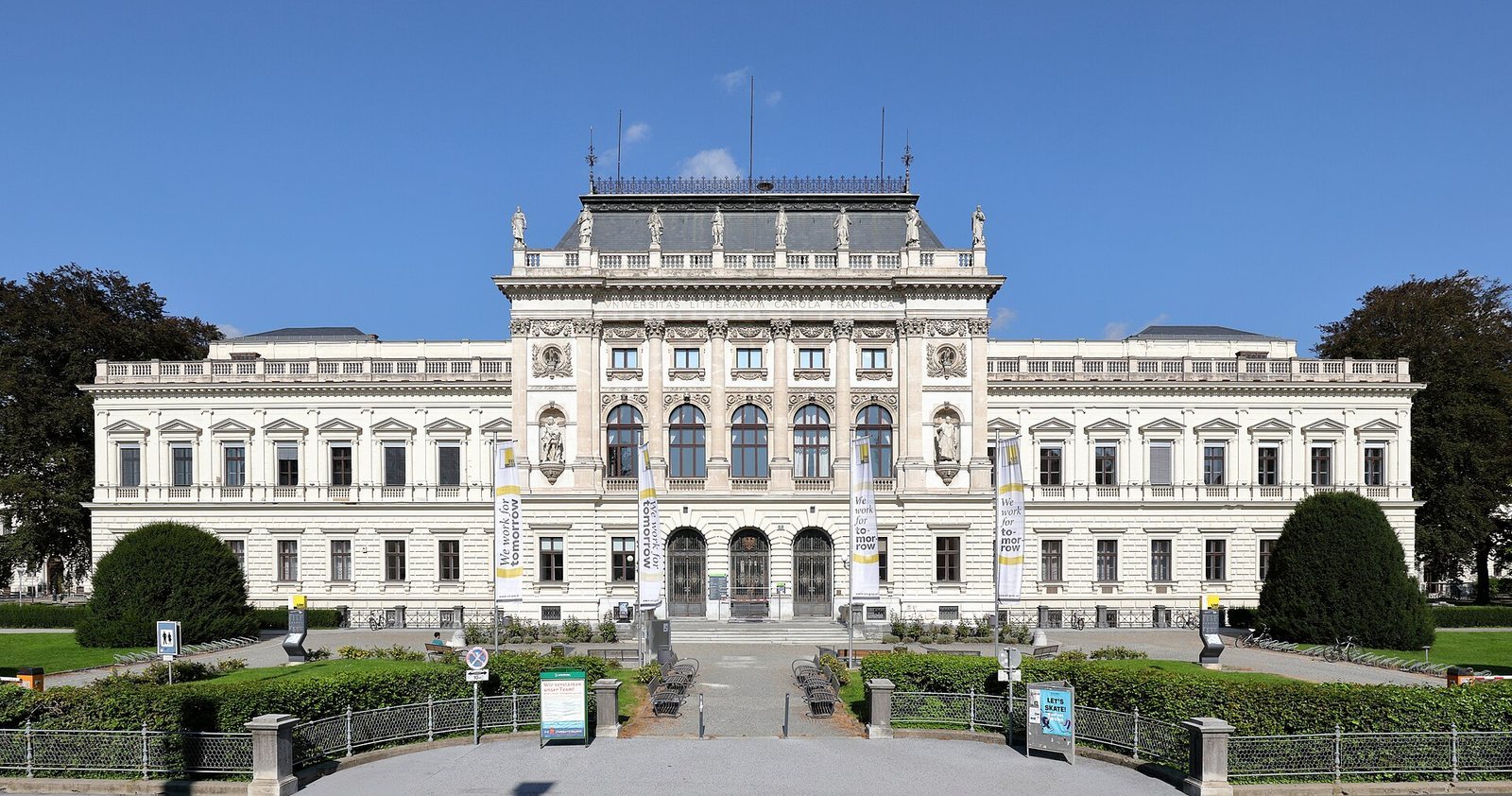
A campus project was approved in 1871. Opposition from the city government stopped a proposal to build in what is now Stadtpark, and development instead proceeded on the present campus. Its first new building was occupied in 1872, and the main building opened in 1895. The university acquired additional land through 1914. Medical teaching moved to new clinics on the grounds of the Graz provincial hospital in 1912, while expansion plans made the following year were abandoned when the First World War began.
Before the war, researchers at Graz included Ernst Mach, Ludwig Boltzmann, Albert von Ettingshausen and Hans Groß. Victor Franz Hess, later known for discovering cosmic rays, received his doctorate there in 1906. Seraphine Puchleitner became the first woman admitted to study at the university in 1898 and earned its first doctorate awarded to a woman, in geography, in 1902. In 1905, Oktavia Aigner-Rollett became the first woman in Graz to earn a doctorate as a practicing physician.
Political conflict and authoritarian rule
The First World War brought a steep fall in student numbers and a severe reduction in university funding. Austerity continued in Austrian universities for almost 50 years. In the early years of the First Austrian Republic, established after the Habsburg monarchy collapsed in 1918, Graz focused chiefly on Austrian students and merely tolerated foreign students. The university formed a Senate Committee for Political Issues to establish its position on political questions.
Student representation elections began in 1919. German nationalist and Catholic groups competed, while both opposed socialist students. A list identified as National Socialist first ran in 1924/25; openly National Socialist students from the National Socialist German Students’ League stood in the 1930/31 election. During the Great Depression, a 1931 campaign against Austria’s provincial universities raised the prospect of closing Graz. Protests followed, but cuts to academic staff went ahead. In 1933, university autonomy and student bodies were abolished amid conflict with the government and concern about National Socialist influence among students.
From the winter semester of 1933/34, the university came under Austria’s Austro-Fascist government, the country’s authoritarian regime from 1933 to 1938. A third of its professorships were affected by purges, and students faced disciplinary proceedings. From 1935, examinations were used to test whether students had been educated in a “patriotic community”; about one-fifth failed. Erwin Schrödinger, Otto Loewi and Victor Franz Hess nevertheless conducted research at Graz before 1938.
Nazi rule and persecution
After Nazi Germany annexed Austria in 1938, the universities were brought under the regime’s control. Rector Josef Dobretsberger resigned on 12 March under pressure from National Socialist students and teachers. His interim successor, Adolf Zauner, sent Adolf Hitler a message welcoming the union with the German Reich on 15 March. In April and May, the regime suspended or restricted the teaching rights of 21 staff members, including Hess and ancient historian Franz Schehl. The university dismissed Loewi and David Herzog because of their Jewish heritage, and Schrödinger was forced to leave. A further purge followed under a June civil-service order. By the end of Nazi rule, 20 professors, 14 lecturers and 13 assistants had been dismissed.
Students were also persecuted and expelled on racial and political grounds. Enrollment fell from 2,015 in the winter semester of 1937/38 to 1,422 in the summer semester of 1939. Jewish students could not enroll for the summer semester of 1938, though until that semester ended they could sit final examinations and receive degrees without public ceremonies. After the November 1938 pogrom, Jews were excluded from universities entirely. A wartime ban on recruiting students to attend university contributed to a further decline in Graz.
The university’s name changed to Karl-Franzens University of the Reich at Graz in 1941 and University of the Reich at Graz in 1942. After the Second World War, the Allied authorities made democratization and the removal of Nazi influence priorities. In 1946, only nine of 79 serving professors and private lecturers, academics qualified to teach at university level without professorships, were judged untainted. The process had stalled by 1947, and a 1948 amnesty allowed former Nazis to resume university careers. Professors expelled before the war were not invited back.
Postwar reform and new research
After 1955, the university retained a traditional organization until rising student numbers and reforms led to the University Organization Act of 1975. The act broadened Senate representation to include non-professorial academic staff, students and general staff. It separated Natural Sciences from the Faculty of Philosophy and divided social sciences and law into distinct faculties. A 1993 amendment strengthened university autonomy and transferred budget responsibility to universities.
The University Act of 2002 reshaped governance by establishing a University Council alongside the Senate and Rectorate and providing for separate medical universities. Graz’s Medical Faculty became the independent Medical University of Graz on 1 January 2004. The act also provided a basis for the gradual replacement of diploma courses with bachelor’s and master’s degrees. By 2024, law and Catholic theology were the only fields still offering diploma programs. University buildings were transferred to the Federal Real Estate Company, which leases them to universities.
A 2005 European Court of Justice ruling prevented Austrian universities from applying an enrollment cap to German school-leavers when Austrian students faced no equivalent restriction. Graz responded with entrance examinations for several oversubscribed programs and reserved 75 percent of places for applicants with an Austrian school-leaving certificate. In 2007, the university established a sixth faculty, Environmental, Regional and Educational Sciences. The Wegener Center for Climate and Global Change, founded in 2005, became one of its institutes in 2013. The university’s longstanding focus on Southeast Europe also supported the creation of an interdisciplinary center for Southeast European studies in 2008. A department of Slovene language and literature laid foundations for scholarly study of Slovenian culture, literature and language.
In autumn 2022, the university began building a facility at the Sermilik Research Station in East Greenland. A new building was completed in 2023 and became available to polar researchers in spring 2024. Demolition of the university’s pre-clinical building began in autumn 2023 to make way for the planned Graz Center of Physics, intended to house physics institutes from the University of Graz and Graz University of Technology.
Around the turn of the twentieth century, Graz was a center of the Graz School of psychology and philosophy, founded by Alexius Meinong and Christian von Ehrenfels. Meinong’s object theory held that objects of thought could possess properties even when they did not exist. The school influenced Gestalt psychology, which studies how people perceive organized wholes, and phenomenology, a philosophical approach to structures of experience.
Confronting the Nazi-era past
After the Second World War, the university largely avoided discussion of its Nazi-era history. Denazification brought little change, while antisemitism before the war had affected both hiring and student life. More critical reassessment began in the 1960s and 1970s, although honors continued to be awarded to people with Nazi ties. At a 1973 university celebration of Otto Loewi’s centenary, his scientific work received attention, while his expulsion was mentioned only briefly.
Renovation work in 1977 again exposed Nazi-era frescoes by Franz Köck in the student union building. The university chose to retain them as a memorial and subject them to an artistic intervention rather than cover them again. The 1984 “memorial plaque affair” became a turning point in public debate. For the university’s 400th anniversary, an umbrella organization of German nationalist student fraternities placed a plaque outside the auditorium commemorating victims of “political arbitrariness” between 1934 and 1955. Protesters challenged its wording and the use of the anniversary; the plaque was covered in November. The Senate rejected the inscription and adopted revised wording that included victims of war and dictatorship.
An independent historians’ commission began investigating the university’s involvement with the Nazi regime in 1998, and its findings informed restitution and public commemoration. The university established a Center for Jewish Studies in 2000. From 2008 to 2017, 127 books looted during the Nazi period were returned from the university library to their rightful owners. In November 2023, stumbling stones were installed on the campuses of the University of Graz and the Medical University of Graz to commemorate victims of the Nazi period.
Remains
The university’s physical sites include a main campus covering more than 130,000 square metres, specialist facilities elsewhere in Graz, and research stations beyond the city. The main campus is one of the largest green spaces in central Graz and combines the main building with faculty, research, sports and botanical facilities.
Main campus
Main building and faculty facilities
The main building forms part of the campus developed from the late nineteenth century. At the campus’s eastern side, the ReSoWi complex houses the Faculties of Law and Social Sciences. The University Center for Theology lies east of ReSoWi and contains all institutes of the Catholic Theology Faculty. The Center for Molecular Biosciences occupies the northern part of campus.
Botanical Garden
The university’s Botanical Garden covers about 2.8 hectares, including 1,500 square metres of greenhouse space. It contains approximately 7,500 plant species.
University Sports Center
At Rosenhain, the University Sports Center has five halls, one of them an indoor running hall. Its outdoor facilities include three tennis courts, two beach-volleyball courts, an athletics track, a hard court and a football field.
Other university facilities
Wall Library Center
About 1.1 kilometres south of the main campus, the Wall Library Center houses specialist libraries for Romance studies, Slavic studies, education and translation studies, together with the Institute Library for Linguistics.
Solar observatory and polar research station
The university operates the Kanzelhöhe Solar Observatory at the summit of the Gerlitze in Carinthia. Its four telescopes are used to observe the Sun. The university also operates the Sermilik Research Station in East Greenland jointly with the University of Copenhagen. Its building can accommodate up to 25 researchers and is usable throughout the year.
Historic buildings and memorials
Old University
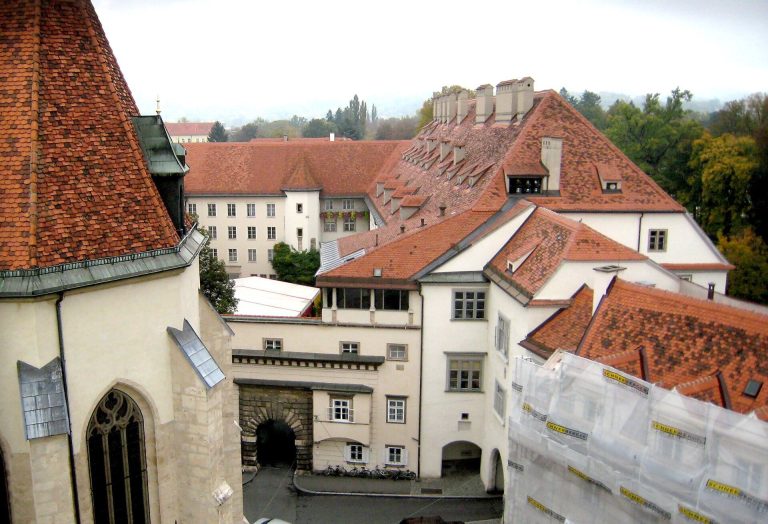
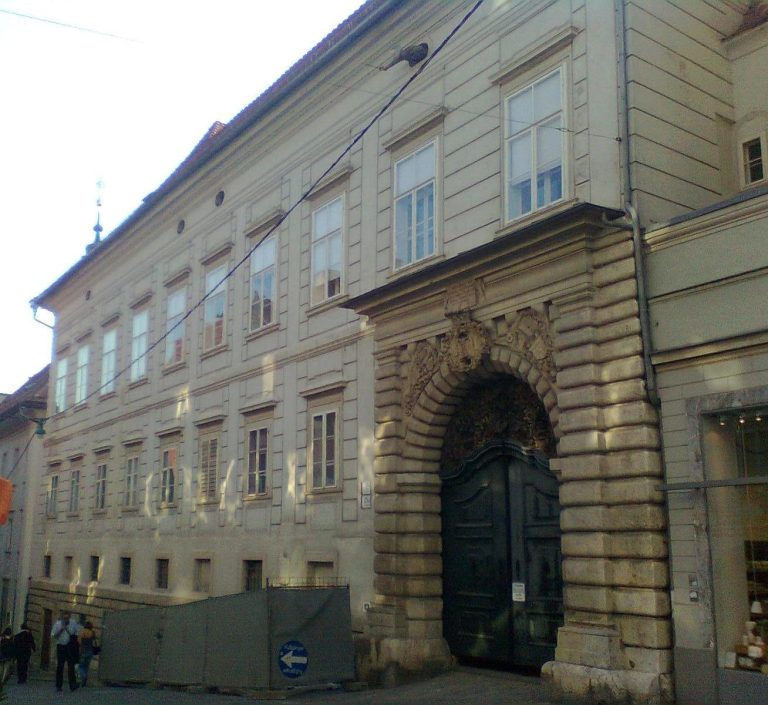
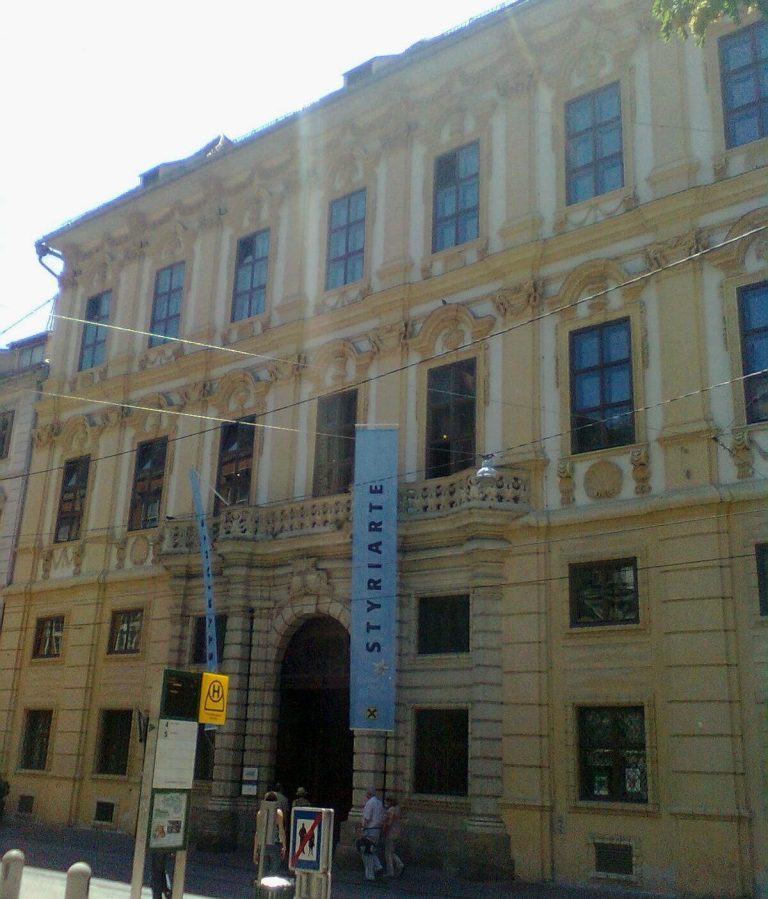
The Old University stands at the corner of Hofgasse and Bürgergasse in central Graz. It was originally freestanding and was later joined to the college to form one complex. Classes occupied the ground floor, while two large rooms upstairs served as an auditorium. The building remains virtually unchanged and is used by the Styrian provincial government for representative purposes.
Leechkirche
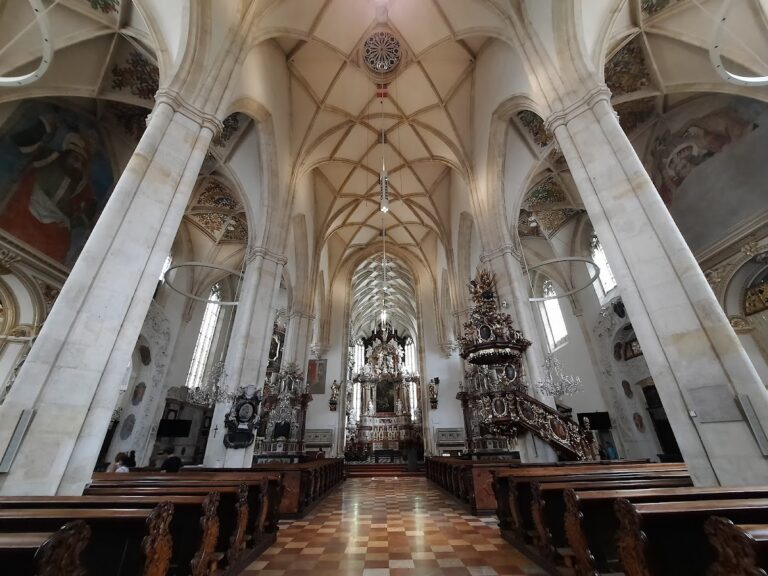
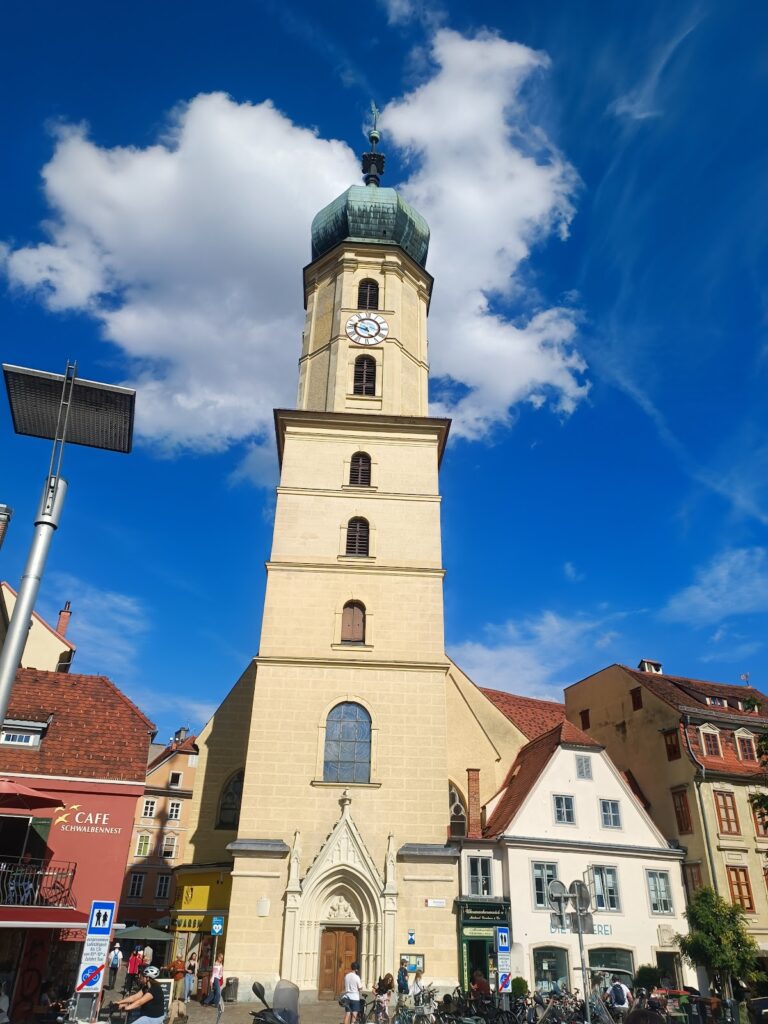
The Leechkirche has served as the university church since 1985.
Fresco and auditorium memorials
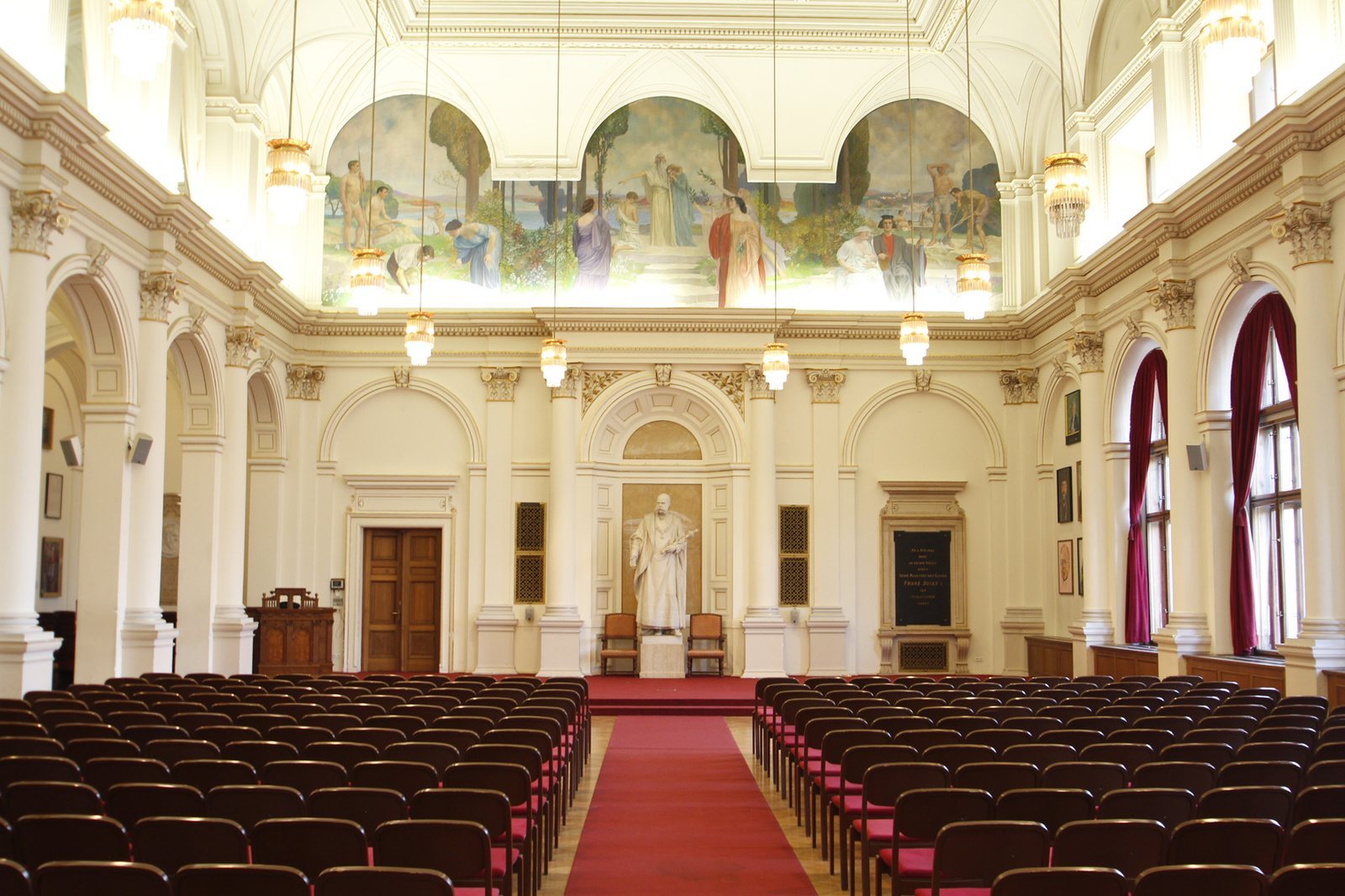
The student union building’s fresco was commissioned in honor of National Socialist students and is now retained as a memorial to the university’s Nazi-era past. A Plexiglas panel in front of it carries headings written by historian Helmut Konrad and artist Richard Kriesche. In the university auditorium, the revised memorial plaque places its commemorated victims in the broader context of war and dictatorship. A portrait of rector Karl Polheim, who held office from 1939 to 1945, was removed from the auditorium after the war.
Stumbling stones
Stumbling stones on the University of Graz campus serve as physical memorials to victims of the Nazi period.