Yusupov Palace, Koreiz: An Aristocratic Estate and Soviet State Residence
Site at a Glance
- Country
- Ukraine
- Primary era
- Modern
- Eras represented
- Modern
- Civilizations
- Russian
- Site type
- Domestic
- Remains
- Elite Residence
On this page13 sections
History
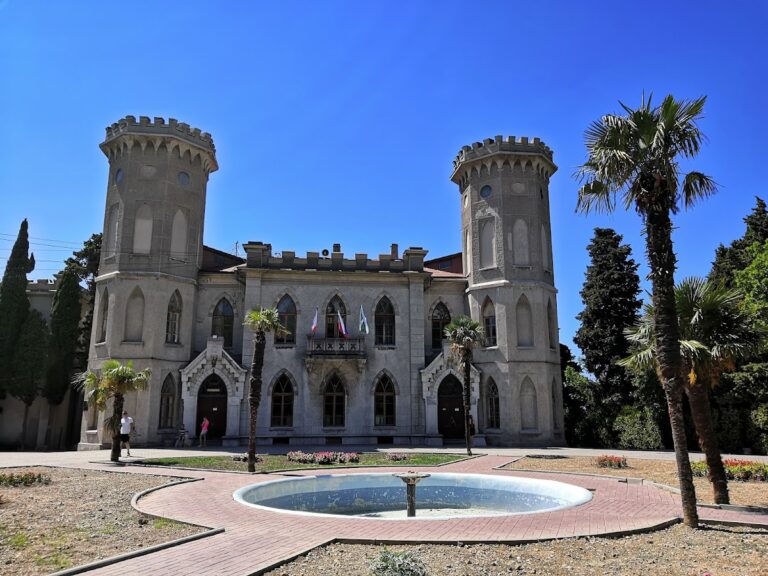
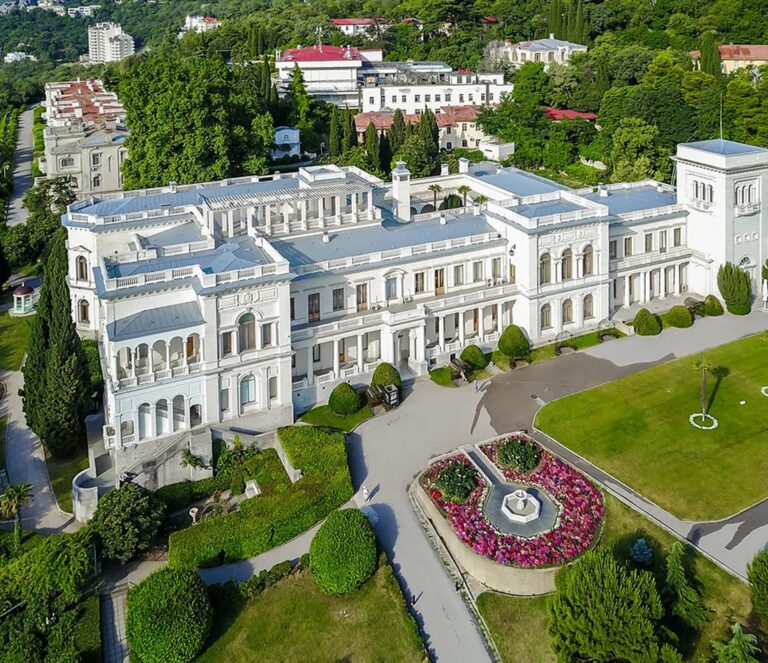
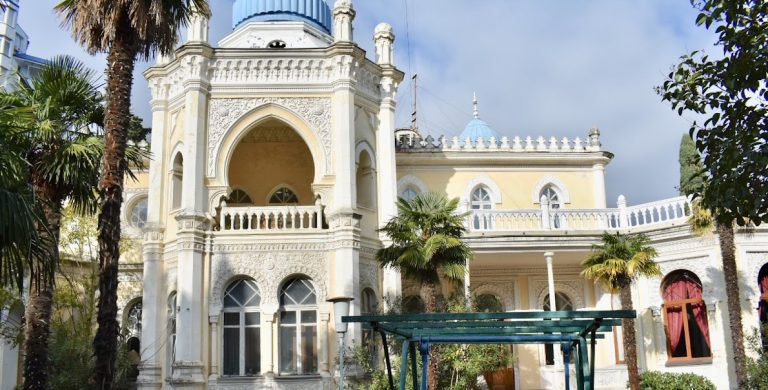
Yusupov Palace, Koreiz, is an aristocratic residence in Ukraine, rebuilt in 1909 by Yalta architect Nikolay Krasnov for Prince Felix Felixovich Yusupov Sr. and Princess Zinaida Yusupova. Its eclectic design combines Neo-Romanesque forms, inspired by medieval Romanesque architecture, with Italian Renaissance elements, associated with a major cultural and artistic movement that began in Italy. The Yusupovs were among the Russian Empire’s wealthiest and most influential aristocratic families.
From Golitsyna estate to Yusupov palace
Before the palace, the site was occupied by the Pink House, an estate belonging to Princess Anna Sergeyevna Golitsyna. The property later passed to winemaker Morozov, from whom Yusupov Sr. purchased it in 1880. Krasnov’s 1909 rebuilding transformed the house into the Yusupov family’s palace. In autumn 1912, Felix Yusupov Jr. became engaged there to Princess Irina Alexandrovna, a niece of Emperor Nicholas II.
Revolution and evacuation
The palace survived the 1917 Revolution intact. After the October Revolution, Felix Yusupov Jr. and his wife remained there for a time. His part in the killing of Grigori Rasputin helped him survive the revolutionary terror. On 13 April 1919, the British battleship Marlborough evacuated the last members of the Romanov imperial family, along with the Yusupov family, from Russia.
Soviet retreat and the Yalta Conference
In the 1920s, the state nationalized the palace and assigned it to the All-Russian Extraordinary Commission, an early Soviet political-police body. It became a rest home for the commission’s staff, designated State Dacha No. 4. A dacha is a country house or seasonal retreat. Felix Dzerzhinsky stayed at the palace in 1925–1926.
The palace escaped damage during the Second World War. At the 1945 Yalta Conference, a meeting of Allied leaders to discuss the postwar order, it served as the residence of the Soviet delegation led by Joseph Stalin. Foreign ministers met there, and a formal lunch was held in honor of U.S. President Franklin D. Roosevelt and British Prime Minister Winston Churchill.
Postwar use and changing administration
After the war, the palace became a retreat for the Central Committee of the Communist Party of the Soviet Union, the party that governed the country. Soviet party and state officials, as well as leaders of foreign communist parties, used the residence. During Mikhail Gorbachev’s perestroika, a period of Soviet reform, the previously restricted property opened to visitors and passed to the Yalta city council.
In 1997 the palace-and-park complex was leased to Yalita-T for 25 years, but a court invalidated the lease nearly four years later. The city council subsequently transferred the complex to state ownership and presidential-administration management. It returned to closed state-residence use in 2002. The complex received Ukrainian local-importance architectural-monument status during the lease and is also registered as a regional cultural-heritage property in Russia. After it became restricted again, heritage officials seeking entry were told the site was closed to them; the legally required conservation agreement had not been concluded.
From 1991 until March 2014, the palace was managed by the Ukrainian president’s affairs administration. Following Russia’s annexation of Crimea in March 2014, it became a special complex of the Russian presidential administration. On 21 October 2014, the Crimean Council of Ministers decided to grant that administration free use of properties previously managed by its Ukrainian counterpart.
Remains
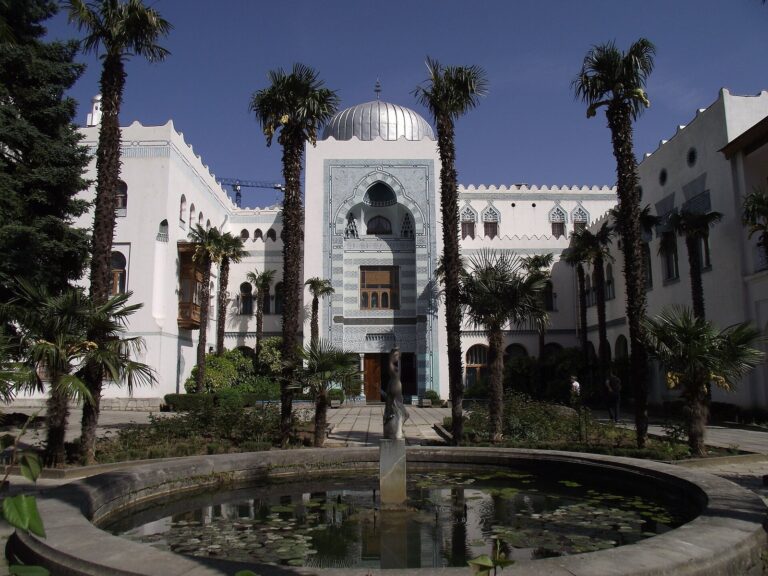
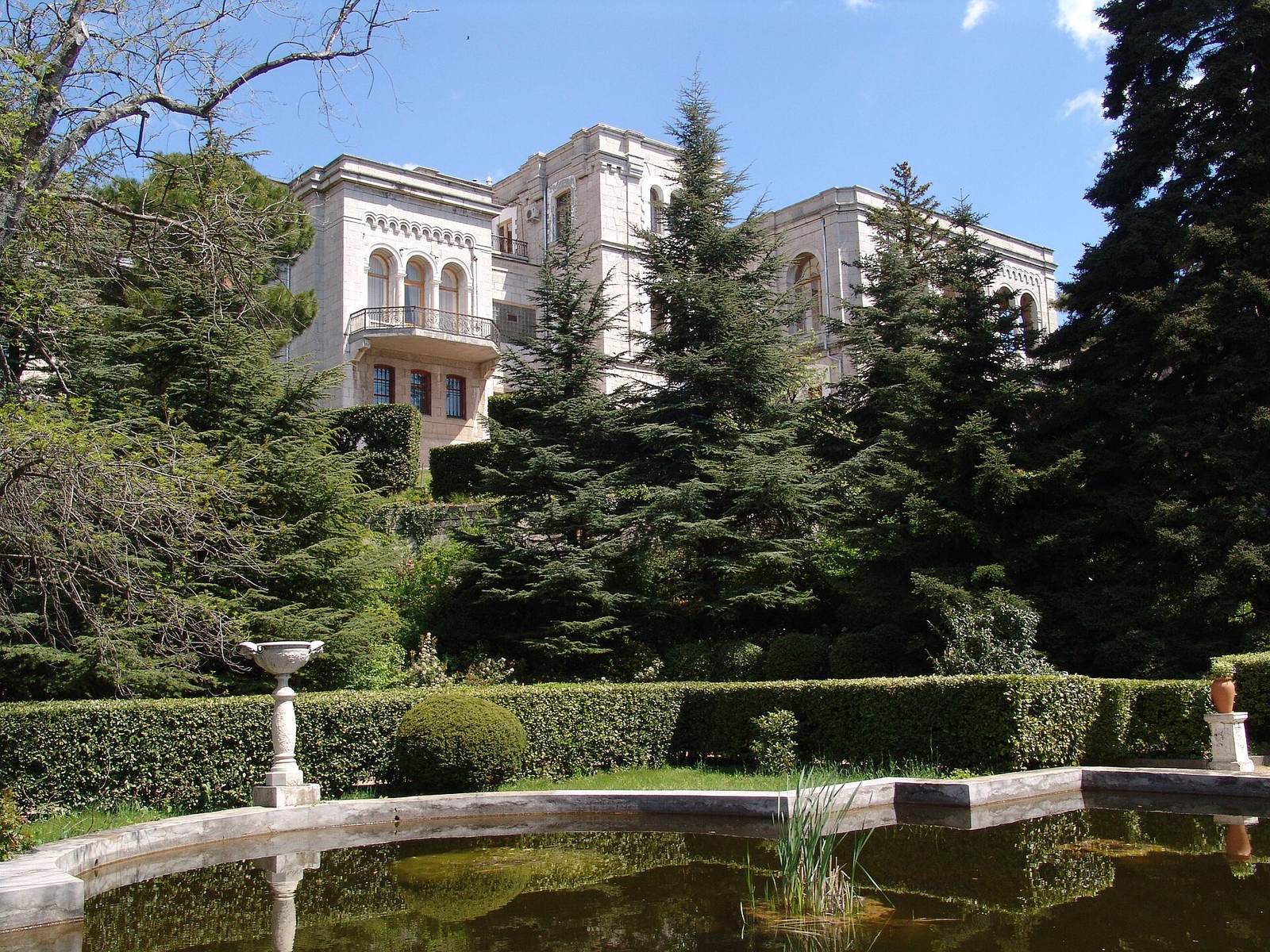
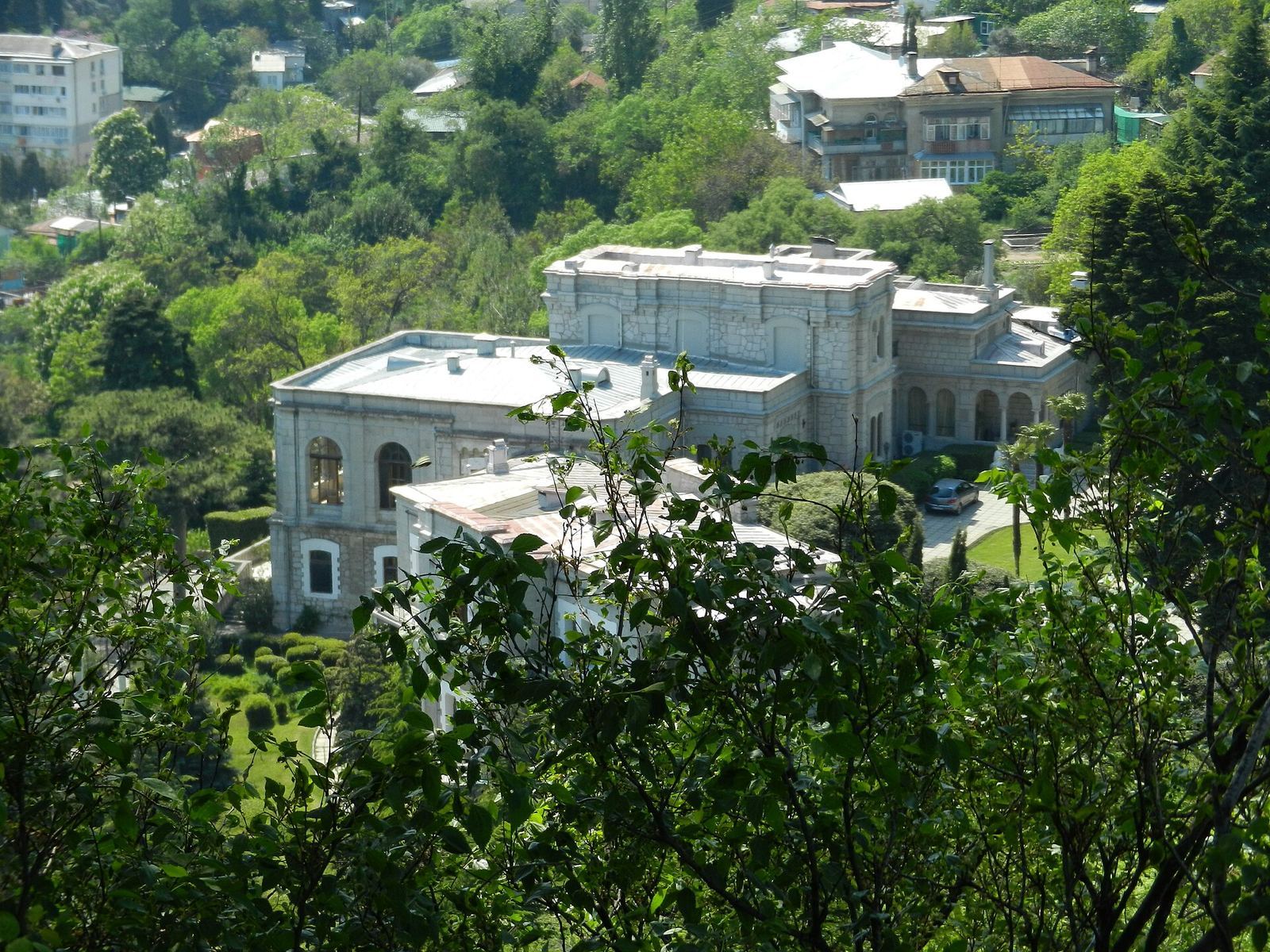
The complex brings together the main villa, a landscaped park, secondary buildings and other historic properties. Its eclectic palace design combines Neo-Romanesque and Italian Renaissance features, while the entrance and interiors retain sculpture and furnishings associated with different periods of use.
The palace
Entrance and exterior
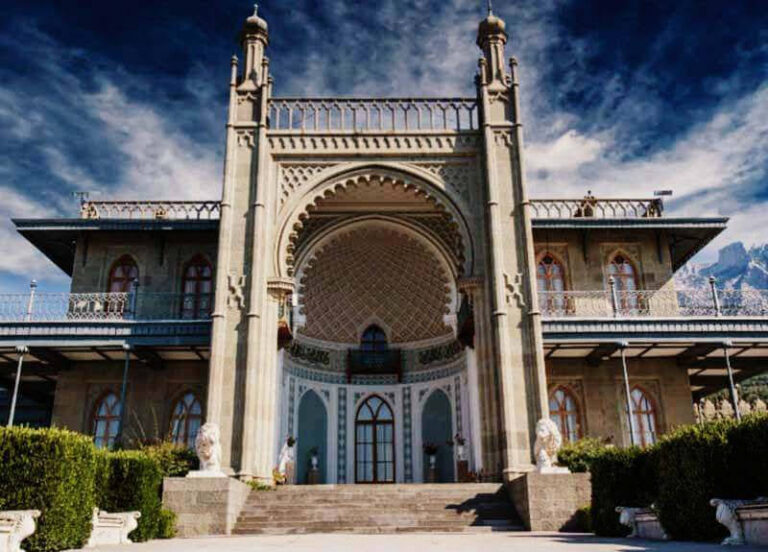
Marble sculptures of lions and figures from ancient Greek mythology decorate the stair landings and arches at the entrance. The sculptures were brought from Venice.
Interiors
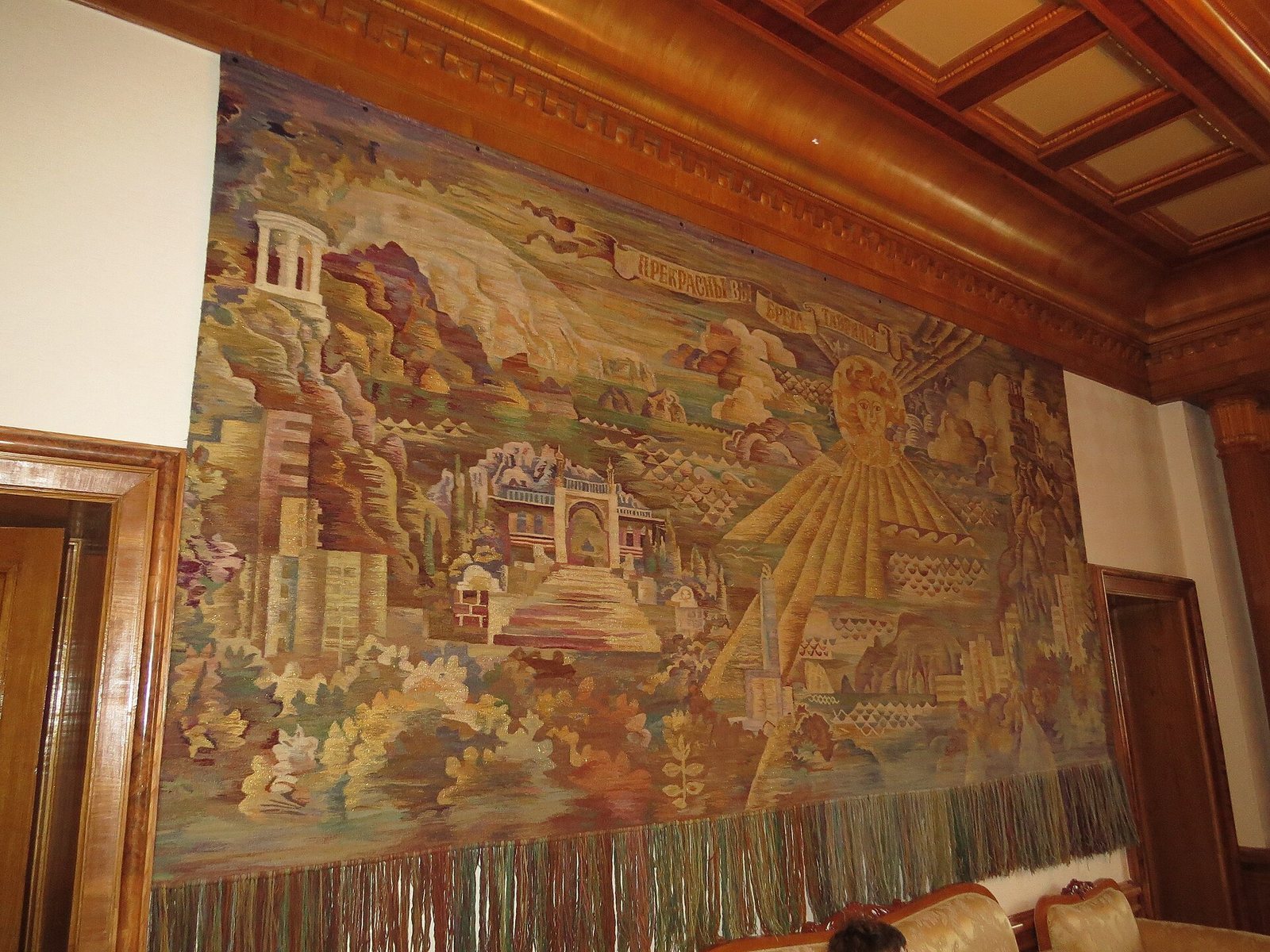
Most of the interiors follow Art Nouveau, a decorative style popular around the turn of the twentieth century. White enamel panels, shelves for porcelain and bronze sculpture, Vienna chairs and corner sofas furnish these rooms. The owner’s study has a different character, with an old French tapestry, a large writing desk, a cabinet and smoking chairs. A billiard table and writing desk associated with Stalin’s use of the palace also survive.
Park and associated buildings
Palace park
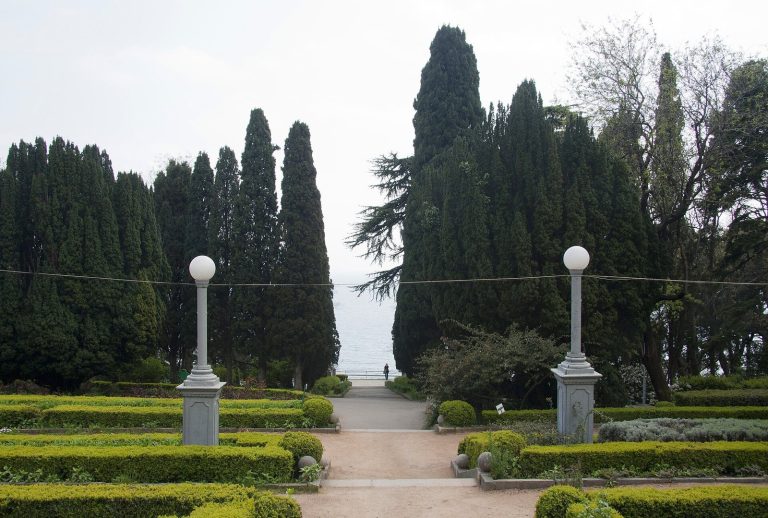
Landscape gardener Karl Kebach laid out the 16.5-hectare park. It contains about 7,500 plants, including roughly 200 species of ornamental trees and shrubs, 32 of them rare. The park also has 155 trees described as between 100 and 500 years old.
Estate and related structures
The estate group includes a small house in front of the main villa, a kitchen, park structures, a former bathhouse and a pavilion with several rooms on its lower floor. The broader complex also encompasses Princess Golitsyna’s manor house, a countess’s dacha, a fountain and a caravanserai, an inn along caravan routes that accommodated travelers and their animals. These properties were included in the complex’s inventory but were not part of the state dacha.
Wine cellar
The wine cellar is associated with Prince Lev Galitzine, a Russian prince and winemaker who founded it in the nineteenth century.