Heeswijk Castle: A Historic Motte-and-Bailey Castle in North Brabant, Netherlands
Visitor Information
Google Rating: 4.5
Popularity: Medium
Official Website: www.kasteelheeswijk.nl
Country: Netherlands
Civilization: Early Modern, Medieval European, Modern
Site type: Military
Remains: Castle
History
Heeswijk Castle was established around 1080 near the River Aa in North Brabant, Netherlands. It began as a motte-and-bailey water castle, built on an artificial hill to control river traffic and serve as a defensive stronghold. The castle’s location on a river bend provided both economic advantages and military protection.
In the 12th century, the castle was owned by Amelricus van Heeswijk. By the early 14th century, the Bentheim family held the castle, with Walraven van Bentheim recorded in 1308. Over the following centuries, ownership passed through several noble families, including the Counts of Megen, van der Aa, van der Lek, de Bousies, van Glymes, and Ostfriesland.
Between the 14th and 16th centuries, Heeswijk Castle was involved in regional conflicts. It resisted attacks by forces from Guelders and Jülich in 1371-1372 and withstood a siege during the Guelders wars in 1512-1513. These events underscored the castle’s strategic importance in local power struggles.
During the Eighty Years’ War, the castle changed hands multiple times between Dutch republican and Spanish forces. In 1601, Maurice of Nassau laid siege to the castle, which ended when the Spanish garrison secretly abandoned it. The castle remained under Spanish control until the 1609 truce. In 1629, Frederick Henry of Orange captured Heeswijk Castle, aiding his campaign against the city of ’s-Hertogenbosch.
After 1647, the castle passed through various owners, including the Tilly family. In the 17th and 18th centuries, prominent figures such as Dirk van Cattenburgh, Jonkheer Matthijs van Asperen, and Cornelis Speelman, Governor-General of the Dutch East Indies, owned the castle. Notably, in 1672, King Louis XIV of France stayed at Heeswijk Castle during his military campaign against the Dutch Republic.
In the late 18th century, the castle served as headquarters for French General Pichegru during the Revolutionary Wars. The French period also saw the abolition of feudal rights associated with the castle. By the early 19th century, the castle had fallen into disrepair.
In 1834, Baron Andreas van den Bogaerde van Terbrugge, then governor of North Brabant, purchased the castle and began extensive restoration and expansion. He added an armory and the “Iron Tower” to house his collection of art and curiosities. His family expanded the collection further and helped found the Provincial Society of Arts and Sciences, which later became the Noordbrabants Museum.
The Van den Bogaerde van Terbrugge family retained ownership until 1974. In 1976, Albertine, the widow of the last owner, established the Heeswijk Castle Foundation. The foundation took ownership in 1987 and oversaw restoration efforts, including a major project completed in 2005. Today, the castle functions as a museum and event venue.
Remains
Heeswijk Castle is built on an artificial motte, or raised earthwork, with cellars containing layers of loam mixed with bog iron and fragments of tuff stone from the original 11th-century fortification. The cellars also preserve parts of 14th-century walls, with outer stone walls reaching up to three meters thick.
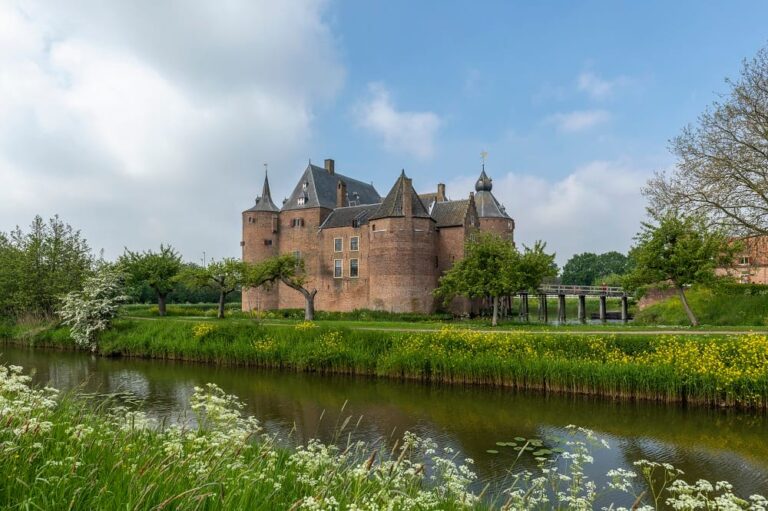
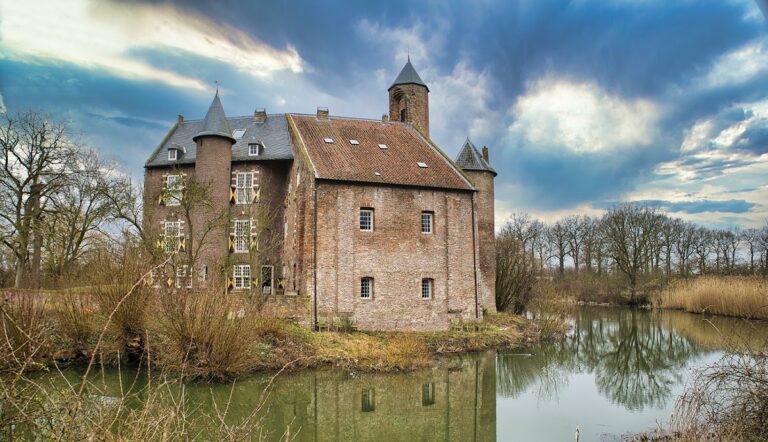
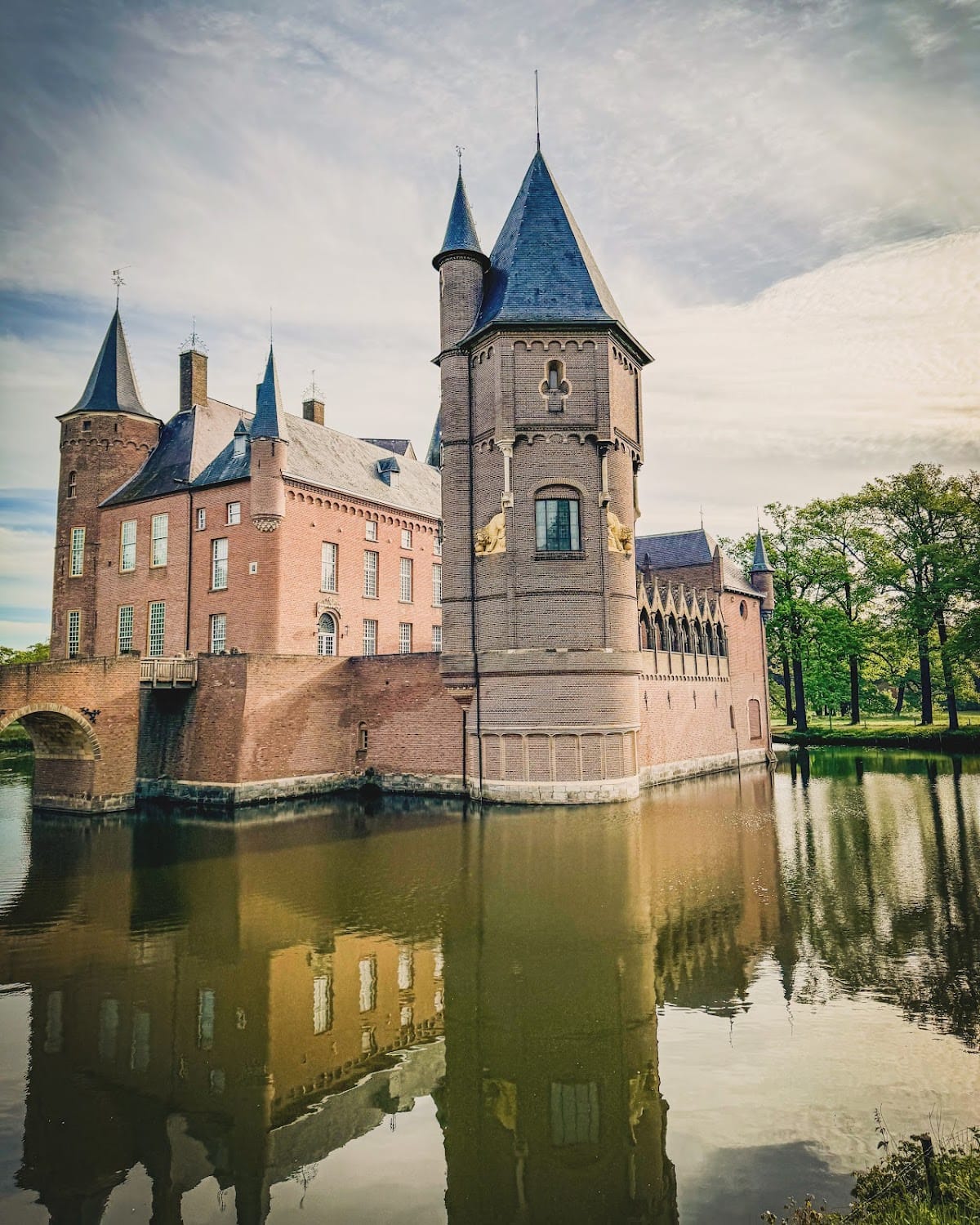
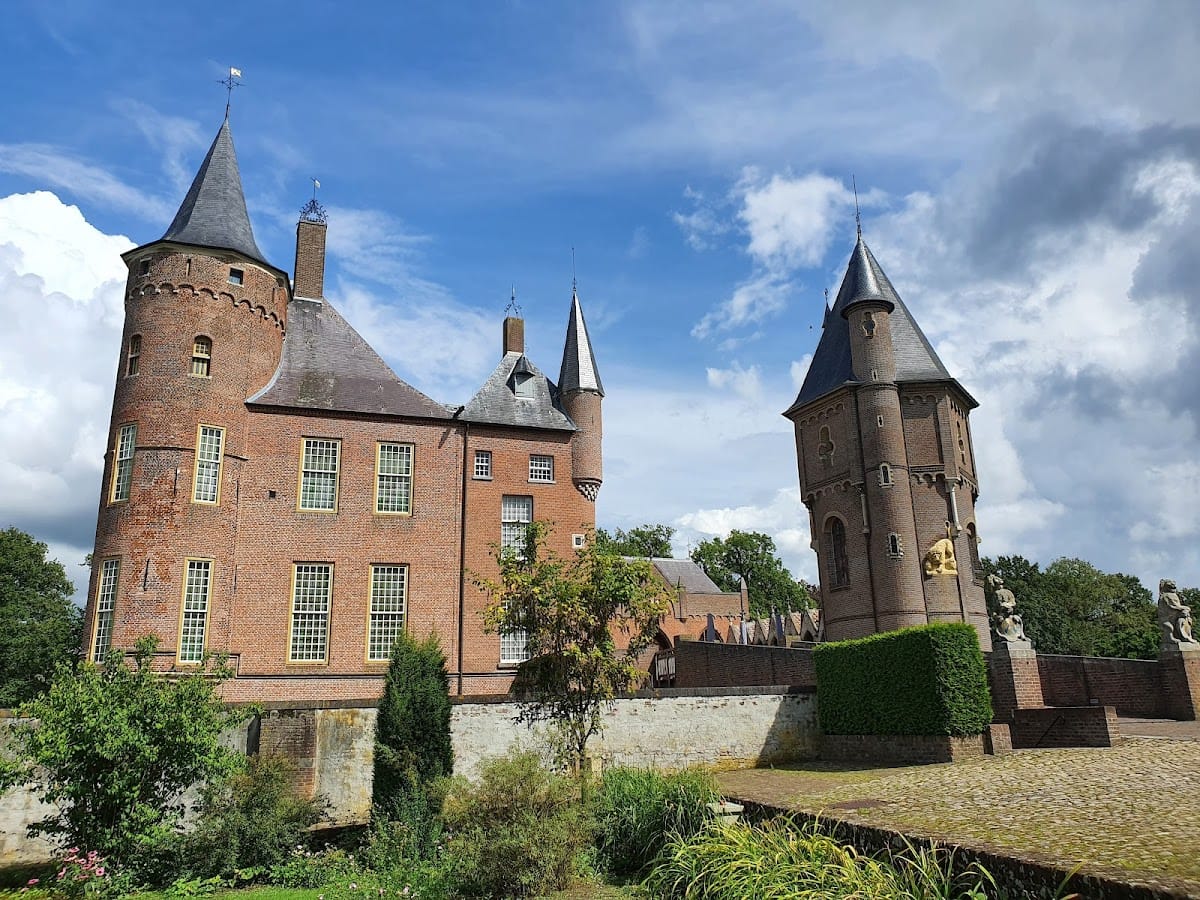
Above ground, most of the main castle dates from the 15th and 16th centuries. Its layout retains a semi-circular shape, reflecting its origins on the motte. Two round corner towers and the base of an overhanging gate tower survive from the oldest structures. The original drawbridge led to the inner courtyard and ended at the base of a now-lost square gate tower.
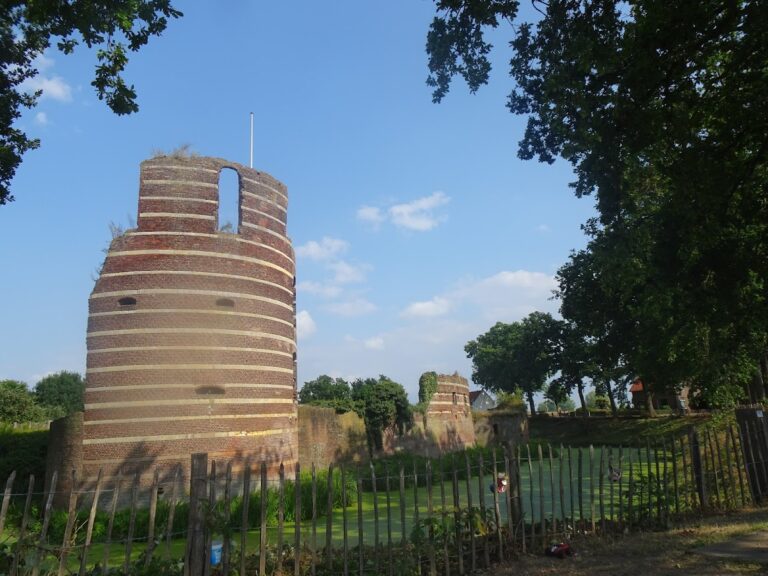
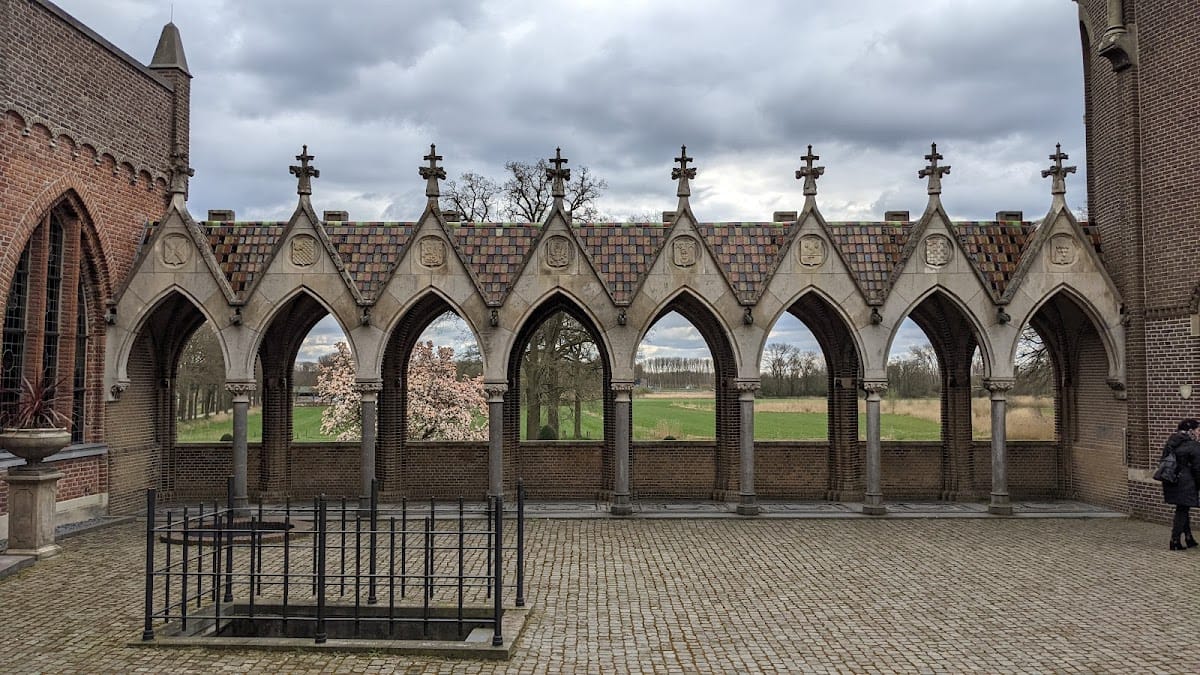
Nineteenth-century additions include a large round tower, an adjoining gallery, and an armory built on older foundations. The “Iron Tower,” constructed to house the baron’s art collection, also dates from this period. These additions altered the castle’s shape to a more square form but did not significantly expand its footprint.
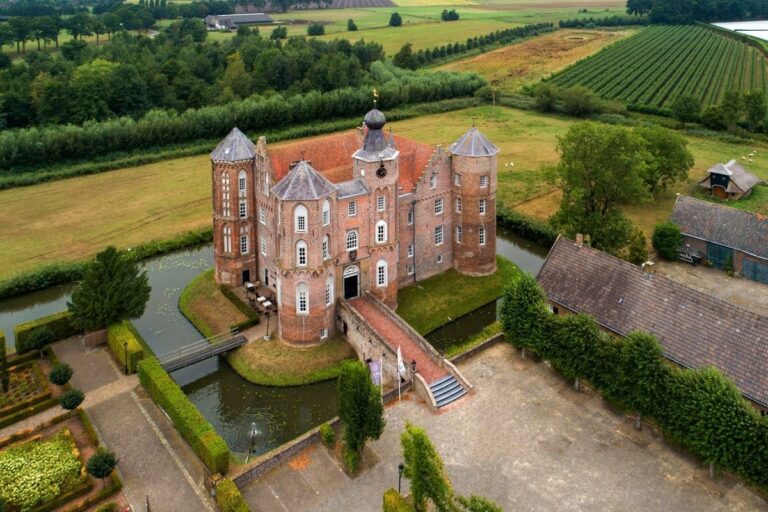
The outer bailey, or forburg, is a well-preserved example of 16th-century construction. It features stepped gables and cross-windows, with walls built from alternating rows of brick and natural stone, creating a distinctive striped appearance. The bailey is enclosed by its own wall and surrounded by water, similar to the main castle.
The castle sits on a pronounced bend of the River Aa, which historically flowed close to the walls. The river’s course was restored in the early 21st century to its original path, reflecting its historical importance for defense and transport.
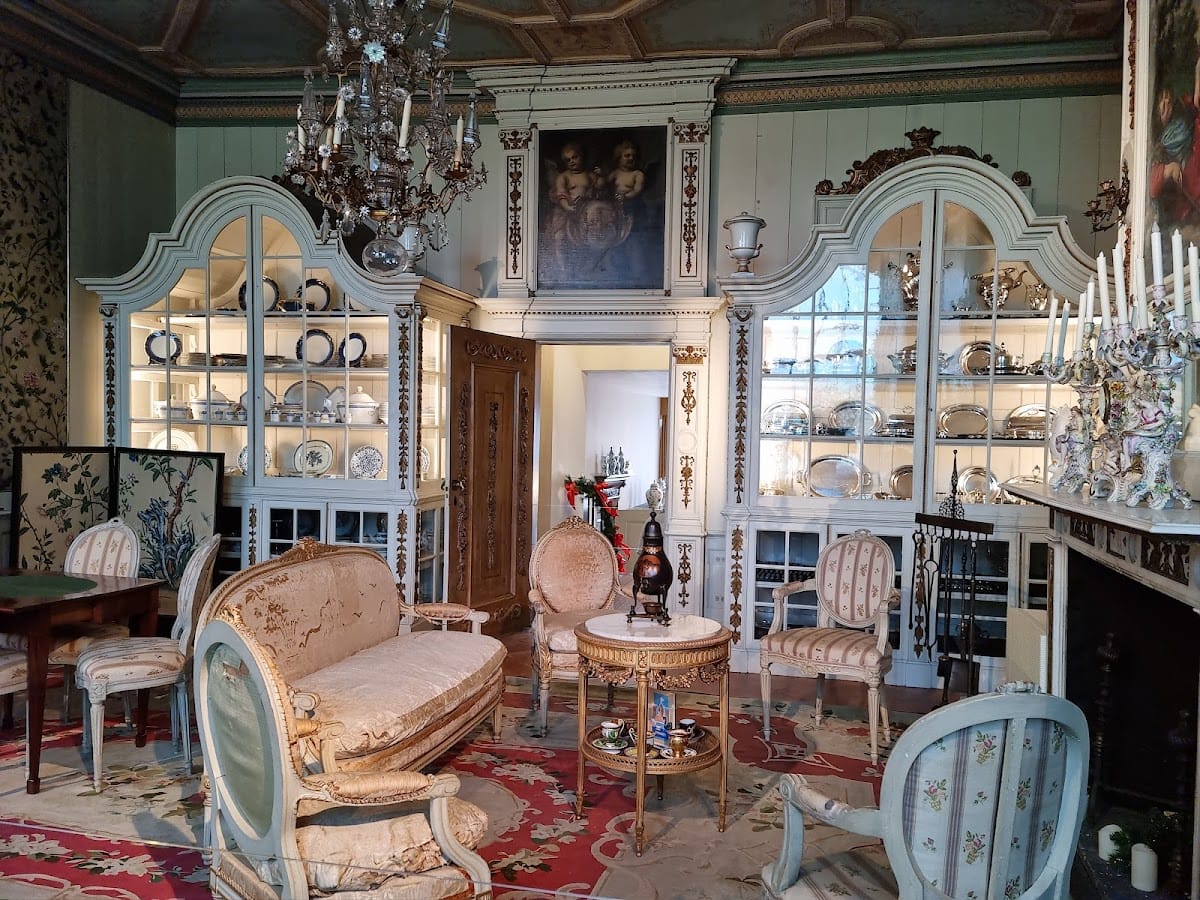
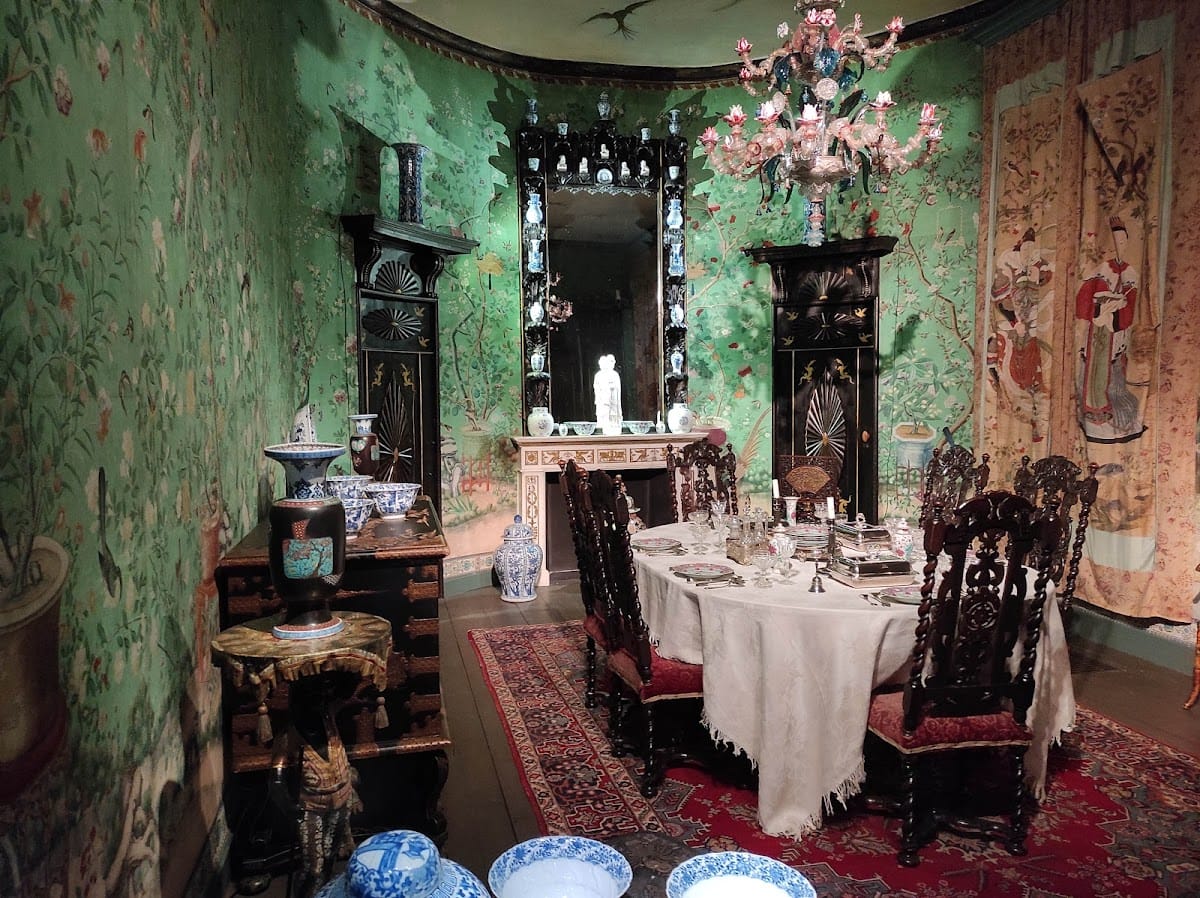
Additional structures include a carriage house and vaulted cellars used for receptions and events. The armory now serves as an official wedding location. Following the 2005 restoration, the castle is well preserved and houses a museum displaying 19th-century life, art collections, and a notable weapons exhibit.
Nearby sites