Zelená Hora Castle: A Historic Medieval and Baroque Site in the Czech Republic
Visitor Information
Google Rating: 3.9
Popularity: Low
Official Website: www.zelenahora.cz
Country: Czechia
Civilization: Early Modern, Medieval European
Site type: Domestic
Remains: Palace
History
Zelená Hora is located near the municipality of Klášter in the Czech Republic and was originally established by medieval Bohemian builders. The site began in the late 13th century with a fortified church, constructed likely in the 1270s or 1280s. This early structure was possibly reinforced around 1419 by Mikuláš z Husi, who is credited with naming the hill Olivetská, or the Mount of Olives. During the turbulent Hussite Wars, the site was captured in 1420 by Bohuslav ze Švamberka. Following the conflicts, Hynek Krušina ze Švamberka replaced the older fortifications with a castle, laying the groundwork for later developments.
Throughout the 15th and 16th centuries, Zelená Hora changed hands several times. Prior to 1464, it was held by Zdeněk ze Šternberk. A significant historical moment took place on November 28, 1465, when sixteen Czech nobles opposing King George of Poděbrady convened at the castle to form the Zelená Hora Unity (Zelenohorská jednota), an alliance established in resistance to royal authority. After 1529, the castle was granted to Zdeněk Lev of Rožmitál, but it returned to the Šternberk family by 1536, who began transforming the fortress.
The transformation culminated between 1669 and 1696 when the Šternberk family converted the fortress into an early Baroque chateau, marking a shift from medieval fortification to a more residential and representational style. Ownership subsequently passed to several noble families: the Martinic family acquired it in 1726, followed by the Colloredo-Mansfeld family from 1784, and later the Auersperg family from 1852 until 1931. In the 20th century, private ownership included the Plavec family and Karel Blažek, who lost the property to the state in 1938 due to unpaid fees.
During World War II, the castle was occupied by German military forces, specifically the Wehrmacht and later the Waffen-SS, and repurposed as a radio school. After the war, Czechoslovak military forces took over, though the site suffered from looting and neglect until military use ended in 1990. In 1992, the castle was transferred to the municipality of Klášter, which initiated restoration efforts. In 2021, a memorandum was signed to accelerate reconstruction and establish an exhibition focused on communist totalitarianism. However, in 2025 the castle was controversially sold to a private company.
Zelená Hora also gained historical notoriety for the alleged discovery of the “Zelená Hora Manuscript” in 1817—a text originally believed to be an ancient Czech document but later exposed as a 19th-century forgery. In modern Czech culture, the castle served as a filming location for “Černí baroni,” a novel by Miloslav Švandrlík, who was stationed there for military service during the 1950s.
Remains
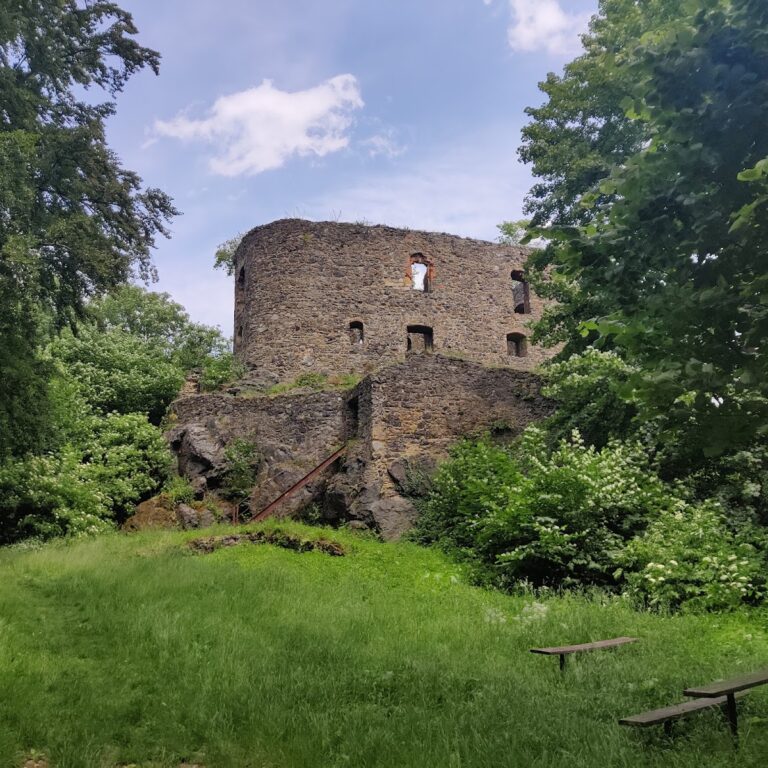
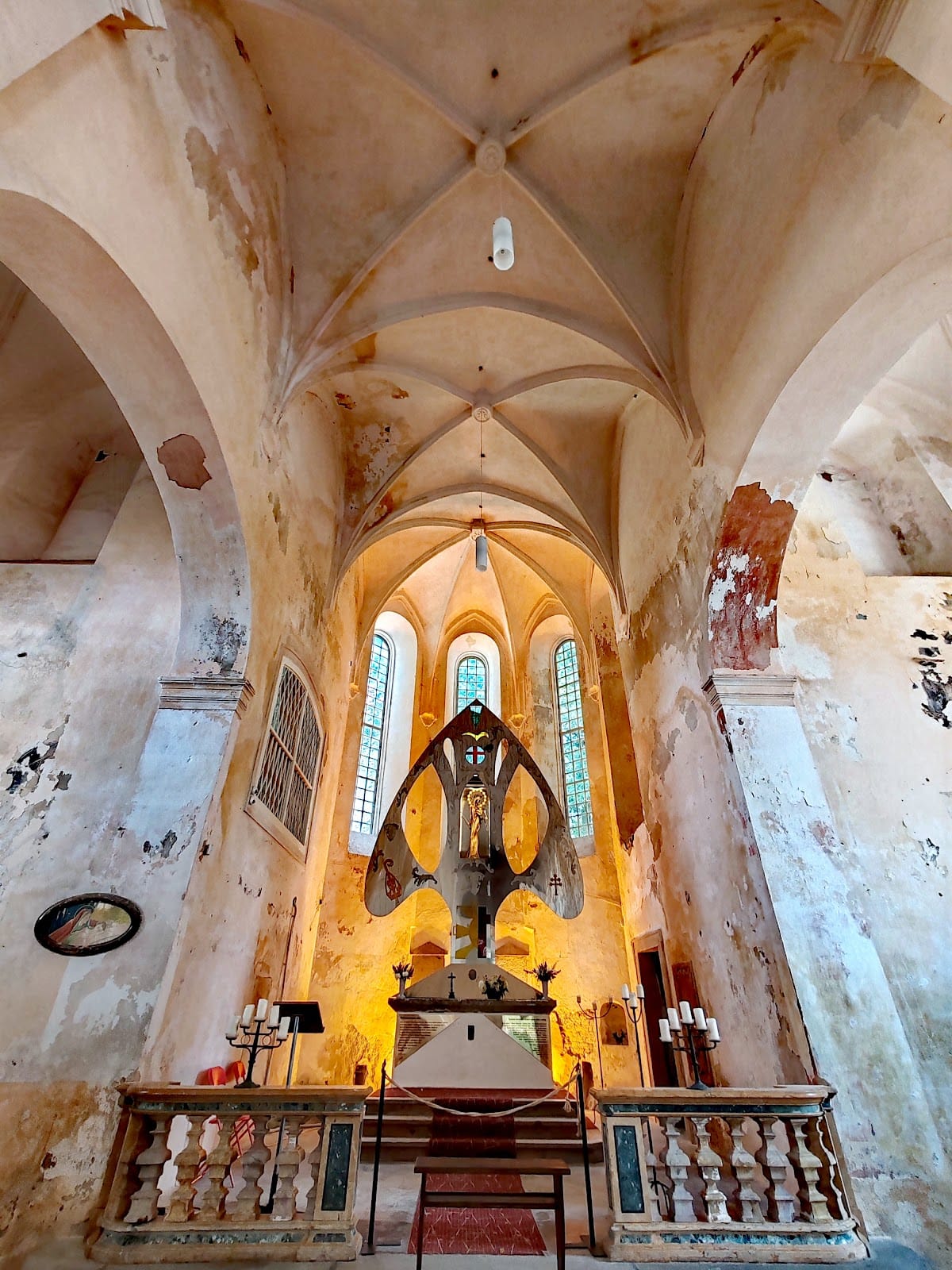
The site is composed of an early Gothic castle that originally functioned as a two-part fortress. Its core features a main building incorporating masonry fragments from its older medieval predecessor. Surrounding this core, the better-preserved structures lie within what was once the outer bailey, an enclosed courtyard area used to support the main stronghold. The complex historically included a pilgrimage church dedicated to the Assumption of the Virgin Mary, positioned near the hilltop, alongside a distinctive round tower that protected the main entrance gate.
In the late 15th century, the site underwent military enhancements, including the addition of a forward artillery bastion at the base of the hill. This bastion consisted of a round tower surrounded by a defensive wall, which incorporated casemates—vaulted chambers used to shelter soldiers and guns. These fortifications were designed to accommodate early artillery and improved defensive capabilities.
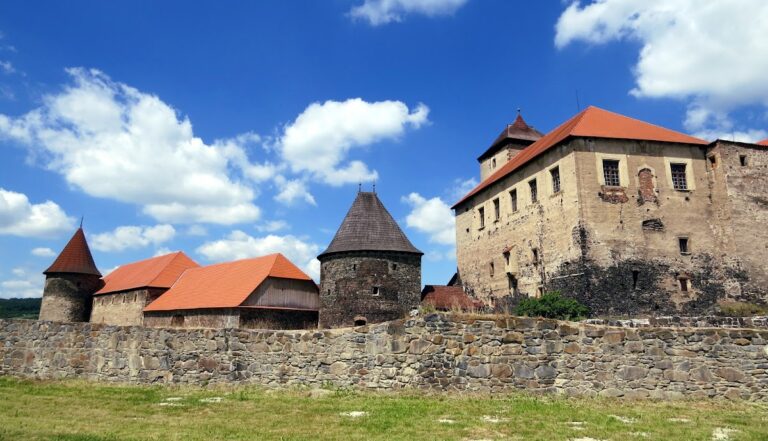
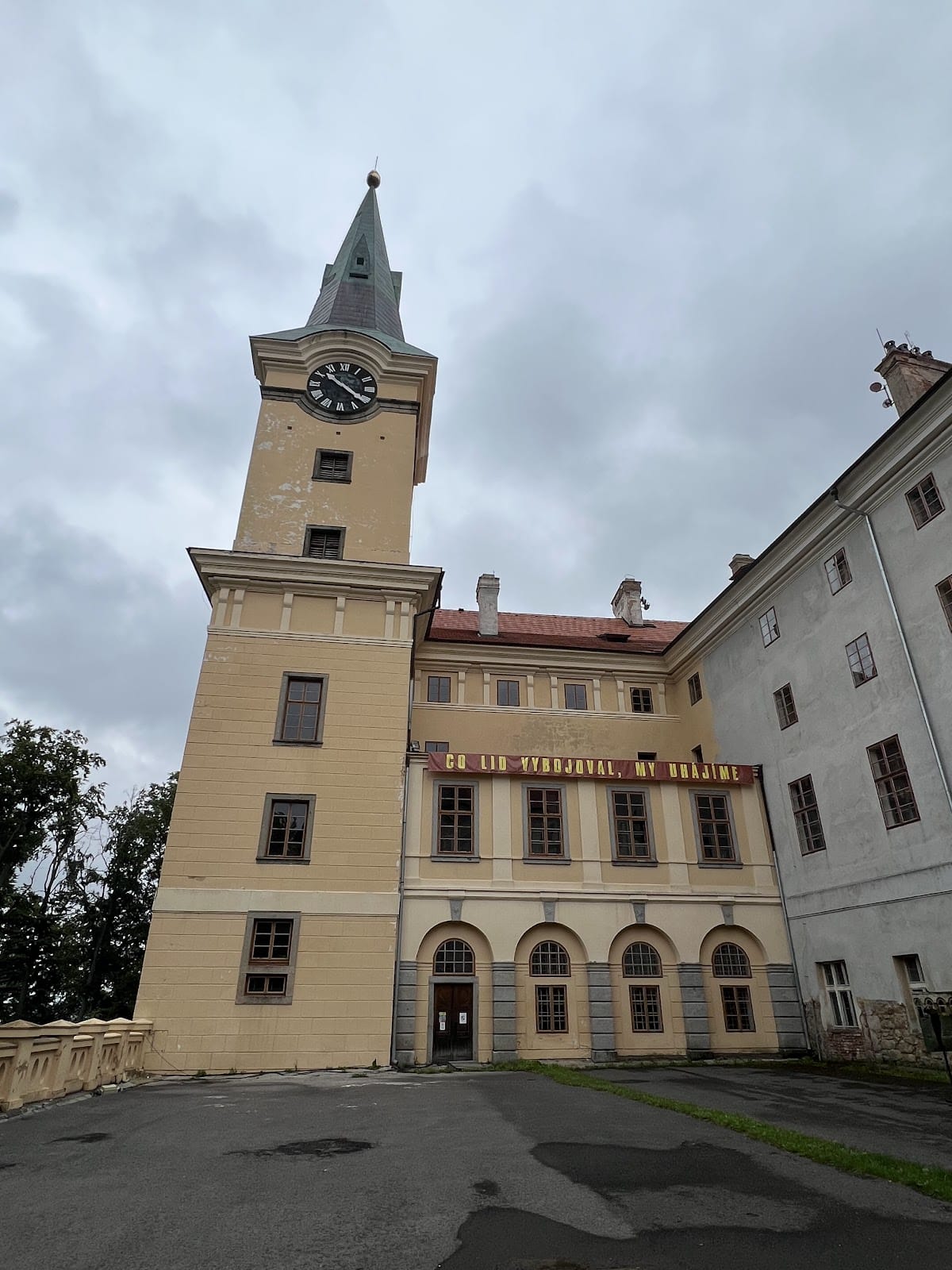
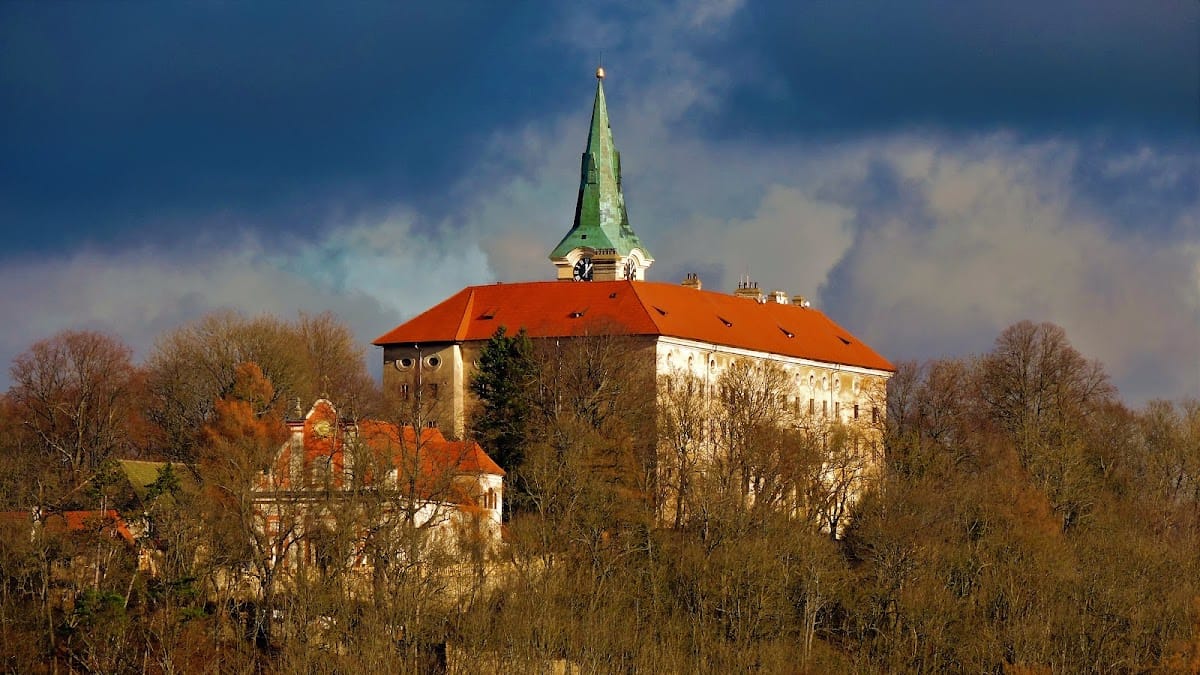
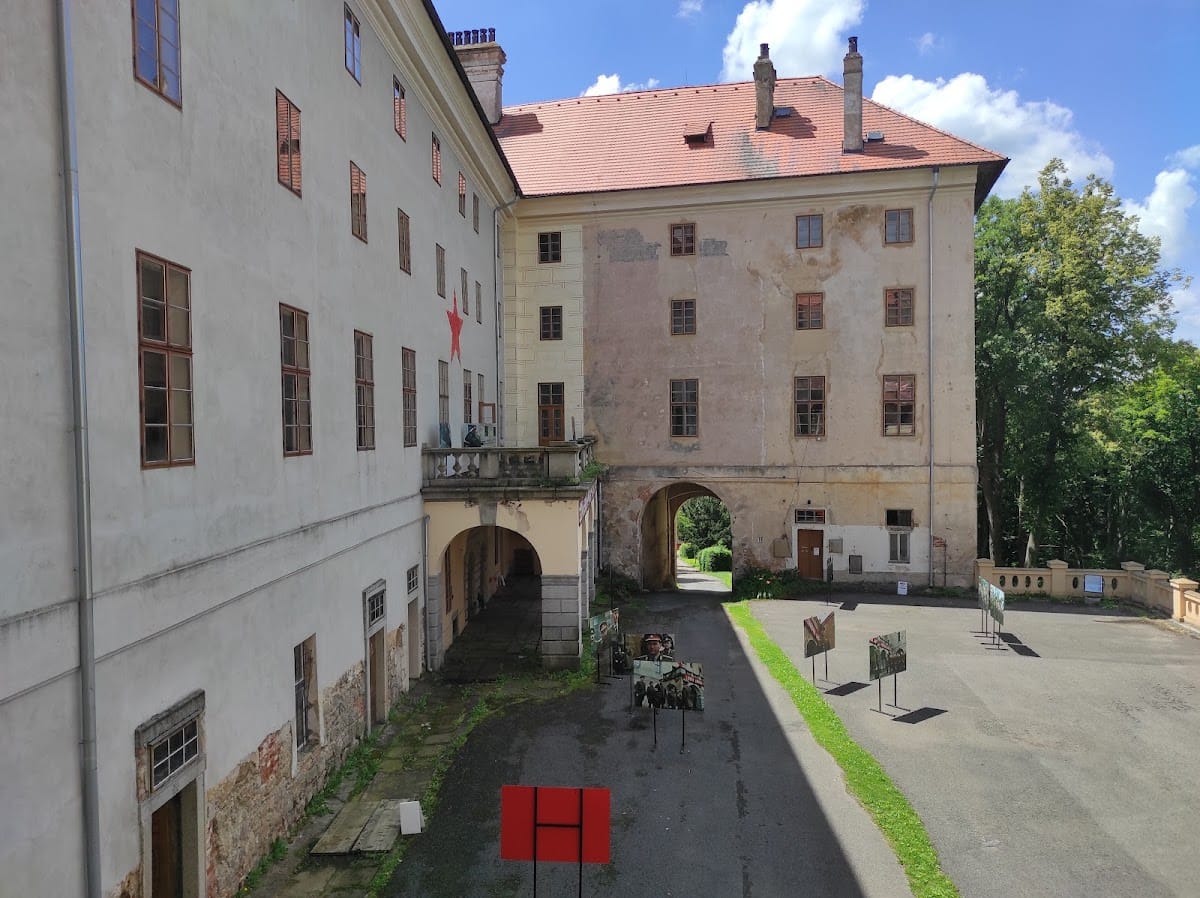
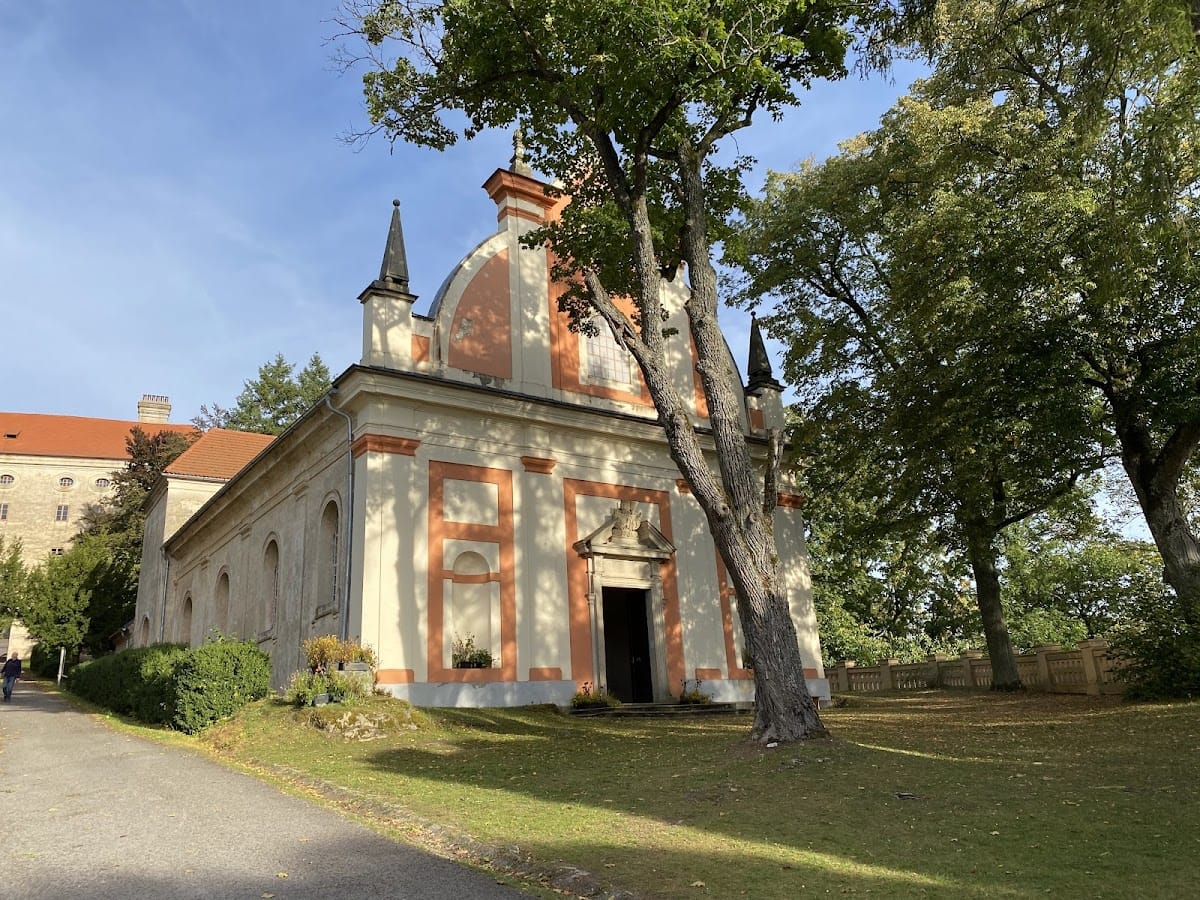
The chateau that stands today was constructed during the extensive rebuilding carried out from 1670 to 1688 by the Šternberk family. It presents an early Baroque style, with three stories arranged in a horseshoe-shaped layout. A tower rises from the eastern wing, serving both decorative and functional roles. Adjacent to the chateau, the Baroque church of the Assumption of the Virgin Mary remains part of the compound, maintaining its religious association since the medieval period.
Another notable feature of the site is a historical granary, reflecting the estate’s role in agricultural storage and management. The castle’s water supply system was remarkable for its time, including one of Bohemia’s oldest known waterworks: a wooden pipeline carried water from a former monastery mill to a well within the castle grounds. This engineering solution highlights the integration of natural resources with the castle’s operational needs.
The castle sits atop Zelená hora, or Green Mountain, which rises to 536 meters above sea level, located about one kilometer north of Nepomuk, near where the Mihovka stream meets the Úslava river. Despite periods of neglect, parts of the castle have survived reasonably well. After military use ended in 1990, the site experienced deterioration, though the church tower was restored in the mid-1960s. Since the 1990s, ongoing restorations have aimed to preserve and repurpose the historical buildings, with portions adapted for use as a hotel and cultural center. The castle’s historically significant library collection is now safeguarded by the regional Monument Office for Western Bohemia in Plzeň.
Nearby sites