Castle Lopata: A Gothic Castle Ruin in Czechia


Site at a Glance
- Rating
- 4.4
- Popularity
- Low
- Country
- Czechia
- Primary era
- Medieval
- Eras represented
- Medieval
- Civilizations
- Holy Roman Empire, Kingdom of Bohemia
- Site type
- Military
- Remains
- Castle
On this page11 sections
History
Castle Lopata is a Gothic castle ruin near Milínov in Czechia, built between 1367 and 1377, probably by Heřman of Litice. The site occupied a siliceous-rock outcrop above the valley of the Kornatický Stream and later became involved in the violence and political instability of the early fifteenth century. A rebuilding or alteration took place in the fifteenth century, but the castle was ultimately burned during a siege and never rebuilt.
Earlier occupation and the medieval foundation
The castle rock had been used long before the medieval construction. During the Eneolithic, or Copper Age, people of the Cham culture occupied the site. Ceramic finds and glass beads also point to a presumed hillfort of the Late Hallstatt period, an Early Iron Age culture of central Europe. The fortifications of this earlier settlement were destroyed when the Gothic castle was built.
In December 1397, Lopata was controlled by raiders when it was besieged and captured by the royal commander Prokop. The castle then passed into royal possession. In 1401, King Wenceslas IV granted it to Maršík of Hrádek, the burgrave, or governor, of Domažlice. After Maršík died, the estate passed to his elder son Jan of Lopata and Hrádek, who supported King Sigismund during the Hussite Wars, a series of religious and political conflicts in Bohemia.
Raiding and destruction
Before 1427, Jan transferred the estate to his brother Habart of Lopata. Taking advantage of the political disorder, Habart became a raider, directing many of his attacks against the estate of Vlčtejn Castle. His activities brought a major military response.
On 27 October 1432, Lopata was surrounded by nobles including Svojše of Zahrádka, Přibík of Klenová, Jan Zmrzlík of Svojšín, Jan Řitka of Bezdědice, and Menhart of Hradec. Forces from the towns of Klatovy, Sušice, Horažďovice, and Domažlice joined the operation. After four months under siege, the starving garrison set the castle on fire and tried to escape in February 1433. Forty members of the garrison were captured, while Habart escaped to Hus Castle, where he continued his raiding activities.
Abandonment and archaeological investigation
The burned castle was never reconstructed. Lopata was recorded as abandoned in 1457 and again in 1539. Later archaeological work included František Xaver Franz’s investigation of the castle rock and Milan Novobilský’s extensive survey of the siege camp from 1432–1433. The castle grounds are protected as a cultural monument of the Czech Republic and form part of the Lopata Nature Reserve.
Remains
Castle layout and defenses
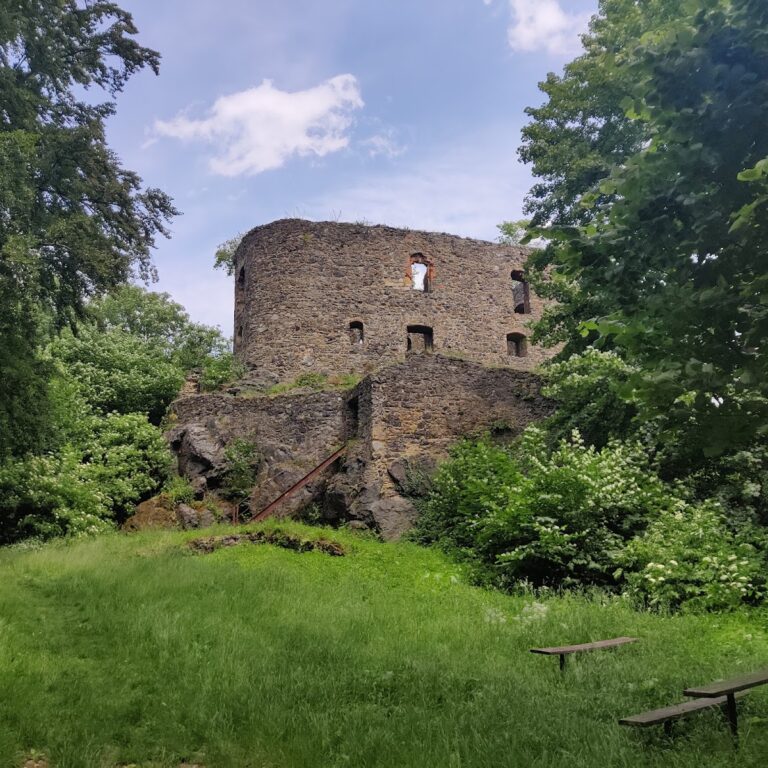
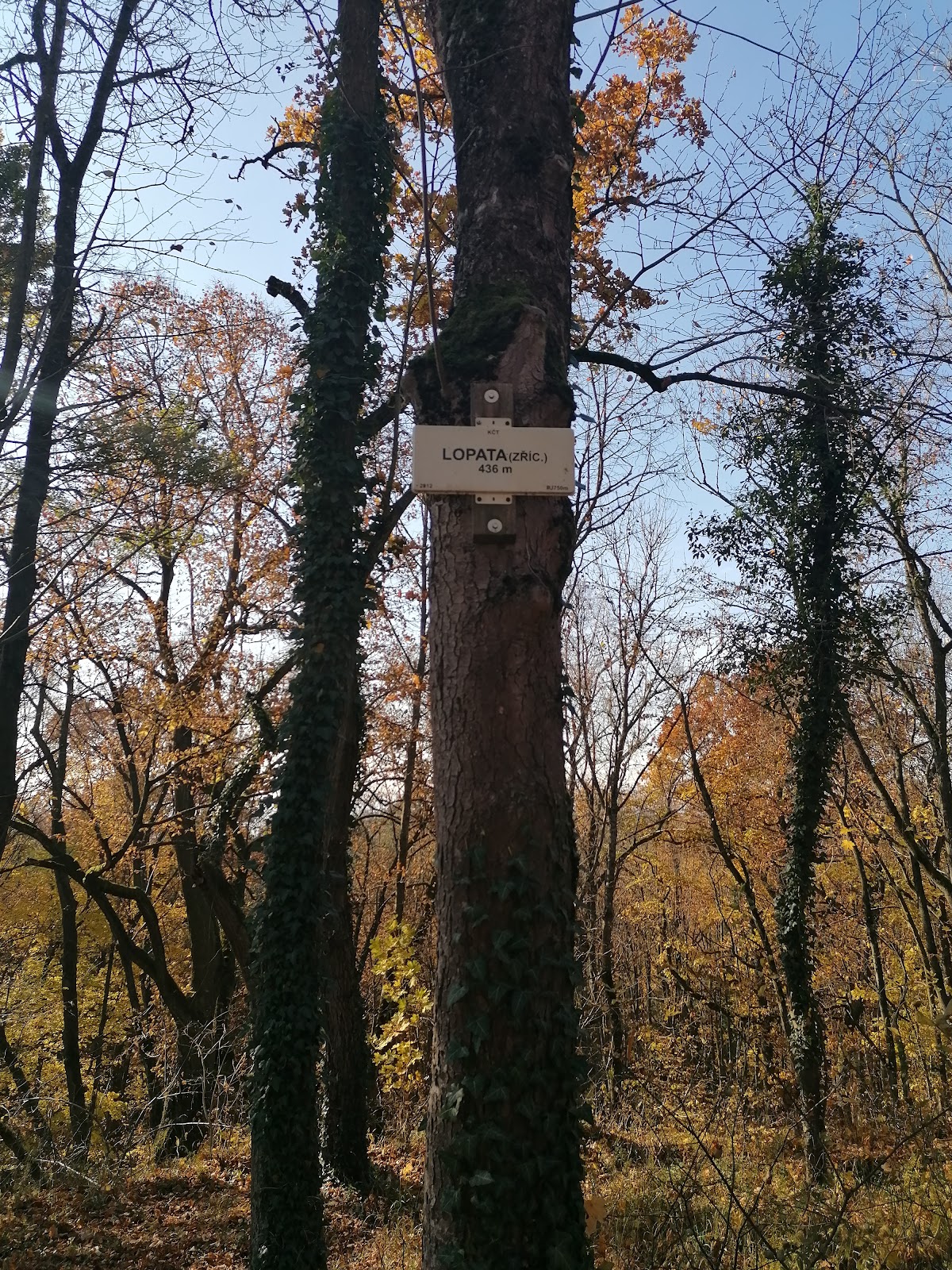
Lopata was a two-part castle of bergfried type. A bergfried was a strong medieval tower used mainly for defense and refuge rather than as the lord’s principal residence. The tower was unusually placed in the most strongly protected part of the castle. Most structures and defenses in the outer court were made of wood. The castle stood at an elevation of 420 metres, while Lopata Hill rises to 452 metres above sea level.
The castle core
Approach and gates
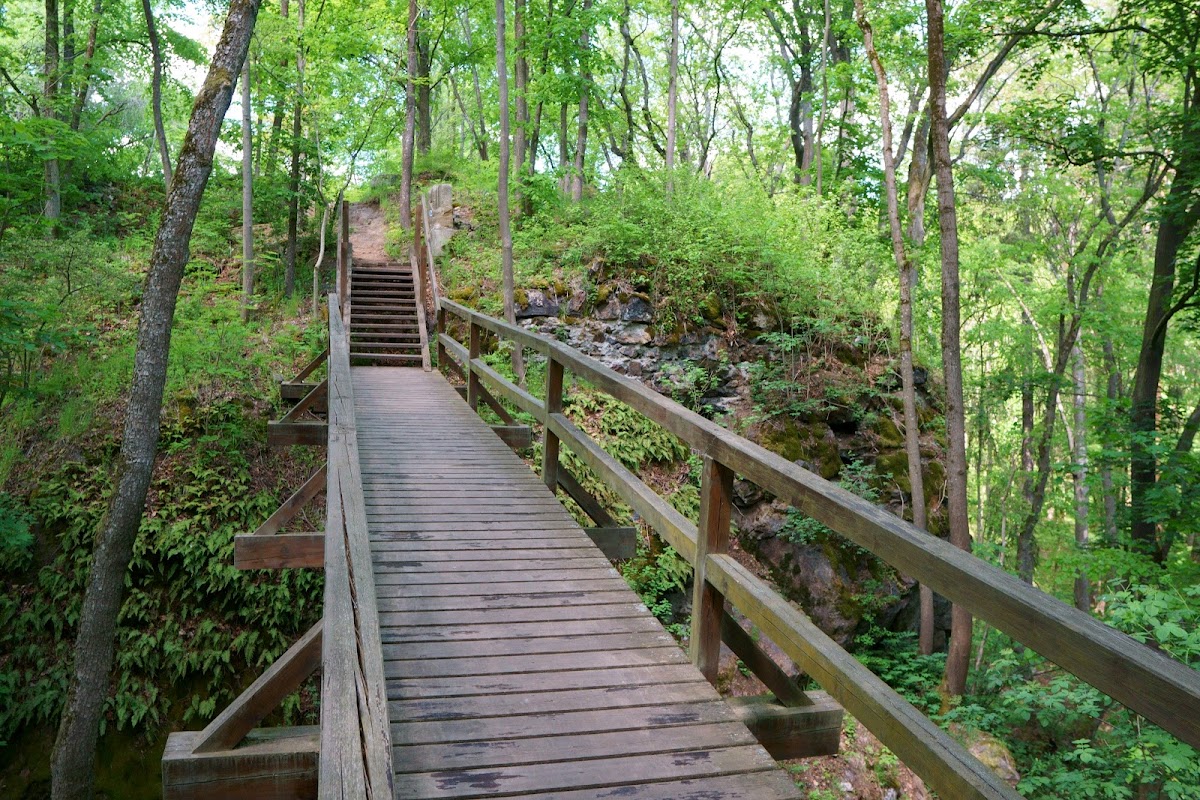
The main castle core had an approximately trapezoidal plan. It was reached on foot across a bridge over the moat. Stairs led from the first floor of a bridge tower to the bridge, although the tower disappeared in the nineteenth century during treasure hunting. The bridge led to a gate in the main defensive wall, closed by a rocking drawbridge. From there, a short staircase reached a second gate, which measured 1.5 metres wide and four metres high.
The second gate was demolished after the castle was captured. Its surviving fragments allowed a nineteenth-century reconstruction, but the gate disappeared again during the twentieth century, leaving only a small fragment.
Towers and residential buildings
A square residential tower stood to the right of the gate when viewed by someone arriving at the castle. At the northern corner of the core was the remnant of the bergfried, which measured 10 metres in diameter and had walls almost 3 metres thick. On the eastern side, foundations of another square tower survive on a prominent rock formation. A second square structure stood at the southern corner of the outer court and survives as a depression.
Interior structures and water supply
A building of uncertain purpose stood between the two towers. Opposite it, along the southwestern side of the core, was a palace fitted with tiled stoves. The castle also contained a water cistern 4 metres deep, providing a surviving indication of its internal water supply.
Siege works and archaeological finds
Earthworks from the siege of 1432–1433 survive around the ruin. The principal siege camp lay north of the castle, at the highest point of the plateau below Lopata Hill. East of the outer-court watchtower, the attackers built a bombard position protected by a ditch and rampart. A bombard was a large medieval cannon, and the weapon at Lopata had a calibre of about 50 centimetres.
The siege area produced large numbers of crossbow bolts and projectiles from hand firearms. The defenders used tarasnice, smaller medieval firearms or light cannons, while the attackers employed the large bombard, three or four tarasnice, two slings, and one smaller throwing engine. Slings and throwing engines projected missiles without gunpowder.
Military objects and pottery make up most of the finds from the castle and siege camp. A face-shaped vessel is among the notable discoveries from Lopata. Ceramic material from the Cham culture, including sherds associated with the Globular Amphora culture, was also found on the castle rock.