Wasserschloss Glatt: A Renaissance Water Castle in Germany
Visitor Information
Google Rating: 4.6
Popularity: Medium
Official Website: www.schloss-glatt.de
Country: Germany
Civilization: Early Modern, Medieval European, Modern
Site type: Domestic
Remains: Palace
History
Wasserschloss Glatt is situated in the village of Glatt, within the municipality of Sulz am Neckar in Germany. The site has origins dating back to medieval times and was strongly shaped by the Neuneck family, a noble lineage that governed the area from the 13th century until the late 17th century.
The earliest known recorded figure associated with the castle was Heinrich von Neuneck, who served as Vogt (a kind of local governor) of Sulz in 1286. By 1296, Ulrich von Neuneck was established as a resident of the site, which was then primarily a medieval fortress. The castle remained under the Neuneck family’s control for several centuries, undergoing significant transformation in the first half of the 16th century. Between 1533/34 and 1540, Reinhard von Neuneck converted the structure into a Renaissance-style residence, reflecting the architectural and cultural shifts of that era. This transition marked a departure from the castle’s original military function toward a focus on residence and representation.
In 1496, Hans von Neuneck further solidified family ownership by purchasing the shares held by other branches, consolidating the estate under a single ruler. After the family’s tenure ended in 1671, the ownership of Wasserschloss Glatt passed through various hands. The Trier Cathedral Chapter inherited it initially, followed by its sale to Freiherr Johann Franz Dietrich von Landsee in 1679. From 1706 until the early 19th century, the castle formed part of the holdings of Muri Monastery.
The mid-19th century saw the property under the control of the Prince of Hohenzollern-Sigmaringen until 1854. During this period, the castle served an administrative role as the seat of a regional Hohenzollern district. In the 20th century, the municipality acquired the castle in 1971, and it underwent thorough restoration between 1973 and 1989 to preserve its historical integrity.
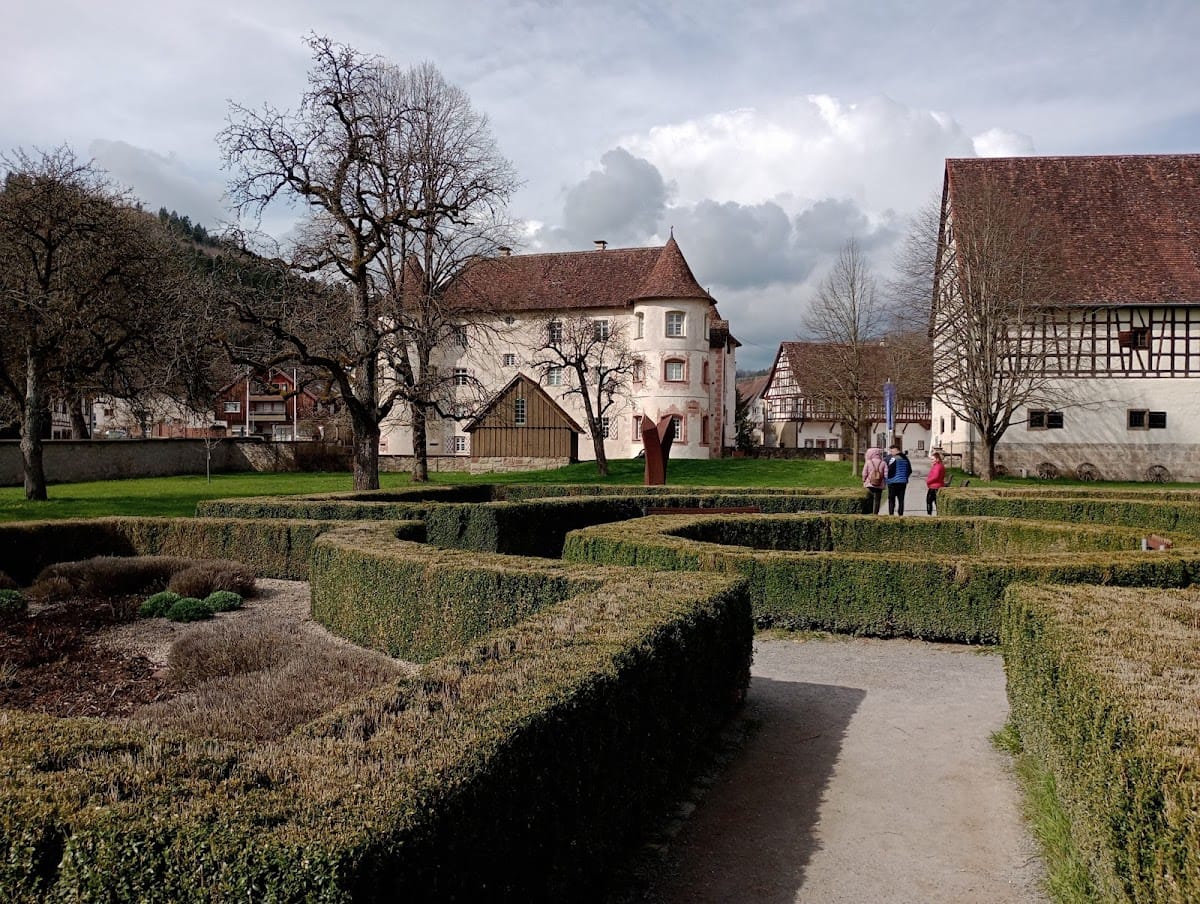
Today, the castle serves as a cultural hub, hosting several museums that exhibit local history, aristocratic heritage, agriculture, weaponry, and regional art, thus continuing its legacy as an important center for cultural preservation and education.
Remains
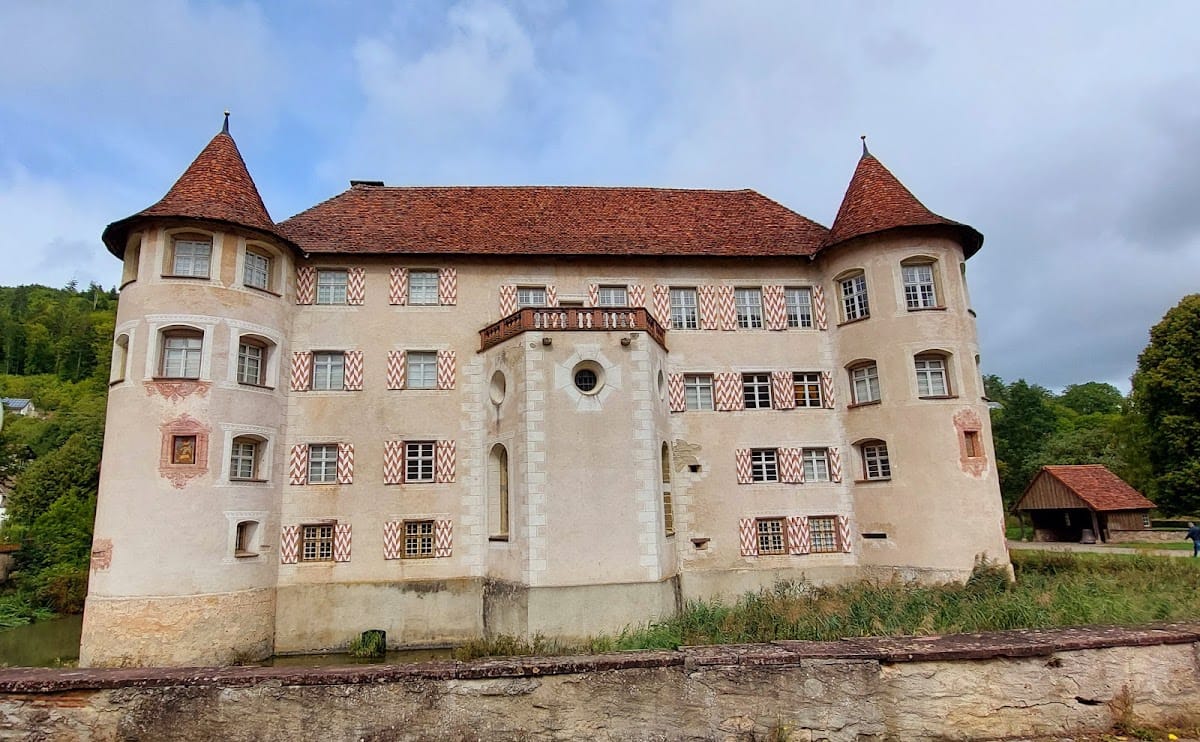
Wasserschloss Glatt presents as a three-winged Renaissance water castle, featuring four corner towers and an integrated gate tower within a formidable protective wall known as the shield wall. A moat, which has been carefully restored, entirely surrounds the building, reinforcing its historical defensive purpose while contributing to its distinctive appearance.
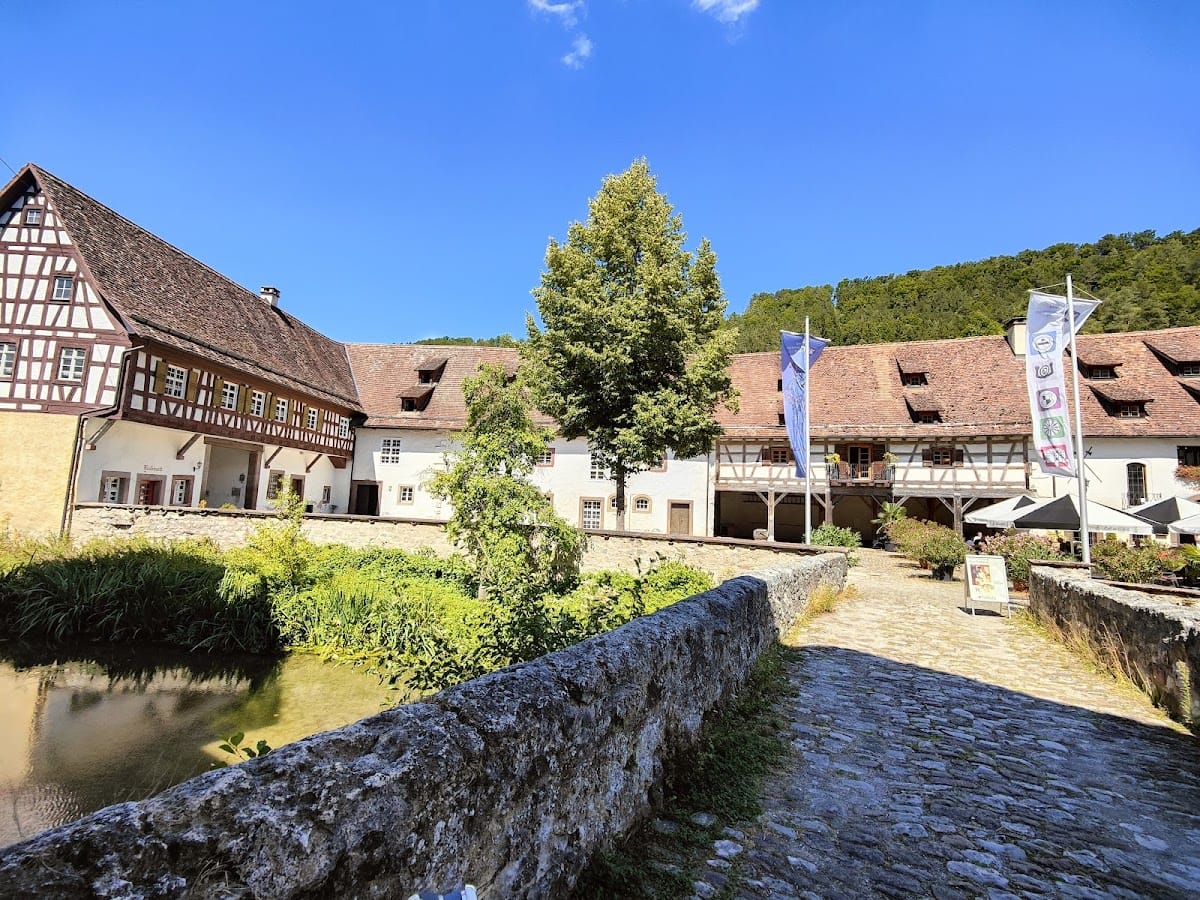
The northern side of the castle encloses a courtyard on three sides with economic buildings that speak to its operational past. On this northern perimeter, a half-timbered structure dates from 1768, aligning closely with the outlines of the former outer bailey, which acted as the castle’s initial outer defensive zone. Nearby, a barn constructed in 1815 rests upon the old outer bailey’s wall, illustrating the layering of functional agricultural buildings connected to the estate.
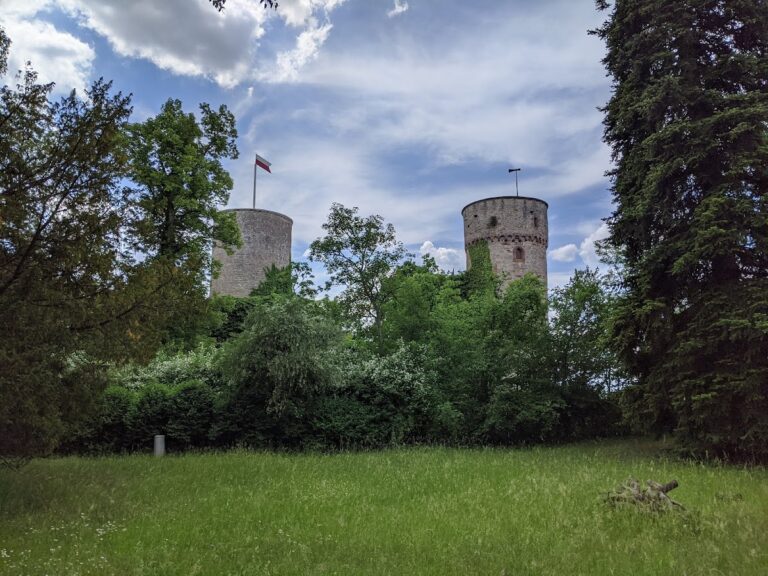
Two round towers frame the northern courtyard where it faces the mill ditch, linked by an outer wall set at an angle of about 22 degrees. This angled wall supports a projecting firing platform, highlighting a design tailored for flanking defense, allowing defenders to target attackers approaching along the perimeter.
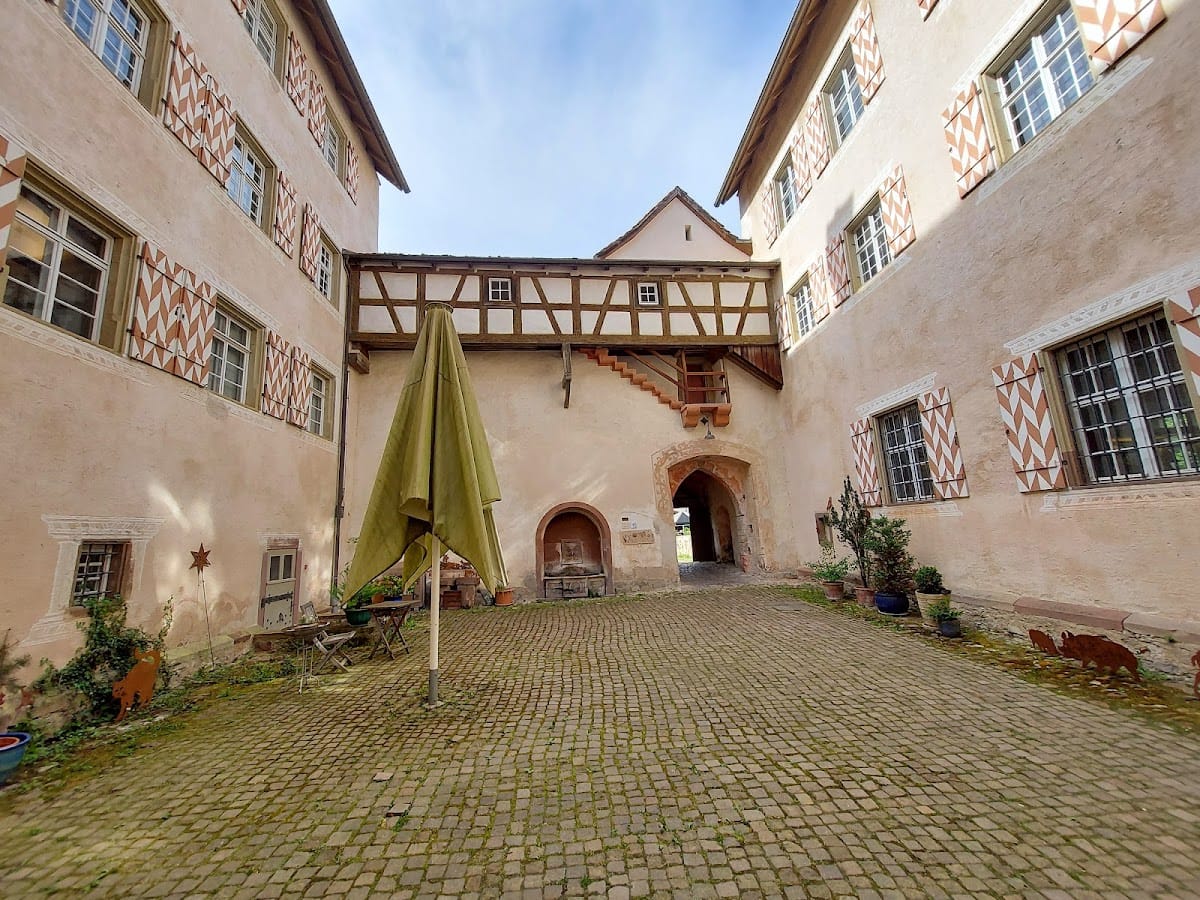
Within the courtyard, remnants of the original late 13th-century medieval castle remain visible. One notable element is a Gothic gate built from bossed stones, a masonry style featuring protruding stone faces. The existing gate tower was added in 1513, replacing an earlier drawbridge that had been removed by the early 18th century. Archaeological evidence suggests that the medieval castle consisted primarily of a residential tower on the site of today’s west wing and a second building matching the footprint of the current south wing. Smaller auxiliary buildings once occupied where the east wing now stands. The entire medieval complex was protected by a long palisade fence made from roughly 1750 vertical stakes, enclosing the area and emphasizing the site’s fortified character.
The Renaissance period remodeling introduced innovative architectural features, including two staircases. Of particular note is the eastern staircase, which features a cross-ribbed vault—a type of stone ceiling structure with intersecting ribs—supporting durable stone steps. During restoration work in 1988, two levels of arcades were discovered on the south wing, positioned opposite the main gate to create a stately and symmetrical visual effect typical of Renaissance design. However, these arcades were later bricked up during alterations in the late 17th century.
Defensive adaptations from the late 16th century under Hans Caspar von Neuneck included the addition of embrasures, openings designed for firing weapons, which were combined with windows to enhance protection while maintaining a domestic appearance. Historical records from 1540 inventory an array of armaments spread throughout the castle, such as artillery pieces, handguns, crossbows, pole arms, and suits of armor. This array points to a well-prepared garrison equipped for sudden attacks or internal uprisings rather than large-scale warfare.
The courtyard’s stone wall, flanked by the surviving round towers, incorporated a firing platform, exhibiting a layout that supported comprehensive flanking fire to defend against assault. In 1688, under the Landsee family, the castle underwent substantial vertical expansion with an additional residential floor added. This renovation included extensive interior remodeling and the bricking up of the arcades, which created a more enclosed courtyard ambience. Around 1700, the chapel was enlarged by extending the choir— the part of the church near the altar—beyond its original wall line, and the interior was decorated with stucco, a fine plastering technique used for ornamental details.
Architecturally, Wasserschloss Glatt stands out in southern Germany for directly adopting Italian Renaissance principles such as symmetry and the use of elegant staircases, consciously avoiding contemporary French influences. This distinctive approach marks the castle’s role as a transitional form between a medieval fortress and a Renaissance residence focused on comfort and status rather than solely on fortification.
Nearby sites