Hohennagold Castle: A Medieval Hilltop Fortress in Germany


Site at a Glance
- Rating
- 4.6
- Popularity
- Medium
- Country
- Germany
- Primary era
- Medieval
- External website
- Open
- Eras represented
- Medieval
- Civilizations
- Holy Roman Empire
- Site type
- Military
- Remains
- Castle
On this page6 sections
History
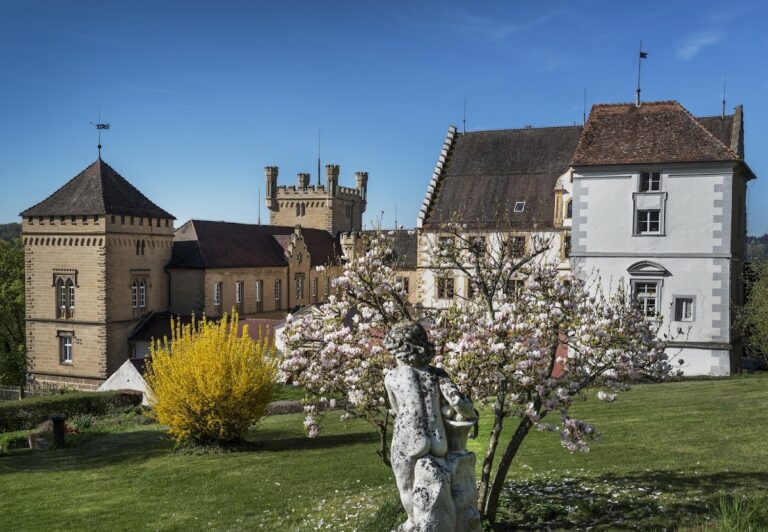
Hohennagold Castle is a medieval hilltop fortress in Nagold, Germany, built on the Schlossberg above the Nagold River. A possible early medieval fortification stood here around 750, when Count Ruodbrecht, one of Charlemagne’s uncles, may have established a stronghold on the site.
The Counts of Nagold and Hohenberg
The first Hohennagold Castle was built around 1100 by the Counts of Nagold. In 1145, this family became the Counts Palatine of Tübingen, a title associated with a high-ranking count who held special authority connected with a ruler’s court or territory. The castle complex was extensively enlarged between 1153 and 1162.
During the mid-thirteenth century, Hohennagold passed to the Counts of Hohenberg. A branch of that family adopted the title Counts of Nagold and used the castle as a residence during the thirteenth and fourteenth centuries. The site therefore served not only as a fortified position but also as a seat of aristocratic rule.
Württemberg, destruction, and preservation
In 1363, the castle was sold to the Counts of Württemberg. They maintained it through their ministeriales, dependent members of the medieval aristocratic and administrative elite who commonly served territorial lords in military and governmental roles. During the fifteenth century, the outer defenses were strengthened with an additional defensive space between walls, projecting gun platforms, and corner towers.
Bavarian troops conquered Hohennagold in 1645, during the final phase of the Thirty Years’ War, the European conflict fought mainly between 1618 and 1648 over religious, dynastic, and territorial struggles. The castle was severely damaged, and the remaining structures were demolished in 1646, leaving the complex in ruins. A low-level Allied air attack destroyed the northwestern tower in 1945. After the Second World War, the surviving remains were provisionally restored to preserve the site as a ruin.
Remains
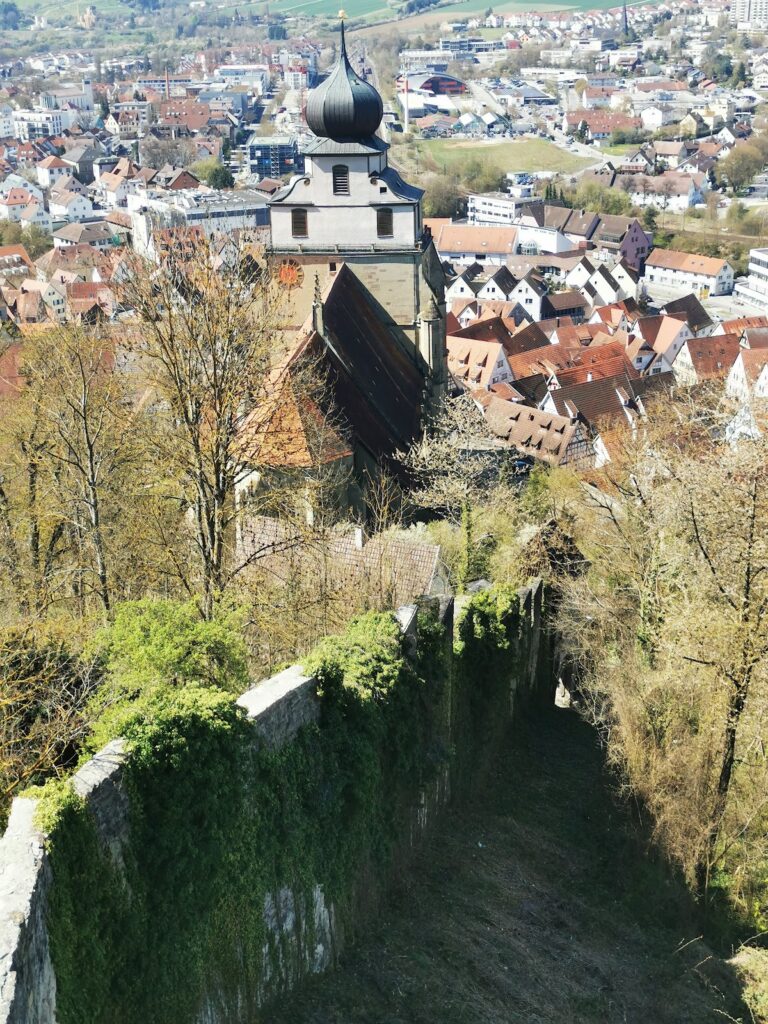
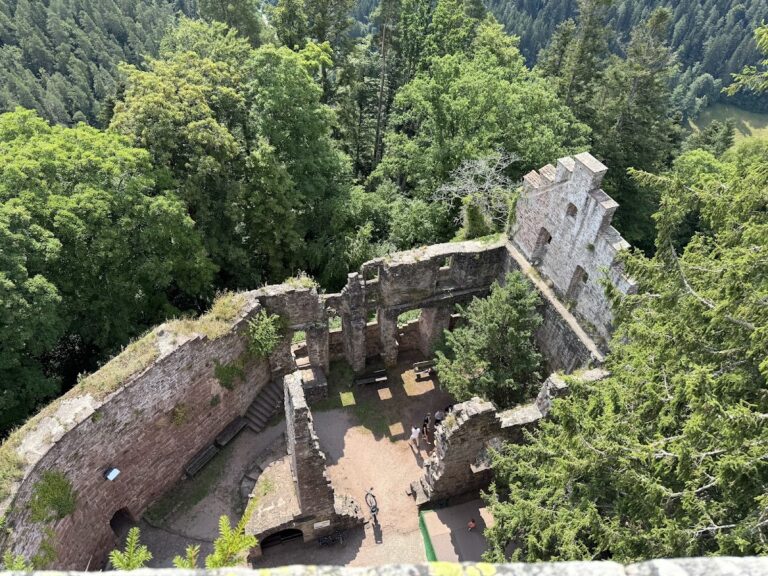
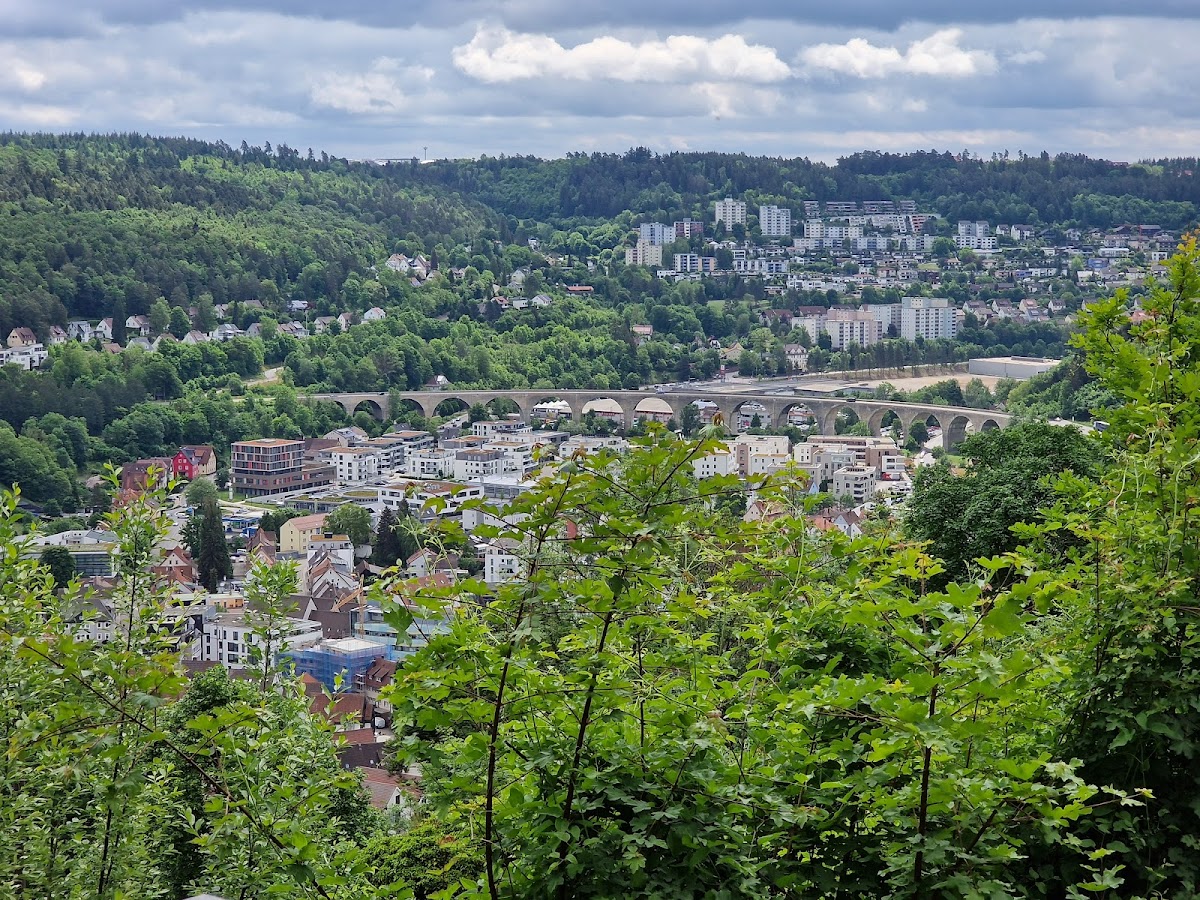
Hohennagold occupies the 529.8-metre Schlossberg, a porphyritic rocky southern spur within a bend of the Nagold River. Here, the river turns approximately 135 degrees northward, while the Waldach joins it more than 130 metres below the hill. The castle overlooks Nagold and the surrounding Black Forest and Gäu landscape. Its remains include foundations in the inner castle, extensive sections of the outer ward, defensive-tower ruins, and the outer ward’s additional defensive enclosure. A moat appears to have surrounded the castle.
Inner castle defenses
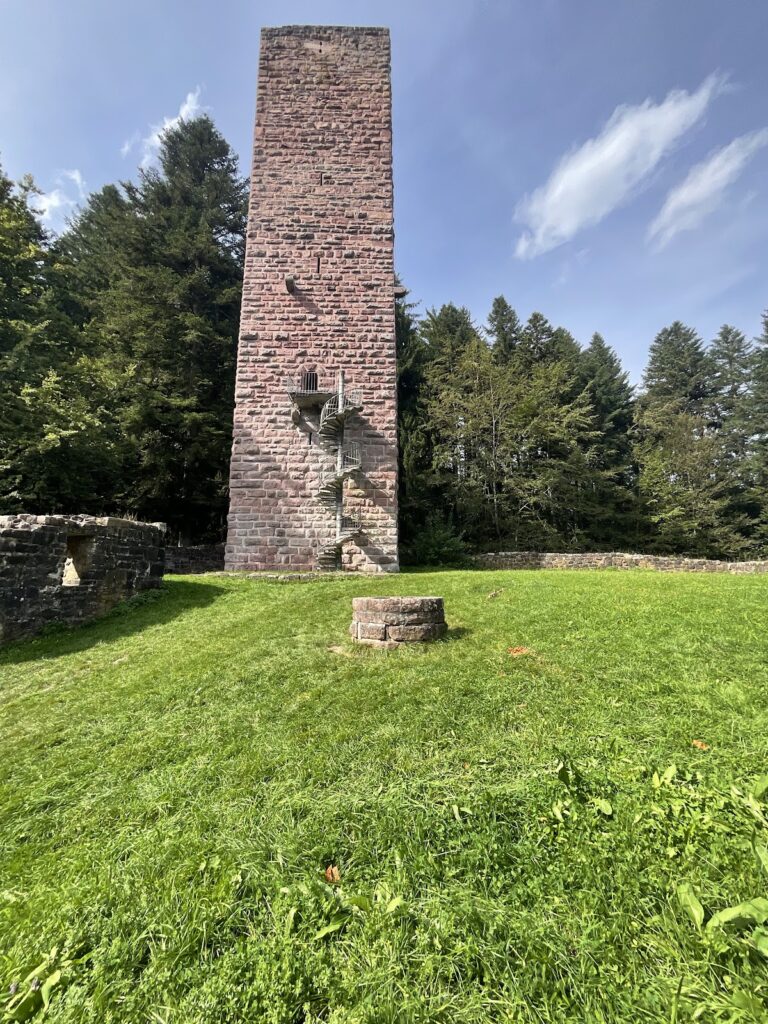
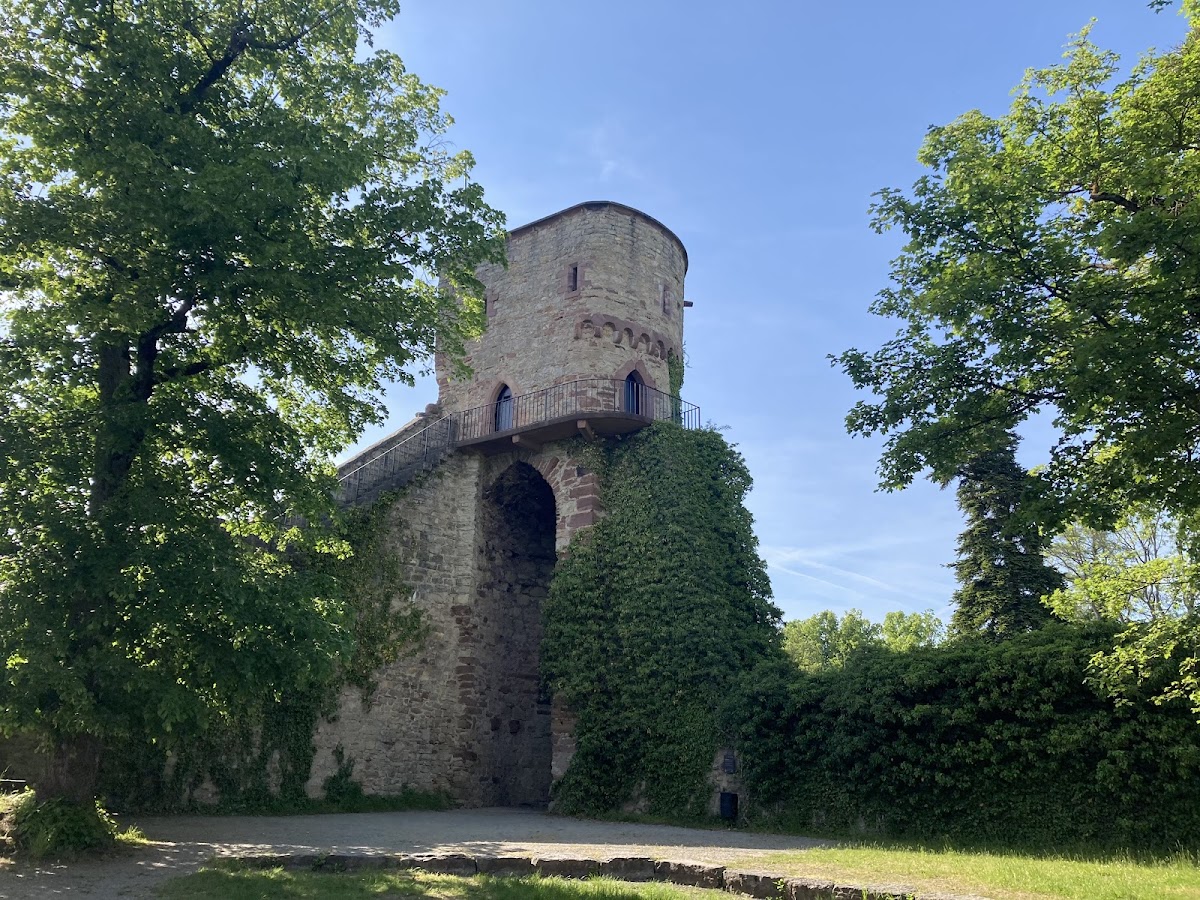
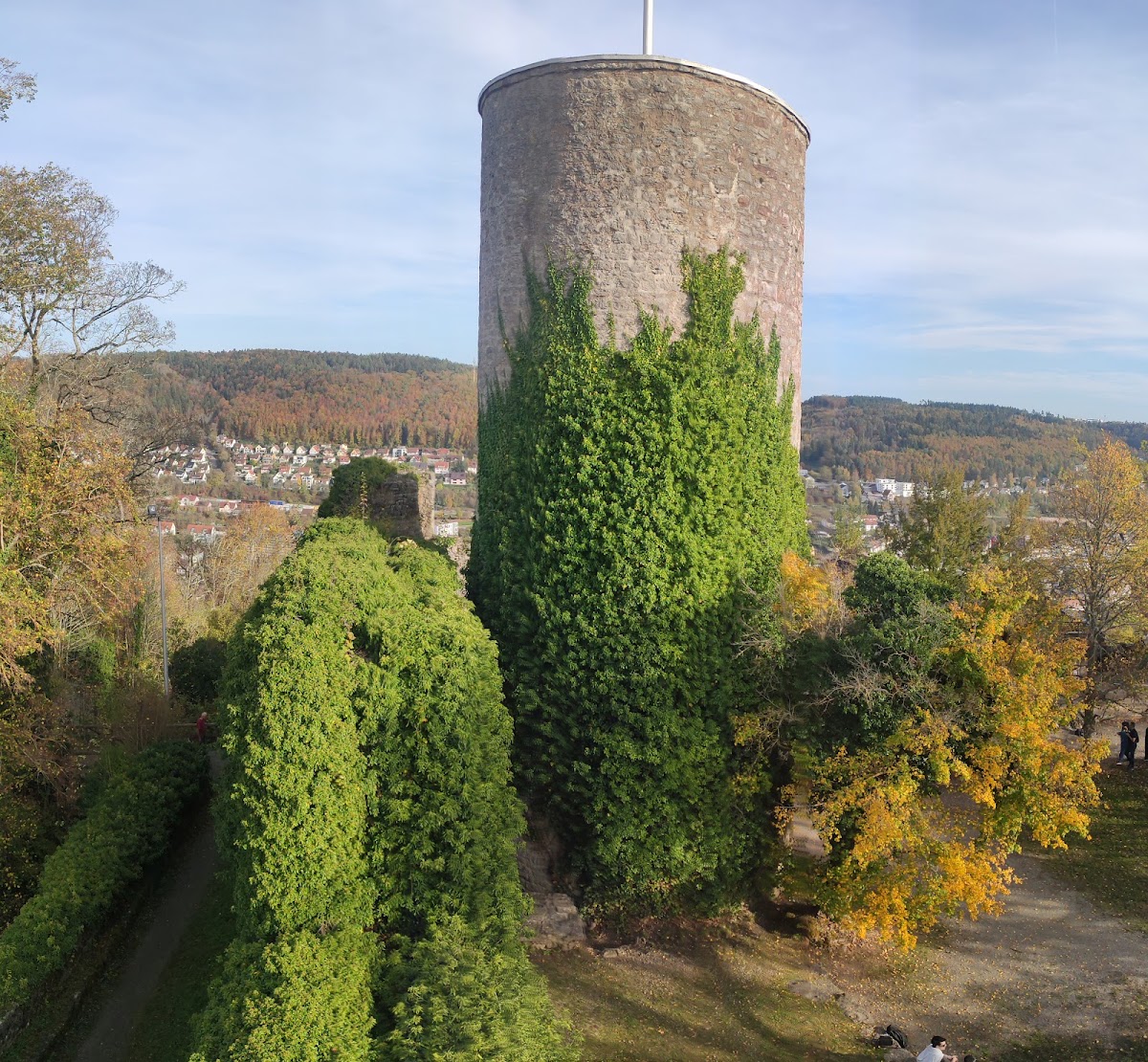
The inner castle preserves the foundations of several buildings and substantial defensive masonry. Its shield wall, a massive barrier protecting the most exposed side of a fortress, is 2.5 metres thick and 10 metres high. The keep, the principal fortified tower, has a diameter of just under 7.5 metres, rises 17 metres, and has walls 2.5 metres thick. Its entrance is positioned 9 metres above ground level. Another defensive tower reaches 25 metres in height.
Outer ward and later fortifications
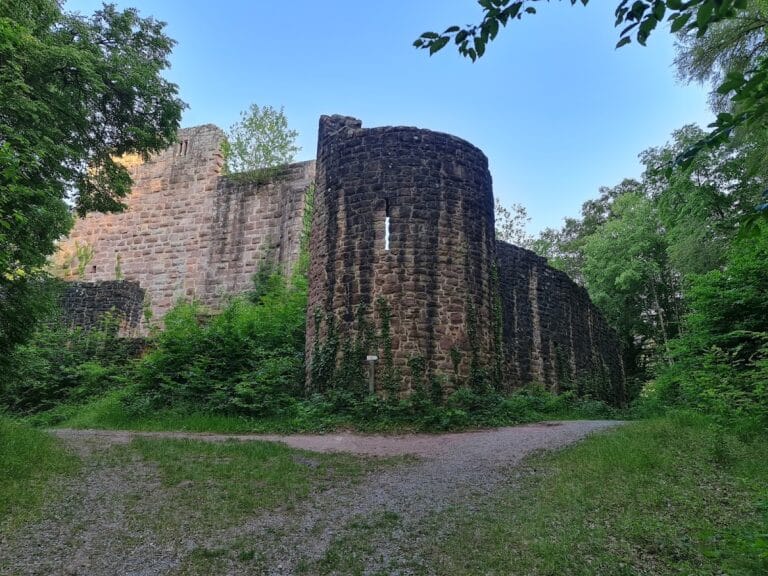
The outer ward, an enclosed area outside the main fortified core, contains surviving sections of later defenses. Its towers included half-round and angular forms, together with bastions, projecting structures designed to provide flanking fire, and corner towers. A northwestern corner tower served as a flanking tower before its destruction in 1945. The outer ward also included a zwinger, an additional defensive space between successive walls, reflecting the castle’s strengthened defensive arrangement during its later history.