Wanping Fortress: A Ming-Dynasty Military Stronghold in Beijing
Site at a Glance
- Rating
- 4.3
- Popularity
- Very Low
- Country
- China
- Primary era
- Early Modern
- Eras represented
- Early Modern, Modern
- Civilizations
- Unclassified
- Site type
- Military
- Remains
- Fortified Town
On this page12 sections
History
Wanping Fortress is a Ming-dynasty military stronghold in China, located on the southwestern outskirts of Beijing. Constructed between 1638 and 1640, it protected the capital from the forces of the rebel leader Li Zicheng. The fortress was initially known as Gongji Fortress and combined a defensive purpose with the functions of a settled town.
Ming and Qing Dynasties
For roughly three centuries, Wanping served as a garrison, a military force stationed at a defensive post for an extended period. It also operated as an independent town. Merchants and travelers entering Beijing commonly made their final overnight stop there before continuing to the capital.
The Ming dynasty ruled China from 1368 to 1644, while the Qing dynasty followed and remained in power until 1912. During the Qing period, the expanding capital approached the fortress boundary. Wanping was incorporated into Beijing in 1928, during the Republic of China.
The Marco Polo Bridge Incident
The fortress garrison guarded Marco Polo Bridge, which crosses the Yongding River. On 7 July 1937, fighting broke out between Japanese troops and Chinese soldiers stationed at Wanping and responsible for guarding the bridge. This confrontation became known as the Marco Polo Bridge Incident and marked the beginning of the Second Sino-Japanese War, the major China-Japan conflict fought from 1937 to 1945 and later incorporated into the wider Second World War.
Memorial and Modern History
Wanping Fortress and Marco Polo Bridge were placed together on China’s national cultural-property list in 1965. During the 1980s, the Chinese People’s Anti-Japanese War Memorial Museum opened within the fortress. A memorial sculpture garden dedicated to China’s resistance war against Japan was created beside the southern wall between 1995 and 2000 and opened in 2000, forming part of a wider memorial landscape for the war and its victims.
The fortress walls and towers were restored in 2003 and 2004. A district government was re-established at Wanping in 2004. These modern interventions accompanied the preservation of the fortress as both a historic settlement and a place connected with the memory of the 1937 conflict.
Remains
Fortress Layout and Historic Settlement
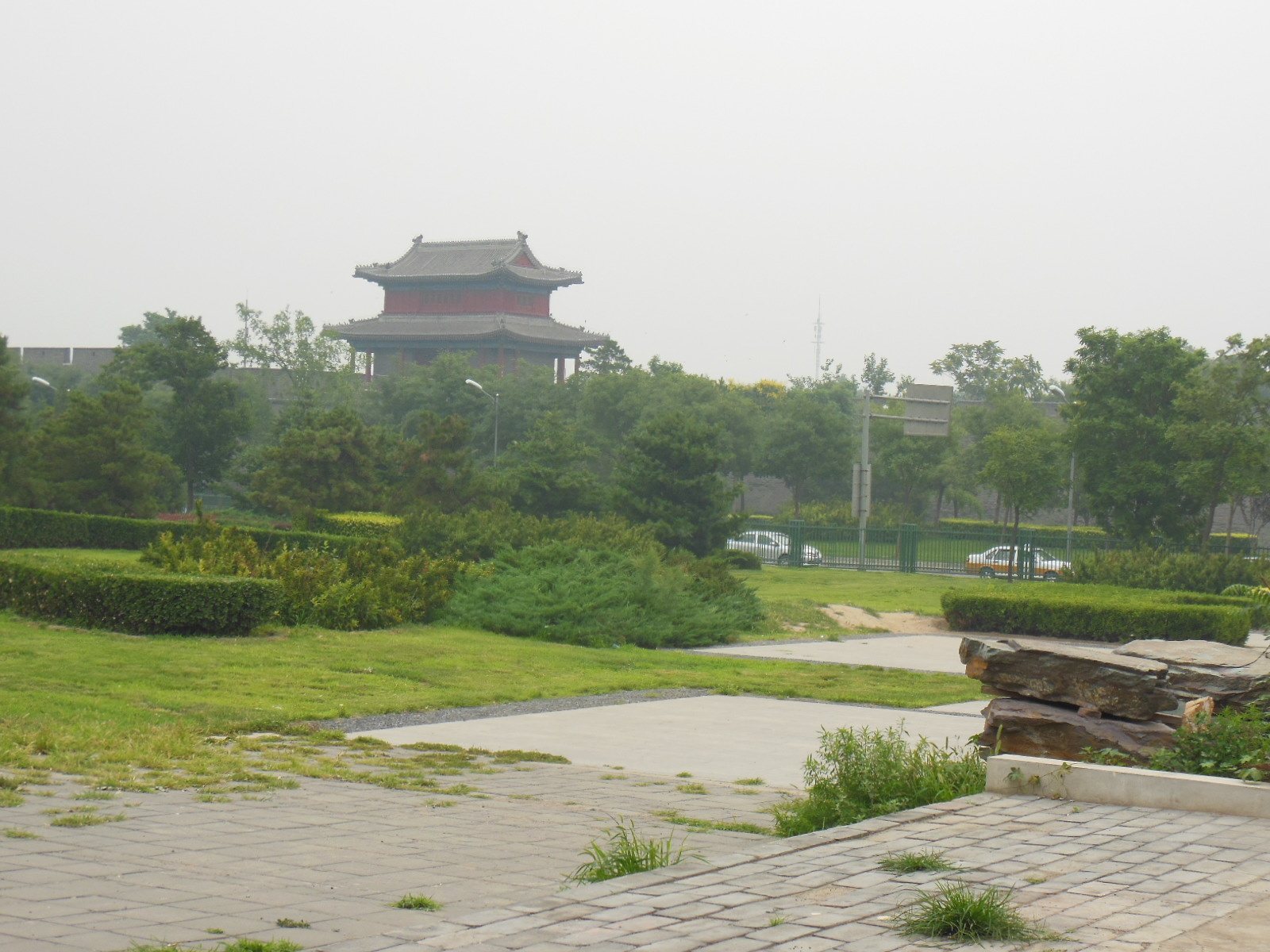
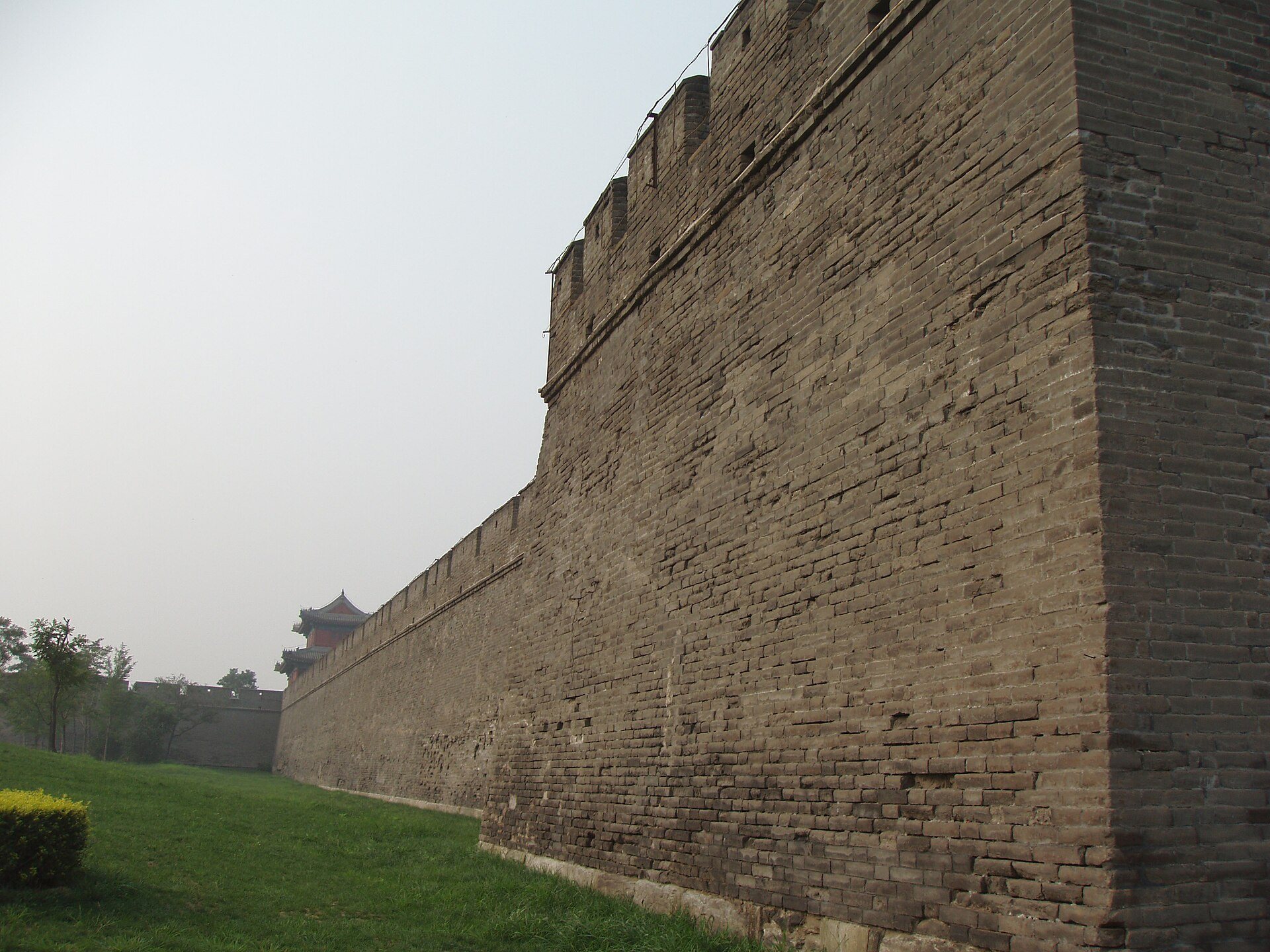
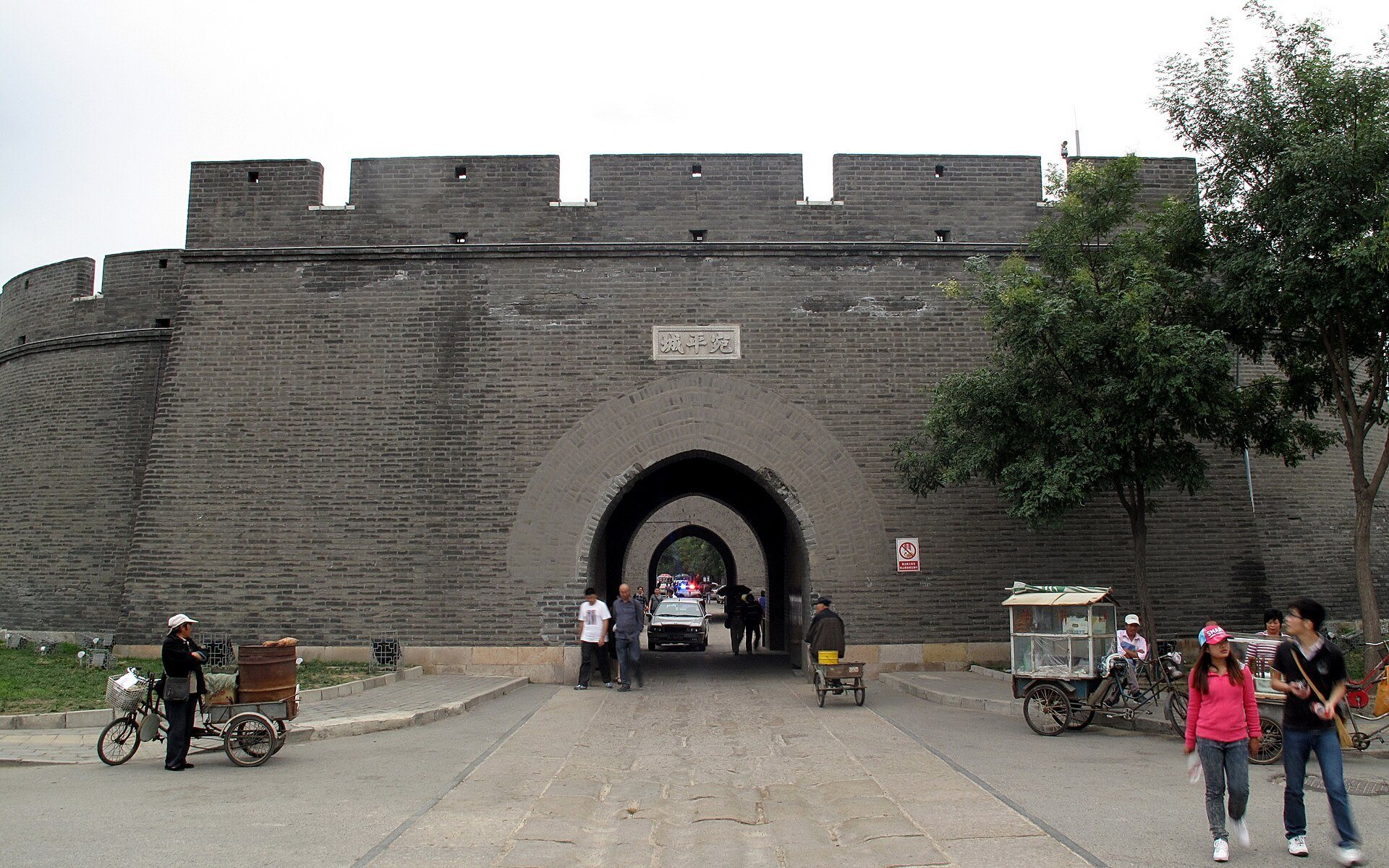
Wanping Fortress stands on the eastern bank of the Yongding River, east of Marco Polo Bridge. Its rectangular enclosure measures about 640 metres from east to west and 320 metres from north to south, covering approximately 208,000 square metres. Surviving walls and towers surround the historic settlement, with gates on the eastern and western sides. Marco Polo Bridge begins at the western gates, while Beijing’s Fifth Ring Road passes through a tunnel beneath the area between the gates and the bridge entrance.
Walls and Western Gates
A broad east-west street connects the two gates and forms the main axis of the settlement. The western entrances are known as the Weiyang Gates, meaning “Strict Gates.” In front of them, a section of old road remains with deep wheel ruts. Comparable paving slabs can be seen on Marco Polo Bridge. Shell holes and other impact marks from Japanese artillery in 1937 remain visible in the fortress walls, and commemorative plaques identify the wartime damage.
Street and Residential Quarters
Traditional Chinese houses line the main street alongside shops, souvenir stalls, restaurants, and teahouses. Lanes and traditional residential quarters extend away from this east-west route. Former barracks and military storehouses have been adapted for commercial uses, while portions of the main street and some buildings have undergone reconstruction.
Museums and Memorial Features
Fortress Museums
The Chinese People’s Anti-Japanese War Memorial Museum occupies the central part of the fortress, north of the main street. A separate museum of traditional Chinese urban life is also located within the enclosure. Together with the preserved walls, streets, and adapted military buildings, these institutions occupy the historic settlement within the fortress.
Memorial Sculpture Garden
The memorial sculpture garden south of the fortress covers 2.25 hectares, while the surrounding park extends across 8.56 hectares. A 15-metre stele stands at the centre, bearing text written by Jiang Zemin, a senior Chinese political leader who served as president of the People’s Republic of China from 1993 to 2003. Sculptures, stelae, and monuments are distributed through the fortress and its surrounding parks.
Outside the western gates, near the entrance to Marco Polo Bridge, Qing-dynasty imperial stelae associated with the Kangxi and Qianlong emperors stand alongside modern historical sculptures. Kangxi and Qianlong were Qing emperors whose long reigns strongly shaped the dynasty. Around the anti-Japanese-war museum are military-patriotic works, including the large monument called the Awakened Lion.
Generals’ Stone Drum Garden
Rows of stone drums stand along the southern wall and within the memorial sculpture garden. Their inscriptions describe crimes committed by the Japanese army during its invasion of China from 1937 to 1945, drawing on material from a publication of the Chinese Historical Society. About 500 drums remain in the fortress area and the sculpture garden.
The stone-drum series is known as the Generals’ Stone Drum Garden. Sculptor, calligrapher, and collector Cai Xueshi began making the drums at his own expense in 1987, using stone from Shaanxi. Around 3,000 calligraphers contributed inscriptions, including 128 Chinese generals, some of whom had taken part in the war when they were young. About 2,700 drums stood near the fortress between 2000 and 2003. Most were moved in 2003 to a forest park elsewhere in the same part of Beijing, but were displaced again when that park was redeveloped in spring 2008. The planned series was intended to contain 3,800 drums.