Purple Bamboo Park: A Historic Chinese Garden in Beijing
Site at a Glance
- Rating
- 4.5
- Popularity
- Low
- Country
- China
- Primary era
- Modern
- Eras represented
- Medieval, Early Modern, Modern
- Civilizations
- Chinese, Jurchen Jin, Qing
- Site type
- Civic
- Remains
- Park
On this page15 sections
History
Purple Bamboo Park is an urban Chinese landscape garden in Beijing, China, developed from historic lakes and imperial garden grounds. Covering 47.35 hectares, it follows a classical mountain-and-water garden tradition that combines water, hills, vegetation, rocks, and framed views. The park’s three principal lakes were formed in 1159, and they supplied Beijing with water during the thirteenth century.
Medieval lakes and the Ming dynasty
The area was associated with the former Gaoliang River and a bridge that bore the same name. During the Ming dynasty, the bridge became a popular recreational place, especially during the Qingming Festival, a spring observance connected with honoring the dead and visiting graves.
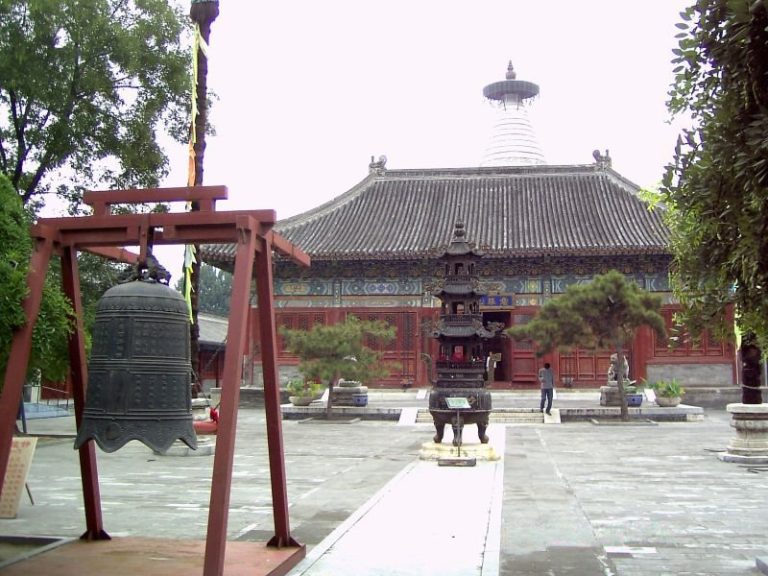
In 1577, the Wanli Emperor, a Ming ruler whose reign lasted from 1572 to 1620, established a royal garden beside the lake. Bamboo was planted there, and the park’s later name developed from Fuyin Purple Bamboo Temple, a Buddhist temple in the area. Longevity Temple was also built northwest of the lake in 1577.
Qing imperial landscape
During the Qing dynasty, emperors built the Purple Bamboo Palace in the area. The imperial household used the Changhe River as a water route from the palace toward the Summer Palace, and the Guangxu Emperor, who reigned from 1875 to 1908, visited frequently. Two stone stelae and two landing stages survive as physical associations with these earlier buildings.
The buildings suffered substantial damage during the Boxer Uprising of 1900. This anti-foreign and anti-Christian movement culminated in military conflict in and around Beijing, affecting many historic sites in the region.
Public park and modern associations
The present public park was established in 1953 and rebuilt and opened to the public in 1954. Its design used the existing lakes and waterways together with artificial hills, ornamental stones, and extensive bamboo planting. A 1,000-square-metre garden complex, including the Purple Bamboo Pavilion and Moon-Viewing Gallery, opened beside the water in 1981. Related work, including a new rock garden, continued until 1987.
Purple Bamboo Park was selected as one of three protest zones during the 2008 Beijing Summer Olympics. It was also formerly known as a gathering place for lesbian women in Beijing, although these gatherings later shifted mainly to specialized restaurants and bars. A popular Beijing saying contrasts Taoranting Park, where couples supposedly “make it,” with Purple Bamboo Park, where they supposedly “separate.” The saying reflects the park’s social reputation rather than a documented historical function.
Remains
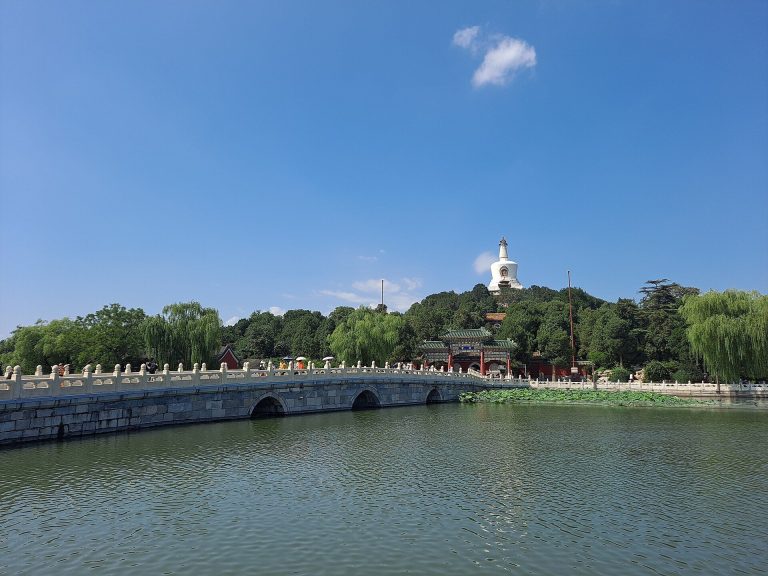
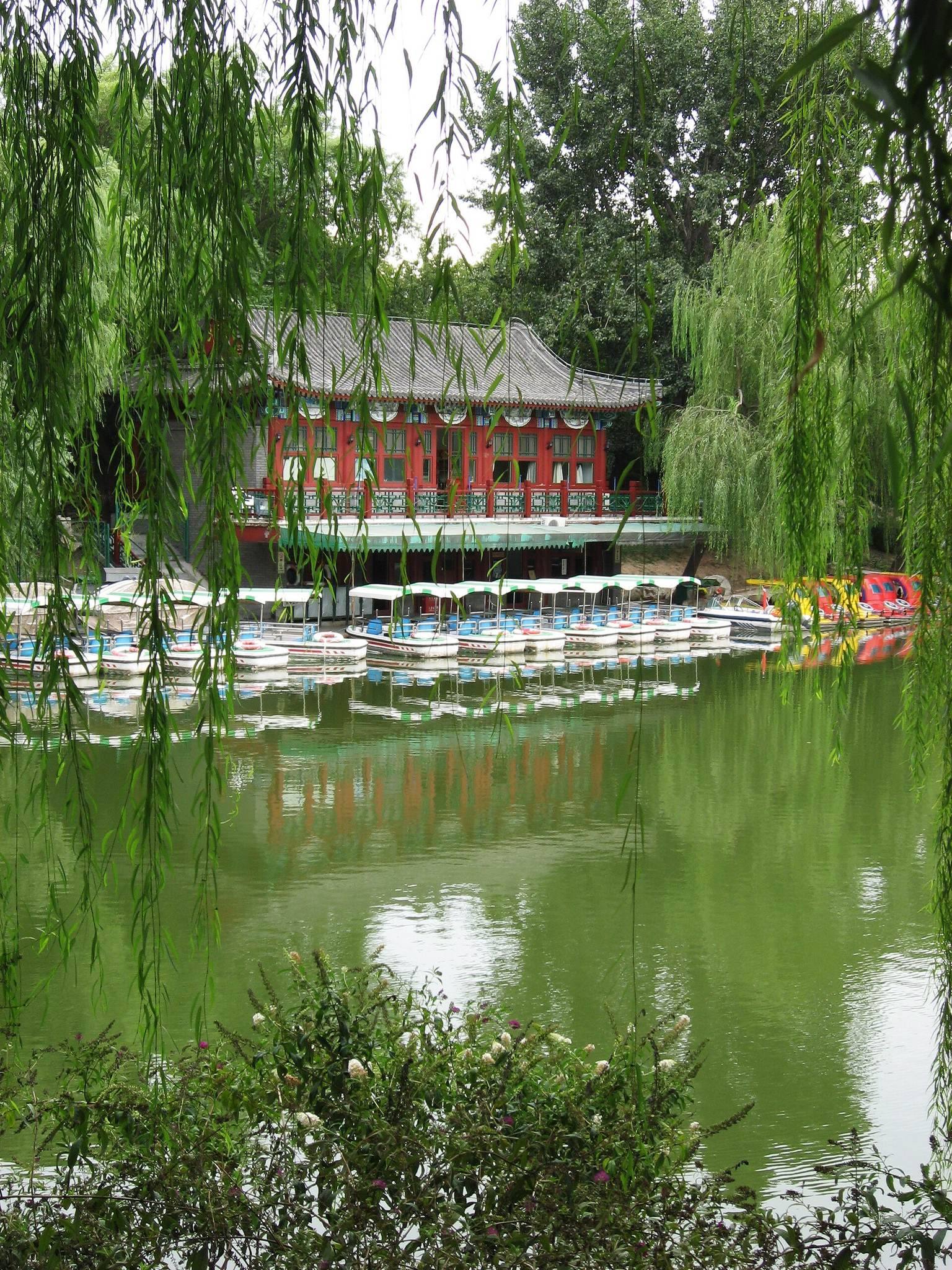
Purple Bamboo Park is organized as a mountain-and-water landscape around three interconnected lakes and canals. About 15.89 hectares of its total area are water. Artificial hills on the eastern shores were formed from earth dredged from the lakes, while naturally occurring hills occupy the western side. The Changhe River crosses the northern part of the grounds, and the Shuangzi Canal also passes through the park. Together, the eastern hills, western hills, waterways, bamboo groves, and ornamental rocks form the main composition of the garden.
Lakes, islands, and bridges
The principal lakes and islands
The Great Lake lies west of the park’s center, with the South Small Lake and North Small Lake forming the other principal water bodies. Qinglian Island occupies the area between the Great Lake and the two smaller lakes. Mingyue Island lies between the Great Lake and the North Small Lake, northwest of Qinglian Island, while another island stands in the North Small Lake. Five bridges connect the lakes, islands, and hills as parts of one organized landscape.
The bridges and West Embankment
The two Hong Bridges cross the water between Qinglian Island and Mingyue Island, and cross the Changhe River west of its junction with the Shuangzi Canal. Plum Bridge lies between Qinglian Island and Chengbi Mountain Lodge. Lotus Bridge connects the South and North Small Lakes and links Qinglian Island with the eastern shore of the South Small Lake.
The West Embankment extends into the western part of the Great Lake. Yide Bridge marks its southern end, Yuebo Bridge its northern end, and Jingyou Pavilion stands between them. The Purple Bamboo Fishing area lies west of the embankment. Chengbi Mountain Lodge occupies the southern shore of the Great Lake, while Lotus Pavilion stands on the embankment between the Changhe River and the North Small Lake.
Bamboo and planted landscapes
Bamboo groves
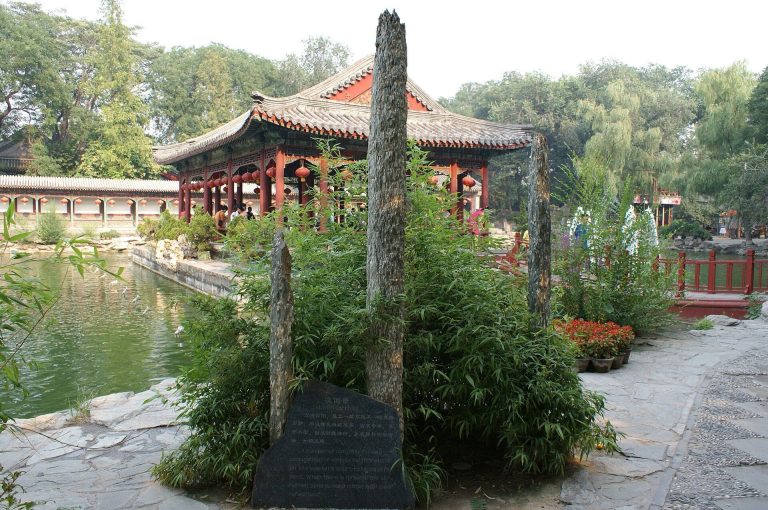
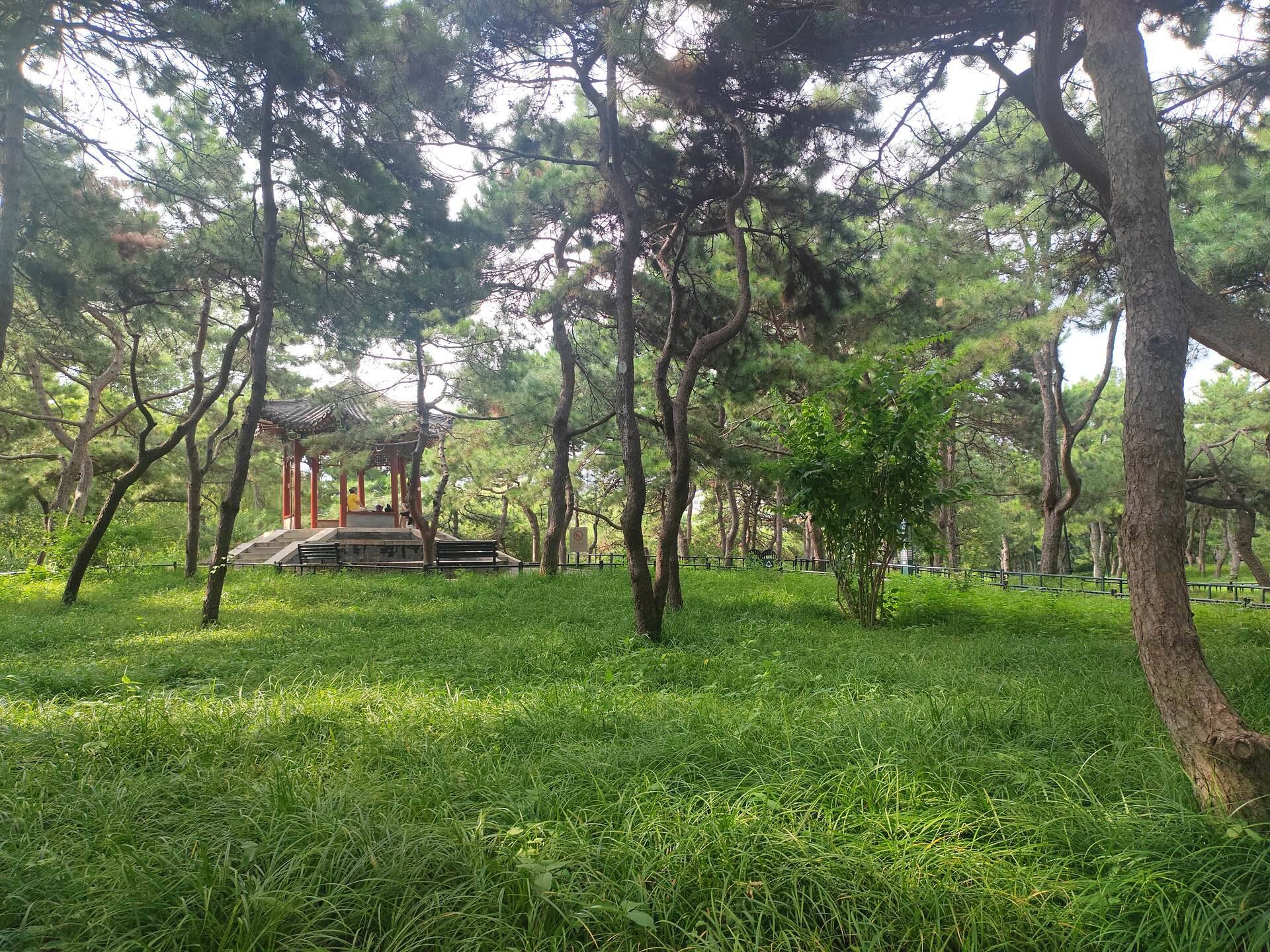
Bamboo is one of the park’s defining planted features. The grounds contain up to 50 species, including rare varieties, and cultivate more than 10,000 bamboo plants alongside other trees and many flowers. Some groves are enclosed by high supports that protect the stems from bending in strong winds.
Bamboo-and-Stone Garden
The Bamboo-and-Stone Garden scenic area lies on the northern bank of the Changhe River. Pine, bamboo, and stones provide its principal landscape elements. The area includes the Bamboo-and-Stone Garden, Green-cloud Pavilion, Spotted Bamboo Foothill, Deep Bamboo and Quiet Lotus, Youxian Mountain Lodge, Listening-to-the-Waves Pavilion, Jiangnan Bamboo Charm, Cool Shade and Hidden Beauty, Plum Terrace, Another World, and the Chess Cottage.
Island gardens and themed features
Qinglian Island and the Great Lake
Bayi Pavilion stands on Qinglian Island, facing the Lotus Ferry on the South Small Lake and backed by a bamboo grove. On the northern shore of the Great Lake, south of the Changhe River, the Cross-Sea Eastern Expedition garden sculpture takes Chinese chess as its theme.
Mingyue Island
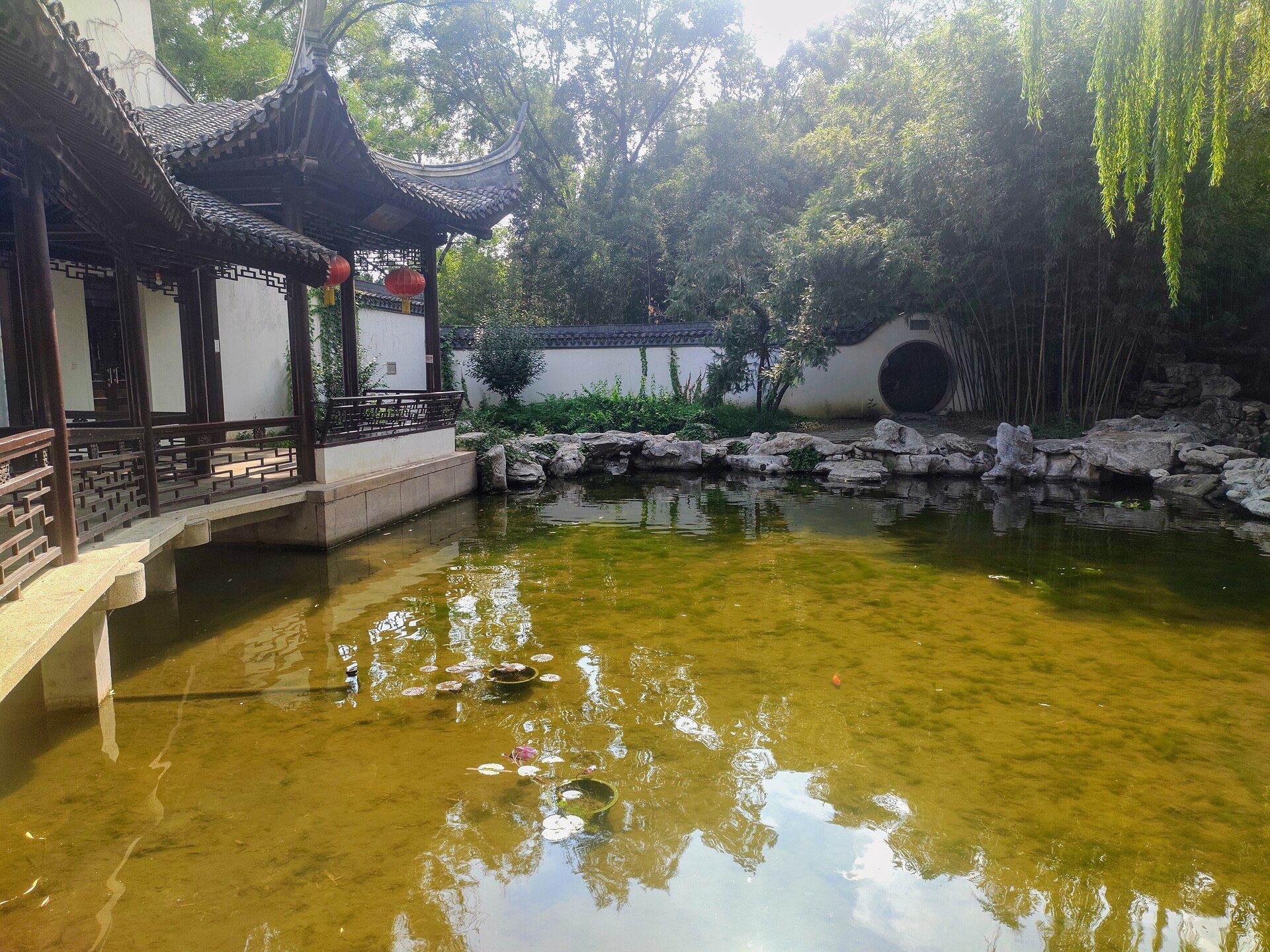
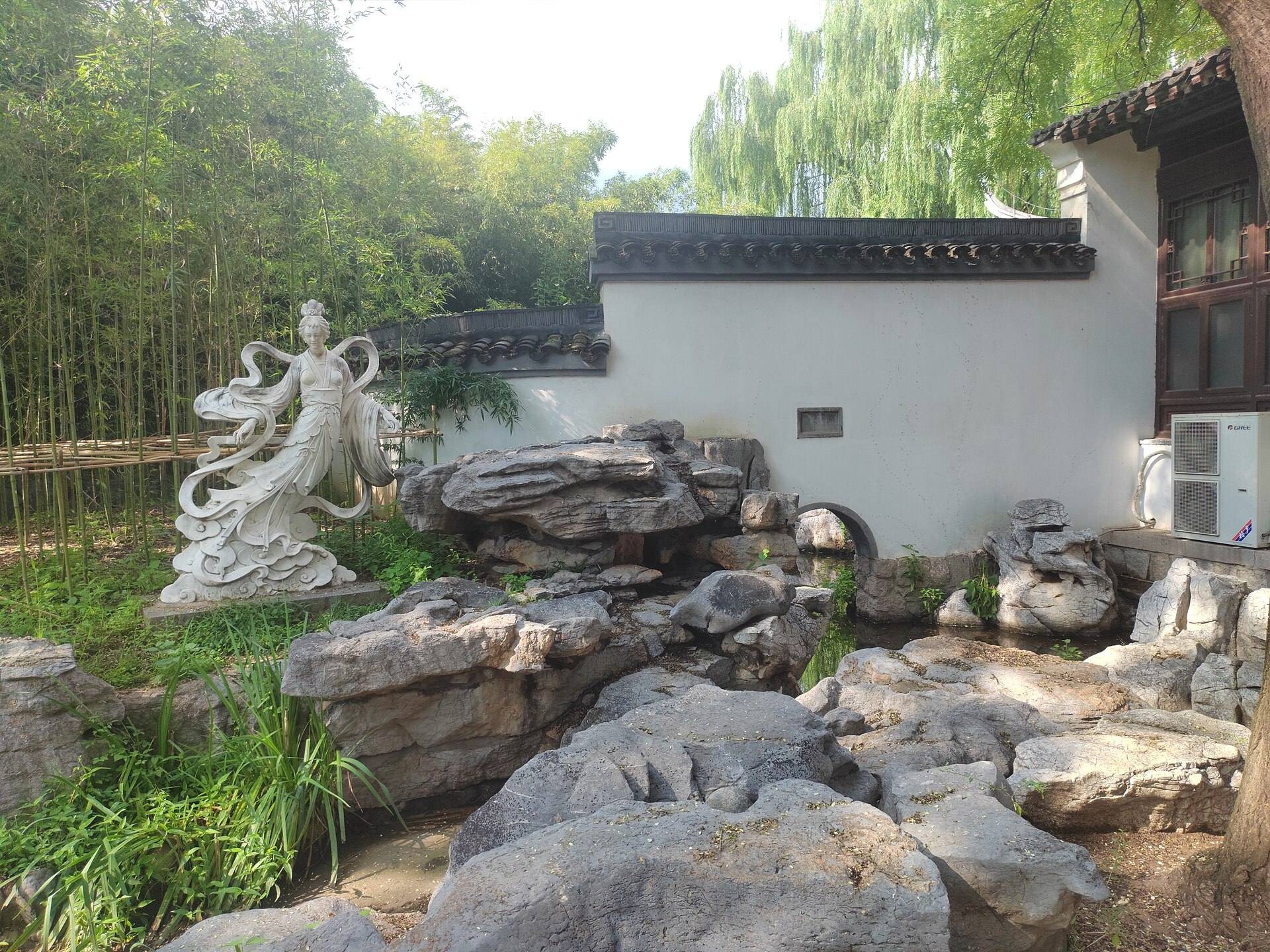
The Flute Music Enchants the Moon garden on Mingyue Island is arranged around a central courtyard. Its Waiting-for-the-Moon Pavilion and Moon-Walking Gallery frame a stone sculpture called “Jade Maiden Playing the Flute.” Asking-the-Moon Tower stands west of the pavilion, while a Lotus Ferry lies to its east in the North Small Lake. South of the tower, a conical-hat pavilion stands beside a stone stele inscribed with the words “Observing Fish.”
Water, stone, and garden structures
Ornamental stones are used throughout the garden, particularly in combination with the eastern artificial hills and the western natural hills. The park also contains traditional Chinese moon bridges. Their arched or semicircular forms can appear as complete circles when reflected in still water. Winding bridges along the ponds provide changing viewpoints and make the water spaces appear visually larger.
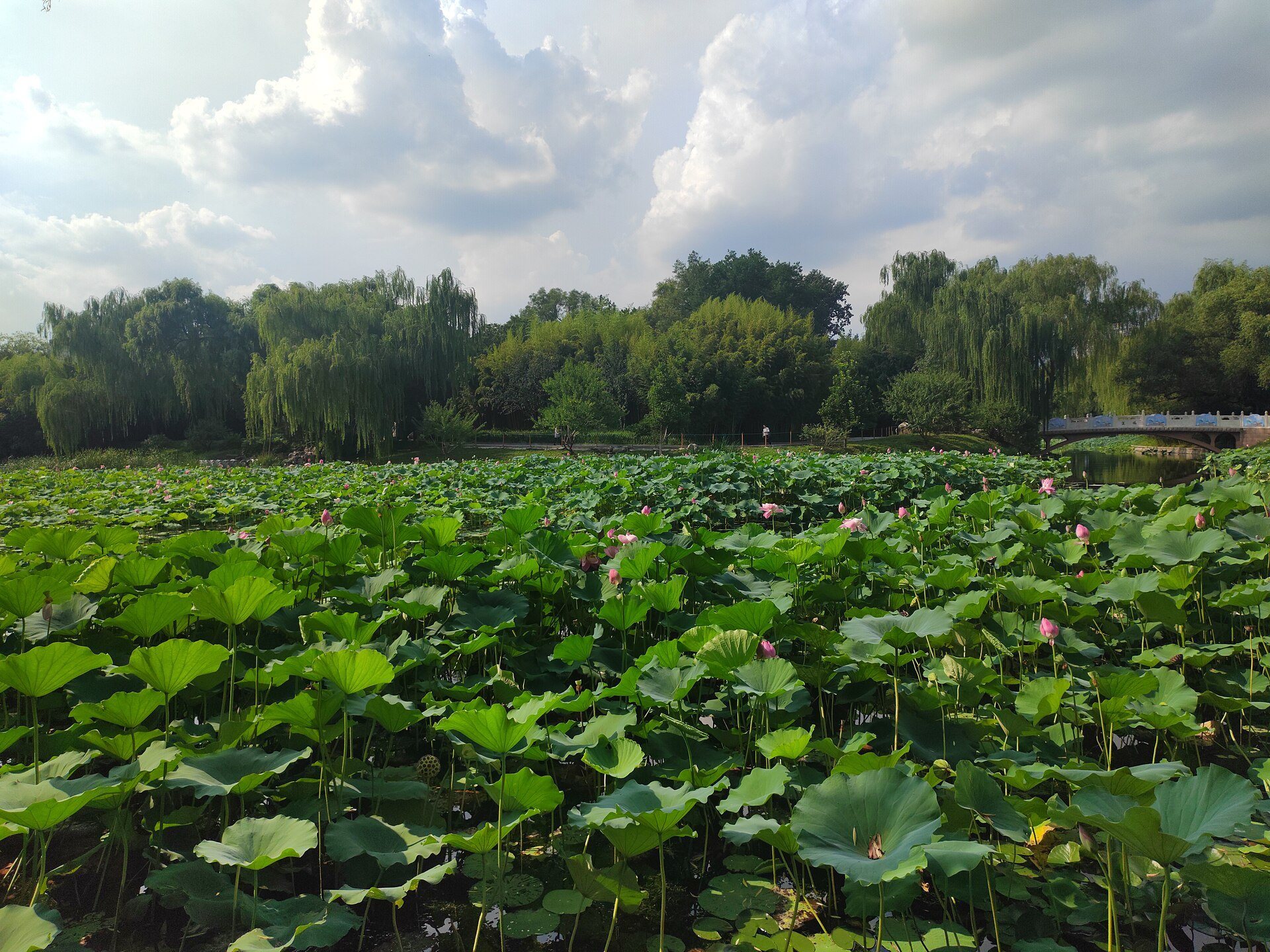
Lotus-shaped rest areas stand beside the ponds, whose shores contain extensive lotus growth. Other lotus-themed landscape elements and a range of decorative garden structures accompany the water features. An art museum is also located within the park, adding a cultural building to the historic water-and-garden setting.