Trausnitz Castle: A Historic Fortress in Landshut, Germany
Visitor Information
Google Rating: 4.7
Popularity: Medium
Official Website: www.burg-trausnitz.de
Country: Germany
Civilization: Early Modern, Medieval European
Site type: Military
Remains: Castle
History
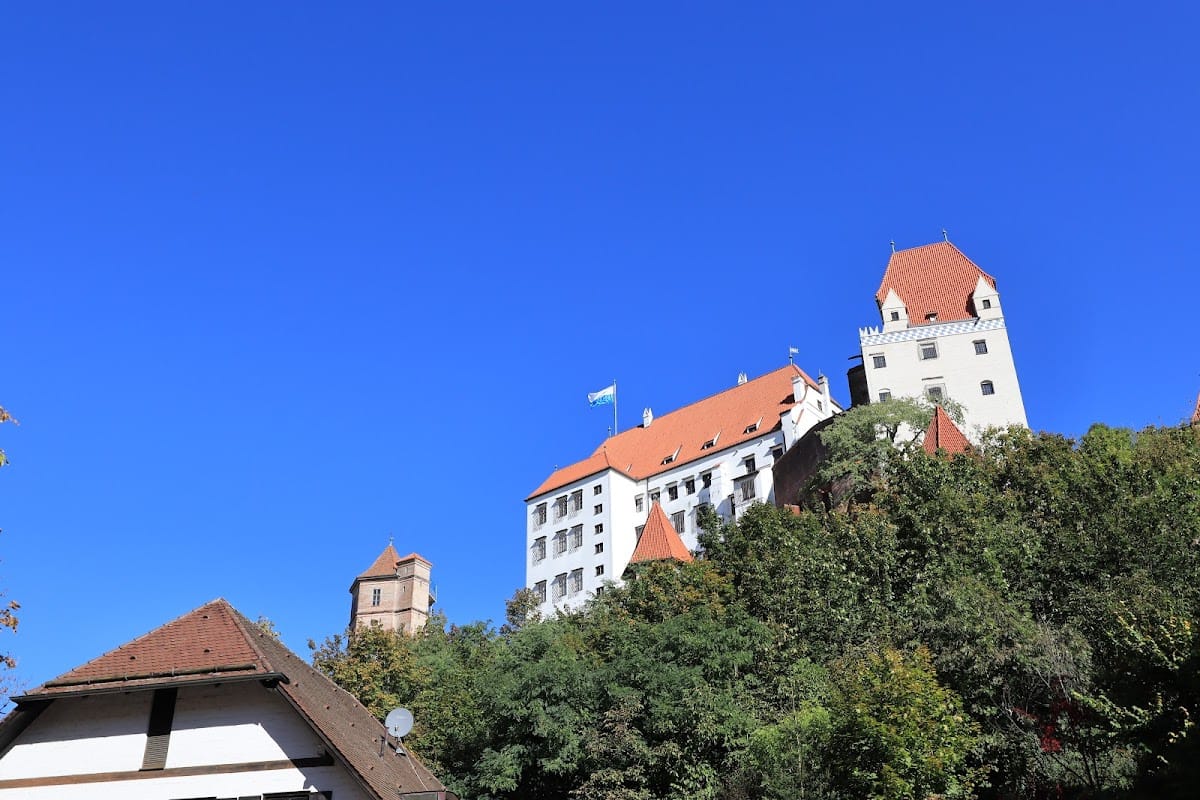
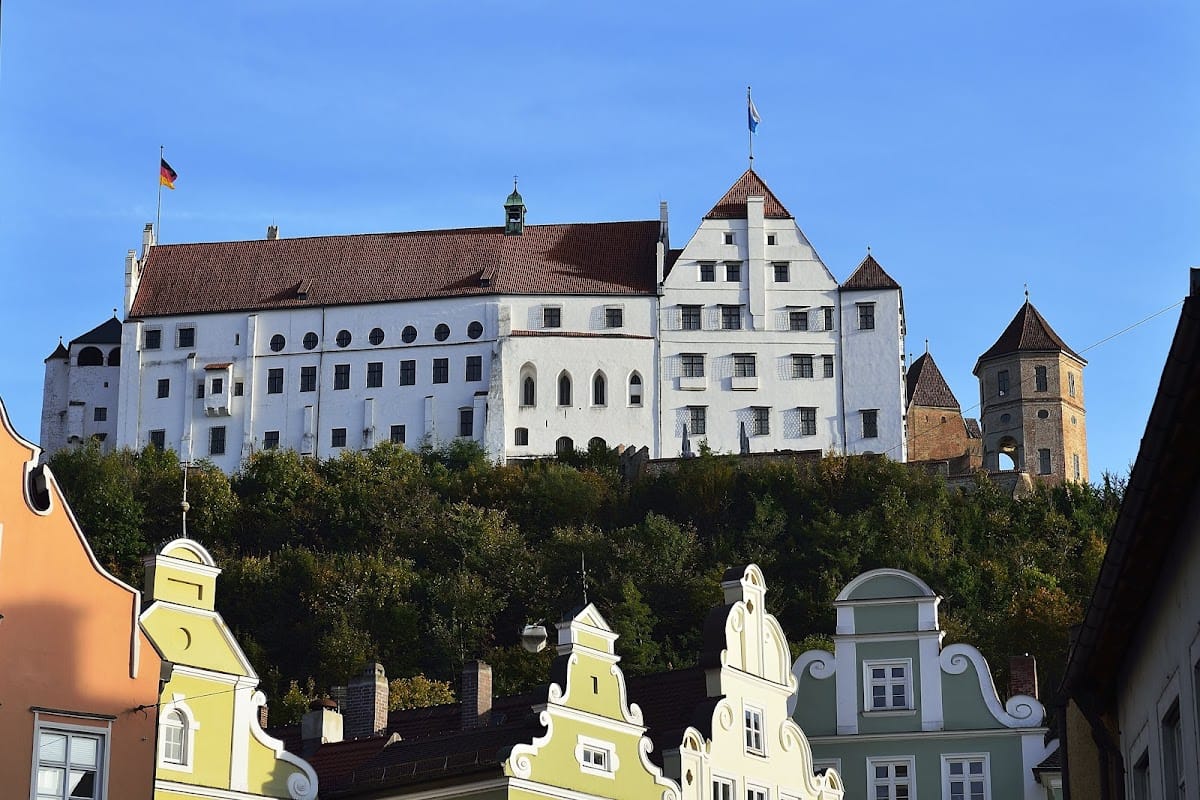
Trausnitz Castle is situated above the historic center of Landshut, Germany. Its origins trace back to prehistoric times, with archaeological finds revealing early fortifications from the Urnfield culture, attesting to the site’s long-standing strategic importance.
The earliest known structure on the location was a wooden watchtower recorded around 1150 under the name Landeshuata, from which the city of Landshut eventually took its name. By 1204, Duke Ludwig I of Bavaria began construction of the stone castle that forms the core of today’s Trausnitz. This period marks the founding of Landshut itself.
Throughout the early 13th century, the castle quickly rose in prominence. By 1227, Elisabeth of Bavaria was born there; she would later become queen consort in Germany, Sicily, and Jerusalem. The castle was largely completed by 1235 and served as a political and cultural hub, hosting Emperor Frederick II and prominent Minnesänger—medieval lyric poets—such as Tannhäuser and Walther von der Vogelweide.
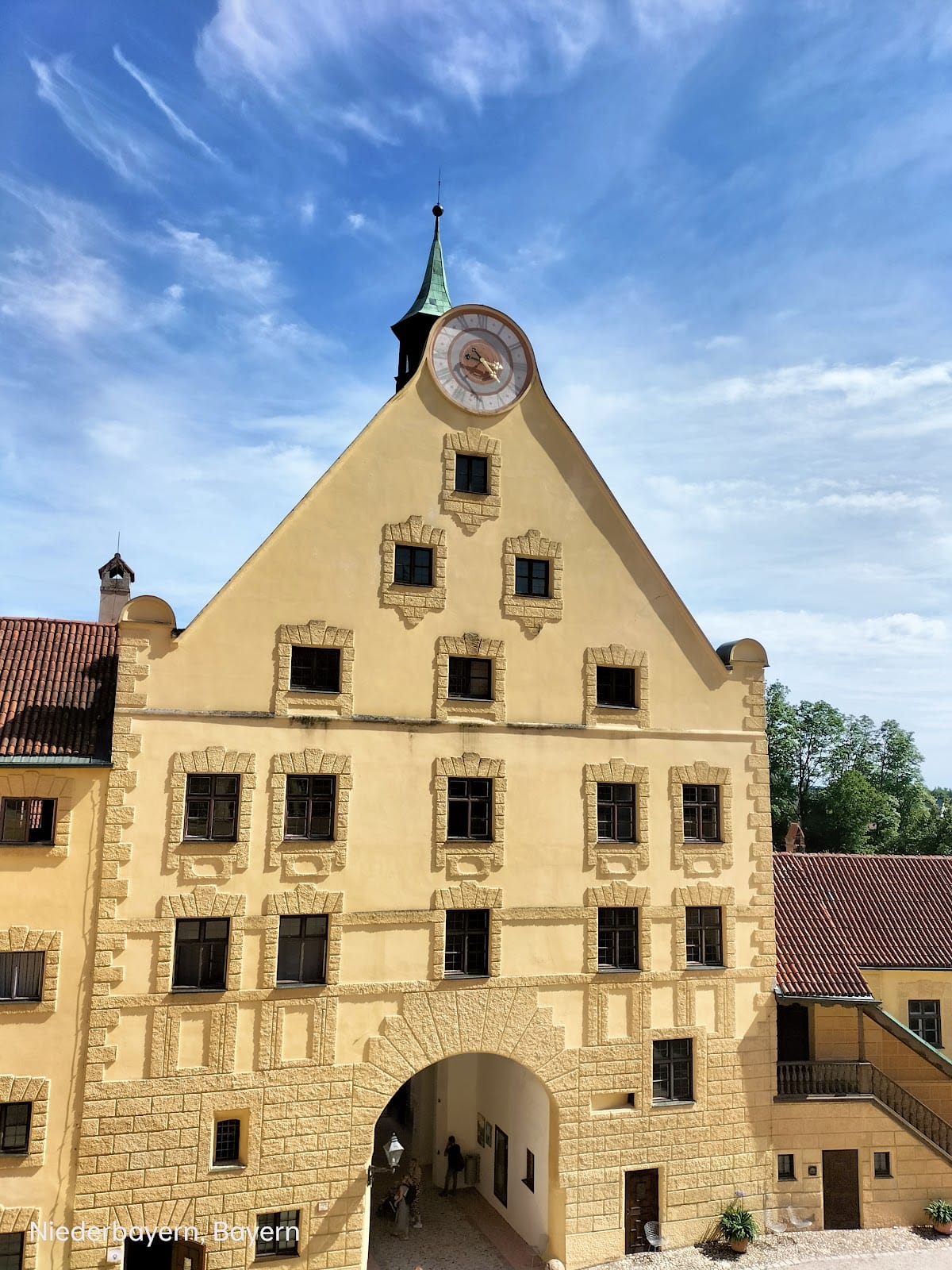
In 1255, after the division of Bavarian territories, Trausnitz became the residence of the dukes of Lower Bavaria alongside Landshut. The 15th century brought expansions under Dukes Ludwig IX and George the Rich, who heightened the curtain walls and added a heated hall known as the Dürnitz along with new towers. These enhancements emphasized the castle’s defensive capabilities and residential function.
The 16th century saw the castle renamed Burg Trausnitz and it remained the ducal seat until 1503. Duke Ludwig X launched Renaissance-style interior renovations starting in 1516, though very few elements from this remodeling survive. Later in the century, from 1568 to 1579, Prince Wilhelm V fostered a cultural blossoming at the castle. Under his patronage, musicians and artists flourished, and Bavaria’s first court brewery was established here in 1573, producing dark beer until 1590.
Architect and painter Friedrich Sustris played a key role during this Renaissance transformation, leading ambitious remodeling projects that included the addition of arcaded galleries and elaborate wall paintings in the Florentine Mannerist style. Unfortunately, most of these decorations were destroyed in a fire in 1961.
In 1634, during the Thirty Years’ War, the castle and city endured a siege by Swedish forces. An attack exploiting a breach in the eastern wall allowed the Swedes entry, leading to the naming of the “Swedish Gate” at the site of their entry.
Later in the 17th and 18th centuries, the castle’s use shifted towards more utilitarian purposes. Elector Ferdinand Maria expanded mural decorations in the late 1600s, though these too eventually disappeared. By the 1700s, parts of the castle served as barracks and a prison for noble prisoners, while a brief silk and wool manufactory operated from 1762.
From the early 19th century, Trausnitz hosted military barracks, a hospital, and a cholera hospital from 1831. In the late 19th century, King Ludwig II commissioned lavish Neo-Renaissance interiors in the Fürstenbau wing, completed between 1869 and 1873, including furnishings and sculptural work for the St. George Chapel.
The castle housed the Lower Bavarian State Archives until 2016. A notable archivist, Josef Edmund Jörg, worked and died there in 1901. Restoration efforts under architect Rudolf Esterer began in 1924, preserving the castle through the 20th century.
Remains
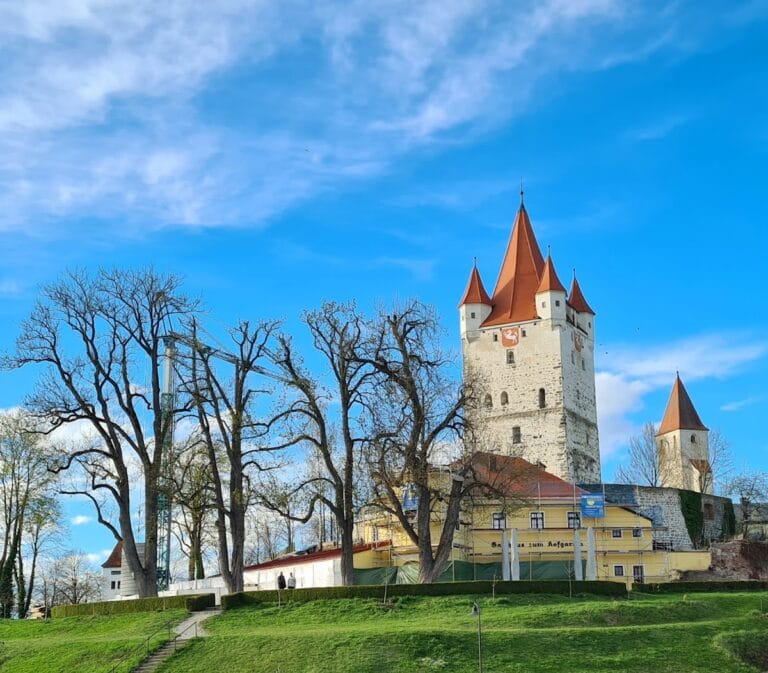
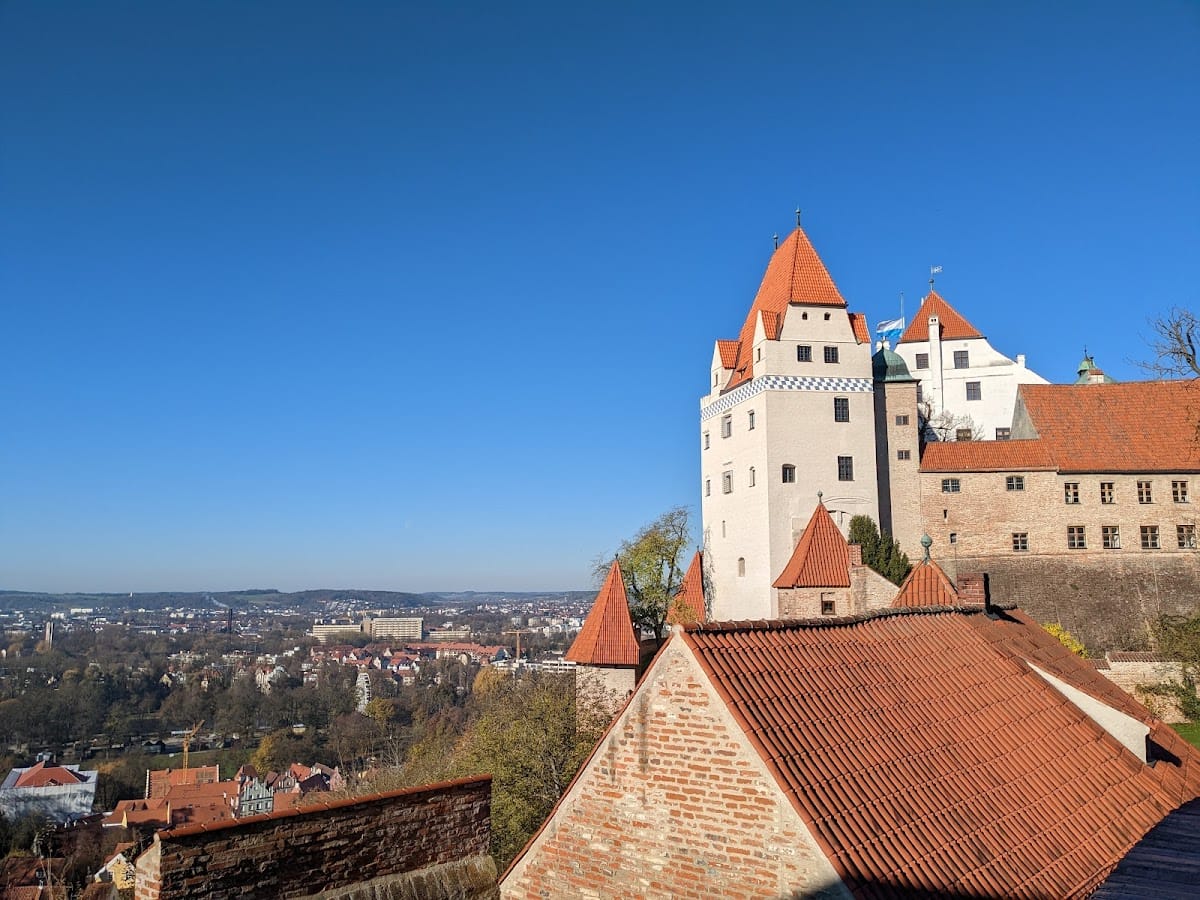
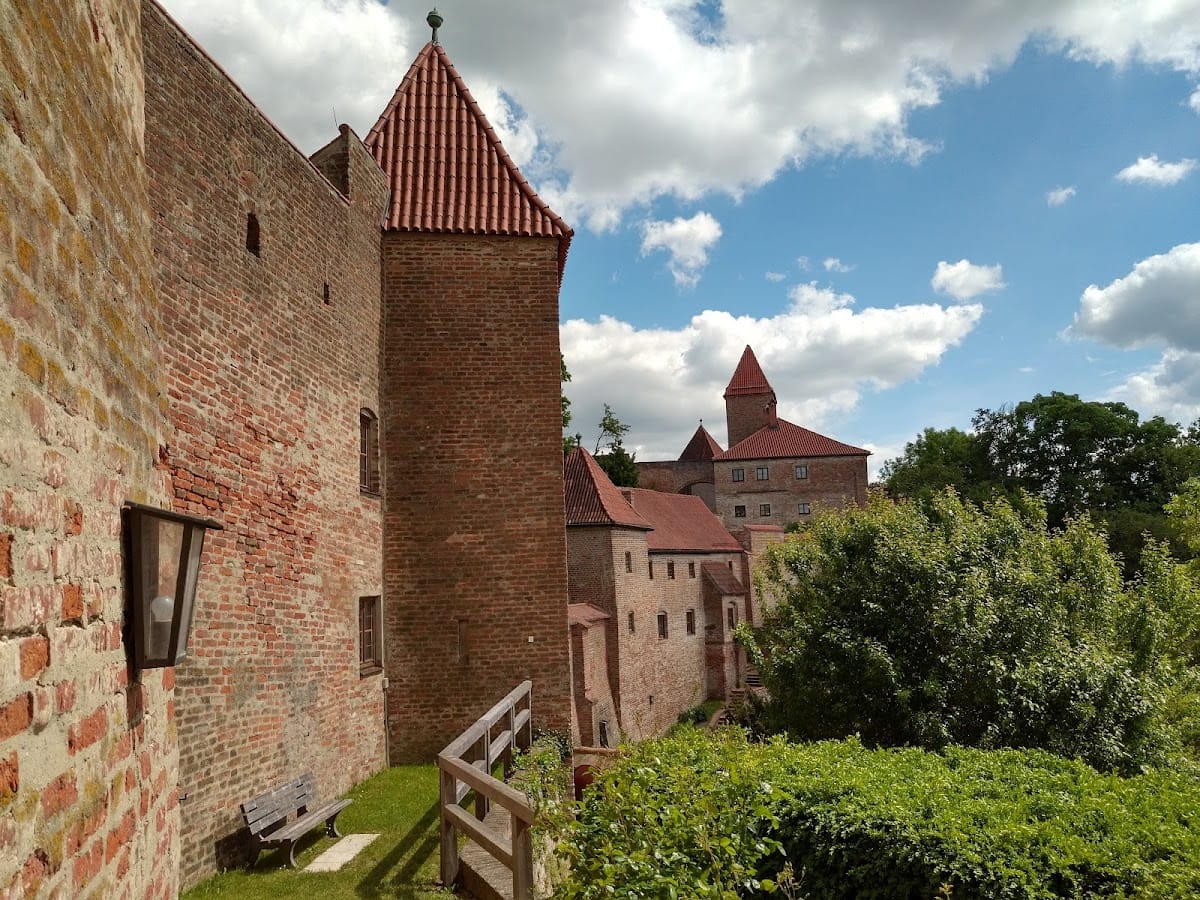
Trausnitz Castle occupies a hilltop with a complex layout combining medieval fortifications and Renaissance modifications. The main castle, or Hauptburg, is situated on the southwestern edge of the hill and includes several important structures such as the bergfried or main tower known as the Wittelsbacher Turm, multiple residential wings, gates, and chapels arranged around inner courtyards.
The oldest surviving sections, dating from the early 13th century, showcase the Cistercian Gothic style in their sturdy stone construction. These include the original curtain wall encircling the castle, the palas or main residence, and the bergfried. Among these, the St. George Chapel stands out as a late-Romanesque building notable for its 13th-century sculptures. The old Dürnitz or Knights’ Hall is a two-nave stone hall measuring approximately 245 square meters, reflecting the castle’s medieval residential and ceremonial functions. This hall is still used for banquets and exhibitions today.
The 15th-century expansions added rooms such as a smaller Dürnitz and the White Hall (Weißer Saal), a large two-story festive hall measuring about 240 square meters. While the White Hall was intended for grand occasions, it is understood not to have been fully completed, lacking the customary mural paintings for such spaces.
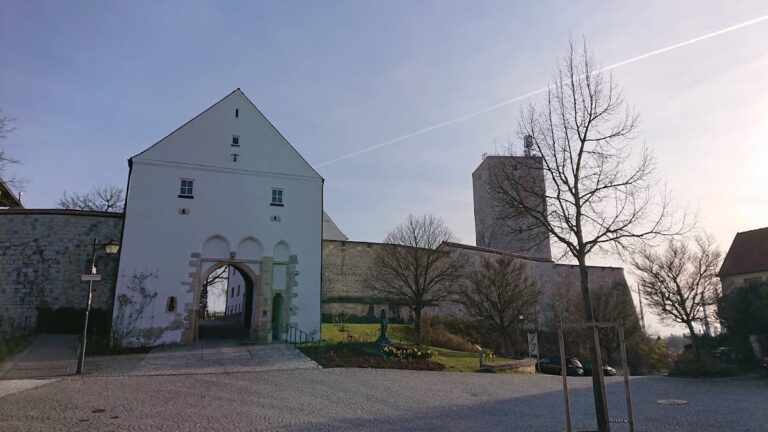
A new bergfried was constructed in 1494, further strengthening the castle’s fortifications. Several gates survive, including the double-tower gate, which has undergone multiple alterations throughout the castle’s history.
During the Renaissance, architect Friedrich Sustris introduced three-story arcaded galleries on the facades facing the courtyards, combining architectural functionality with artistic elegance. These galleries featured flat pilasters and connected the various main wings, including the Fürstenbau or Princes’ Building.
The Italian annex to the west side of the Fürstenbau contains a rectangular loggia with a staircase and cabinets on each floor. Its coffered vaults bear Italian Renaissance-style paintings, complemented by frescoes along the stairwell walls portraying characters from the Commedia dell’arte—an Italian theatrical tradition—painted by Alessandro Paduano between 1575 and 1579. This painted stairway is known as the “Narrentreppe” or Staircase of Fools.
The Söller, a terrace tower known from 1493, features round-arched arcades and a wooden ceiling decorated with rosettes from Wilhelm V’s period. The structure includes a small stair tower and a masonry music platform and currently accommodates audiences of up to 99 people.
The Damenstock, or Ladies’ Wing, houses the “Art and Curiosities Chamber” museum, established in 2004. This collection reflects Duke Albert V’s Renaissance-era assembly of around 750 objects, categorized into artificial creations, natural specimens, exotic items, and scientific artifacts.
The outer ward, or zwinger, surrounds the castle on the south and southwest with defensive walls and towers. Beyond it lies the outer courtyard (Vorburg) to the east, which once contained agricultural buildings but suffered damage during the 1634 Swedish siege. These former structures no longer remain, and the area is now known as the “Swedish Meadow” (Schwedenwiese).
One notable feature linked to historical use is the “Fürstentreppe” or Princes’ Staircase, also called the “Ochsenklavier” or Ox Piano. This brick-built sloped path includes lateral reinforcements designed to allow horses to ascend from the old town up to the outer courtyard.
The castle’s Fürstenbau wing endured a major fire on October 21, 1961, which destroyed most of its frescoes, furnishings, and King Ludwig II’s apartments. However, the Narrentreppe staircase and St. George Chapel survived. The Fürstenbau was later rebuilt and served as the home of the Landshut State Archives until 2016.
Surrounding the castle are forested areas and the Hofgarten, a former palace garden redesigned in the late 18th century in the Neoclassical style. Opened to the public in 1837, this garden provides a landscaped setting adjoining the castle’s outer defenses.
Nearby sites