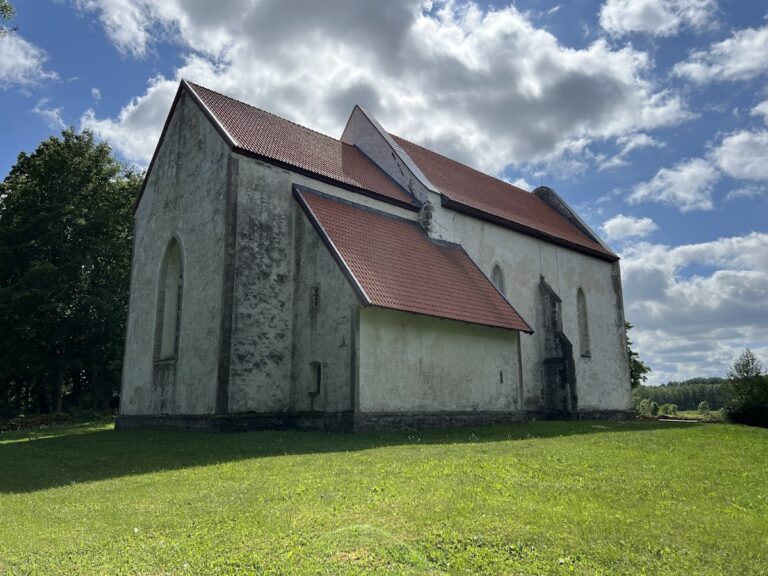
Haapsalu Castle: Episcopal Residence and Fortress in Estonia
Site at a Glance
- Rating
- 4.7
- Popularity
- Medium
- Country
- Estonia
- Primary era
- Medieval
- External website
- Open
- Eras represented
- Medieval, Early Modern, Modern
- Civilizations
- Crusader, Holy Roman Empire, Russian
- Site type
- Military
- Remains
- Castle
On this page14 sections
History
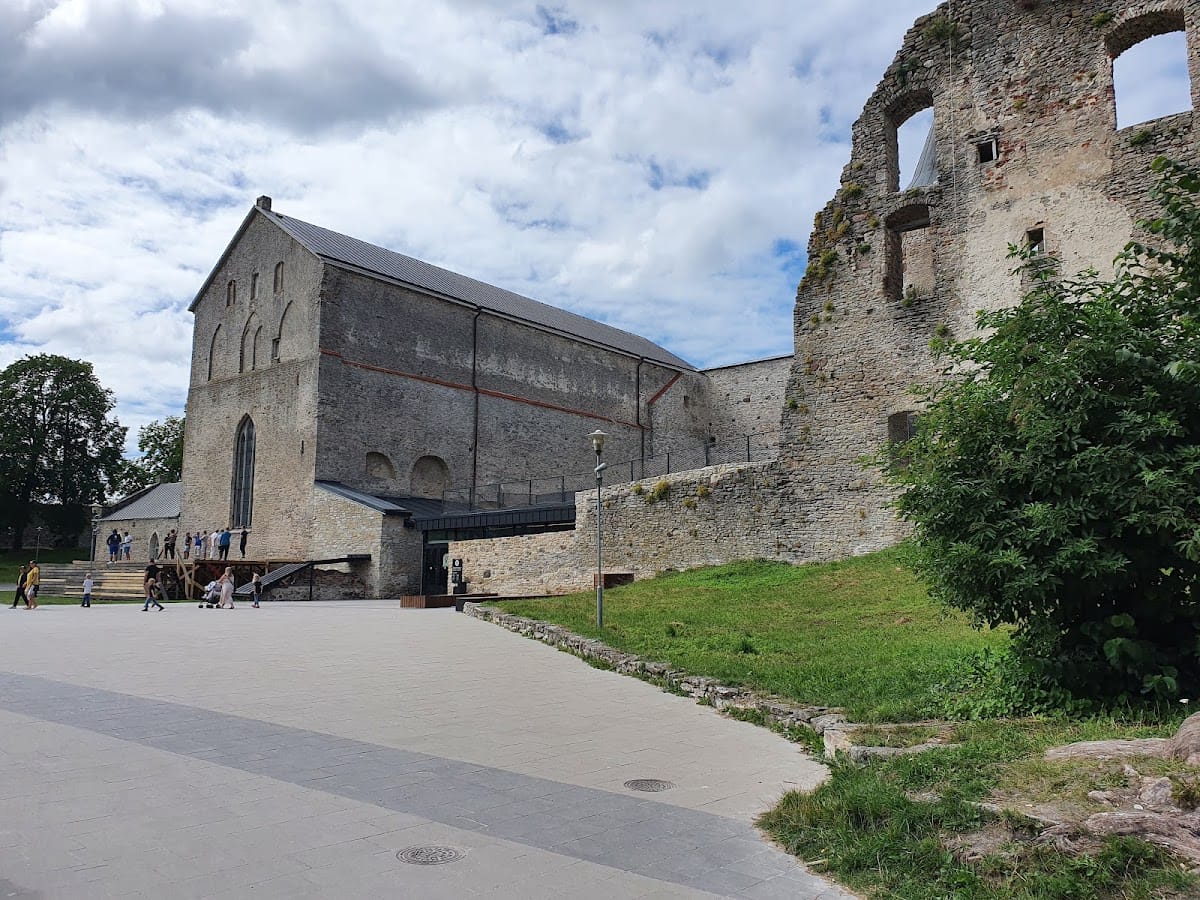
Haapsalu Castle in Estonia was founded in the thirteenth century as the episcopal residence and administrative center of the Ösel-Wiek Bishopric, a medieval ecclesiastical territory covering islands and coastal areas in present-day western Estonia. Haapsalu grew around the castle and its cathedral, which served as the bishopric’s principal church and the official seat of its bishop.
Foundation of the bishopric
In 1228, Archbishop Albert of Riga established a new diocese comprising Läänemaa, Saaremaa, and Hiiumaa, appointing Gottfried, the Cistercian abbot of Dünamünde, as its bishop. The Cistercians were a Western Christian monastic order known for disciplined communal religious life. On 1 October 1228, Henry VII established the diocese as a vassal state of the Holy Roman Empire, a political union whose territories held their lands within a feudal and imperial framework. In 1234, the papal legate William of Modena fixed its boundaries.
The bishopric’s first residence was at Lihula, where a stone fortification was built with assistance from the Sword Brothers. To avoid conflict with that powerful military order, the episcopal residence was moved to Perona. The Lithuanians burned Perona ten years later, after which Haapsalu was selected as the new diocesan center. Construction of an episcopal castle and cathedral then began.
Medieval expansion
Building, enlargement, and reconstruction continued for three centuries. Changes in weaponry influenced the castle’s architecture, while its medieval complex reached its final dimensions under Bishop Johannes IV Kievel during his episcopate from 1515 to 1527.
Haapsalu Cathedral was the principal church of the Ösel-Wiek Bishopric and the bishop’s official workplace. Bishop Herman I, regarded as the founder of Haapsalu, referred to the cathedral and settlement in the Haapsalu charter. He described the town as a place where residents could gather, seek refuge, and defend the church when necessary.
War, decline, and changing ownership
The Livonian War, a sixteenth-century conflict that brought major political and religious changes to the eastern Baltic, caused serious damage to the fortress between 1558 and 1582. The walls of the smaller castle and the outer fortifications were partly destroyed. Estonia subsequently became part of the Lutheran Swedish kingdom, and the former Catholic cathedral became a Lutheran parish church known as the Castle Church. A Lutheran parish was a local Protestant congregation.
In 1625, King Gustav II Adolf of Sweden sold Haapsalu, the castle, and the surrounding property to Count Jacob De la Gardie. De la Gardie planned to convert the deteriorated fortress into a modern castle and invited the sculptor and master builder Arent Passer to advise him. During the seventeenth century, however, the Swedish authorities ceased to use the castle as a defensive structure.
After Estonia came under Russian rule during the Great Northern War in 1710, Peter I ordered the demolition of parts of the walls. The Great Northern War was an early-eighteenth-century conflict in which Sweden lost control of Estonia to Russia. These demolitions left the castle effectively in ruins.
Cathedral restoration and later history
A fire on 23 March 1688 destroyed the cathedral’s copper-sheet roof, although the church was restored relatively quickly. A storm destroyed the roof again in 1726. The congregation had become too small to pay for further repairs and moved to the town church. During the nineteenth century, the cathedral ruins began to be incorporated into a romantic castle park.
The cathedral was repaired and restored between 1886 and 1889, and its first service dedicated to Saint Nicholas after the restoration was held on 15 October 1889. Soviet rule brought another sharp change: the cathedral was closed in 1940. Services continued during the Second World War, but in spring 1944 intruders destroyed the altar, organ, chairs, and windows. A 1946 request to place the cathedral on the list of protected historic monuments failed. The empty church was later used to store grain, and proposals were even made to convert it into a swimming pool.
On Mother’s Day in 1992, a Mother’s Altar was consecrated in memory of Estonian mothers who died during the Soviet occupation. The sculptor Hille Palm created the altar’s statue of the Virgin and Child.
The White Lady tradition
Haapsalu’s enduring cultural identity is also linked to the White Lady, a legendary apparition associated with the chapel during the August full moon. According to the story, a canon or priest secretly brought an Estonian girl into the bishop’s castle disguised as a choirboy. After she was discovered, she was walled into the chapel, while the cleric was imprisoned and died of hunger. The White Lady is a legend rather than a documented historical person.
The appearance has been connected with a light-and-shadow effect. When the August or September full moon is low, moonlight enters through the baptistery’s eastern window and is reflected onto the southern wall, forming a female silhouette. The effect can be viewed from the opposite rampart or from the foot of the rampart. White Lady Days, a music festival held around the August full moon, continues this tradition.
Remains
Fortified complex
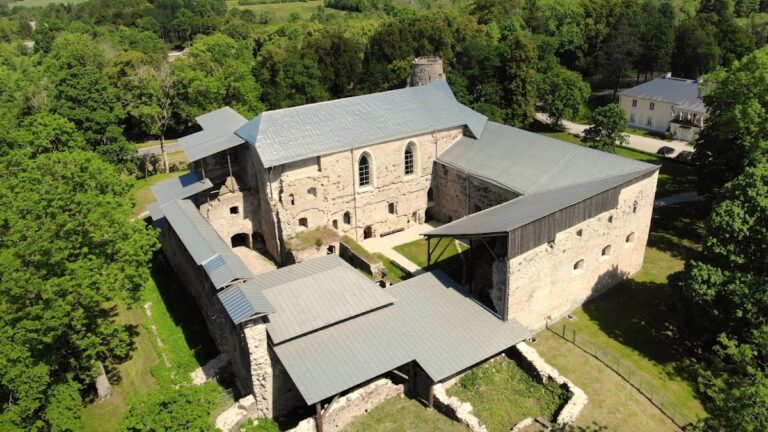
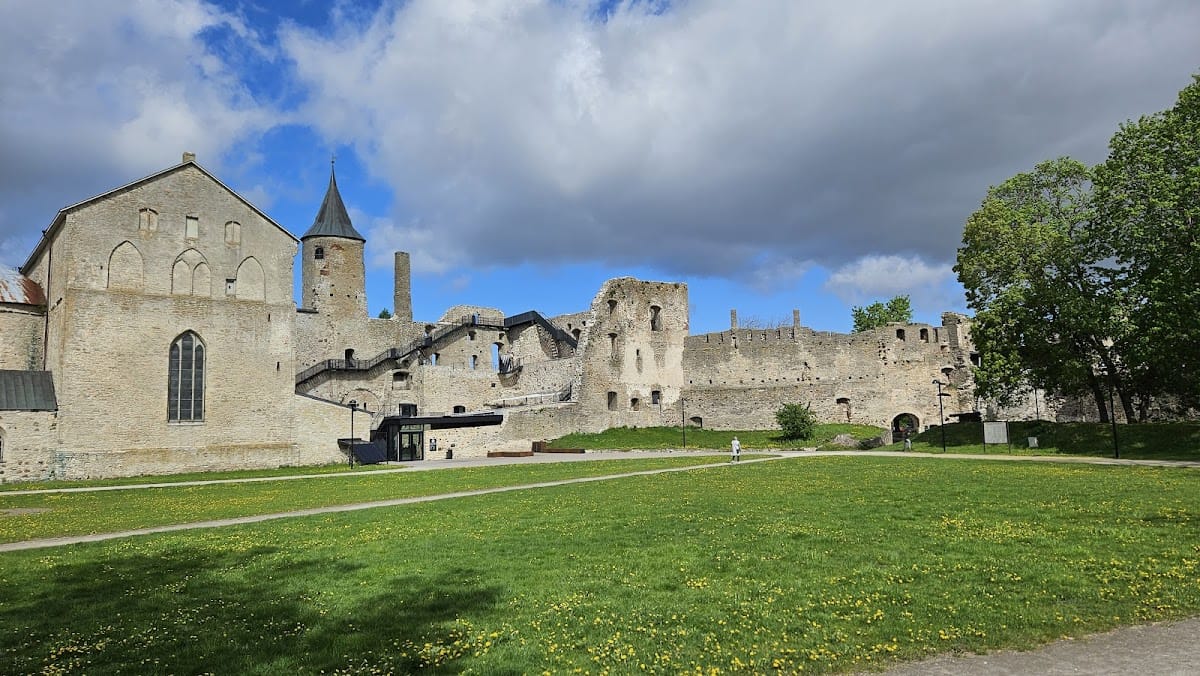
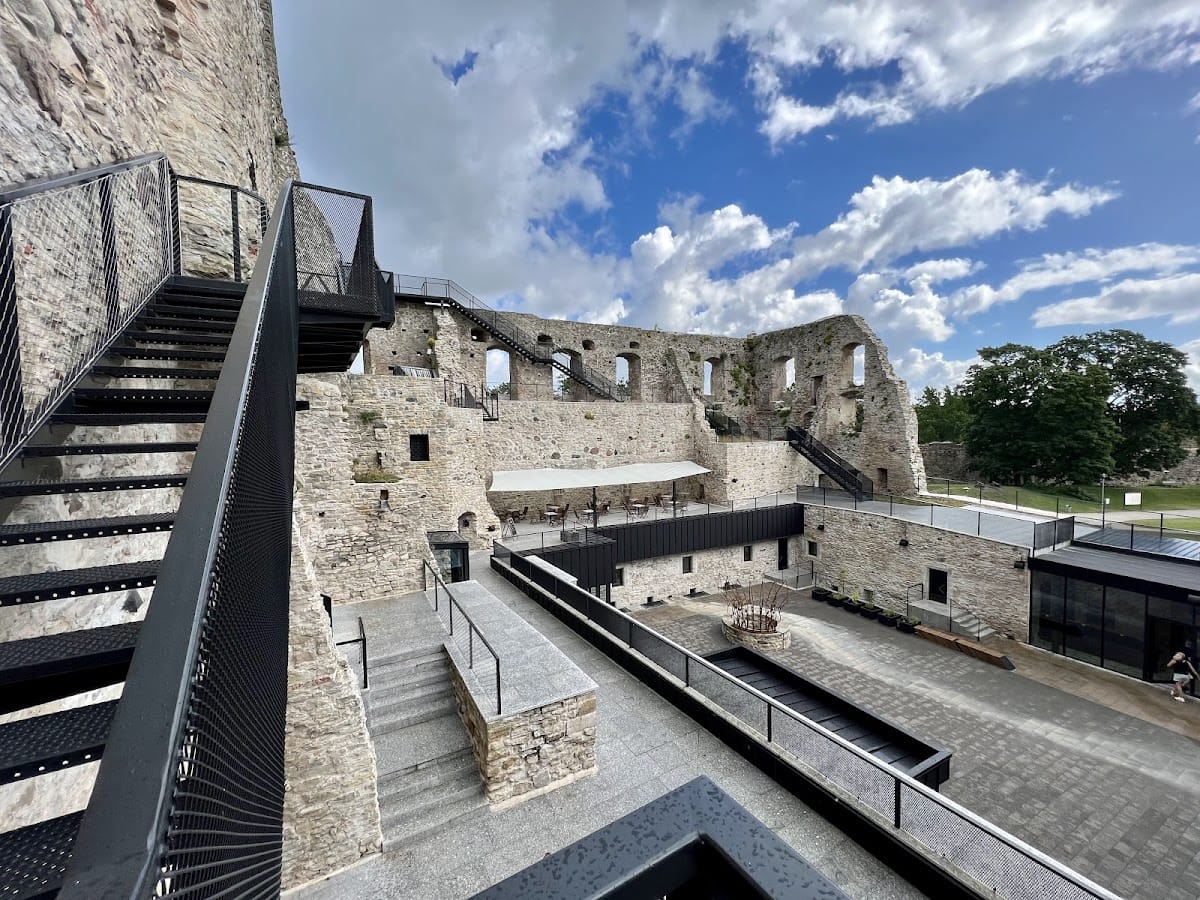
Haapsalu Castle occupies more than 30,000 square meters. Its walls measure between 1.2 and 1.8 meters in thickness and reached more than 10 meters in height in some places before later being raised to approximately 15 meters. The surviving complex reflects successive changes from episcopal residence to military fortress and, after its defensive use ended, to a ruin shaped by demolition and weather.
Western watchtower
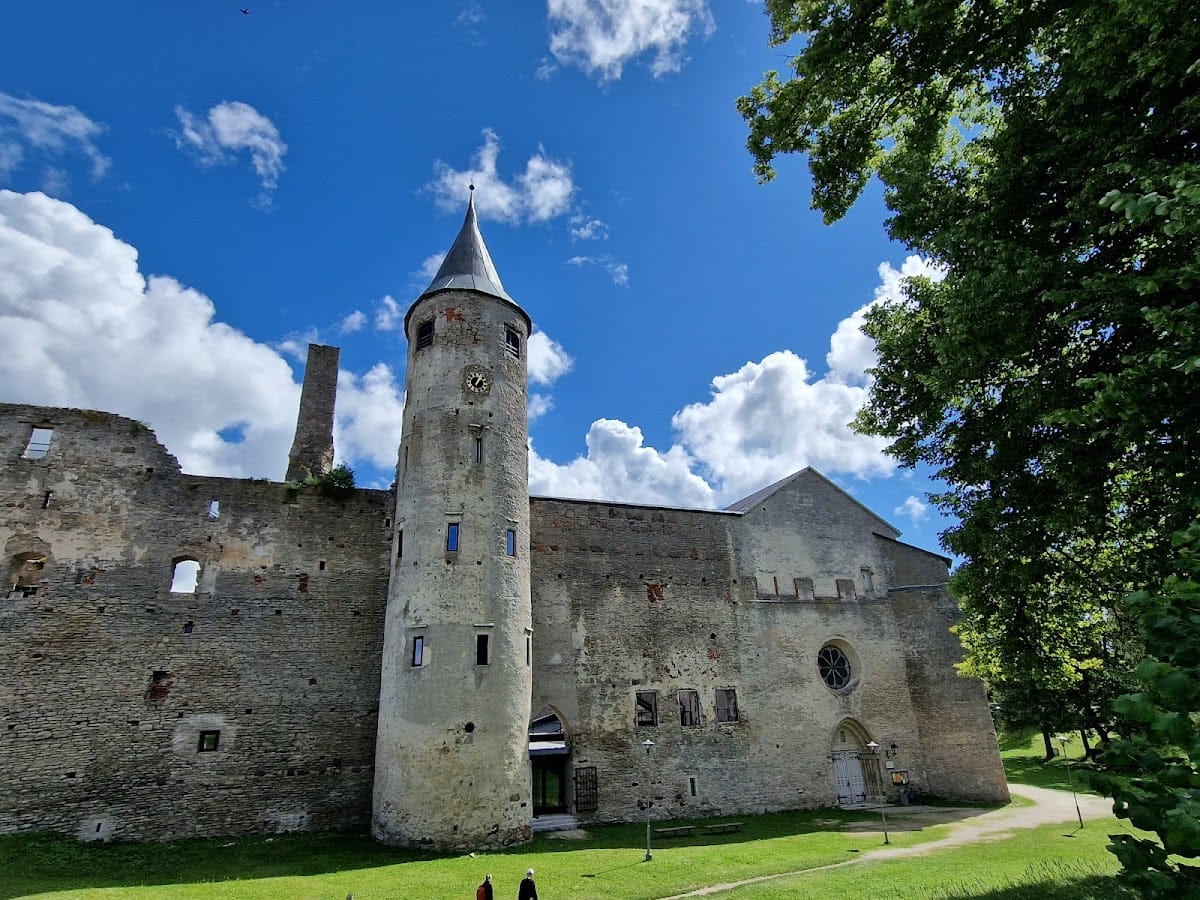
A 29-meter-high watchtower stands on the western side of the castle. It dates from the thirteenth century and was later adapted for use as a bell tower, a tower designed to house church bells.
War defenses
Internal trenches and artillery shelters were added during the Livonian War to provide positions for cannons and protection from bombardment. The smaller castle walls and outer fortifications were partly destroyed during the same conflict, leaving these defensive features within a complex whose earlier medieval layout had been altered by warfare.
Cathedral and chapel
Haapsalu Cathedral
The cathedral is a single-nave church approximately 11.5 meters wide and 15.5 meters high, with an area of about 425 square meters. It belongs to the transitional period between Romanesque and Gothic architecture. Romanesque features include vegetal ornament on the capitals of the pilasters and the original western semicircular portal, whose round arch contained a pointed ornamental gable with a niche for a statue of the patron saint. Gothic elements include star-shaped vaults.
Built in the thirteenth century, the cathedral has no precisely established construction date. Its attic was initially adapted for defense and could serve as a refuge. Paintings decorated the walls, while tombstones of clergy and distinguished nobles covered the floor. During the restoration of 1886 to 1889, surviving fragments of wall painting were renewed or covered, and the tombstones were removed from the church. The ruined Romanesque portal was replaced by a pseudo-Gothic stepped portal.
Round baptistery
A distinctive round baptistery, a chapel used for baptism, was joined to the cathedral in the second half of the fourteenth century. The tower-like structure has a groined vault, formed by the intersection of two barrel vaults. Its eastern window and southern interior wall provide the physical setting for the light effect associated with the White Lady. The chapel’s position also allows the silhouette to be viewed from the opposite rampart or from the foot of the rampart.
Mother’s Altar
The cathedral’s later interior includes the Mother’s Altar, consecrated in 1992. Its statue of the Virgin and Child was made by Hille Palm. The altar belongs to the building’s modern religious history, following the destruction of the earlier altar, organ, seating, and windows in 1944.
Nearby sites